The Welsh Parliament (the Senedd) passed a new law in the last week of November – the Workplace Recycling Regulations. This will change how all workplaces across the country store, manage and dispose of commercial waste from the start of April 2024.
Businesses, charities, and public and third sector organisations must separate certain recyclable materials and arrange collection away from other waste. Essentially, it means workplaces will legally have to separate paper and card, glass, packaging, food, electrical, and textile waste for recycling like most households already do.
The Senedd is making this a legal requirement to improve recycling rates in Wales and move the country closer to becoming a zero-waste nation and reducing carbon emissions. Failure to comply could result in a fine for your business.
Learn all about the new Workplace Recycling Regulations and how to prepare for them with Business Waste.
What are the Workplace Recycling Regulations in Wales?
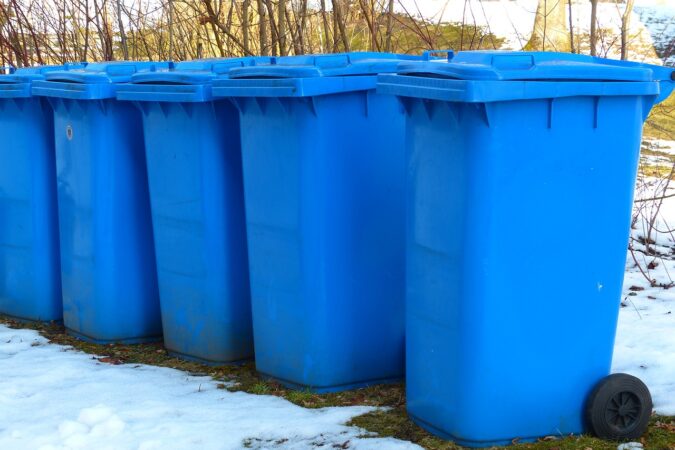
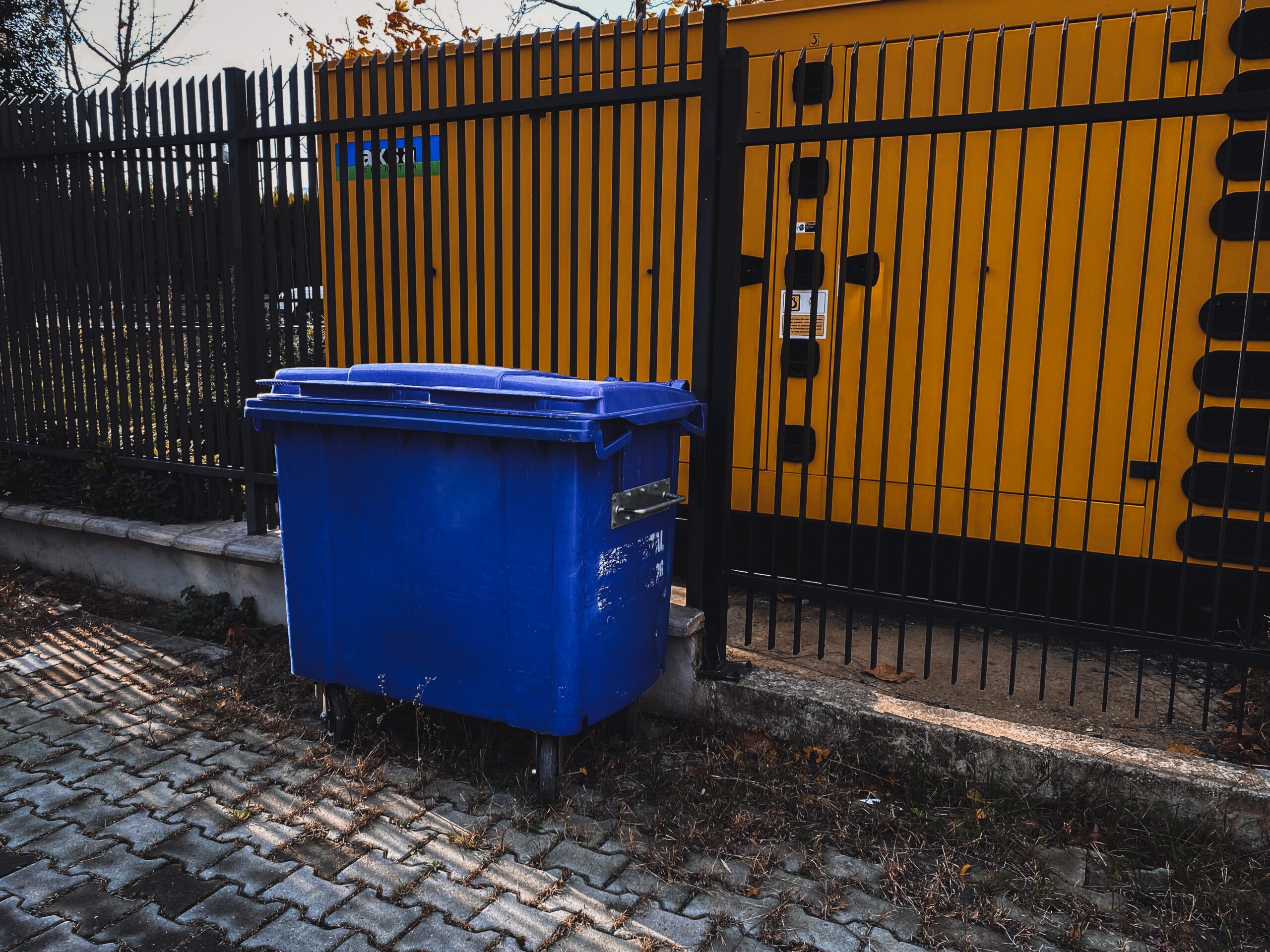
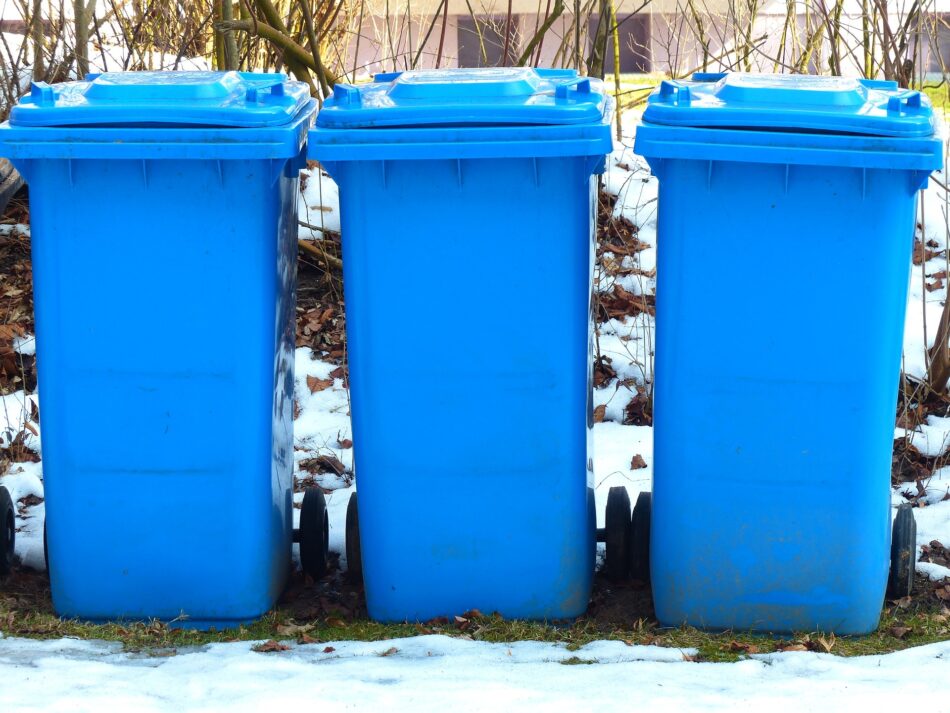
The Workplace Recycling Regulations is a new law that legally requires all workplaces in Wales to separate certain waste materials and arrange collection separate from other waste. Businesses, charities, and public sector organisations will need to use bins or containers to store paper and card, glass, packaging, food, unsold small WEEE, and unsold textiles.
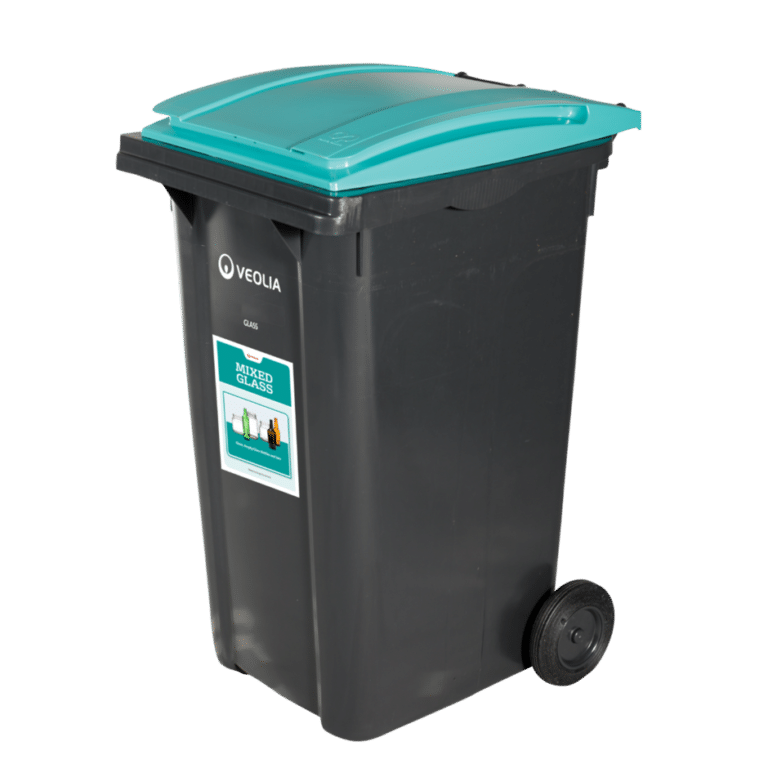
Workplaces will no longer be able to put all waste in a single bin if it includes any of these recyclable materials. However, you can use one bin for paper and card, and another to collect metal, plastics, and cartons (packaging) together. Glass must be collected on its own.
Any waste separated for recycling going to landfill or for incineration (except some textiles that may go to incineration plants – but not unsold textiles)
Failure to follow these new Workplace Recycling Regulations could result in a fine for your business, charity, or third sector organisation.
When are the Workplace Recycling Regulations in Wales being introduced?
The Workplace Recycling Regulations in Wales come into force from 6 April 2024. After this date, all businesses, charities, and public sector organisations anywhere in Wales must ensure relevant waste materials are collected separately and disposed of appropriately.
The only exceptions are NHS and private hospitals, which have an extra two years to comply with the regulations. Plans to reform workplace recycling in Wales were outlined over the summer, but the law was officially passed in the Senedd during the last week of November 2023.
Why is this new law being introduced?
Changes to the law around workplace recycling in Wales aim to help the country work towards becoming a zero-waste nation and reducing carbon emissions by 2050. Recycling rates for households in Wales are already high compared to most other countries. Just over 65% of materials collected by local authorities from homes are recycled.
The new Workplace Recycling Regulations aim to replicate these results for businesses and improve recycling rates in Wales across the commercial, charity, and public sectors. Separating and sorting recycling in workplaces should ensure greater volumes of high-quality recycling are produced and much less waste is sent to landfill and for incineration.
There’s also an economic boost by increasing recycling rates across Wales. It helps to keep materials in use for longer, which tackles the rising cost of materials and reduces how much landfill tax businesses pay for their waste management. Greater recycling should also create new and more job opportunities.
It is important that this collective effort stems right from the biggest businesses and organisations to the smallest in helping to tackle the climate and nature emergency and improve recycling – Minister for Climate Change, Julie James
What waste types must my business separate?
Under the new Workplace Recycling Regulations, certain waste materials must be collected separately. This aims to avoid contamination and increase the quantity and quality of individual recycling streams. The following waste materials must be stored and collected separately from other rubbish:
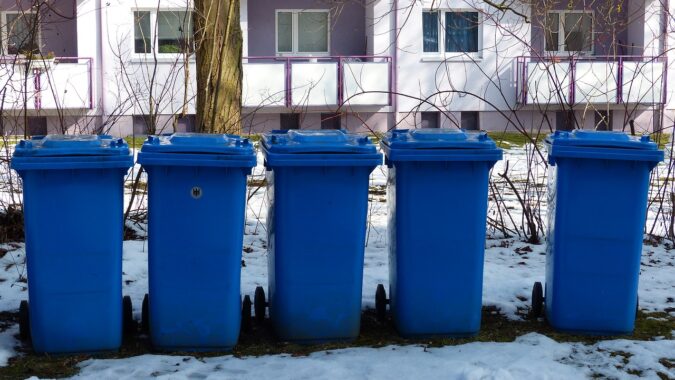
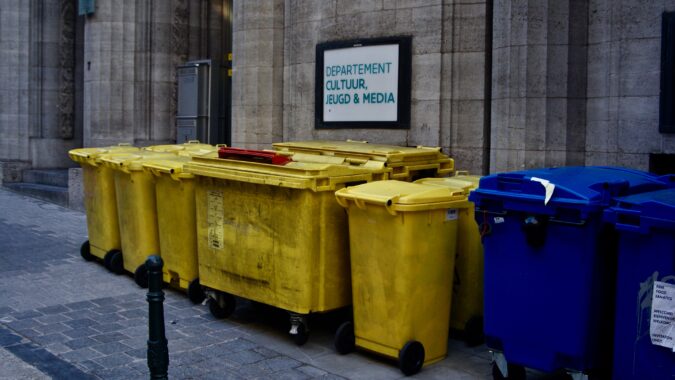
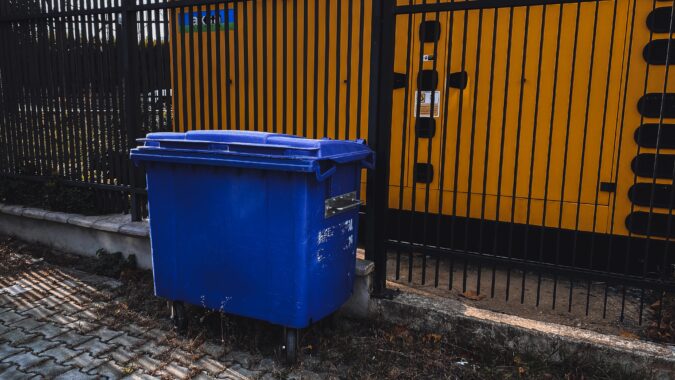
You can’t put all your waste in one bin if any of the above materials are present. For example, you can’t throw away paper, glass, and cartons in a general waste bin. This means your business in Wales could need up to six extra bins from April 2024 to comply with the new regulations, depending on what waste types you generate.
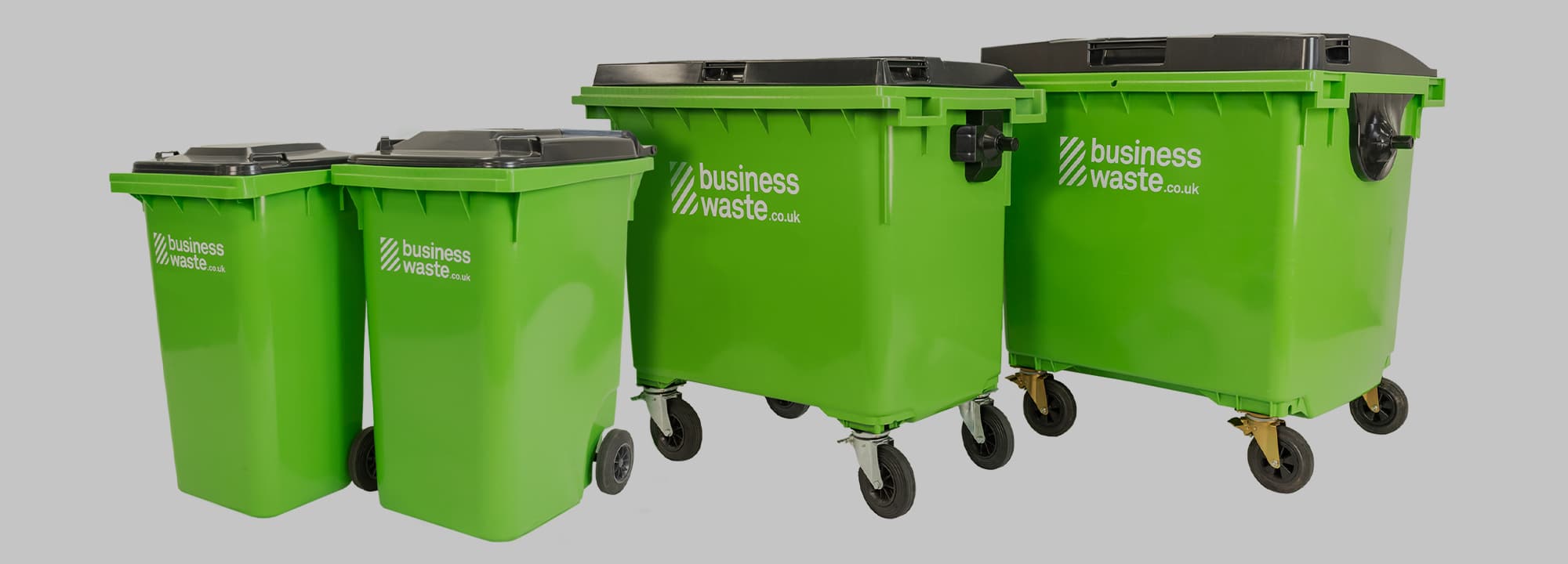
Get help with Business Waste as we can provide a wide range of recycling bins for free to separate waste types anywhere in Wales. There are no delivery or rental charges, you just pay for collection.
What are the food waste disposal regulations?
Any premises in Wales that create more than 5kg of food waste a week must arrange separate collection of their waste food, so it doesn’t go to landfill. This includes restaurants, cafes, takeaways, hotels, pubs, catering companies, and canteens in offices, schools, nursing homes, hospitals, and anywhere else that serves food.
The new regulations also stipulate that workplaces must not dispose of any food waste down the sink or drain or into a public drain or sewer. You must not use a macerator or similar technology like enzyme digesters or de-waterers to dispose of food waste down the sink or drain either.
Who must follow these Workplace Recycling Regulations?
Every workplace in Wales is required to follow the new Workplace Recycling Regulations. This includes businesses, charities, and public sector organisations. The occupiers of a workplace must ensure recycling is separated for collection and the new law is followed whether you own, lease, rent, or temporarily occupy the premises.
For any workplace in a shared location, the individual organisations are responsible for complying with the regulations. If a central recycling system is required then you might need an agreement in place with the landlord or facilities manager. The regulations also cover waste and recycling collectors and processors who manage household-like waste from workplaces.
The new workplace recycling law applies to all workplaces in Wales, including:
How will the new workplace recycling law be enforced?
Natural Resources Wales (NRW) will be responsible for overseeing the separation requirements for recycling materials and the ban on waste going to incineration and landfill is upheld. Local Authorities in Wales will regulate the ban on food waste disposal in sewers from workplaces within their regions. Failure to comply with the new regulations could lead to a fine for your organisation.
How to prepare for the Workplace Recycling Regulations in Wales
The earlier your organisation prepares for these new regulations, the easier it will be to ensure compliance and avoid the risk of a fine. As with any commercial waste collection, only licensed waste carriers must remove and handle the rubbish your organisation produces. To ensure it’s managed responsibly you should receive a duty of care certificate.
A few key steps to prepare for the Workplace Recycling Regulations in Wales:
Conduct a waste audit – assess the types and amounts of waste you produce on a daily and weekly basis. This should identify any rubbish materials you create that fall within the new regulations and whether you need extra bins to collect them separately in your workplace.
Contact your waste collector – speak to your current waste collector to ensure they can collect and recycle your separated waste. If they can’t you should contact other commercial waste management firms to find a suitable and cost-effective service and solution to comply with the new regulations.
Reduce waste and reuse materials – look for any ways to reduce how much waste your organisation produces. This could be through reusing materials or adapting processes to be more efficient. Reducing waste could mean there’s less to separate and you won’t need as many collections.
Train employees on the new law – explain to your staff about the new law well in advance and make their obligations clear. Putting a waste management policy in place, having clear posters near bins, and creating training materials can help ensure recyclable rubbish and other relevant waste are separated in line with the new law.
Get the right bins in place – your audit results should highlight the bins you need to separate all relevant waste types. Request the best sizes and types of bins with an efficient collection schedule to avoid a build-up of rubbish and the risk of recyclables being placed in the wrong bins. Put them in an accessible spot for employees and customers too.
Claim free bins for Welsh businesses
At Business Waste we can help organisations in Wales comply with the new law with our commercial waste services. We provide free bins to separate your recycling and ensure it’s recycled away from landfill and incineration – you only pay for collection. Licensed waste carriers will remove your waste and you receive a free duty of care certificate too.
Published 8th December 2023 by Mark Hall.
Last modified 14th November 2025
Christmas is the season of giving. But that doesn’t mean presenting your binmen or waste collection company with gifts of extra rubbish to remove this year. It happens though, as UK homes create almost a third more waste over the festive period – and businesses aren’t much better.
For example, around 227,000 miles of wrapping paper and 270,000 tons of food are chucked out every year at Christmas. It’s enough to turn Rudolf’s nose red with anger. Check out our Christmas waste facts for more shameful stats about how much rubbish we churn out every holiday season.
There are many ways to be sustainable at Christmas and give back to the environment. Your decorations, food, and celebrations can be as green as one of Santa’s elves’ outfits with a little effort. Use these sustainable Christmas ideas to enjoy the most wonderful time of the year in an eco-friendly way.
The most sustainable Christmas trees are real ones grown locally in the UK. Once cut a new tree can be planted and grown, which is highly sustainable. Ones sourced locally require less transport, fuel, and carbon emissions too. You should check if any tree is from a sustainable forest (or FSC-certified) before you buy.
Other sustainable Christmas tree ideas include renting a real tree rather than buying one. This can be cost-effective and ensures the tree is replanted in the new year. The tree can have a positive impact on the environment and wildlife throughout the year and be used again next Christmas.
What you do after Christmas with your tree is vital for sustainability. Real trees take 10 to 12 years to grow so it’s ideal to replant them in your garden or pass them on to a certified forest. If you have an artificial one, hold onto it and reuse it in the future, as many are plastic and hard to recycle due to containing a combination of materials.
In the UK we spend more than £20 billion on Christmas presents every year. Unfortunately, plenty aren’t that sustainable due to packaging and the products themselves. Greater awareness and eco-focus mean there are more options available to buy sustainable Christmas gifts and ideas for creating your own.
Wrapping paper, tags, and bags also contribute to how sustainable any Christmas presents you give out are. Use our tips to reduce Christmas wrapping paper waste. Reusing paper from last year, sourcing recyclable wrapping paper, and using reusable bags are simple steps towards sustainability.
Consider sustainable Christmas cards
It’s estimated that we send around eight billion Christmas cards in the UK every year. That’s an awful lot of trees chopped down for the paper and card to make them all. Most Christmas cards are recyclable and therefore fairly sustainable, although those featuring glitter, glue, and plastic are trickier to recycle.
Recycling Christmas cards also requires energy and effort, so a more sustainable option can be to consider sending an e-card or simply don’t bother this year. Finding a cute Christmas picture and sending it to friends and family over social media, WhatsApp, or email could suffice and use zero paper and card.
The Christmas party season is a fun time that leads to plenty of excess – eating, drinking, and dancing more than usual. Often it includes creating excess waste too, with loads of leftover food, decorations thrown away, and plastic plates and cups binned. But it doesn’t have to be that way.
A little bit of preparation can create a sustainable party whether you’re planning the work Christmas do or arranging a festive get-together at home for friends and family. Considerations covering the food, decorations, activities, and recycling can help reduce how much waste your celebrations create and ensure there’s less cleaning up afterwards.
As most people only wear Christmas jumpers in December they’re not always the most sustainable clothing items. Keep yours for a few years and it can be better for the environment though. A few ways to source a sustainable Christmas jumper include to:
Wear last year’s Christmas jumper (if it still fits!)
Knit your own using locally sourced wool
Buy a second-hand Christmas jumper from a charity shop or online
Upcycle an old jumper with a few festive additions
Go to a clothes swap
Put up sustainable Christmas decorations
Tinsel is terrible for the environment as the PVC film and metallic coating can’t be separated and recycled. Thankfully, there are many eco-friendly alternatives for decorating your home or workplace in December. These include making a sustainable Christmas wreath from natural items to stringing up solar lights outside or on your Christmas tree.
Handmade decorations, sustainably sourced baubles, and table decorations – including sustainable Christmas crackers – are essential. Avoid plastic decorations and those that use a combination of materials as they’re harder to recycle. One of the most sustainable actions is to simply use the same decorations from last year and store them for many years to come.
The equivalent of around seven million bins full of waste food are produced in the UK over Christmas every year. That includes millions of mince pies, sprouts, turkeys, Christmas cakes and pudding being thrown out. Smart shopping, portion control, saving and using leftovers in other recipes can all help reduce food waste for your festive feasting.
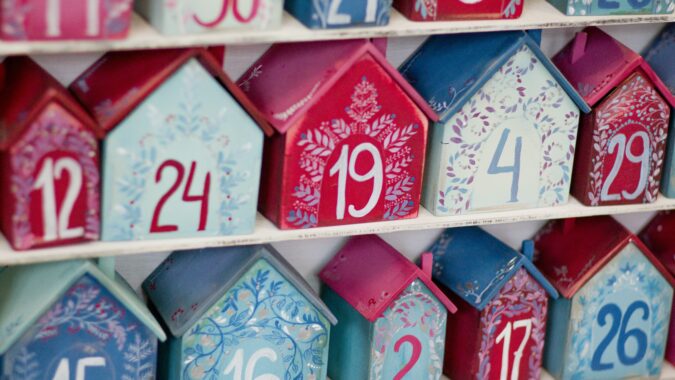
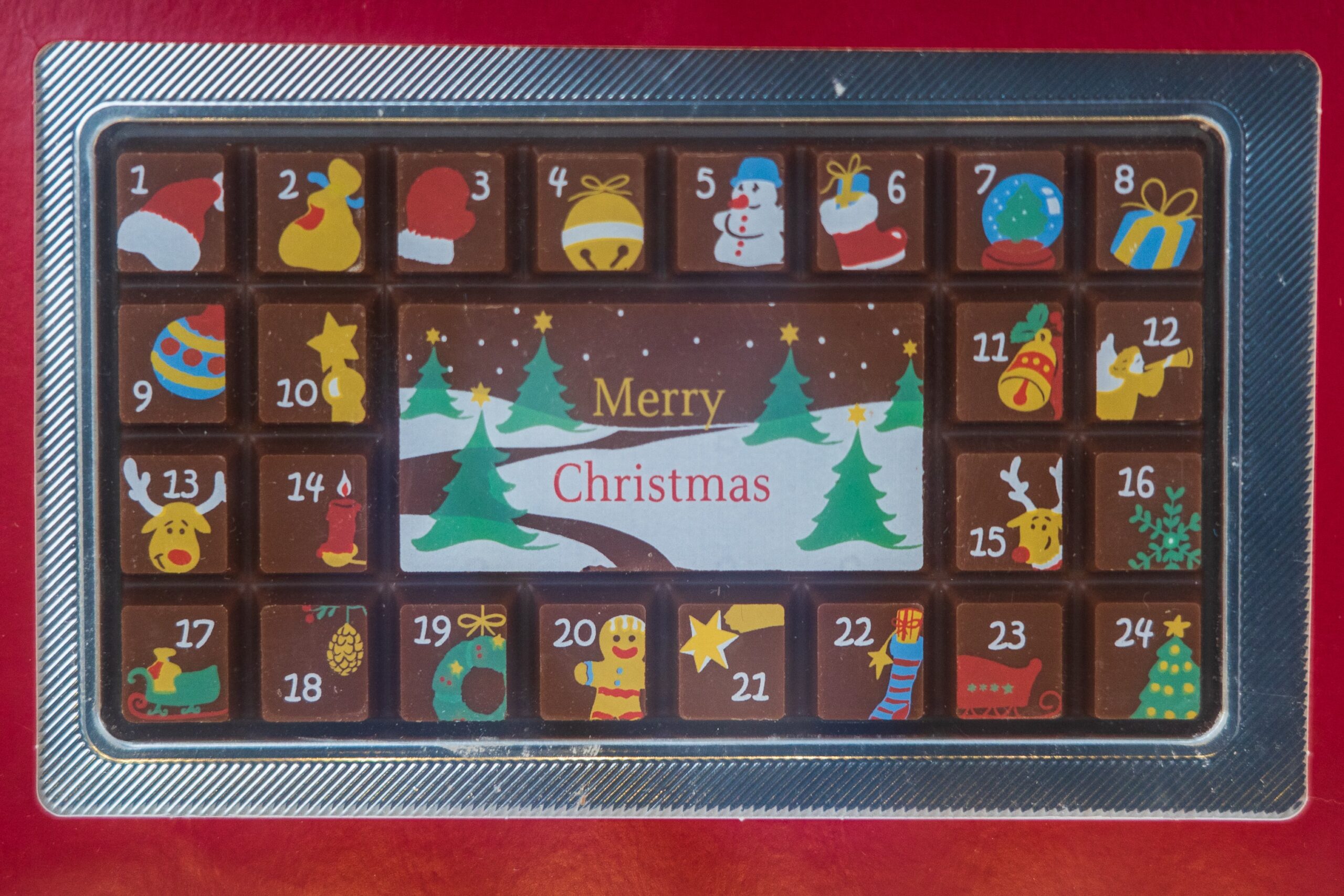
There’s a hidden cost of advent calendars, as many include single-use plastics that are bad for the environment. Sweet and chocolate wrappers aren’t always recyclable and many end up in landfill. But advent calendars are great for getting kids (and some adults) into the Christmas spirit.
Buy or make a sustainable advent calendar that has as little packaging as possible. Plenty are made purely from cardboard that’s easy to recycle. Alternatively, create your own for a waste-free option. It’s important you recycle or reuse the advent calendar next year after the big day for a fully sustainable solution.
Looking for more ways to reduce waste and celebrate a sustainable Christmas this year? We’ve put together a range of expert guides with tips and advice about reducing waste at home and work this festive season.
Published 5th December 2023 by Mark Hall.
Last modified 17th November 2025
Umbrellas protect against the UK’s frequent wet and windy weather. The battering they receive from numerous storms adds up after a while though, tearing the material and sometimes snapping their spokes. If you’ve popped up a parasol for the last time or struggled as your umbrella turned inside out once too many, it’s probably time to get rid of it.
Around 1.45 million umbrellas are sold every year in the UK to help keep us dry on those all too common grey and drizzly days. Sales have also increased over the past few years with more than £14 million spent annually on new umbrellas. But what do you do when one reaches the end of its life?
Recycle an umbrella rather than chucking it in the bin where there’s a chance it could end up in landfill. There are various ways to reuse and recover the materials of a broken umbrella. Discover some great umbrella recycling ideas in this guide.
How to recycle a broken umbrella
There are various types of umbrellas and each one is made from a combination of materials. These usually include a mix of metal, wood, plastic, and fabric. The different materials they contain make umbrellas tricky to recycle. Unfortunately, you can’t simply put them in your household recycling bin.
Don’t throw away a broken umbrella in your general waste bin at home or work either though, as it could end up in landfill. Instead, the best option is to break up an old umbrella into its different materials to recycle them separately at your local household waste recycling centre (HWRC). Separate and recycle each part of your old umbrella:
Fabric – most umbrellas have a fabric or textile canopy, which you can tear or cut off to separate it from the ribs and stretcher. Recycle this in any textile bins.
Metal – the main frame parts of most umbrellas are metal including the stretcher, ribs, shaft, and handle. Recycle these in the metal bins at your HWRC.
Wood – some traditional umbrellas feature a wooden handle and sometimes a shaft too. Remove this and recycle it with other wood waste.
Plastic – various bits of some umbrellas are made of plastic, like the handle, shaft, end tip, and canopy. Remove any such elements and check if the type of plastic is recyclable. Ask at your HWRC if you’re unsure.
What to do with umbrella covers
You’ll also need to responsibly dispose of the cover as well as the umbrella. This is often a thin piece of fabric similar to the material used for the umbrella’s canopy. Most modern umbrellas have covers made from nylon or polyester but check the material to ensure it’s recyclable.
If it’s made of a type of fabric then you should be able to recycle it with other textiles. Either find a clothing or textile bank or take it to your HWRC and recycle it in the specific textile bin. For any plastic umbrella covers check the plastic type and recycle with other plastics if possible.
Umbrella disposal for businesses
Various businesses can find themselves with umbrellas they need to dispose of as well. It could be shops with excess umbrellas they can’t sell or damaged stock, umbrellas left behind after an event such as a festival, or even manufacturing firms that produce umbrellas having broken items they need to get rid of from a factory.
Umbrellas that any type of business wants to recycle or dispose of class as commercial waste. If your business has lots of old, unused, or broken umbrellas it no longer needs then you must arrange commercial waste collection. Licensed waste carriers will remove them and transport them to a waste management facility for recycling and responsible disposal.
A broken umbrella will be as useful as a chocolate teapot when the next storm comes. Consider fixing it before throwing it away though. It’s always best to reduce waste and reuse before recycling, as it saves resources, time, and effort. How to fix a broken umbrella depends on what parts are damaged.
A few ways to fix a broken umbrella:
Sew or stitch together the canopy fabric with some thread of the same colour if it’s ripped or torn.
Use a length of metal wire to bind together dislocated pieces of a broken umbrella rib to get it back into place.
Put a bit of super glue in the handle hole and hold the handle in place to reattach it – leave it overnight to dry.
Umbrella recycling ideas
There are many ways you can reuse an old or broken umbrella even if it won’t keep the rain or sunshine out any more. Upcycling umbrellas helps to reduce waste, keep them out of landfill, and save on the energy and resources required for recycling. Plus, it puts them to good use in other ways.
Here are a few easy ideas for upcycling by turning your old umbrella into a:
Light shade – colourful umbrella canopies make wonderful light shades for your living room, hallway, or garage. Keep the ribs in place with the umbrella top open and position it over a bare lightbulb hanging from the ceiling for great effect.
Chandelier – remove the canopy and turn the frame of your old umbrella upside down to form a DIY chandelier. Hang and attach decorative bits to the ribs to add a touch of class.
Mini greenhouse – transparent plastic umbrella canopies and the ribs are ideal as a cover for precious plants in your garden, acting like a small greenhouse. Remove the shaft and handle and secure it in the ground so it won’t blow away to help plants thrive.
Hanging basket – simply flip an old umbrella upside down and hang it outside for an easy hanging basket. You can also partially close the umbrella and hang it indoors or outside then fill it with a bouquet of flowers.
Coat rack – traditional curved umbrella handles make a great coat rack. Remove them from the rest of the umbrella, turn them upside down, and nail them into a small board for a quick and easy coat rack.
Clothesline – get rid of the canopy and use the metal shaft and ribs of an umbrella as a clothesline either inside or outside. Find something to hang it from, such as a tree or pole. It’s great for drying small items like socks and tea towels.
Costume – dressing up as Mary Poppins? It doesn’t matter if the umbrella is in working order or not – you’re unlikely to fly away with it anyway. Get creative and use the canopy of an old black umbrella as the wings of a bat for a spooky Halloween costume or transform the fabric into a cape.
Published 17th November 2023 by Mark Hall.
Last modified 13th November 2025
Rugby League legend Kevin Sinfield OBE will lace up his running trainers once again to take on another epic endurance event this December. Sinfield and his team will run anultra marathon each day for seven days in seven cities to raise awareness and money to support people impacted by motor neurone disease (MND).
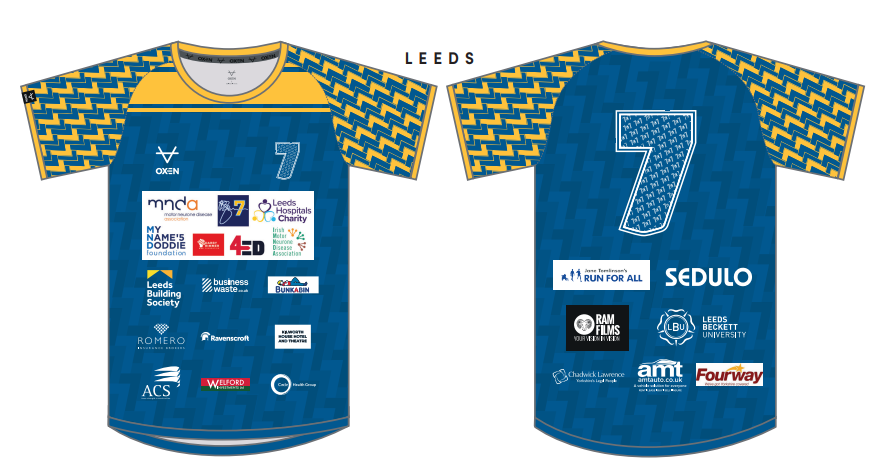
And for the second year in a row, Business Waste is proud to sponsor Sinfield with our name on the front of his jersey as he tackles his fourth fundraiser. So far he’s raised more than £8 million for the fight against MND across three endurance events. Each one has been inspired by his former Leeds Rhinos teammate Rob Burrow MBE.
This challenge is no different with the team also inspired by sporting warriors Ed Slater, Marcus Stewart, Stephen Darby, the late Doddie Weir, and the 5,000 other people living with MND in the UK today. The aim is to raise £777,777 for five charities that support and care for people affected by MND and their families and invest in research for effective treatments and a cure for the disease.
The 7 in 7 in 7 challenge is the fourth fundraising endurance event in the fight against MND by Kevin Sinfield OBE and his team. It combines elements of the three previous challenges the England Rugby Union defensive coach conquered. The challenge starts on Friday December 1st – three years to the day since Sinfield began his first 7 in 7 challenge.
In 2023 Sinfield and his team will run an ultra marathon every day for seven days in seven cities around Great Britain and Ireland. And the target is to complete each one inunder four hours to really push themselves to the limit.
Every run will be a marathon with an extra mile added on – to highlight the extra mile people can go to help friends and family in tough times. Each day invited guests will join Sinfield for the extra mile event. The challenge will raise funds for five charities that provide support, care, and research into MND:
MND Association and Leeds Hospitals Charity’s appeal to build the Rob Burrow Centre for MND in Leeds
My Name’5 Doddie Foundation
The Irish MND Association
The Darby Rimmer MND Foundation
The 4ED campaign to support former Gloucester and Leicester Rugby Union player Ed Slater
Physically this will be my toughest challenge as I have not been able to do the amount of training that I have done previously because of my commitments for the World Cup and we have set an ambitious time target to complete each ultra so people know that we will be pushing ourselves to the limit.
Where will the 7 in 7 in 7 challenge take place?
For the first time, one of Sinfield’s fundraising challenges will cover multiple cities in Great Britain and Ireland. Many of these cities were chosen due to their sporting significance and links to MND. Hopefully, this should raise even greater awareness of the condition and funds to support those living with it and fund further research into treatment and a cure.
For example, the fifth day in Dublin was inspired by former Munster Rugby Union coach Paul Darbyshire, who played Rugby League with Warrington and passed away from MND in 2011 aged just 41. The team will work with the Irish MNDA for the first time, following the incredible work done by legendary RTE broadcaster Charlie Bird who raised over €3 million with his Climb with Charlie after his own MND diagnosis.
The challenge starts at Headingley Stadium in Leeds before visiting key cities across the rest of the country, Wales, Scotland, and Ireland. The days and locations for each of the 7 ultra marathons are:
Friday 1st December – Leeds to York (AMT Headingley Rugby Stadium to York Minister).
Saturday 2nd December – Cardiff (finishing at half time of the United Rugby Championship game between Cardiff and Scarlets at The Arms Park).
Sunday 3rd December – Birmingham (start at the Alexandra Stadium, calling at St Andrews, Villa Park, and Edgbaston, before finishing in the city centre).
Monday 4th December – Edinburgh (crossing the Forth Road Bridge before finishing at Scottish Gas Murrayfield).
Tuesday 5th December – Dublin.
Wednesday 6th December – Brighton.
Thursday 7th December – London (Twickenham Stadium to the Mall).
I am looking forward to it and seeing all the support out on the streets once again. For the MND community, every second counts and we will be making the most of every step on this challenge to raise awareness, funds and support for that community.
How can I donate?
There are a few easy ways to donate and support Sinfield and the fight against MND:
Once again, Business Waste wants to encourage other companies and individuals in the waste management industry to get behind Sinfield’s epic challenge and donate. It would be great for as many of our customers, suppliers, and other local and national waste management companies to support this fantastic cause as possible.
You can also support Sinfield’s efforts by buying any of the limited-edition merchandise worn by the team during the week-long challenge. There’s a different design for each day inspired by the location and a t-shirt or singlet (vest) is available for each. Order merch online.
Published 8th November 2023 by Mark Hall.
Every 5th November the UK’s night skies light up with the colours, sounds, and smells of burning bonfires, extravagant fireworks, and sweet toffee apples. Millions of people attend public firework displays while plenty throw Bonfire Night parties in their gardens. Like most celebrations though, these create lots of extra waste.
Bonfires aren’t good for the environment, the rubbish from used fireworks isn’t recyclable, and there can be more food waste produced with discarded toffee apples and trays of parkin cake. However, we don’t want to extinguish the fun of the 5th of November.
Instead, this guide outlines ways to ensure your celebrations are as low-waste and eco-conscious as possible. Plot how to enjoy Guy Fawkes Night in a low-waste way with these environmentally friendlier Bonfire Night party ideas.
Bonfire Night facts
A few facts about the environmental impact and safety stats associated with Bonfire Night:
The levels of soot in the atmosphere during and after bonfire night displays are 100 times higher than usual.
The biggest annual spike in particulates across the UK is caused by bonfire night. This includes increases in levels of Sulphur dioxide (SO2), nitrogen dioxide (NO2), and particulate matter (PM2.5).
Around 200,000 pallets are burned on Bonfire Night across the UK – the equivalent of 35,000 trees.
Burning garden waste on a bonfire can cause 30 times the amount of particulate pollution compared to alighting untreated wood.
Around 2,000 people go to A&E with fireworks-related injuries every year around bonfire night, according to NHS figures.
Most people are treated and sent home but there are about 1,000 hospital admissions in the UK every year due to injuries sustained from letting off fireworks
Attend a public bonfire
Setting off fireworks and having a bonfire in your garden is a fun way to celebrate Guy Fawkes Night but it’s not the most sustainable option. Many councils, pubs, and community clubs host their own Bonfire Night parties. There are many reasons why attending a public display is better for the environment, as it:
Minimises emissions as it avoids you from having a bonfire at home that would otherwise add to increased particulate and soot levels in the air.
Reduces waste from dead fireworks being littered across the local environment with community displays ensuring all used fireworks and sticks are cleaned up.
Creates less noise in your local neighbourhood, which should help cause less upset to any pets.
Costs much less than buying fireworks and wood for a bonfire at home.
Provides an impressive visual display that’s likely bigger and longer than any event you plan.
Use eco-friendly fireworks
There are plenty of ways to reduce waste and your environmental impact if you’re planning a Bonfire Night party at home. Fireworks are the main focus of the evening, so ensuring these are as environmentally friendly as possible is vital. A greater awareness of the effect fireworks have on the environment means there are now eco-friendly options available.
Eco-friendly fireworks are made with a nitrogen-based fuel that burns cleaner and produces a lot less smoke. They’re designed to reduce atmospheric pollution caused by traditional fireworks that have charcoal and sulphur fuel. Currently, they’re not as easy to find but making the effort to source eco-friendly fireworks is worth it for a sustainable Bonfire Night.
How to dispose of fireworks
Fireworks aren’t environmentally friendly, and they can’t be recycled whether they’re used or not. Unfortunately, paper wrapping, plastic packaging, and any wooden sticks with fireworks aren’t recyclable due to contamination. Responsible disposal is vital to avoid accidental fires. Here’s how to dispose of fireworks safely depending on their type:
Any used fireworks that went off should be disposed of in your general waste bin.
Unused fireworks can be stored safely and used at future celebrations or donated to an organisation that can make use of them.
Misfired fireworks should be submerged in water for 48 hours and then placed in a plastic bag inside your general waste bin.
Skip the sky lanterns
Sky lanterns are a more recent addition to some Bonfire Night celebrations. They might look impressive illuminating the night sky but they’re terrible for the environment and quite dangerous. This is because sky lanterns are essentially pretty bits of rubbish on fire floating around that eventually fall to earth.
The fuel that lights and lifts off the sky lanterns isn’t great for the atmosphere but it’s when they land that the problems start. They can set fire to dry materials near where they land, choke or get caught up in any animals, and end up in our waterways. Skip the sky lanterns this Bonfire Night.
Build a better bonfire
Burning rubbish might sound like a great way to avoid any non-recyclable waste ending up in landfill, but you should avoid this. Building a bonfire with household waste, plastics, wet wood, and many other materials can pollute the air, create lots of smoke, and an unpleasant smell.
Burning many waste types is also illegal with a potential fine of up to £50,000. As well as environmental concerns there are also safety risks, so fires must be held in a secure place with plenty of water nearby. If you’re planning a bonfire then here’s how to have one in the most environmentally friendly way:
Only burn dry, untreated, and unpainted scrap wood. Any wood that could be reused, repurposed, or recycled shouldn’t be burned, as this isn’t sustainable. This includes garden waste, which it’s better to compost rather than burn on a fire.
Just use small amounts of paper or cardboard to help start the fire. Recycling paper and cardboard is the best way to dispose of these materials, so don’t burn loads on your bonfire.
Check the weather forecast as it’s best to have bonfires on clear nights with no wind or mist to minimise their impact.
Look into the bonfire before lighting it to ensure no hedgehogs or other animals are living inside. Building the bonfire on the day helps reduce this risk.
Dispose of ash properly after your bonfire has burned out. Ensure it’s cooled down and then you can add pure wood ash to a compost heap.
Throwing an effigy of Guy Fawkes onto a bonfire is a tradition that goes back hundreds of years. The most environmentally friendly action is to not bother making a Guy as it introduces extra materials that may release toxic emissions when burnt. There are a few ways to make it a bit eco-friendlier though.
Find some old clothes, such as a shirt and trousers or a pair of pyjamas. Ideally, these should be in a state beyond reuse, such as ripped or stained. Lightweight items made from untreated natural fibres like cotton or linen are best as they should burn quickly, easily, and release fewer toxins.
Make the head from an old linen pillowcase. Avoiding plastic or synthetic materials prevents the release of harmful chemicals. Then stuff the clothes and head with old and dry paper (including newspaper). Use some string or thread to tie up the wrists, ankles, and any other gaps, and then he’s ready for the bonfire.
Reduce food waste and recycle
There are sure to be plenty of autumn treats and drinks flowing at your Bonfire Night party. Careful planning helps reduce and even eliminate any food waste and packaging waste being created. Here are a few easy ways to reduce food waste on Guy Fawkes Night:
Put toffee apples on sustainable sticks such as bamboo or wooden skewers rather than plastic ones.
Recycle all aluminium drink cans and any glass wine or beer bottles. Have a station where people can leave them before cleaning them out and recycling them.
Published 1st November 2023 by Mark Hall.
Last modified 26th June 2024
The Department for Environment, Food & Rural Affairs (Defra) revealed reforms to bin collections and the UK’s waste system at the end of October 2023. These proposals have been dubbed ‘Simpler Recycling.’ They aim to increase, improve, and standardise recycling and waste collections by local authorities across the country for households and businesses.
This should eradicate the current ‘postcode lottery’ where homes in some areas of the country can recycle materials like glass in their domestic recycling bins, while others can’t. The plans also aim to crack down on waste crime, through mandatory digital waste tracking, an issue costing England over £1 billion per year.
Businesses in England with 10 or more employees were required to separate dry recyclables into individual containers and arrange separate food waste collections by the end of March 2025.
For most other proposed changes there’s a deadline of the end of March 2026, so there’s still time to get to grips with them. Understand what Defra’s simpler recycling plans are and how they could affect your business or household with these answers to your common questions.
As of February 2026, the Environment Agency are charging £118 per hour to businesses who are non-compliant with Simpler Recycling Regulations. This measure is in place to fund EA assessments. It’s now more crucial than ever to ensure your business is fully compliant.
Note: The timeline for Simpler Recycling could change. Below is all the current information and expected dates about the plans available. You can find more information on the UK government website.
What will change under Defra’s simpler recycling reforms?
Defra’s simpler recycling reforms will affect households, businesses, and waste carriers. It will change bin collections for households to ensure more materials are recycled and that all homes in England receive the same waste collection services. You should also be able to recycle the same materials at work as you can at home under the proposed reforms.
The main changes that Defra’s simpler recycling is set to introduce are:
Every local authority in England will collect four containers from households in their area (including flats). These will be for residual (non-recyclable) waste, food waste (mixed with garden waste if appropriate), paper and card, and all other dry recyclable materials (plastic, metal and glass).
Most UK households will receive weekly food waste collections from their local authority.
Charges can continue to be applied by local authorities for garden waste collections.
Plastic film will be collected as part of the plastic waste stream, but the deadline is a year later by 31 March 2027.
Waste collectors can collect combined dry recyclables so there’s no need for seven bins per household.
Businesses must arrange separate food waste collections, separate paper and card, and separate dry recyclables (glass, plastic, and metal) by the end of March 2025 for businesses with more than 10 employees. This includes schools and hospitals – garden waste and plastic film are exempt initially.
Companies in England with fewer than 10 employees have until the end of March 2027 to comply with the new regulations.
A central digital system for waste tracking will be introduced for waste carriers, operators, and brokers.
How will Defra’s simpler recycling affect businesses?
Businesses will need to arrange collections and recycling of all food waste, paper and cardboard, and dry recycling (glass, plastic, and metals) they produce by licensed waste carriers. All businesses, schools, hospitals, and other ‘non-household municipal premises in England’ must arrange collection for recycling or composting of the same recyclable waste streams as households under Defra’s new plans – excluding garden waste.
These arrangements were required to be in place by the end of March 2025 for businesses in England with 10 or more full-time employees. Using commercial waste collection services and licensed waste carriers should ensure compliance with the new plans. You could use separate bins for each recycling stream or dry mixed recycling bin collections to combine plastic and metals for ease. Paper and card must be collected separately from other dry recyclables.
The government plans to hold a consultation about the definition of ‘non-household municipal premises.’ Depending on the outcome of this it could mean places of worship, prisons, charity shops, and residential hostels are included and will also need to arrange recycling collections in line with the new plans.
A few key areas of the Separation of Waste (England) (No. 2) Regulations 2024 are also still under review by the government. These could affect how recyclable materials are collected and which can be mixed and the deadline for micro-businesses, which may be subject to change.
Get free bins for Simpler Recycling
Organise your Simpler Recycling bins
Only pay for collections
Any type of waste
FREE bins and delivery
We cover all of the UK
Who needs to prepare for simpler recycling?
All businesses will need to prepare for the changes that Defra’s simpler recycling scheme is set to introduce. So will non-household premises like hospitals, schools, and prisons. However, the deadlines to comply with the new regulations depend on the size of the organisation:
Businesses with 10 or more full-time employees – by 31 March 2025 any business or non-household premises with at least 10 full-time employees were required to arrange separate food waste and dry recycling collections. This is regardless of how many employees are on site at once. If you have two locations with five full-time employees at each, you must still comply with the Simpler Recycling regulations, as you’ll have 10 employees in total.
Businesses with fewer than 10 full-time employees – by 31 March 2027 any business or non-household premises with fewer than 10 full-time employees must arrange separate food waste and dry recycling collections.
Local authorities – have until 31 March 2026 to implement the requirements of simpler recycling for all residents.
The bulk of Defra’s simpler recycling plans aim to be in place by the end of March 2026. However, collections of core dry recycling materials from businesses, schools, and hospitals with more than 10 employees should be in force earlier by March 2025. Collection of plastic film is also set for later, presumably due to the difficulty of recycling such material.
The main three dates for the changes to bin collections are:
31 March 2025 – core dry recycling and food waste have been collected separately from businesses, schools, and hospitals with 10 or more full-time employees (garden waste and plastic film are exempt).
31 March 2026 – local authorities will provide weekly food waste collections and include all core recycling collections for households (glass, metal, plastic, paper and card, and garden waste).
31 March 2027 – plastic film will be removed as part of the plastic waste stream from households and businesses. Dry recycling and food waste should be collected separately from businesses, schools, and hospitals with fewer than 10 full-time employees.
Why are changes to waste collections being introduced?
There are three main reasons why Defra is set to update the current waste system – to improve recycling rates, simplify waste management, and crack down on waste crime.
Improve recycling rates
Household recycling rates in England have grown from 11% in 2001 to 42% in 2022. However, they’ve stagnated and missed the target of reaching an average of 50% by 2020. Ensuring all domestic waste collections include the seven core recycling streams should improve recycling rates towards the UK’s household waste recycling target of 65% by 2035.
Simplify waste management
Applying Defra’s simpler recycling scheme across all households and businesses will mean the same materials can be recycled at home or work anywhere in the UK. This removes the current ‘postcode lottery’ about what can be recycled where and avoids any confusion. It should encourage manufacturers to design sustainable packaging that’s recyclable anywhere in the UK, helping boost recycling rates.
Crack down on waste crime
Around 18% of waste in England might be managed illegally according to the Environment Agency. This can have a hugely negative impact on the environment and businesses and costs the economy in England £1 billion a year. Reforming the licensing system for waste carriers, brokers, and dealers with mandatory digital waste tracking aims to centralise reporting and reduce illegal waste activity and its negative impact.
There are plans to overhaul the system that tracks how waste is handled and the ways data is collected with mandatory waste tracking. The exact details are yet to be released but it should improve detection of waste crime by regulators. New systems will record information from the point waste is produced to when it’s disposed of.
This provides regulators with all the information and evidence required to hold waste criminals to account. An increase in background checks for organisations and individuals who move commercial waste is set to be introduced too. These should make it easier for regulators to identify rogue operators and make it harder for unlicensed waste carriers to get work.
Are there any concerns or problems with the plans?
Most of the reaction has been positive but a few concerns have been raised. An announcement was initially promised by the end of 2022. With nearly a year’s delay, it wouldn’t be a surprise if deadlines are pushed back again and could make implementation challenging due to this initial delay.
The mixing of materials was also highlighted as disappointing. However, updates to Simpler Recycling plans mean paper and card will now be collected separately to reduce cross-contamination and improve the quality of collected material. It’s hoped that simplifying the number of bins should increase recycling participation levels.
Greater detail on how simpler recycling will work with the emerging extended producer responsibility (EPR) regime for packaging is also required. And there are also worries about whether councils and local authorities will have the bins, vehicles, and systems in place in time to deal with the proposals.
You can prepare for these changes in advance and increase your commercial recycling with Business Waste. Get a free quote for any type of waste collection anywhere in the UK today, simply call 0800 211 8390 or contact us online today.
Published 27th October 2023 by Mark Hall.
Last modified 26th February 2026
Have you experienced extra strain carrying your Halloween pumpkin to your car from the supermarket this year? The good news is that there’s nothing to be scared about and you’re not getting weaker – it’s the pumpkins that are getting bigger this year.
Farmers have commented that the wet July and August (with enough sunny intervals) has seen pumpkin crops thrive[1]. A warm September and early October helped ripen the fruits at the right time too[2]. With between 10 and 15 million pumpkins grown and harvested in the UK every year that means most pumpkins sold are bigger and heavier than usual.
You might get more pumpkin for your pound thanks to the miserable summer, but experts at Business Waste are worried it will lead to more pumpkins being wasted. Already around 24 million pumpkins are sold in the UK every year to celebrate Halloween with 18,000 tonnes of pumpkins thrown away that end up in landfill.
“More than half of Brits who buy pumpkins once a year just to make a jack-o’-lantern aren’t aware that they can eat and use the fruit,” says Mark Hall, representative for waste management company Business Waste. “Instead, they scoop out the insides and chuck it straight in the bin, meaning thousands of tonnes of edible pumpkins go to waste. It’s a real shame, especially with the millions of homes in the UK currently experiencing food insecurity.”
How much extra waste food will bigger pumpkins create?
There are no exact figures about how much bigger pumpkins are compared to last year. However, as 18,000 tonnes of pumpkins are thrown out normally in a year, even a 1% increase in size could lead to significant amounts of extra waste:
1% increase in pumpkin size – 180 extra tons – the weight of 30 elephants
5% increase in pumpkin size – 900 extra tons – the weight of 150 elephants
10% increase in pumpkin size – 1,800 extra tons – the weight of 300 elephants
The average pumpkin that you buy in the supermarket has a diameter of 15 to 25cm and weighs between 2 and 3kg[3]. Medium pumpkins range in size from 60 to 80cm in diameter and can weigh as much as 9kg.
The bigger the pumpkin size you normally buy, the larger it will likely be this year, and the more food waste it will create if disposed of irresponsibly. Unless more consumers eat or use the pumpkin flesh then those buying bigger pumpkins for their porch could create more avoidable food waste in the UK.
“Unfortunately, more food often leads to more waste,” adds Hall. “We encourage people to only buy the number and sizes of pumpkins they need. You should also plan how you’re going to use all of the pumpkin and manage it properly, as after carving a pumpkin it only lasts for 3 days to a week before it starts to rot.”
The good news is that last year Tesco reported ten times more people searched for pumpkin recipes on their website than the year before1. Hopefully this suggests more people will be eating the innards of their jack-o-lanterns in 2023 than ever before.
There’s also a growing awareness of the impact of food waste and many recipes and tips out there to help people make the most of their pumpkins. The current cost of living crisis could also encourage more people to think twice and consider cooking and eating them rather than heading straight for the bin. After all, pumpkins are edible fruits.
“There are loads of great ways to eat the innards and flesh of pumpkins,” concludes Hall. “These include traditional sweet and savoury recipes such as pumpkin pie and soups, as well as simply roasting the seeds or blending the flesh to create a homemade pumpkin spiced latte.”
From 1 April 2026, landfill tax in the UK will rise again. The standard rate will increase to £130.75 per tonne, reinforcing landfill as the most expensive waste disposal option for most businesses.
This commercial waste guide covers everything you need to know in 2026.
Published 13th October 2023 by Mark Hall.
Last modified 8th February 2024
Reducing waste production is a key challenge for every country to tackle pollution and climate change. Global waste generation was 2.24 billion tons in 2020, and is predicted to increase to 3.88 billion tons by 2050, according to the World Bank. Homes and businesses can play their part to cut waste production at the source, but advancements in artificial intelligence (AI) are helping across the board.
Waste management involves many processes, from production and storage to transportation, inspection, and disposal. AI is already essential for lots of data processing and behind the scenes work around waste management. It’s now being introduced for more applications that are much more visible and businesses can use to reduce waste, save time, and money.
There are many innovative ways AI benefits the waste management sector and how it can help your business reduce its waste production levels and the associated costs.
Cameras to cut food waste
Around 17% of food produced globally is wasted according to the UN. The food service industry accounts for about 5% of this, so efforts are ongoing to reduce this amount. For example, the average restaurant in The Netherlands throws away around 10,000kg of edible food waste every year.
Trials using cameras and AI software developed by Orbisk are in place within some professional kitchens to cut down on the amount of waste food restaurants, cafes, and takeouts produce. This places cameras above food waste bins in the kitchen. They use AI image recognition technology to identify the type and amount of food waste, its level of processing (prepared, whole, or cutting waste), the time of disposal and reason for disposal.
There’s no need for extra space in the kitchen as cameras are fit to existing food waste bins. The data goes to the Cloud automatically, which restaurant managers, chefs, and other kitchen workers can later access and interpret to see where they waste food and to develop strategies to cut down on this.
Currently there’s a 24-hour turnaround for data to reach the user, but the aim is for instant turnaround as the technology advances. Orbisk claims its cameras and AI technology can helpkitchens reduce their food waste by 50%, so it could have a significant impact on reducing commercial kitchen food waste.
Recycling recognition technology
One of the big challenges for waste management and recycling facilities is waste getting mixed up. Just one wrong piece of rubbish can contaminate an entire load and prevent recycling. AI-powered computer vision software developed by Greyparrot tracks 32 billion items of waste every year to help improve the efficiency of waste managers.
After all, as AI can recognise the complex details of human faces, surely identifying your waste should be a breeze? Unlike human faces, the likes of chocolate bar wrappers and crisp packets are pretty much all the same. The technology works as cameras assess waste on a conveyor belt and identify different waste types, faster and more accurately than the human eye.
It provides composition information and analytics about the waste, helping facilities spot waste in the wrong streams and remove it. This can eliminate errors, highlight inefficiencies when sorting waste, and ultimately boost the recycling rates at waste management facilities by ensuring as much recyclable rubbish as possible is processed properly.
Effective route planning for waste trucks
Waste management companies work to determine the most efficient routes to collect garbage from homes and businesses. This saves them money on fuel, which has a positive environmental effect too, and cuts the time it takes so they can make more pickups in a day. AI offers solutions to accurately map the areas that a waste management company covers, which can use historical data and new information to develop the most efficient routes.
Research has found that using AI could reduce transportation distances by up to 36.8% for waste logistics. This could make time savings of up to 28.22%, which leads to better efficiencies and may cut costs for waste collections by up to 13.35%.
Holidays, seasonal events, and traffic regularly impact waste collections, leading to longer and slower routes. AI integration can automatically generate route plans for trucks while they’re out on the road, making changes in real time to avoid traffic jams, road closures, and avoid delays where possible.
Intelligent rubbish bins
The development of ‘intelligent’ rubbish bins uses the power of AI to inform waste management companies when bins are full. Through a variety of smart sensors and IoT technology (Internet of Things) linked up to software used by waste management firms it can improve the efficiency of collections.
Coupled with route planning technology this can optimise waste collections for homes and businesses, ensuring bins are only emptied when full. It prevents waste overflowing and keeps sites hygienic. This saves on time, fuel, and money wasted by trucks to collect and empty half-full bins, maximising the value for money homes and businesses get for their waste management.
Smart sensors inside bins can also track temperature and movements, as well as the fill level. If the temperature gets too high or there’s unexpected movement, it could be due to fire or potential theft. This adds an extra layer of defence to protect the trash and ensure it’s sent for recycling and responsible disposal.
Reducing waste in space
It’s not just rubbish on planet earth that AI helps to combat, it’s now got its sights set on the stars (kind of). The European Space Agency estimates there are more than 170 million bits of debris in space larger than 1mm, which could harm an operational spacecraft. This includes natural meteoroid and human-made orbital debris, such as mission-related debris, spacecraft fragmentation, and nonfunctional spacecraft.
All this waste in space could be dangerous for astronauts navigating orbit, communication networks and weather satellites, and future missions. AI is now helping spearhead a space clean-up. The Department of Defense’s global Space Surveillance Network (SSN) uses sensors to track around 27,000 large bits of space junk, but development is ongoing to use recognition technology to identify smaller debris in space.
Start-ups are innovating to come up with solutions that go beyond just detecting waste in space too. StartRocket is working on a foam debris catcher. It delivers a small satellite into orbit that releases foam as it comes close to a cloud of debris in space, which absorbs the waste. Then it falls from orbit, destroying the debris as it burns up in the atmosphere.
Automating various processes of waste management with AI capabilities can reduce the amount of waste we create and ensure responsible disposal in many ways. Future developments and innovations could hopefully help make waste reduction even easier for homes and businesses to have a positive environmental impact.
Any business that produces hazardous waste must use a consignment note whenever that waste leaves its premises. The document forms part of the waste duty of care, which requires organisations to manage waste safely and responsibly.
Mis-flushed items are products that get flushed down toilets when they should go in the bin. Our expert analysis claims these items contribute to approximately 215,101 sewer blockages a year, with an estimated national cost of £143,472,200.
One year after Simpler Recycling became mandatory for larger businesses in England, compliance has improved. But pressure on infrastructure, rising food waste volumes, and new enforcement powers mean the system is experiencing some teething errors.
This guide explains how to manage waste in a restaurant and build a system that works during busy services and quieter seasons.
Published 22nd September 2023 by Mark Hall.
Last modified 27th November 2025
What to do with old candles when they’ve burnt out for the last time is important. Candles may seem like a green way to illuminate your space and add a warming atmosphere, as they don’t rely on electricity. Yet at the end of their life, you’re left with a jar, part of a wick, and some small bits of wax.
How to dispose of a candle responsibly depends on what parts of the candle you’ve got left, the condition, what materials they’re made from, and if you’re getting rid of a candle from your home or business. With the right steps, you can reuse and recycle candles in various ways.
Find out how to dispose of candles in this guide with ideas about what to do with old candle jars, leftover wax, and the wick.
How to dispose of candles in the UK
To dispose of candles in the UK at home you must first separate the parts of your old candle. Start by scooping out any remnants of candle wax that remain at the bottom of the jar or candle holder. This should be put to one side for reuse or thrown away in your household general waste bin.
Most wax in domestic candles is made of paraffin, vegetable or animal fats, or oils. Recycling candle wax and recovery of this material isn’t economically viable for many local councils and authorities, so general waste is the only option for disposal in most cases. However, you can reuse the candle wax in various ways (see below).
Any remaining bits of wick should also be disposed of with your general waste as they’re not recoverable. If your old candle is in a glass jar then you should clean it out to remove any remnants of wax. Then take it to your local bottle bank or nearest household waste recycling centre (HWRC) to recycle your glass candle jar with other glass waste.
For any other types of candle holders or jars made from materials other than glass, check your local recycling collections. Many plastics can be recycled in your domestic recycling bin. A tea light can be recycled in most household recycling bins too, as they’re made from aluminium that’s highly recyclable. Ensure it’s clean and dry before recycling.
Can you recycle glass candle jars?
You can recycle glass candle jars with most other old glass bottles and jars. Empty out any leftover wax and wicks then take them to your local bottle bank or HWRC. Recycle glass candle jars in the mixed glass recycling bottle bank or the one for its specific colour.
To recycle glass candle jars from your business you put them in any glass bins you have and add them to your commercial glass waste collections. Again, you must remove any wax and wash out the jars before doing so. This removes contaminants and increases the chance of recycling.
Recycling glass candle jars is important as glass is fully recyclable. It can be endlessly recycled with no loss of quality and is used to create many new glass products. This saves on the energy and resources required to create fresh glass candle jars, resulting in a positive environmental impact.
How to clean candle jars for recycling
Before recycling any glass candle jars or reusing the wax you need to separate the two. Using a knife and/or spoon to scoop it out sometimes works if the wax is soft and you use a bit of elbow grease (not literally). Often it’s too hard, but there are easier ways to get it out.
There are three main ways to clean out the wax from your candle jars before recycling them:
Boil and melt – place your candle jar on a heat-safe surface and boil a kettle. Pour the boiling water into the jar, leaving a little room at the top. The melted wax should float to the top and harden as the water cools. Simply pick it out when the water’s cool and scrape away any remaining bits stuck to the jar’s insides, before washing with soap and water.
Freeze it out – break up the wax a bit if you can and then put the jar in a freezer overnight. When the wax has frozen you should be able to pop it out with a butter knife. Breaking it up beforehand makes removing the frozen wax easier. Then wash the insides with soap and water before recycling.
Use the hob – place the candle jar in an empty glass bowl over a pan of simmering water. This melts the wax so you can easily pour it out, without the jar itself getting too hot (though wearing oven gloves is advised). Alternatively, have the bowl on a heat-safe surface and pour the boiling water around the candle jar in the bowl but ensure no water goes into the jar. Safely pour out the melted wax then clean the jar.
What to do with empty candle jars
Rather than recycling candle jars when you’ve cleaned them out and emptied them, they have various other uses. This includes old candle jars made of glass, metal, plastic, or any other material. A few ideas of what to do with empty candle jars include to:
Hold and display flowers like a vase
Plant small cacti or other house plants – or grow plants from a seed
Store pens, make-up brushes, or toothbrushes
Use to serve drinks, desserts, or snacks (after a thorough cleaning)
Keep cat and dog treats for easy access
How to dispose of candles from your business
Any businesses with old candles and jars to dispose of must arrange commercial waste collection. It’s a legal requirement that only licensed waste carriers remove commercial waste from your premises, which includes old candles from shops, hotels, restaurants, and any other business. Use a professional waste management company that ensures recycling of your candles.
An easy way to dispose of candles from your business is to remove any wax and wicks, and then recycle them with your current commercial glass waste collection. Just like recycling candle jars at home, you can dispose of them responsibly at work with other waste glass bottles and jars.
This ensures all the candle jars from your business are recycled and turned into new glass products. It also saves you money on landfill tax by reducing the amount of waste you send to landfill. Arrange commercial waste collections to get rid of old candles whether it’s leftover stock, broken candles, or used ones from tables in a restaurant.
Can you reuse candle wax?
You can reuse candle wax after it’s been used in a candle. It just needs remelting and repurposing to use again as a fresh candle or for other things. If you melt it and mix it with another type of wax it can affect the smell, colour, and consistency.
Never pour candle wax down the drain, as it will cool, harden, and block your pipes. To reuse candle wax you first need to melt the wax left in your old candle jar in a bowl of boiling water or over a simmering pan. Once it’s melted there are a few ways to reuse candle wax to make a:
New candle – simply pour the melted wax into an old glass candle jar around a wick to create a fresh candle. If you’ve only got a small amount of wax either build it up over time to form a rainbow candle or add it into an empty tealight for a new small candle.
Wax melt – find a mould or ice cube tray pour your remaining wax into it and leave it to solidify. Add colour and fragrances then when they’re solidified you can bag them up and gift them to friends and family or place any fragranced ones around your home or office.
Fragrance pouch – if the wax is from a scented candle you can melt it down or break it off and put it in little pouches (or add fragrances when melting down). Place these fragrance pouches inside drawers, wardrobes, and even your car to introduce a fresh fragrance to stale areas.
Can candle wax go in general waste?
Small amounts of solid candle wax can be disposed of in domestic and commercial general waste bins. If you can’t or don’t want to reuse and recycle candle wax then it should be removed from the jar and thrown away. Never throw a glass jar in general waste as it’s 100% recyclable.
Ensure the wax is cool and dry – don’t throw away warm melting wax as it could stick to the bin or waste bag and pose a fire risk. Put it inside any other rubbish in the general waste bin, such as wrapping it in an empty crisp packet.
Any business that produces hazardous waste must use a consignment note whenever that waste leaves its premises. The document forms part of the waste duty of care, which requires organisations to manage waste safely and responsibly.
Mis-flushed items are products that get flushed down toilets when they should go in the bin. Our expert analysis claims these items contribute to approximately 215,101 sewer blockages a year, with an estimated national cost of £143,472,200.
One year after Simpler Recycling became mandatory for larger businesses in England, compliance has improved. But pressure on infrastructure, rising food waste volumes, and new enforcement powers mean the system is experiencing some teething errors.
This guide explains how to manage waste in a restaurant and build a system that works during busy services and quieter seasons.
Published 8th September 2023 by Mark Hall.
Last modified 3rd January 2024
Changes to the classification of ten waste wood items will come into play from 1 September 2023 in the UK. The new classification of these products as hazardous and potentially hazardous waste will affect both producers of waste wood (businesses) and recyclers. Understand the updated regulations to ensure the proper disposal of your wood waste.
The regulatory changes follow around five years of work and testing by the Wood Recyclers’ Association (WRA) to determine the hazardous waste content of various waste wood products. They mainly affect ‘amber’ waste wood items from the construction and demolition (C&D) sectors, though it could impact some other industries.
Learn all about these changes to wood waste regulations and what your business might need to do to ensure the safe, legal, and responsible disposal of your wood waste.
What are the wood waste regulation changes?
The Environment Agency (EA) is changing its regulation by withdrawing Regulatory Position Statement (RPS) 250 from 1 September 2023. It means ten wood items from buildings constructed before 2007 will now classify as types of hazardous waste. Wood recyclers won’t accept them unless they’ve undergone appropriate tests to prove they’re not hazardous.
RPS 250 was introduced in July 2021 to allow potentially hazardous ‘amber’ waste wood items from the construction and demolition waste stream to be moved and processed as non-hazardous. Under these new changes, they’ll automatically classify as hazardous waste and require specialist hazardous waste disposal.
The withdrawal of RPS 250 is happening after successful work by the WRA and UK regulators. They’ve collected evidence over five years as part of its Waste Wood Classification Project, which reduced the list of potentially hazardous C&D amber items to ten.
What types of wood waste now classify as hazardous?
Ten items of waste wood from pre-2007 buildings now classify as hazardous:
Barge boards
External fascia
Soffit boards
External joinery
External doors
Roof timber
Tiling cladding
Tiling battens
Timber frames
Timber joists
There are four grades of wood waste that all classify as hazardous, non-hazardous, or potentially hazardous:
Grade A – the cleanest wood type that is not hazardous waste and includes the likes of pallets, packaging crates, and joinery offcuts.
Grade Band C – may contain potentially hazardous wood so might require testing before disposal. This can include furniture, wooden fittings, and chipboard.
Grade D – is always classed as hazardouswaste and can include wood types found in fencing, railway sleepers, and cooling towers.
What do the wood waste regulation changes mean for my waste wood collections?
If your organisation produces any of the ten types of waste wood items from pre-2007 buildings they’ll now be treated as hazardous waste. This means you can’t dispose of the likes of external doors or roof timber from pre-2007 buildings with the rest of your wood waste.
Instead, you’ll have to book a separate hazardous waste collection for any of these ten items or arrange suitable testing. You can organise testing of your waste wood items and if it’s proven to not contain any hazardous elements then you can recycle it with the rest of your wood as normal. Confirmation of the test and results must be sent to the wood recyclers.
Research by the WRA estimates that less than 1% of waste wood from C&D activities will contain hazardous content. This represents a small amount of UK waste wood production of around 4,000 tonnes in total. The amount of these potentially hazardous waste wood items is also predicted to fall over time due to newer buildings being constructed and continued testing.
Is household wood waste affected by these updated regulations?
Household wood waste is regulated by RPS 249. This covers when household waste recycling centres (HWRCs) can accept domestic hazardous waste wood and store it with non-hazardous household waste wood. It was introduced on 1 August 2021 and will be withdrawn by 1 April 2024.
Testing of household wood waste is ongoing. The WRA is currently sampling and testing household waste wood types, with expectations that it may confirm hazardous content is falling and expected to disappear. If you currently have domestic wood waste to recycle, check with your local HWRC for what they accept.
Why can’t wood recyclers take all my waste wood?
The regulation changes mean most wood recyclers will update their acceptance criteria to exclude the ten types of hazardous wood waste. This is because most wood recyclers don’t have the facilities to dispose of hazardous waste. Upgrading to accept and dispose of hazardous waste properly would come at a great cost to most wood recyclers to deal with only a small amount of waste.
Wood recyclers will continue to accept most non-hazardous wood waste. They can also take and recycle any of the ten potentially hazardous wood waste items if they’ve been tested and certified as non-hazardous. Disposing of hazardous wood waste through proper channels reduces the risk of contamination and ensures safe, legal, and responsible disposal.
Arrange waste wood collection and disposal
Book removal of any type and amount of waste wood your organisation creates anywhere in the UK with Business Waste. We can provide free bins and containers to store your waste wood securely on-site – you only pay for collection. All wood waste is diverted away from landfill where possible.
Our experts can advise on whether your wood may be potentially hazardous and work out the best solution for its disposal. Get in touch for a free quote for commercial wood waste collection today. Contact us online or call 0800 211 8390 and speak to one of our friendly team about your wood waste.
Published 31st August 2023 by Mark Hall.
Last modified 3rd January 2024
Three in ten admit to stealing plastic bags from supermarkets
Why spend 10p when you can nab it for free? Are we a nation of petty criminals?
In a petty crime spree that should shock the nation, a third of Britons say they steal plastic bags from the tills at supermarkets rather than pay for them.
What started in 2015 as a bid to cut down on plastic pollution, the 5p plastic bag charge has since doubled to 10p, and that’s proved too much for some customers, according to a UK waste recycling company. Some retailers charge even more, usually for more luxurious bags.
A new poll (of 1200) conducted by UK waste experts BusinessWaste.co.uk has revealed that 3 in 10 people admit to pinching carrier bags instead of paying up in a national wave of petty theft.
Company spokesman Mark Hall warns: “People may not like having to pay for them, but you definitely should not be stealing them!
“We’ve heard all sorts of reasons (or should we say ‘excuses’?) from people, and we’re shocked to the very core.”
So why are people stealing plastic bags?
Is it laziness? Forgetfulness? Staunch defiance of the rules? If you answered “all of the above”, you win a carrier bag.
Mark Hall says: “We asked the more light-fingered respondents to our poll to elaborate as to why they don’t bother paying for plastic bags, and it’s fair to say we received an *ahem* mixed bag of responses.”
“I already have millions under my kitchen sink, and there is absolutely no way any shop is seeing another penny out of me to add to the collection.”
“I usually bring my trusty tote bag, but on the odd occasion I forget, I don’t see the point in paying for a carrier bag. I’m not the kind of person who uses them much, so I don’t see why it’s fair when I’m already doing my bit by choosing reusable bags most of the time.”
“My dog destroys all the carrier bags he finds, so I always have to buy new ones. And I’m not being funny but this does add up.”
“I’m not made of money, and do shops really expect me to juggle my shopping? It’s ridiculous.”
“I’ll be honest, it gives me a bit of a buzz every time I build up the nerve to just take a plastic bag. Besides it’s not really stealing is it, I mean it’s only 10p here and there. No harm done.”
“I bet they don’t even cost a penny each to make, so it’s a shameless money-grabbing markup for the shops. Total scam, and it’s almost a victimless crime”
Alex from Reading pays for his plastic bags but does admit that some retailers are taking the mick by charging a small fortune for a bag for life – “I accidentally bought a reusable bag in Waitrose and it was FIVE POUNDS. I’m still furious about this. What’s worse is that I’ve since lost it.”
Well Alex, it pays to be prepared and bring one of the many carrier bags you undoubtedly have stashed away in a cupboard somewhere – but kudos for being a law-abiding citizen!
Turning your forgetfulness into a charitable donation
While 226 million plastic bags are purchased every year in the UK [1], many retailers have made the decision to scrap selling single-use carrier bags and instead only offer bags of life. That, hopefully, will mean less plastic going to landfill.
But yet again, the price of these bags for life vary depending on which retailer you go to, so see where your shop of choice ranks below[2]:
Asda – 20p
Aldi – 25p
Tesco – 30p
Sainsbury’s – 30p
Waitrose – 50p
Morrisons – 60p
So what happens to all this money collected by shops from plastic bag sales? Is it lining the pockets of some head-honcho in an office?
Actually, for the most part a lot of retailers have set up schemes where the money collected goes to charities, and around £9.2 million pounds a year goes from carrier bag sales to good causes. [3]
Some retailers donate to national causes, while others let the local branches of their stores decide which local charity will benefit which means that each bag sold can actually make a small difference to your community.
Business Waste’s Mark Hall says “While it’s always better to be prepared and reuse the bags you already have, at least it softens the blow of having to shell out for a bag if you know that the money is going to a good cause.”
“And if you are part of the 30% who have admitting to nicking one, then technically you’re stealing from charity. It is not a victimless crime.”
And you know who else you’re robbing? Mother Earth and her precious resource, that’s who. Have a think about that next time you get itchy fingers in the supermarket.
Published 31st August 2023 by Mark Hall.
MRF Recycling
MRF recycling stands for materials recovery facility (or materials recycling or reclamation facility). It’s a place where domestic and commercial waste goes for sorting and processing before it’s sent out for final recycling, reuse, or disposal. Mechanical and technical equipment separates recyclable materials into individual waste streams.
There are more than 100 MRFs in the UK, which take a total of around 4.2 million tonnes of material every year. This is mainly made up of recyclable waste paper, glass, plastic, and metals. It’s estimated that the MRF market will increase to nearly 5 million tonnes by 2030 as MRF recycling becomes even more important.
Understand more about how MRF recycling works, why it’s important, and how to dispose of your commercial waste responsibly. For a free quote for your business waste collection, which could end up at an MRF, call 0800 211 8390 or contact us online.
What is a materials recovery facility?
A materials recovery facility (MRF) is a specialised plant that receives, sorts, and processes dry mixed recycling materials. They accept domestic, commercial, and industrial waste and sort the waste into single recyclable material streams. Mechanical and manual processes ensure as many recyclable materials are recovered as possible to re-enter the manufacturing process.
MRFs range in size with 108 sites spread across the UK. Crayford MRF in Dartford is the largest one in the UK, which processes 330,000 tonnes of recyclable rubbish every year. MRFs are operated by local authorities, major private contractors, the community/third sector, and SMEs.
The main types of materials recovered at an MRF waste facility are:
Most materials recovery facilities work in the same way as waste is sorted and processed for recycling. However, there are two different types of MRFs that affect the methods used. These are:
Clean MRFs
A clean materials recovery facility only takes materials that have already been separated from municipal solid waste. Less labour and time are needed at the clean MRF as the materials should already be sorted by type. The clean materials are processed and sorted by specifications at the MRF. However, clean MRFs have lower recovery rates as materials may be disposed of before they reach the MRF.
Dirty MRFs
A dirty materials recovery facility takes waste straight from commercial or domestic bins. The waste is separated into individual streams by manual and mechanical processes to determine recoverable and recyclable materials. It’s a more costly, longer, and labour-intensive process but ensures 100% of waste is sorted, which leads to higher recovery rates. Contamination risks are higher though, and dirty MRFs cost more to operate.
How does a materials recovery facility work?
Processes and methods can vary between materials recovery facilities, but each one generally follows these processes:
Waste collection and transportation – domestic and commercial waste are collected by licensed waste carriers and transported to a nearby MRF.
Separation – the waste is mostly processed by machinery that separates it into different recyclable streams (such as plastics, paper, and glass). Some manual separation may be required before it’s screened by hand to ensure high levels of accuracy.
Cleaning – all the materials are then cleaned in their individual streams to remove any contaminants, using a combination of machines and by hand. Cleaning methods vary for the recyclables:
Glass cleaning – the glass passes under a magnet to remove any metals and then an air classifier to remove any paper.
Metal cleaning – a magnet or eddy current separator is used to remove any non-ferrous metals.
Plastic cleaning – optical sorting machines or workers separate any plastic containers using the machine or by hand.
Baling – cardboard, paper, plastic, and metals are all baled in their individual waste streams. Glass may be placed in separate containers.
Distribution – the bales or containers of recyclable materials are sent out to recycling plants, manufacturers, and other places for recycling and reuse.
MRF waste management is big business in the UK with more than 4.2 million tonnes of material processed at facilities every year. Annual estimates for the outputs of MRFs in the UK are around:
1,389,000 tonnes of paper
952,000 tonnes of glass
516,000 tonnes of plastic
234,000 tonnes of metal
The importance of materials recovery facilities for waste management
MRFs are important for waste management as they provide a cost-effective and environmentally friendly solution, especially for household waste. Having individual bins for each type of recyclable rubbish (glass, paper, cardboard, plastic, and metal) would be impractical. They’d take up lots of space and require more collections, which would use even more fuel.
This would lead to higher waste management costs and a negative environmental impact due to the additional transportation journeys. Instead, the importance of a material recovery facility for waste management helps keep costs down for domestic waste removal and recycling. Plus, it ensures efficient separation and high recovery rates.
There’s a great importance of MRFs for businesses too. They help companies improve their recycling rates by recovering dry mixed recycling to ensure your business has a positive environmental impact. Greater recycling means less commercial waste goes to landfill too, which can reduce how much landfill tax you pay for lower business waste management costs.
Arrange responsible commercial waste disposal
Book commercial waste collection anywhere in the UK with Business Waste and rest assured that your rubbish is disposed of responsibly. Our large national network means we work with many materials recovery facilities across the UK. Your dry mixed recycling may be taken to a nearby MRF for processing.
All waste we collect is diverted away from landfill to help protect the environment and save your company money. We can provide free bins to store your dry mixed recycling and other individual waste streams – you only pay for collection. Daily, weekly, and fortnightly collections are available.
Licensed waste carriers will remove your bins and transport them to a local MRF where appropriate. One of our experts can advise on the disposal method and you’ll receive a free duty of care certificate confirming safe and legal disposal of your waste.
Get in touch with us today for a free no obligation quote for any type and amount of waste collection and disposal. Contact us online or call 0800 211 8390 for your tailored free quote or to speak with one of our friendly experts about your commercial waste collection and disposal needs.
Get a fast and free quote
Get a fast FREE quote for commercial waste disposal
Free quote within 1 hr
Any type of commercial waste
FREE bins and delivery
We cover all of the UK
Published 30th August 2023 by Mark Hall.
Last modified 28th October 2025
RDF and SRF
RDF Waste and SRF Waste
Refuse-derived fuel (RDF) and solid recovered fuel (SRF) are renewable energy sources produced from commercial and domestic waste. Not all waste types are reusable or recyclable, so converting waste into RDF or SRF provides a sustainable option for waste management. These form part of the energy from waste process.
Using waste as an energy source is a more sustainable solution compared to sending non-recyclable rubbish to landfill. The UK exports around 1.5 million tonnes of RDF every year, according to data from the Environment Agency. Of this amount England exports around 120,000 tonnes of RDF every month, so there’s a big market.
Learn what RDF is and how it works in the world of waste management in this guide. For help with your commercial waste disposal, including a free quote based on your needs, call 0800 211 8390 or contact us online.
What is RDF waste?
RDF waste refers to any domestic, commercial, or industrial waste that’s disposed of by being converted into refuse-derived fuel (RDF). This is a process that creates energy from waste that can’t be recycled or reused. RDF waste is municipal solid waste (MSW), which includes non-hazardous, residential, industrial, commercial, construction, and demolition waste.
RDF waste examples can include all sorts of combustible and biodegradable materials. Common examples are food waste, non-recyclable plastics, paper, and cardboard (such as treated, laminated, or contaminated materials). These are processed to create a type of fuel that’s used as an alternative to fossil fuels in power plants and other systems.
What is SRF waste?
SRF waste refers to mainly commercial waste that’s used to produce solid recovered fuel (SRF). This is another type of energy from waste process that converts a wide range of non-recyclable rubbish into renewable energy. SRF waste is very similar to RDF, but it goes through extra processing to create the fuel.
Examples of waste types used to produce SRF mainly include non-recyclable paper, cardboard, wood, textiles, and plastic. All SRF waste must come from non-hazardous types of waste. These are often sourced from commercial waste, rather than domestic and industrial settings that can provide the basis for RDF waste.
What is RDF?
RDF is refuse-derived fuel. This is the actual fuel produced after processing the relevant waste types. Non-recyclable non-hazardous, residential, industrial, commercial, construction and demolition waste are shredded, treated, and compressed to form RDF. It has a high calorific value, stable combustion, low secondary pollution, and low dioxin emissions.
What is SRF?
SRF is solid recovered fuel. It’s the fuel type created after non-recyclable commercial waste is shredded, treated, and compressed. SRF is a more refined fuel that has a high calorific value, low moisture, and low chlorine content. It’s used to generate energy but also in cement kilns and other industrial processes.
How are RDF and SRF produced and used?
The process to produce and use RDF and SRF follows similar steps:
Commercial, domestic, or industrial waste is transported to a Materials Recycling Facility (MRF).
At the MRF all recyclable materials are removed. The rest is shredded, treated, and compressed to form RDF or SRF.
The RDF or SRF is then incinerated at temperatures of around 850°C and moved to a combustion chamber.
Oxygen is added and the heat creates steam, which is used to generate power (electricity) or heat.
The main difference between RDF and SRF is the level of refinement needed to produce both fuel types. Both fuels are generally made from the same source materials (non-recyclable rubbish), although SRF is most often created from just commercial waste. It’s the refinement levels that are the main difference between the fuels.
SRF is highly refined and in many cases produced to exact specifications. These are supplied by the companies set to use the fuel to ensure it meets their needs. There’s less refinement required for RDF, so it can be used for a wide array of applications. SRF can also be used in cement kilns, unlike RDF.
Advantages of RDF and SRF for waste management
RDF and SRF as waste disposal methods have many advantages when you generate rubbish that can’t be recycled or reused. The main advantages of creating RDF or SRF from your rubbish for waste management purposes are that it:
Reduces the reliance on fossil fuels like coal and oil, which have negative environmental impacts. This helps reduce carbon emissions related to waste disposal.
Saves landfill space by diverting non-recyclable rubbish away from landfill sites that are already filling up.
Cuts waste disposal costs for your business. Converting waste into energy means you’ll pay less landfill tax for your waste management costs.
All waste we collect at Business Waste is diverted away from landfill where possible to help protect the environment and save your company money. We use a wide range of commercial waste disposal methods, depending on the type of waste you need to get rid of. This includes turning waste into energy with RDF and SRF.
Whatever type and amount of waste you’ve got for disposal we provide free bins anywhere in the UK – you just pay for collection. Daily, weekly, and fortnightly collections are available on a schedule to suit your needs. We offer a free no obligation quote based on the type and size of bins, the collection frequency, and your location.
Contact us online or call 0800 211 8390 for your free quote for waste collection and disposal today. One of our friendly experts can explain more about the disposal methods and answer your questions. You also receive a free duty of care certificate confirming the responsible disposal of any waste removed from your premises.
Get a fast FREE quote for commercial waste disposal
Free quote within 1 hr
Any type of commercial waste
FREE bins and delivery
We cover all of the UK
Published 29th August 2023 by Mark Hall.
Last modified 22nd October 2025
Converting food waste into energy is a sustainable solution that makes much better use of waste food than allowing it to decompose in a landfill site. Modern technologies and innovations mean there are various ways that food waste can be used as a renewable energy source. Research into energy from food waste is ongoing.
When waste food ends up in landfill it breaks down and releases the highly potent greenhouse gas methane. This traps heat in the atmosphere, contributing to global warming. Methods of turning food waste into energy still produce methane but they capture and control the gas and use it to generate energy.
Learn why turning food waste into energy is a good option, how converting food waste into energy works, and ways your organisation can dispose of waste food responsibly.
How do we get energy from food waste?
One of the main ways to turn food waste into energy is through anaerobic digestion. This is a process where the waste food is placed in an anaerobic digester that removes oxygen to speed up the breakdown of organic matter. It produces biofertilizer, but also biogas – that’s used to generate renewable energy.
Another method to get energy from food waste is via biomass gasification. Semi-dry food waste is placed in a biomass gasification unit where it undergoes fluidisation – the waste passes through a hot and bubbling substance to convert it to fuel gas. This converts the food waste into an energy-rich synthesis gas called syngas (a combination of hydrogen, methane, carbon monoxide, and carbon dioxide), which is used to generate heat and power.
Food waste can be used as biofuel when managed and processed properly. Anaerobic digestion, aerobic digestion, and microbial fermentation processes can convert waste food into biofuels. This includes bio-methane, bio-hydrogen, bio-ethanol, and bio-diesel, depending on the process and technologies used.
Most types of food waste can be used to create biofuel, including waste fruit and vegetables, fats, and cooking oil. Biofuel is simply any fuel that comes from living or organic matter, such as food waste. It can be used as fuel for vehicles or to generate heat and electricity.
Turning food waste into energy is important as it provides a sustainable disposal method. Unlike paper, glass, and cardboard, you can’t recycle waste food and turn it back into new food (unless you plant the seeds from fruit and vegetables). Changing food waste to energy benefits the environment as it:
Reduces our reliance on fossil fuels, which add to air pollution, harm human health, and generate toxic emissions contributing to climate change.
Diverts waste food away from landfill, where it would otherwise break down slowly and release methane – a highly potent greenhouse gas.
Creates cleaner renewable energy that can be used to generate heat and electricity with fewer negative environmental effects.
Offers a cost-effective solution, as it might reduce fuel costs in the long run. There are around 1.3 billion tonnes of waste food produced annually that could be converted into energy.
Makes jobs as the energy from waste food industry is relatively new and starting to grow, which means more processing plants will need building and more people will be required to work in them.
Saves money for businesses by reducing how much landfill tax you pay for waste food disposal.
How to turn food waste into energy
The easiest way to turn food waste into energy is to ensure any waste food your organisation produces goes to a processing facility. Arrange collection by a professional waste management company that uses licensed waste carriers and takes your leftover food to a facility that converts it into energy.
Effective waste management is essential to turn any waste food you produce into energy. This involves storing food waste separately from other rubbish in appropriate bins and containers to avoid contaminating it before it’s collected. At Business Waste we can provide free food waste bins – you only pay for collection.
The method of converting food waste into energy will depend on the facility where it ends up. Often this will be at an anaerobic digestion plant, where it will be used to create biogas that generates electricity and/or heat. We can advise on where your waste food will be taken and explain the energy conversion process.
Get a free quote for commercial food waste collection and disposal anywhere in the UK with Business Waste. We can provide a range of free bins to store your waste food safely with the ability to book removals on a daily, weekly, or fortnightly basis to suit your schedule.
Licensed waste carriers will remove your waste food bins and transport them to a nearby facility for responsible disposal. We divert all waste food away from landfill and take it to local anaerobic digestion, food waste to energy, or industrial composting facilities. Composting is a responsible disposal method for waste food, although it won’t generate energy.
Contact us online or call 0800 211 8390 for your free tailored quote. Tell us the number and size of waste food bins you need, where you’re based, and how often you want them collected. One of our expert team can answer any questions and work to ensure your waste food is disposed of responsibly.
Published 25th August 2023 by Mark Hall.
Last modified 14th November 2025
Waste to Energy
Energy From Waste
Reuse and recycling are the primary commercial waste disposal methods. These are sustainable and environmentally friendly ways businesses can get rid of many types of waste. However, not all rubbish is recyclable or reusable. Getting energy from waste is a sustainable solution and great alternative to landfill.
Energy recovery from waste provides around 3% of the UK’s electricity needs. More plants than ever across the UK accept all sorts of waste types and use them to generate energy rather than rotting in landfill. It reduces the need to export waste too and helps power a circular economy.
At Business Waste, we divert all commercial waste away from landfill and recycle as much as possible. In some cases, your waste may be sent to an energy from waste plant. Understand what energy from waste is, how it works, and when it may be used in this guide.
What is energy from waste?
Energy from waste is a technique that uses non-recyclable refuse and converts it into useful energy. There are various methods of energy recovery from waste, but most involve incineration. It can create a variety of energy sources depending on the waste type and method, such as electricity, heat, and fuels (like diesel).
Often energy from waste in the UK is used when all possible recycling processes are exhausted. The costs to separate, clean, and reuse any remaining waste are greater than the benefit, so recycling isn’t a realistic choice. There are many energy from waste plants in the UK that use various methods to create different kinds of energy from various waste types.
The main benefit of energy recovery from waste is that it avoids rubbish ending up in landfill. There are many reasons why landfill is bad, as any waste added to landfill sites can take hundreds and thousands of years to break down, contributing to increasing methane emissions. Further benefits of energy recovery from waste include:
Generating energy from waste reduces CO2 emissions. Carbon saved from energy recovery compared to landfill is 0.05 tonnes of CO2e per tonne of residual waste.
Over one year, energy recovery from waste could save 37,500 tonnes of CO2e. That’s similar to the emissions created by 4,700 homes or 8,000 non-electric cars.
Creating electricity and heat from waste also reduces the reliance on fossil fuels by providing an alternative energy source, which further cuts carbon emissions.
Energy from waste is better than regular incineration for any waste sent for to be burned as a disposal method. The same amount of waste is burned but it creates usable energy in the process.
Valuable resources can also be recovered after the incineration, such as metals. These can be removed from the ashes and sent for cleaning and recycling, which wouldn’t happen if they ended up in landfill.
How to generate energy from waste
The method to generate energy from waste may depend on the specific energy from waste plant in the UK where your rubbish ends up. The type of waste and kind of energy it creates also impacts the process. However, the general way that energy is generated from waste follows these steps:
Waste collection – commercial waste is removed from businesses and taken to a waste management centre for sorting. Anything that’s not recyclable or reusable is checked, and relevant waste is sent to an energy from waste plant.
Mixing – the waste is mixed to help ensure an even burn during incineration. Large cranes then lift the waste and drop it into a combustion chamber.
Incineration – the combustion chamber reaches temperatures of up to 1,000°C as the waste is burned.
Energy generation – incineration generates heat and hot flue gases travel through a boiler. This heats water running through boiler pipes and the steam produced drives a turbine to create electricity. This electricity may be exported to the National Grid.
Emissions – all gases from the burned waste are cleaned with lime and carbon to ensure they comply with UK pollution control standards. The gases pass through a fine fabric filter that captures any particles, and it’s then released via a chimney.
Materials recovery – ash waste from the incinerated rubbish drops into a quench tank and is then moved to a storage pit. Powerful magnets remove any metal waste, which is sent for recycling. The ash waste is then sent to a specialist recycling facility and used as aggregate replacement in construction materials.
The process to generate energy from food waste is called anaerobic digestion. Waste food is treated and heated up to speed up the process, so microorganisms (bacteria and archaea) break down the waste faster. This results in a mixture of biogas and biofertilisers that are used to generate renewable energy, heat, and fuel.
At Business Waste we provide a wide array of commercial waste disposal solutions for companies in the UK. This includes commercial recycling, as well as sending food waste for anaerobic digestion, industrial composting, and to waste from energy plants where appropriate. Our experts can advise on relevant waste disposal methods.
We divert all waste away from landfill to help protect the environment and save your business money. Recycling and energy recovery from waste reduce how much landfill tax you pay for commercial waste disposal. Get a free quote for waste collection and disposal for any type and amount of waste – contact us online or call 0800 211 8390.
Get a fast and free quote
Get a fast FREE quote for commercial waste disposal
Free quote within 1 hr
Any type of commercial waste
FREE bins and delivery
We cover all of the UK
Published 22nd August 2023 by Mark Hall.
Last modified 28th October 2025
Mandatory food waste reporting will not be introduced for large businesses in England after a consultation by the Department for Environment, Food & Rural Affairs (Defra). This is despite 80% of almost 4,000 respondents being in favour of new food waste legislation in the UK for waste food reporting by large and medium-sized businesses.
Currently, food waste reporting is voluntary, which is set to continue for the next few years. More than 200 businesses voluntarily reported their waste food figures in 2022 and year-on-year data shows such organisations managed to reduce their food waste. However, there are concerns about costs and inflation, which led to mandatory reporting being ruled out.
Learn all about food waste reporting, what the consultation found, the advantages and disadvantages, and what the future holds for food waste reporting.
Why was there a food waste reporting consultation?
The UK creates 9.5 million tonnes of food waste annually, with most of it produced by households. This has a total cost of around £19 billion and associated emissions of 36 million tonnes of carbon dioxide. Of this amount, businesses create more than 2.9 million tonnes of food waste every year.
The UK government has a 25-Year Environment Plan that aims to improve the environment. Food waste plays a part in this and the Resources and Waste Strategy (RWS) for England outlines the government’s approach to food waste in the country. It includes a pledge to consult on annual reporting of food surplus and waste by food businesses.
For this reason, Defra ran its food waste reporting consultation to assess the views of those across various industries and determine any actions to take. The consultation aimed to gather thoughts about:
Food waste reporting improvement options
Businesses in scope
Waste food materials to be reported
The reporting process businesses should follow
Costs and impacts
Regulatory enforcement
Food waste reporting consultation results
The consultation ran from 13 June 2022 to 5 September 2022, with the summary of responses and government response published on 28 July 2023. These are some of the key results and data from the consultation about mandatory food waste reporting:
There were 3,851 respondents to the consultation.
39% of respondents qualified as large-sized businesses
80% of respondents were in favour of Option 2, requiring food waste measurement and reporting for large food businesses. Individuals, respondents from charities and social enterprises, and hospitality and retail sectors, all primarily shared this view.
64% of respondents didn’t agree that medium-sized businesses (MSBs) should be outside the scope of any regulations. However, only 4% of respondents responding to this question qualified as MSBs.
Around half of all large food businesses in England measured and reported their food waste figures voluntarily in 2022.
The government’s response also refers to WRAP’s Food Waste Reduction Roadmap Progress Report 2021. This uses data from businesses that voluntarily reported their food waste and found:
140 businesses with year-on-year data made a 17% overall reduction in food waste in 2021. This was worth £365 million.
Businesses measuring and reporting food waste data year-on-year collectively saved 251,000 tonnes of food from going to waste in 2021.
These businesses reported increased efficiency reducing waste per tonne of food handled by 13 to 15%.
The main advantage of mandatory food waste reporting is that it should help businesses reduce the amount of waste food they produce. As the progress report by WRAP shows, of the 140 businesses that provided voluntary food waste reporting in 2021 they achieved an average of 17% reduction in food waste.
Another key advantage of mandatory food waste reporting is the amount of money it can also save businesses. The same WRAP report found organisations that reported their food waste managed to save a total of £365 million. And cutting food waste also helps reduce carbon emissions related to its transportation and disposal.
There’s a decent uptake of voluntary food waste reporting by businesses. Making it mandatory with new food waste legislation in the UK would ensure all relevant companies take action. This could help the country work towards its target to cut food waste by 50% by 2030 and positively impact the environment.
Disadvantages of mandatory food waste reporting
One of the main issues with mandatory food waste reporting and reasons why the government hasn’t yet implemented it is the costs involved. It’s estimated that the total average annual reporting costs to business would be around £5.3 million. That’s significantly more than the £0.3 million to enhance current voluntary food waste reporting agreements.
The total cost across the 12-year appraisal period is estimated to be £63.8m to require food waste measurement and reporting for large food businesses. That’s compared to £11.7m for enhancing voluntary reporting. Reporting for large food businesses works out at up to £32,362 per year for a business new to food waste reporting.
One body that opposed mandatory reporting due to such cost issues was the National Farmers Union. The voluntary approach to food waste reporting has also proved fairly successful, so continuing to encourage this without the costs and time involved to bring in new legislation is the government’s preferred route.
The future of food waste reporting
A voluntary approach to food waste reporting will remain in place for a few years. There will be a review sometime in mid-2025 to assess the impact and whether UK food waste legislation is required to bring in mandatory food waste reporting or not. This could involve another consultation.
Keeping a record and reporting surplus and waste food from your business is advisable whether it becomes mandatory or not. This can highlight areas where waste food is produced regularly so you can put in place solutions to reduce it as much as possible. Plus, it can ensure your business is prepared if mandatory food waste reporting is introduced.
Get help with your commercial food waste management
At Business Waste, we encourage all organisations to reduce their food waste as much as possible. Our experts can advise where necessary and help you create an effective waste management plan. We also arrange collections of commercial food waste and ensure responsible disposal. It’s sent for composting or anaerobic digestion, never to landfill.
We provide a wide range of free bins to store food waste your business produces with no rental or delivery fees – you only pay for collection. Book food waste collection on a daily, weekly, or fortnightly schedule to suit your schedule. Collections are available anywhere in the UK.
Get in touch for a free quote for commercial food waste collection today – contact us online or call 0800 211 8390. One of our friendly team can answer any questions, help improve your commercial food waste management, and advise on reporting.
Published 18th August 2023 by Mark Hall.
Last modified 27th November 2025
How Big is a Wheelie Bin?
Wheelie bin sizes, capacities, and weight limits vary greatly. Two and four-wheel bins in all shapes and sizes can store many waste types securely before collection and disposal. The standard wheelie bin size in the UK is a 240 litre wheelie bin, but bigger and smaller ones are available.
Wheelie bin width, height, and depth (or length) are different for each wheelie bin size. However, wheelie bin dimensions in the UK are generally standardised. For example, a 240 litre wheelie bin from your local council should be the same size as a 240 litre wheelie bin provided by a private waste management company.
Using the right sizes of wheelie bins avoids waste overflowing and ensures cost-effective management. Find out everything you need to know about wheelie bin sizes to help work out which one is best for your business.
Get a free wheelie bin
Get a fast FREE quote for wheelie bin delivery and collection
Free quote within 1 hr
Any type of waste
FREE bins and delivery
We cover all of the UK
Important information about wheelie bin sizes
All wheelie bin sizes are based on litres. This gives an idea of their capacity for waste storage, but the height, width, and depth of wheelie bins also vary. Wheelie bin weights are also different based on their size and material, with most wheelie bins made of polyethylene – a type of plastic.
To give a realistic idea of the capacity of each wheelie bin we provide an estimate of the maximum number of full waste bags you can fit into them. These are based on standard 65 litre bin bags. If you use larger or smaller bin bags then how many you can fit in may be different.
A 120 litre wheelie bin is the smallest size of wheelie bin available. 120 litre wheelie bin dimensions are 0.9m (height) x 0.5m (width) x 0.5m (depth). They have a capacity to hold up to 120 litres, which works out at a maximum of two to three full waste bags.
This is the standard wheelie bin size like the one you have at home for your domestic rubbish. 240 litre wheelie bin dimensions are 1.08m (height) x 0.58m (width) x 0.72 (depth). They have the capacity to store up to 240 litres, equivalent to between four and five bags of waste.
A 360 litre wheelie bin is the biggest two-wheel bin available for use at your business or home. 360 litre wheelie bin dimensions are 1.1m (height) x 0.6m (width) x 0.9m (depth). Their capacity is a maximum of 360 litres, and they can hold up to six full waste bags.
These are the smallest four-wheel bins available, but they can store significantly more waste than any two-wheel bin. 660 litre wheelie bin dimensions are 1.3m (height) x 0.7m (width) x 1.3m (depth). Their capacity is 660 litres and they’re capable of storing a maximum of 10 to 12 bags of waste.
A 1100 litre wheelie bin is the largest available wheelie bin that has four wheels. 1100 litre wheelie bin dimensions are 1.4m (height) x 1.0m (width) x 1.3m (depth). They have a large capacity of 1100 litres, which means they’re capable of holding up to 18 full waste bags.
Compare wheelie bin measurements with this simple table that includes the height, width, depth, capacity, and maximum waste bags all sizes of wheelie bins can hold. Use this wheelie bin size chart for an easy way to compare wheelie bin sizes and determine which one suits your needs:
How much weight can a wheelie bin hold?
Wheelie bin weight limits depend on the size and capacity of a wheelie bin, as well as the waste type. All wheelie bins have a general maximum weight limit but there are ones in place for specific kinds of waste. Compliance with these is vital to avoid any overweight charges.
Overflowing bins can be too heavy to remove, which may lead to a missed waste collection. Understanding wheelie bin weight limits and having an efficient waste management plan helps avoid such issues. Use this wheelie bin weight limit chart to see the maximum allowances for common waste types depending on different sizes of wheelie bins.
Most domestic wheelie bin sizes in the UK are 240 litres. This includes those used for domestic general waste, mixed recycling, and garden waste supplied by local councils and authorities to households in their district. These can hold four to five bags of waste.
The colour and size of council wheelie bins can vary between areas. Some local authorities may provide 360 or 120 litre wheelie bins for general waste, recycling, or garden waste. The differences in council wheelie bin sizes may depend on collection frequencies, local authority policies, budgets, and other factors.
Get free wheelie bins of all sizes
At Business Waste we provide free wheelie bins of any size to companies across the UK. There are no rental or delivery fees or any hidden charges – you only pay the collection costs for each wheelie bin. These vary depending on the number and sizes of wheelie bins, waste types, collection frequency, and your location.
Wheelie bin collections are available on a daily, weekly, or fortnightly basis to suit the amount of waste you produce. Combine the best wheelie bin sizes for each type of waste you create with a collection schedule that offers cost-effective waste management. Use different sizes and numbers of bins suited to your needs.
Get a free no obligation quote to use any number and size of wheelie bins wherever your business is in the UK. Contact us online or call 0800 211 8390 today for a free quote. One of our friendly and expert team can answer any of your questions and advise on the best wheelie bin sizes for your organisation.
A standard wheelie bin is a 240 litre wheelie bin. This is the size of a wheelie bin provided by councils and local authorities to most households in the UK. Standard wheelie bin measurements are 1.08m (height) x 0.58m (width) x 0.72 (depth) and this bin can hold between four and five bags of waste.
What is the capacity of a standard wheelie bin?
The capacity of a standard wheelie bin is 240 litres. This is the equivalent of between four and five full standard bin bags (when using 65 litre bin bags). If you filled a standard wheelie bin with water it would hold 240 litres.
What is the largest wheelie bin size?
The largest wheelie bin size is a 1100 litre wheelie bin. This is a big four-wheel bin that measures 1.4m (height) x 1.0m (width) x 1.3m (depth). It can be used to store up to 18 bags of waste and hold up to 65kg of general waste.
How tall is a wheelie bin?
How tall a wheelie bin is depends on its capacity and shape. The height of wheelie bins ranges from 0.9m (120 litre wheelie bins) up to 1.4m (1100 litre wheelie bins). Check that where you store your wheelie bins has room to accommodate the height of any bins you use.
How wide is a wheelie bin?
How wide a wheelie bin is depends on the capacity and shape of the bin. The width of wheelie bins ranges from 0.9m (120 litre wheelie bins) up to 1.0m (1100 litre wheelie bins). Ensure you have enough space to fit any two- or four-wheel bins on your premises based on their width.
Any business that produces hazardous waste must use a consignment note whenever that waste leaves its premises. The document forms part of the waste duty of care, which requires organisations to manage waste safely and responsibly.
Mis-flushed items are products that get flushed down toilets when they should go in the bin. Our expert analysis claims these items contribute to approximately 215,101 sewer blockages a year, with an estimated national cost of £143,472,200.
One year after Simpler Recycling became mandatory for larger businesses in England, compliance has improved. But pressure on infrastructure, rising food waste volumes, and new enforcement powers mean the system is experiencing some teething errors.
This guide explains how to manage waste in a restaurant and build a system that works during busy services and quieter seasons.
Published 17th August 2023 by Mark Hall.
Last modified 13th November 2025
Should fast-food chains pay for extra litter pick up?
When it comes to food and drink on-the-go, boy are we spoilt for choice in the UK, and we also seem to do our best to spoil our towns and countryside as we go.
Some of the biggest brands we all know and love are among the worst culprits for creating a huge amount of litter, which is costing local councils a small fortune to constantly clear up.
BusinessWaste.co.uk – the UK’s waste collection company – believe it’s time that these big chains paid extra for the rubbish their businesses create.
Every where you look, it’s the same brand names you see littering the streets up and down the UK, and it’s time they took some responsibility for this. It’s their trash so they need to cough up the cash
The scores on the floors
Fast-food litter is a broad term which covers all types of food that are consumed outside and disposed of incorrectly, which can be anything including plastic bottles, sweet wrappers, and food containers.
So while we love our ‘on-the-go’ food and drink brands because of how convenient they are, the packaging from takeaways or meal-deals is creating chaos for our waste collectors across the UK.
Just how much fast-food litter are we dealing with?
BusinessWaste.co.uk have taken a deep (bin)dive into just how loyal we Brits are to our consumable brands, and just what this means in terms of rubbish littering our country.
* On average, McDonald’s serves over 3.8 million customers a day in the UK. This means millions of wrappers, boxes, and soft drink cups are being disposed of daily.
* Coca-Cola produces 2.5 billion soft drink cans a year in the UK – including fan favourites Fanta, Sprite, Dr Pepper, and of course, Coca-Cola.
* Walkers produces over 11 million packets of crisps a day, which means over 4 billion packets being produced and consumed a year.
* More than 2 billion Nestle products are sold in the UK every year, with 97% of UK households buying their products, including popular items such as Kit-Kats, Nescafe coffee, and Buxton water.
Hall – Our love of these trusted brands is an environmental nightmare, as many of the top selling products in the UK are made out of non-sustainable packaging such as plastic and foil.
And lets not forgot about the billion rubber bands the royal mail litters each year.
What’s the cost and what can we do?
The bill for litter cleaning up and down the UK currently costs local authorities around £586 million a year, which of course is money raised straight from the tax payer.
Business Waste don’t think this is fair on local councils and tax payers to have to pay when they aren’t the ones profiting from the sale of these goods, especially as consumers are often stuck for choice when it comes to making a sustainable choice when buying fast-food.
Hall: “Consumers have no choice as to what packaging their favourite products come in, so if the big brands don’t want to be eco-friendly then they should have to reach into their pockets to pay for the inevitable amount of waste their items produce.
“This could be the incentive they need to become more environmentally friendly.”
So what can we do to clamp down on the fast-food litter that is taking over our streets?
Some brands such as McDonald’s have partnered with local councils by organising daily litter picks with their staff around stores and have done for years. Some stores such as in Dagenham have agreed to up the number of litter picks to four times a day covering a half mile radius around the shop.
And the government are cracking down on fast-food litter too, by introducing new guidance for new applications made by franchises including installing more bins around takeaways to reduce the amount of rubbish. [7]
But Business Waste believe that ultimately, introducing charges for these brands is the best way to stop the amount of rubbish they create, and save local councils from having to foot the bill to clear it up.
It’s time to hit these brands where they will feel it most, in their bank balance. Money talks, so hopefully these proposed fees will say “please stop littering our streets”
Published 17th August 2023 by Mark Hall.
Last modified 9th October 2025
The proper disposal of X-ray films is important for hospitals, dentists, healthcare centres, and other organisations. It’s essential to protect patient confidentiality and ensure X-rays are recycled and disposed of in an environmentally friendly way. You’ll also want to dispose of any personal X-rays safely when they’re no longer needed.
Medical organisations must hold onto X-rays for a pre-described period. After that time passes you’ll need to arrange professional x-ray film waste disposal to destroy the sensitive information they contain. It also saves space for your business or household, when getting rid of personal X-rays from a few years ago.
Learn how to dispose of old X-rays responsibly from your business or home in this guide. If you’ve got a question or want a free no obligation quote for the collection of any x-ray films, chemicals, or equipment, you can contact us online or call 0800 211 8390.
Recycling X-ray film is possible. X-ray films are made from a clear plastic film, usually polyethylene terephthalate (PET), which is recyclable. This is coated with a radiation-sensitive emulsion that normally contains silver halide crystals (95% silver bromide and 5% silver iodide) and gelatine. It’s this silver substance that captures an image when an X-ray is taken.
To recycle x-ray films the silver and plastic materials are separated using chemical solutions and processes. They’re then recycled and turned into new plastic products and silver bars, which can be valuable. Recycling X-ray film is only possible at specialist facilities with the appropriate machinery and processes in place.
Organisations must arrange commercial waste collection of any old X-rays and ensure licensed waste carriers take them to a relevant recycling centre. You can’t put old X-ray films at home in your domestic recycling bin – or your household general waste bin. Check with your local hospital or healthcare centre or use a professional waste management company.
Why is X-ray recycling important?
X-ray recycling is important because it’s a safe way to dispose of any old X-rays and the materials they’re made from are easily recyclable and valuable. Most X-rays are made from PET plastic film, which is one of the most recyclable types of plastic. Recycling plastic is important to avoid it ending up in landfill.
Recycling and reusing the silver in X-rays is also essential. There’s only a finite amount of silver in the world, so reusing it should be done where possible. Mining silver is incredibly energy-intensive and has negative environmental effects, so recycling helps reduce these impacts and saves energy.
Improper disposal of X-rays can lead to the silver substances contaminating ground and waterways. This may kill fish and negatively affect ecosystems – even causing issues for humans if it gets into drinking water. Recycling x-ray film ensures all plastic and silver materials are removed, reused, and recycled safely, which protects the environment.
Recycling X-rays saves businesses money too, as it reduces the amount of landfill tax you’ll have to pay for its disposal. You may also receive some financial benefit based on the amount of silver extracted from your old x-rays, depending on the amount you send for recycling and the recycling company.
How to dispose of X-rays as a business
Businesses must arrange commercial waste collection of any obsolete X-ray films of patients, clients, or employees. Your organisation may have piles of X-rays in storage, which you can only keep for as long as necessary under GDPR principles. When it’s time to get rid of them, responsible disposal of X-ray films is vital.
Arranging x-ray destruction and recycling by professional third-party waste management experts is the best solution. Many shred the X-rays first to destroy the sensitive data before recycling the X-rays. This includes a wide range of X-ray types, such as:
Analogue medical film
Dry-view medical film
Industrial film
NDT (from non-destructive testing of engineered parts)
Professional commercial waste management firms, such as Business Waste, will organise the collection of your old X-rays at a convenient time. Licensed waste carriers then transport them to an appropriate waste management facility. Here the X-rays will normally be checked, shredded, and recycled. Your business should receive a duty of care certificate confirming its disposal.
Failure to dispose of X-rays properly from any business can lead to confidential data being exposed and ending up in the wrong hands. Organisations can face regulatory fines, a negative reputational impact, and a loss of business. Always use licensed waste carriers to ensure the proper disposal of X-rays from any business.
X-ray recycling and destruction methods
The main priorities when disposing of X-rays are to ensure all sensitive information is destroyed and that the materials are recycled and reused. Recycling and destruction methods for old X-rays can vary depending on the facility where they end up. Often the process to recycle X-ray films involves the following steps:
First, the X-rays may be shredded to destroy the confidential information they display.
The X-ray film is then dipped in a chemical solution, which separates the silver substance from the plastic sheet.
All the separated silver is melted and solidified into silver bars that are either sold or used in other products.
The clear PET film is recycled alongside other types of the same plastic waste and converted into new plastic products.
If the x-rays were delivered or supplied in any paper envelopes then these will also be sent for recycling alongside other waste paper.
How to dispose of personal X-rays
To dispose of any X-rays, you’ve got lying around at home you should first check with your doctor how long you should keep them. There may be medical or legal reasons why you have to hang onto them for a specific amount of time. If that period has passed then there are a few disposal options.
Check whether your local hospital, radiology clinic, or healthcare centre will take your old X-rays for disposal and recycling. Most should accept them but may need proof of identity. You can rest assured that your X-rays will be disposed of properly and safely, as they’ll follow all medical privacy regulations.
You can also see if your local council has an x-ray recycling programme or accepts them at your nearby household waste recycling centre (HWRC). Otherwise, professional waste management firms like Business Waste might take your old X-rays for disposal. Check if there are any minimum amounts though.
Donating your old X-rays to local schools, universities, or medical facilities is another option. They can be used as educational resources and are greatly appreciated by some organisations. Cut or block out any sensitive details such as your name to avoid identification before donating your old X-rays.
Disposal of X-ray chemicals
Radiology departments, dentists, laboratories, and anywhere else that provides X-ray services might also need to dispose of X-ray phytochemicals. These should be stored, managed, collected, and disposed of separately from X-ray films. This is because they’re a type of hazardous waste.
At Business Waste we provide free binsand containers to store all sorts of waste chemicals securely on your site – you only pay for collection. Oil drums, IBC containers, and other containers are available to store waste X-ray chemicals. Licensed waste carriers can then collect your chemical waste and transport it for disposal.
Any organisation that uses X-ray machines may also need to arrange disposal when they break down, are upgraded, or are no longer needed. Generally, an X-ray scanner needs to be replaced every six to eight years, as the efficiency and image quality decrease. X-ray equipment must be disposed of in line with the Waste Electrical and Electronic Equipment (WEEE) Regulations.
Due to the presence of chemicals and radiation in x-racy machinery, they must be removed and disassembled by specialists before recycling. The oil must be drained and then all metal parts can be removed and recycled. At this point the X-ray generator isn’t live, so there’s no risk of radiation exposure.
Book collection of X-ray waste from your organisation today, whether you’ve got old X-ray films, equipment, or chemicals for disposal. At Business Waste we can provide free bins and containers to store your x-ray waste – you only pay for collection. Removals are available anywhere in the UK.
Licensed waste carriers will collect your waste and transport it to an appropriate waste management facility for recycling and disposal. You receive a free duty of care certificate and certificate of destruction if relevant, confirming the legal disposal of any X-ray waste. One-off, daily, weekly, and fortnightly collections are available.
Contact us online or call 0800 211 8390 for a free no obligation quote for the collection of any X-ray waste. One of our friendly experts will provide a free quote based on your specific needs and can answer any questions or advise on the best solution to get rid of your waste X-ray materials.
X-ray film isn’t generally considered a type of hazardous waste as the amount of silver in one is very small. X-ray chemicals do class as hazardous waste as they’re a type of chemical waste that can harm human health and the environment due to exposure. Old X-ray machines contain oil that’s hazardous waste, which is removed before disposal.
Is X-ray waste radioactive?
Old X-ray films are not radioactive and there’s no residual radiation once an X-ray machine is switched off. X-ray film isn’t a type of radioactive waste, and most equipment is a kind of WEEE waste, though it may need Cobalt 60 removed first. Cobalt 60 is a radioisotope used in radiography and medical applications that needs to be removed professionally before recycling any X-ray machinery.
Are old X-rays worth anything?
Some old X-rays might be worth something due to the silver content. However, it depends on the type of X-ray film and the amount of silver that can be extracted from it. In most cases this is negligible, and X-rays are only worth something if you have a high volume for recycling.
It also depends on the price of silver at the time when you want to recycle old X-ray films. Check with your waste management company or those responsible for disposing of your old X-rays and they might quote you with its potential worth.
Published 16th August 2023 by Mark Hall.
Last modified 17th November 2025
Recycling blister packs is important for businesses and homes to reduce the amount of packaging waste going to landfill. Blister packs are made from a combination of plastic and foil used to contain medication, which makes recycling difficult. However, there are schemes and actions that organisations and individuals can take to recycle pill and blister packs.
The NHS gets through around 150 million blister packs every year. Retailers and private healthcare providers account for more on top of that figure. It’s also estimated that every individual in the UK on average gets through 70 paracetamol tablets annually, equivalent to just over four packs. It adds up to a lot of blister pack waste.
Learn how to dispose of and recycle blister packs from your business or home in this guide. If you’ve got a question or want a free quote for the collection of waste blister packs from your organisation, contact us online or call 0800 211 8390.
A blister pack is the packaging used to store tablets, pills, and other medication for sale or prescription. It’s a type of pre-formed packaging material that has a thermoformed plastic cavity and a pliable lid. They’re called blister packs as the product (tablet or pill) sits in a deep-drawn cavity or pocket that looks like a blister.
Blister packs are normally made of one type of plastic to hold the tablets, which are covered by a thin layer of foil. Normally the base of the packaging is made from polyethylene terephthalate (PET) or polyvinyl chloride (PVC) plastic with an aluminium foil top. These are heat-sealed together.
The combination of materials used to make blister packs and the heat-sealing means separating them to recycle blister packs is difficult and expensive. For this reason, many councils don’t recycle pill packets as it’s too costly. There are other places and solutions for blister pack recycling for households and businesses though.
How to recycle tablet blister packs from your business
Businesses must arrange commercial waste collection of all types and amounts of waste they produce. This includes using licensed waste carriers to remove any empty blister packs or those containing expired medication. You also have a duty of care to ensure waste disposal in ways that avoid harming the environment, so recycling blister packs is essential where possible.
As blister packs and pill packets contain a few elements and are made from a combination of materials, your organisation should use different bins to recycle each part. For any blister packs that still contain medication – if it’s expired or unused – you should arrange pharmaceutical waste collection. This ensures the medication is disposed of responsibly.
Dry mixed recycling bins are also an option to recycle the cardboard packaging and paper inserts to save space on your site. Contact Business Waste for a free no obligation quote based on the number, type, and size of bins you need to recycle medicine blister packs anywhere in the UK.
Separate the blister packs and their contents and use the following bins to recycle all parts of used pill packets from your organisation responsibly:
Cytotoxic and cytostatic waste bags
Purple clinical waste bags are used for cytotoxic and cytostatic waste, which includes blister packs.
You can recycle blister packs in the UK that are personal or household waste in many Superdrug pharmacies. Waste blister packs from businesses, organisations, or healthcare facilities are not accepted as they’re a type of commercial waste. You can only recycle empty blister packs and not the cardboard packaging or paper inserts.
The blister pack recycling scheme is only available in Superdrug pharmacy stores, not those without a pharmacy. Simply visit your local Superdrug pharmacy and dispose of your empty blister packets in the dedicated collection boxes. They’re collected and the packs are recycled and turned into boards for the construction industry.
The medicine packet recycling scheme runs in partnership with TerraCycle, which is responsible for recycling blister packs collected in Superdrug pharmacies. Superdrug has also teamed up with many household brands to help make the scheme a success, including Benadryl, Buscopan, Calpol, Nurofen, Imodium, Nicorette, Optrex, BuscoMint, Dulcolax, Sudafed, and Allevia.
How are blister packs recycled?
Empty blister packs are collected and transported to appropriate waste management facilities for recycling. Here they’re broken down into their elements, which are recycled alongside materials of the same type. Tablet blister pack recycling methods can vary depending on the facility. The general method for medicine blister pack recycling follows such steps:
The blister packs are separated mechanically and by hand into their fibres, fabrics, metals, and plastic materials.
These fibres are hydro pulped to separate any coatings, such as wax and plastic.
After separation, the fibres are recycled into new paper products where possible. If not, they’ll be sent for industrial composting.
Plastics from the recycled blister packs are recycled into plastic polymers, while metals from the foil layer are smelted for steel making.
If the blister packs contain any flexible and rigid plastics then they’ll undergo extrusion and pelletisation. These are then moulded into new recycled plastic products.
Who needs to recycle blister packs?
Any business that needs to get rid of empty blister packs or those containing expired or unused medication should seek recycling solutions. Collection by licensed waste carriers of any commercial blister pack waste is a legal requirement. Some of the main organisations that need to recycle pill packets include:
Care homes
Recycling of blister packs containing regular medication for residents.
Most councils and local authorities don’t accept empty blister packs in household recycling bins. This means most are disposed of with domestic general waste and may end up in landfill or be sent for incineration. To protect the environment, you can recycle blister packs at home by taking them to your local Superdrug pharmacy.
Some GP surgeries and healthcare centres are also trialling blister pack recycling schemes, so check with your local facility. If you’ve got any unopened, unused, and expired medication in blister packs then return them to your local pharmacy for disposal. They should accept them even if you purchased the from a different pharmacy.
You can recycle the cardboard box and paper inserts from any blister packs at home in your domestic recycling bin. If your recycling bin is full or you’ve got lots for disposal, you should be able to recycle medicine blister packs at your nearest household waste recycling centre (HWRC) too.
Arrange blister pack recycling
Recycle medicine blister packs anywhere in the UK with Business Waste. We can provide free bins and bags to store cytotoxic and cytostatic waste including empty blister packets – you only pay for collection. Book removals on a daily, weekly, fortnightly, or ad hoc schedule to suit your needs.
Cardboard, paper, and dry mixed recycling bins can also be delivered and collected to recycle the rest of any blister packs. And we offer pharmaceutical waste collection services to help you dispose of any full packets of tablets, pills, and other medication responsibly.
Licensed waste carriers remove your old blister packs and transport them to a relevant waste management facility for recycling and disposal. Get in touch with our expert team for a free no obligation quote for blister pack collections and recycling today – contact us onlineor call 0800 211 8390.
Superdrug pharmacies are currently the only pharmacies in the UK that recycle empty blister packs. This is part of a recycling scheme with TerraCycle. It could expand in the future and more pharmacies may start to recycle empty blister packs. Most pharmacies should take back expired and out-of-date blister packs containing medication.
How can my organisation set up a recycling point for blister packs?
If you run a pharmacy, shop, or community centre that wants to set up a recycling point for blister packs then we can help. Having a dedicated bin makes it easy for consumers to drop off their used tablet packs so they can be recycled. Put a dedicated bin in place and arrange regular removal for recycling.
At Business Waste we can work with our nationwide network to find a suitable solution for your business or organisation. We’ll provide a free bin of the required size that you can place anywhere on your premises to store just empty blister packs. Then we’ll arrange removal by licensed waste carriers that transport the waste to a facility where blister packs are recycled.
The easiest way to set up a dedicated recycling point for blister packs is to speak to one of our friendly experts. They can advise on your best options and provide a free quote – call 0800 211 8390 or contact us online today for more information.
Can tablet foils be recycled?
Tablet foil recycling is possible. However, the foil should be recycled with the rest of the blister pack at a pharmacy or through commercial waste collections. The process of tablet blister pack recycling involves the separation of the foil from the plastic packaging. It’s then melted down and reused as recycled metals.
Recycling foil pill packets is not possible in your household waste bin or with other metal waste collections. The foil from pill packets must be recycled with the rest of a blister pack.
Why do pharmacies use blister packs?
Pharmacies use blister packs as they reduce contamination risks and highlight any tampering. The seals prevent exposure to contamination and lengthen the shelf life of the medication by preventing moisture from getting into the pack. The seal must be broken to remove the medication, which shows evidence of any tampering and helps people remember if they took a previous dose or not.
Published 15th August 2023 by Mark Hall.
Last modified 17th November 2025
Could chants of “we recycle more than you!”, “you’re unsustainable, and you know you are!”, and “who’s the ****** not recycling!” be bellowed from the terraces this season? If so, don’t expect to hear many in a Scouse or Brummie accent. That’s according to a revised Premier League table based on recycling rates in the areas of each stadium.
At Business Waste we used the latest data for household waste recycling rates across England to predict how this season’s Premier League could pan out. Rather than focusing on wins, draws, and losses, the rankings use the recycling rates of the local authority that covers every stadium’s location.
Data covering recycling rates for individual constituencies isn’t available, which means Everton and Liverpool are tied, as are Chelsea and Fulham. These teams are placed in alphabetical order (and given their positions, there aren’t any worries about bragging rights). To make things fair all data is from 2021/22, as government data for 2022/23 is yet to be released.
Highlighting recycling differences across England
“Awarding points for the teams that win the most is all well and good, but it gets a bit boring when Man City lift the Premier League trophy at the end of the season again,” says Business Waste representative Mark Hall.
“To make things interesting this year and to highlight the differences between recycling in places across England and the work to be done, we thought it a good time to bring recycling rates into the equation.”
The Premier League recycling rate table
Premier League recycling winners and losers
“Erik ten Hag will be hoping Trafford Council’s great work boosting recycling rates across the borough is replicated on the pitch if Manchester United are to topple their title-winning rivals across the city. And new Bournemouth manager Andoni Iraola would be working miracles should their position here comes to fruition in the proper Premier League table,” adds Hall.
“At the other end it might be another season of struggle for Everton and Forest, which won’t surprise many of their fans. Liverpool and Villa supporters are more likely to be up in arms if their local authority’s poor recycling rates are reflected in their results this season.”
Birmingham has the fourth-worst recycling rate in England5, which resulted in Aston Villa being rock bottom. If there were a few more teams from England’s second city in the top tier, then Liverpool and Everton could have survived (before any Birmingham City or West Brom fans start gloating).
London teams experienced mixed fortunes. Crystal Palace proudly edge into fourth and secure that valuable Champions League place, while Brentford also sit comfortably in the top ten. It’s another story for West Ham though, who only just survive.
Sustainability improvements for the Premier League
The table shows there’s still plenty of work for most areas in England to reach the government’s target of recycling 50% of all household waste. While Premier League clubs can’t have a direct impact, they can all play their part to encourage increased recycling and sustainability for their clubs and fans.
Many teams are working towards a greener future. The Premier League Sustainability Rankings considers what clubs themselves are doing to improve their climate credentials. Last season Spurs and Liverpool came out on top, showing that while their local authorities may be falling behind they take sustainability more seriously. And unlike the recycling rate table, Bournemouth find themselves down at the bottom of the sustainability rankings.
Hall adds: “Given the huge amount of money floating around in football it’s about time more teams invested in sustainable waste solutions inside and outside their stadiums. Running a football club that’s as green as its pristine pitch should be the goal for every top-tier team in England.”
Improve recycling rates at your sports club
Run a football club, rugby team, tennis courts, or any other sporting organisation? Boost your recycling efforts with the help of Business Waste. We offer everything from waste audits and waste management plans to collections of any type and amount of recycling rubbish anywhere in the UK.
We can provide free bins for your recycling, so you only pay for collection. This helps separate your commercial waste and ensure as much as possible is recycled, benefiting the environment and your sports club. Get a free no obligation quote for waste collection in the UK today – call 0800 211 8390 or contact us online.
From 1 April 2026, landfill tax in the UK will rise again. The standard rate will increase to £130.75 per tonne, reinforcing landfill as the most expensive waste disposal option for most businesses.
This commercial waste guide covers everything you need to know in 2026.
Published 10th August 2023 by Mark Hall.
Last modified 26th September 2023
Extended producer responsibility (EPR) is a new UK regulation that aims to increase the responsibility of businesses that supply or import packaging. It’s a reform to the current Packaging Waste Regulations that will change the management and funding of packaging waste. The costs of managing packaging once it becomes waste will shift to the producers rather than the consumers.
Any organisation in the UK that produces, supplies, or imports packaging will need to report packaging data and ensure EPR compliance when it comes into effect. In July 2023 it was announced that the full introduction of the UK EPR scheme will be pushed back by a year. Businesses should still start preparing for the scheme though.
Getting to grips with extended producer responsibility can seem complex before it’s enforced. Understand what EPR is and whether your business will be affected and need to make any changes with our detailed guide.
What is EPR?
EPR is an environmental policy where the producer’s responsibility for a product extends to the post-consumer stage. In the UK, EPR refers to the new extended producer responsibility scheme for packaging waste. This means companies that produce, supply, and import packaging will be responsible for the costs of managing it once it becomes waste.
The new EPR scheme will move the cost to dispose of packaging waste from taxpayers to the producers. Organisations may need to:
Collect and report data about the packaging they supply and/or import
Pay waste management, administrator, and environmental regulator fees
Meet recycling obligations with packaging waste recycling notes (PRNs) or packaging waste export recycling notes (PERNs)
The idea of EPR for packaging is that if the products created add to pollution, then the producer rather than the user should cover the costs of its impact on the environment and human health. EPR is set to build on and replace existing packaging waste regulations.
Why is EPR for packaging being introduced in the UK?
The UK produces more than 10 million tonnes of packaging waste every year. Around two-thirds of this are recyclable or reusable, yet vast amounts make their way to landfill sites across the country. By placing the responsibility and costs for packaging disposal on the producers, EPR aims to encourage businesses to develop more sustainable and recyclable packaging.
An increase in costs for packaging producers should kickstart an improvement in creating and using formats and materials that are recyclable. This should have a positive effect on the environment and reduce the associated costs for businesses, as recycling is more cost-effective than sending waste to landfill and other disposal methods.
Introducing EPR for packaging also helps the UK government make small steps towards its various environmental targets. This includes eliminating all avoidable waste by 2050 and reducing residual waste production per capita by 50% by 2042. The government is also following the example of other countries that have introduced EPR for packaging waste.
Research by The Recycling Partnership in the USA found a positive impact of EPR on packaging and paper when introduced in seven other regions. It found EPR increased the collection and recycling of target materials to more than 75% in British Columbia, Belgium, Spain, the Netherlands, and South Korea. In Portugal and Quebec, it was over 60%.
Who does the EPR scheme apply to?
The EPR scheme applies to any organisation in the UK that supplies or imports packaging. Normally EPR applies to a brand owner or importer. This includes any business that:
Supplies packaged goods to the UK market under your own brand
Puts items into packaging that’s unbranded when it’s supplied
Imports products in packaging
Owns an online marketplace
Hires or loans out reusable packaging
Provides empty packaging
If your business does any of the above then it will need to collect and report its packaging data. EPR regulations apply to any UK organisation that:
Is an individual business, subsidiary, or group (but not a charity)
Has an annual turnover of £1 million or more (based on your most recent annual accounts)
Was responsible for more than 25 tonnes of packaging in 2022
Carries out any of the packaging activities
For example, imagine you run a food company with branded packaging for your goods. You supply supermarkets and other food retailers with your products that are sold to consumers in the UK. Here the food company must comply with EPR regulations. But if the food items were sold under the supermarket’s branded packaging then the supermarket would be responsible.
You do not have to act under EPR in the UK if you import goods in packaging that’s:
Branded – you import it for an established brand owner in the UK
Unbranded – you supply it to a ‘large’ organisation that applies its brand before it’s sold
How does extended producer responsibility work?
Extended producer responsibility requires all eligible companies to comply with the scheme. This involves submitting packaging data on time and covering the net cost of packaging waste management and disposal for their own products. Extended producer responsibility works by businesses following these general steps:
Businesses that produce, supply, or import packaging in the UK collect the required packaging data. This includes in-house and supply chain information.
Organisations should get any PRN (packaging waste recycling note) or PERN (packaging waste export recycling note) as evidence that their packaging waste was recycled.
Enrol on the government EPR portal and prepare to submit your data report and meet financial obligations. This might include paying a waste management fee, scheme administrator costs, and charges to the environmental regulator.
Report and submit your packaging data for the specific period by the agreed deadline. You might have to include nation data about which country the packaging is supplied to and discarded in. Your packaging report must include details about:
Packaging activity – how you supplied the packaging
Packaging type – household or non-household packaging
Packaging class – if the packaging is primary, secondary, shipment or tertiary
Packaging material and weight
Repeat the process for the next EPR deadline. During this time many businesses will seek recyclable and sustainable packaging options to reduce the environmental and financial impact of their operations.
The Packaging Waste (Data Reporting) (England) Regulations 2023 came into effect on 28 February 2023. This means producers of packaging should already be collecting and reporting data about the amount and type of packaging they place on the market in England. Large organisations should have registered for the EPR packaging online service by April 2023, while for smaller companies it opens in 2024.
Large organisations in the UK must submit packaging data between 1 January 2024 and 1 April 2024 (this is to cover the period of 1 July 2023 to 31 December 2023). Small organisations should work to the same dates but for data from 1 March 2023 to 31 December 2023.
The introduction of EPR legislation is phased though. In July 2023 the Department for Environment Food and Rural Affairs (Defra) announced a delay for payments for extended producer responsibility (EPR) for packaging by a year, pushing it back to October 2025. Defra claims the delay is to help efforts to drive down inflation
From October 2025 onwards producers will pay fees based on the recyclability/sustainability of their packaging. The exact charges will depend on how widely recycled the material is and other factors. More detailed data on packaging materials will be necessary at this point compared to what’s reported in the current system.
The exact cost of the new EPR tax is yet to be announced by the UK government. However, it will likely vary between businesses and depend on the amount and type of packaging supplied or imported. There may also be differences across nations and further measures and changes may apply to the EPR tax.
Under the new EPR scheme, 30% of plastic packaging must contain recycled content that’s placed on the UK market by a producer. A charge of £200 per tonne will apply to any plastic packaging with less than 30% recycled material.
One advantage of the delay to extended producer responsibility regulations is that businesses have an extra year to prepare for them. Understanding whether EPR legislation will affect your organisation and what you need to do is vital to comply with these new regulations. Important ways to prepare for EPR as a business include to:
Check whether EPR applies to your organisation or not – your suppliers may hold responsibility.
Identify any areas of your business where EPR applies and understand its impact.
Model the regulatory costs and factor upcoming EPR charges into your budget to financially prepare for such change.
Plan how you’ll gather, collect, and store all data about your packaging and waste. Check your data is accurate and provides complete coverage.
Consider alternative packaging options to ensure full recyclability and other ways to use sustainable packaging that’s environmentally friendly and financially beneficial for your business.
Advantages and disadvantages of extended producer responsibility
Extended producer responsibility (EPR) aims to have a positive environmental impact and transfer waste management costs to the producers. In the long run, it should benefit businesses, councils, and households, but there are still some concerns for the short term. There are various advantages and disadvantages of extended producer responsibility:
Advantages of EPR
Increases the recyclability of packaging
Reduces the amount of packaging waste in landfill
Encourages more sustainable packaging designs
Businesses are likelier to seek out alternative eco-friendly packaging solutions
Could place a financial burden on producers of packaging
Implementation of packaging changes could take a long time
Complex system with slightly different rules across the UK nations
Producers could increase prices to match any EPR tax additions
Growing businesses may change from small to large organisations, causing complications in data reporting
Get help with your packaging waste
At Business Waste we have a team of experts who can help with any questions you’ve got about managing your packaging waste. We can provide free bins for all types and amounts of packaging waste with no delivery or hire fees – you only pay for collection. Regular and one-off removals are available.
Call 0800 211 8390 to speak to one of our experts about your packaging waste or contact us online with your query or to arrange a callback. We can also provide a free no obligation quote for packaging waste collection from your business anywhere in the UK.
Published 4th August 2023 by Mark Hall.
Last modified 1st July 2024
Bins overflowing can cause a real headache for businesses and households. There’s nothing more annoying than taking a bag of general waste to your wheelie bin outside or some old cardboard boxes to the workplace recycling bins only to find them overflowing. It’s even worse if the next collection isn’t due for a few days or a week.
A good waste management plan should help businesses avoid bins overflowing. However, things can crop up that means your organisation or home ends up with some surprising excess waste. A change in your collection schedule may also lead to an overflowing bin, but there are things you can do to tackle the problem.
Find out how to prevent a bin from overflowing and what to do with any that are already teeming with rubbish.
Problems with an overflowing rubbish bin
Dealing with an overflowing rubbish bin isn’t a pleasant experience. In most cases, you’ll have to get your hands dirty and remove any waste bags or items that won’t fit in the bin. This is because most local authorities and waste management companies won’t empty or remove your bin if it’s overfull.
Any bags of waste left next to or on top of a wheelie bin are unlikely to be removed. Some waste removal firms, or local councils, may also refuse to empty or take away an overflowing bin as they’ll have to pay overweight charges at the waste management site. These may then be passed down to you, depending on the situation.
Any overflowing rubbish bin is also unhygienic, creating a breeding ground for bacteria, disease, and maggots. Excess rubbish spilling out of the bin can attract bigger pests such as rats into the vicinity of your home or business. It can be off-putting for customers and clients visiting your premises, giving off a poor impression, and negatively affecting your neighbours.
How to deal with overflowing wheelie bins at home
When you’ve got a wheelie bin overflowing in your backyard, on the drive, or the curb outside your house it can quickly entice pests. Soon a bad smell may also develop that makes walking in and out of your home highly unpleasant. And if you’ve got nosy neighbours it won’t be long before they kick up a fuss.
Most local councils or authorities won’t collect any excess waste left on or next to your household bins. Some may refuse to empty overflowing domestic bins, which can make the problem worse. If you’ve got too much rubbish for a wheelie bin at home – whether your general waste, recycling, or garden waste bin – there are a few things you can do:
Contact your local council – most household bin collections in the UK are run by local councils or authorities. Get in touch with yours if your bin is overflowing with rubbish and they should offer a solution. This could be providing you with an extra domestic recycling or general waste bin, or arranging an extra collection. There could be a cost for these services, depending on where you live.
Visit your nearest household waste recycling centre (HWRC) – find your local HWRC and check that they accept the type of rubbish that’s overflowing from your bin. Most HWRCs accept everything from excess domestic general waste and recyclables such as cardboard, as well as bulky items and WEEE waste.
Arrange a one-off collection – some councils provide additional domestic waste collections for bulky waste and garden waste, though there may be a charge. Alternatively, use a professional waste management company such as Business Waste for one-off removals of a wide range of waste types to get your overflowing bin back under control.
What to do with excess rubbish as a business
An overflowing wheelie bin isn’t a good look for your business, even if it’s an overflowing recycling bin. It can signal to clients, customers, and visitors that your organisation isn’t in control of its waste, which gives off a poor impression. Plus, waste bags and rubbish that won’t fit in your bins can attract pests.
Knowing what to do with excess rubbish is important to help your business get its waste management back on track and to avoid any potential overweight charges for your bin collections. If your business has one or more overflowing bins then there are a few options to tackle this excess waste responsibly:
Book an emergency bin collection – if your next waste collections aren’t for a few days, a week, or longer, then a fast solution is to arrange a one-off bin removal. At Business Waste we can work on a quick turnaround to book a collection slot for a wide range of waste types anywhere in the UK to stop your bins from overflowing.
Add extra bins to your service – when your organisation regularly finds its bins overflowing it could be a sign that you’re producing more waste than previously thought. Adding one or more extra bins to your collection service of the waste type you’re creating more of can eliminate bins from overflowing in the future.
Use bigger bins – another solution to regular overflowing waste bins is to switch and use larger containers to store your commercial waste. Make the step up from 240 litre wheelie bins to 360 litre wheelie bins for example, and it should ensure this excess waste fits in the bin.
Arrange more frequent collections – bigger and more bins are good for dry waste that can stay on your premises for a while. However, for any rubbish that’s hazardous (such as clinical waste) or starts to smell quickly, like food waste, you don’t want it hanging around your business for too long. Instead, consider changing to more frequent bin collections, so your rubbish has less chance to build up and overflow from your bins.
How to prevent overflowing bins
There are many solutions to deal with an overflowing rubbish bin efficiently, but it’s more cost-effective and easier to prevent the situation in the first place. Good planning and waste control measures can ensure your bins never overflow again. These are a few ways to avoid overflowing bins at your home or business:
Separate your waste – sort your domestic and commercial waste into different streams to ensure as much as possible is recycled. This also avoids too much rubbish ending up in general waste bins or dry mixed recycling bins being overfull if you use separate paper, cardboard, and plastic bins.
Compress packaging waste – flatten as much waste as you can, such as cardboard boxes, juice cartons, and drinks cans to save space and prevent an overflowing recycling bin.
Review your waste production – assess your waste creation and identify any areas where more rubbish is now being produced. Factor this into your waste management plan and see if you need more, bigger, or new bins to store your waste (or any extra collections).
Plan for seasonal events – many households and businesses produce more waste at Christmas and other times of the year. Book any additional collections or bigger bins in advance of such events to ensure you’ve got enough space to store any extra waste you produce.
Compost food waste – if your food waste bins are overflowing, consider creating a compost pile. These are cheap and easy, and you can use the nutrient-rich soil in your garden. For businesses, it can reduce your costs for commercial food waste collection too.
Get free bins for your business to tackle overflowing issues
Eliminate the risk of overflowing wheelie bins with Business Waste. We provide free bins to organisations anywhere in the UK with no delivery or wheelie bin hire fees – you only pay for collection. A wide range of bins are available in various sizes to store all sorts of rubbish before disposal and recycling.
Arrange bin collection on a schedule to suit your needs and avoid your bins overflowing, with daily, weekly, and fortnightly removals available. Our experts can also conduct a waste audit and help develop an effective waste management plan to ensure all your commercial waste is controlled effectively.
Get a free no obligation quote for wheelie bins and commercial waste collection in the UK today – contact us online or call 0800 211 8390. Speak to one of our friendly experts and they can answer your questions and find a fast solution to deal with any overflowing bins.
From 1 April 2026, landfill tax in the UK will rise again. The standard rate will increase to £130.75 per tonne, reinforcing landfill as the most expensive waste disposal option for most businesses.
This commercial waste guide covers everything you need to know in 2026.
Published 2nd August 2023 by Mark Hall.
Last modified 18th November 2025
POPs is an acronym for persistent organic pollutants. These are chemical substances that don’t break down and can be harmful to humans and the environment. They also spread easily via air, water, and wildlife. The main types of POPs waste include upholstered domestic seating (armchairs, sofas, and office chairs) and electrical devices and components.
The Environment Agency introduced new regulations on 1 January 2023 covering the storage and disposal of POPs waste. Homes and businesses must ensure any waste they have that contains any persistent organic pollutants is managed, removed, and disposed of safely and in line with this legislation. POPs waste cannot be disposed of in landfill sites.
Learn all you need to know about what POPs waste is, common examples of POPs waste, and how to dispose of it properly.
What are persistent organic pollutants?
Persistent organic pollutants (POPs) are toxic chemical substances that are harmful to human health and the environment. They don’t break down and remain in the environment for a long time, negatively affecting any wildlife and humans they encounter. POPs can transfer by air, and water, and pass from one species to another through the food chain.
This means the impact of POPs can spread far from where they’re produced, used, and released into the environment. Some of the most common examples of persistent organic pollutants are synthetic chemicals used for pest and disease control, crop production, and industrial purposes. These can be produced intentionally or unintentionally (such as byproducts of combustion and industrial processes).
Common persistent organic pollutants examples include:
Polychlorinated biphenyls (PCBs) – used in electrical equipment
Dichlorodiphenyltrichloroethane (DDT) – pesticides and insecticides
Dioxins and furans – often byproducts of industrial processes
Persistent organic pollutants (POPs) are harmful toxic chemical substances
Examples of POPs waste
POPs waste doesn’t just affect industries and organisations that produce chemical waste. Various items of furniture and old electrical and electronic devices and products could contain persistent organic pollutants found in homes and businesses. These must be identified, managed, and disposed of responsibly.
Some of the most common examples of POPs waste found in homes and businesses include upholstered domestic seating. POPs may be present in any parts that contain or are made of leather, synthetic leather, fabric, or foam. Often they’re in the back of the covers and in the foam, which may contaminate any lining and wadding in contact with it.
Common examples of upholstered seating that may contain POPs are:
The other main types of waste that may contain POPs are electrical items. PCBs were widely used in electrical equipment, while circuit boards that are present in various items can also include certain types of persistent organic pollutants. Examples of waste electrical and electronic equipment (WEEE) that may contain POPs include:
The manufacture, sale, and use of products containing POPs are now banned. Many items of upholstered domestic seating that class as POPs waste contain decabromodiphenyl ether (decaBDE). This is a flame-retardant chemical, but its use has been banned since 2019. Therefore, any upholstered seating made after 2019 shouldn’t contain POPs (though you should still check).
Other types of domestic seating that may not contain POPs and should be exempt from regulation include:
Seats that aren’t upholstered – like wooden chairs without a cushioned/textile back, seat, or arms
Deckchairs
Mattresses, curtains, blinds, and beds
Newly manufactured domestic seating (post-2019) that the manufacturer can demonstrate doesn’t contain POPs
POPs regulation
The Persistent Organic Pollutants Regulations 2007 requires the destruction of POPs in any waste to protect the environment and impacts on the food chain. It means any waste containing POPs must be incinerated and never reused, recycled, or landfilled. The regulation also makes production and placing on the market any POPs an offence.
The waste management of POPs is covered by this regulation. Any producer or holder of POPs waste who fails to dispose of or recover it in compliance with these regulations commits an offence. Anyone breaching these regulations could face potential penalties of a fine or imprisonment.
In the UK, the Environment Agency brought new legislation into effect from 1 January 2023 for the storage and disposal of POPs waste. These new compliance procedures mean local authorities are now legally required to change their processes for dealing with potential POPs waste. Essentially, any upholstered domestic seating waste must be incinerated.
How do you dispose of POPs waste?
All POPs waste should be stored separately away from other waste types to prevent contamination. If any non-POP waste becomes mixed up with them then the entire load must be treated as POPs waste. This is because the chemicals can spread and contaminate the other waste, meaning it’s now a type of POPs waste.
To determine whether your waste contains persistent organic pollutants you should check any paperwork that came with the item or device. This should list the materials and chemical components, including any POPs. If you can’t find the paperwork or are still unsure, you could:
Ask the supplier or manufacturer whether it contains POPs
Test the material yourself to check for any evidence of POPs
Get the material analysed by a laboratory
Domestic upholstered seating or mixed waste containing POPs must be disposed of through incineration. This destroys the chemicals, preventing their release into the environment. Any municipal or hazardous waste incinerator (or cement kiln) used must be authorised to accept POPs waste. Recycling, reuse, and other treatment methods are not acceptable to dispose of POPs waste.
What should I do with my POPs waste?
For any POPs waste you’ve got at home you should check if your local household waste recycling centre (HWRC) accepts upholstered domestic seating. Most HWRCs do, just ensure you keep it separate from other waste and dispose of your POPs waste in the correct container at the site. Your local authority can advise on the process.
Businesses must arrange commercial waste collection by licensed waste carriers for any waste containing POPs. At Business Waste we can provide a free no obligation quote to remove and dispose of any kind and amount of POPs waste from companies anywhere in the UK. One-off collections and disposal of domestic POPs waste is also available.
Licensed waste carriers remove your waste and ensure responsible disposal (incineration) with a free duty of care certificate provided for added peace of mind. Contact us online or call 0800 211 8390 for a free quote for collection of any type and amount of waste that may contain persistent organic pollutants from your home or business today.
Published 28th July 2023 by Mark Hall.
Last modified 17th January 2025
Wheelie bin hire is a common choice for many businesses to ensure their waste management runs smoothly. It could be renting extra bins to cover busy periods when your company produces more waste or to simply store daily rubbish before it’s collected. Some households also use wheelie bins for hire to take care of extra waste at certain times.
Wheelie bin rental often sounds like an affordable option. However, before you hire wheelie bins for your business or home it’s important you think about why you need these bins, how much and what types of waste you produce, and if it’s cost-effective to rent a wheelie bin or to consider another option.
Work out whether commercial wheelie bin hire is right for your business and what other options are available for cost-effective and efficient waste management.
Why hire wheelie bins?
Hiring wheelie bins often seems like a more affordable and sensible option compared to buying them. This may especially be the case if you only need some extra wheelie bins for a busy period. If you hire a couple of wheelie bins it may soon get your waste management back on track.
Businesses that find their bins constantly overflowing or overweight, leading to overweight charges, might also consider hiring wheelie bins as a longer-term solution. Some households may turn to wheelie bin rental if they experience reduced bin collections by their local authority to ensure they have enough capacity to store waste safely.
Often wheelie bin hire provides a flexible and cost-effective option for homes and businesses that only need a few extra bins for a set period. Collections can normally be tailored to your needs, and it can improve your recycling by diversifying the types of bins you have available.
Sizes of wheelie bins for hire
Two and four-wheel bins are available for hire in a range of sizes to meet all sorts of waste management needs. Most households will only want to hire two-wheel bins like the ones you already have, while businesses can benefit from large wheelie bin hire with four-wheel options. Explore the range of sizes of wheelie bins for hire.
Small wheelie bin hire
Small wheelie bin hire options cover three types of two-wheel bins. This includes those that are the same size as your household wheelie bins provided by your local authority, as well as ones slightly smaller and larger. They’re easy to move and require limited storage space. Discover the main options for small wheelie bin hire:
120 litre wheelie bin hire – these are slightly smaller than regular domestic wheelie bins and can hold two or three bags of waste. Dimensions – 0.9m x 0.5m x 0.5m.
240 litre wheelie bin hire – the same size as most household wheelie bins with room for three or four full waste bags. Dimensions – 1.1m x 0.6m x 0.7m.
360 litre wheelie bin hire – a little larger than the standard wheelie bin you have at home with space for five or six bags of waste. Dimensions – 1.1m x 0.6m x 0.9m.
Large wheelie bin hire
Large wheelie bin hire options include a range of four-wheel bins. These are the type you’ll see outside the back of supermarkets, takeaways, and other businesses. They’re easy to manoeuvre and offer a cost-effective choice as they can store more waste at once, requiring fewer collections. Discover the main options for large wheelie bin hire:
660 litre wheelie bin hire – a large wheelie bin that can store between ten to 12 bags of waste for all sorts of businesses. Dimensions – 1.3m x 0.7m x 1.3m.
1100 litre wheelie bin hire – this is the largest wheelie bin for hire that can hold up to 18 full bags of waste. Dimensions – 1.4m x 1.0m x 1.3m.
The costs for commercial wheelie bin hire depend on the size and number of bins you need, how often you want them collected, your location, and where you rent the bins. For example, hiring a few small wheelie bins that are only emptied once a week will often be cheaper than renting large wheelie bins with daily collections.
Other costs that can affect wheelie bin hire prices include if there are any delivery fees or admin charges applied. Some organisations will require a fixed-term contract, while others are more flexible. Prices vary between companies that offer wheelie bin hire, so it’s worth comparing the options available in your area.
At Business Waste, for example, we provide free wheelie bins with no delivery or hire charges for organisations anywhere in the UK – you only pay for the collection. This is more cost-effective than hiring or buying wheelie bins for your business.
What waste types can you put in rented wheelie bins?
The size of the wheelie bin you hire affects what types of waste you can put in it. General waste, dry mixed recycling, and most individual recycling streams can go in most two and four-wheel bins. Glass and food waste can only be put in a 120 or 240 litre wheelie bin.
Weight restrictions apply and are based on the specific waste type and bin size you use. Check these and adhere to them to avoid facing any overweight charges. Common waste types you can put in rented wheelie bins include:
Arrange commercial wheelie bin hire with Business Waste with no rental or delivery fees. We offer a wide range of wheelie bins to businesses across the UK in various sizes and you only pay for collection – there are zero hire or hidden fees. Enjoy affordable and effective waste management.
120 to 1100 litre wheelie bins are available to use to store your general waste and recycling. Book collections on a daily, weekly, or fortnightly schedule and tailor them to your needs for a cost-effective solution. We can provide a free no obligation quote for the wheelie bins and collection service you need.
Costs are based on the number and size of wheelie bins you need, what waste types they’re used for, how often you want them collected, and where your business is based in the UK. Contact us online or call 0800 211 8390 today for a free quote.
Any business that produces hazardous waste must use a consignment note whenever that waste leaves its premises. The document forms part of the waste duty of care, which requires organisations to manage waste safely and responsibly.
Mis-flushed items are products that get flushed down toilets when they should go in the bin. Our expert analysis claims these items contribute to approximately 215,101 sewer blockages a year, with an estimated national cost of £143,472,200.
One year after Simpler Recycling became mandatory for larger businesses in England, compliance has improved. But pressure on infrastructure, rising food waste volumes, and new enforcement powers mean the system is experiencing some teething errors.
This guide explains how to manage waste in a restaurant and build a system that works during busy services and quieter seasons.
Published 26th July 2023 by Mark Hall.
Last modified 28th November 2025
How to Secure Wheelie Bins in a Storm
Wet, windy, and wild weather causes chaos for wheelie bins. It can blow them over, strewing waste across the street that might pollute the local environment, while damaging the bin itself. That’s why it’s important you try to secure your wheelie bins when there’s a storm, hurricane, or tornado on its way.
Wheelie bins are convenient for homes and businesses to store all sorts of waste and easily move them around. Most are built from solid plastic, which makes them sturdy and waterproof. Heavy rains, strong gusts of wind, and hail provide a real challenge that can blow over wheelie bins in a storm.
Rubbish escaping from a bin can end up in local waterways, contaminate land, and block drains. Even if it blows out of your bin accidentally, it’s your responsibility to reduce the risk by preparing your bin properly. Discover how to secure wheelie bins in a storm at home or work with these steps.
Get a free wheelie bin
Get a fast FREE quote for wheelie bin delivery and collection
Free quote within 1 hr
Any type of waste
FREE bins and delivery
We cover all of the UK
How to stop a wheelie bin blowing over in a storm
If a wheelie bin falls over in a storm or tornado there’s a chance that all the waste it contains could blow away, littering the local environment. Your household or business is responsible for any wheelie bins you use so should take steps to avoid this happening. It ensures all your waste will be disposed of and recycled responsibly.
There are many things you can do to secure your wheelie bins to stop them from blowing over in a storm:
Lock your wheelie bin – one of the best ways to secure a wheelie bin in general is with a dedicated wheelie bin lock. Many are specifically manufactured to lock wheelie bins to walls or posts. There are also wheelie bin lock straps that secure the lid and keep it closed, which prevents theft and stops rubbish from blowing out if your bin falls over in a storm.
Hook up your bins – install a hook on a nearby wall or post and tie some bungee cord around your bin or its handles and attach it for a DIY alternative to locking your wheelie bins. There are also brackets available that act similarly. Simply screw the bracket into a fence and clip in the wheelie bin handles to secure it.
Use a dedicated storage area – businesses should consider a dedicated wheelie bin storage area. Ideally, this will be undercover in a shed, indoors, in a garage, or in a dedicated wheelie bin storage unit. Even a fenced-off or walled area with no roof will provide more shelter from the elements than standing your wheelie bins out in the open though.
Keep them close together – positioning wheelie bins near each other provides extra security rather than having them stand out on the street corner alone. Place them next to your neighbours’ bins if possible. Tying them together also reduces the chance of wheelie bins blowing over but it adds an extra obstacle when they’re being emptied, so avoid this.
Place bricks near the wheels – it can be tempting to put rocks or bricks in your wheelie bin or on the lid to add extra weight. However, this presents a safety risk if it falls off and injures someone and the bricks may be accidentally thrown away with your waste. Instead, place a couple of bricks or rocks around the wheels and base of the wheelie bin for extra security, as these can be removed easily.
What to do to protect your wheelie bin from rain and snow
As well as the wind from a storm blowing over wheelie bins, any rain, hail, and snow can damage the bin and the waste it contains. Rainwater will contaminate recyclable waste, such as cardboard and paper, if it gets into your bin. This can prevent it from being recycled and reused, so protecting wheelie bins from rain is vital.
There are a few things you can do to safeguard your wheelie bins against rain, hail, and snow:
Keep it under a roof – securing the lid with a lock is useful but keeping your wheelie bin in a sheltered space under a roof is the best way to protect it from the rain. A shed, garage, or dedicated wheelie bin storage unit are all good options.
Use waste bags – storing your waste in bags adds an extra layer of protection when in a wheelie bin. This provides a little bit more of a waterproof layer and means if the bin falls over the rubbish is less likely to blow away.
Check for cracks – regularly clean your wheelie bin and look for any cracks or signs of damage where rainwater could get in. Tape these up or request a new wheelie bin to avoid water damage in the future.
How to stop a wheelie bin lid and its contents from freezing
A cold snap, snow storms, and icy temperatures can cause wheelie bins to freeze. This makes moving them less fun than usual and may cause the lid to seize shut and the waste to freeze. Some waste collectors may not empty your bins if the rubbish is frozen as it may stay stuck inside or damage the bin.
Do not pour hot water on or in your bin as it may refreeze and make the problem worse. Also avoid using excessive force as frozen plastic may snap easily. Instead, there are a few things you can try to stop a wheelie bin lid and the contents from freezing:
Place a piece of cardboard between the bin and its lid to prevent them sticking together if temperatures drop below zero
Line the bottom of your recycling bin with cardboard to provide a little extra insulation and warmth
Keep your bins in the garage, a shed, or under shelter where possible so they’re out of the snow
Move your bin into somewhere that gets direct sunlight during the day to help thaw it out
Use a spade to loosen the contents of a garden waste bin as this is more likely to freeze – especially when compacted
Moving your wheelie bins in a storm
Homes and businesses must move their wheelie bins to the agreed pickup point ahead of the collection time. This is often at the curbside for households, on your premises or outside the main gate for businesses. Wind and rain can make moving two and four-wheel bins a lot more challenging.
Normally it’s best to put your wheelie bins out well in advance to ensure they’re emptied and collected. However, in a storm try to take them out as close to the pickup time as possible to minimise the risk of it blowing over. You could place a few bricks near the wheels for extra security.
Locking a wheelie bin helps prevent theft, damage, and illegal waste dumping. You can also use a wheelie bin lock to secure it to a wall or post. This makes it hard to remove from its location, fighting against theft, and makes it less likely to blow away during a storm.
Any business that disposes of confidential waste should consider locking wheelie bins to avoid the theft of sensitive documents. If your bins are stored in a n exposed area then locks can help reduce the risk of them blowing away. You can buy wheelie bin locks in the UK from specialist online bin shops.
Here’s how to lock a wheelie bin:
Attach the wheelie bin lock to the underside of the lid and the main body.
Shut and lock the bin then use a key or code to unlock it and access the inside of the bin.
Use a bin clamp to secure your wheelie bin to a post or wall.
Clamp on one part of the bin clamp to the underside of the bin lid or body.
Attach the other part of the clamp to a wall or post and test that it’s secure.
Get free secure wheelie bins for your commercial waste
At Business Waste we provide a wide range of free wheelie bins – you only pay for collection. This includes everything from 120 to 1100 litre wheelie bins to store general waste, recyclable rubbish, and other types of commercial waste. Wheelie bins are available anywhere in the UK with no rental charges.
We can provide lockable wheelie bins for extra safety and security to reduce the risk of theft and damage. Daily, weekly, and fortnightly bin collections are possible to ensure regular removal of your commercial waste. Get a free no obligation quote for wheelie bins and commercial waste collection in the UK today – contact us online or call 0800 211 8390.
From 1 April 2026, landfill tax in the UK will rise again. The standard rate will increase to £130.75 per tonne, reinforcing landfill as the most expensive waste disposal option for most businesses.
This commercial waste guide covers everything you need to know in 2026.
Published 25th July 2023 by Mark Hall.
Last modified 28th November 2025
How to Get Rid of Maggots in a Wheelie Bin
Getting rid of maggots in a wheelie bin is a common challenge for homeowners and businesses. Seeing these little white worm-like creatures isn’t fun when filling your bin or for those emptying it. It’s best to take steps to prevent maggots appearing in your wheelie bins but if they’ve already made it their home there are ways to get rid of them.
Maggots are fly larvae with the most common species those from houseflies or bluebottles. They’re small, white, cream, or light brown, and look like little worms. While maggots are harmless and there’s no evidence that they pose a health risk to humans, they can spread disease and it’s not pleasant to open a bin full of maggots wriggling around.
Find out why maggots might be in your bins, how to get rid of maggots in your wheelie bin, and ways to prevent them from coming back with our help.
Get a free wheelie bin
Get a fast FREE quote for wheelie bin delivery and collection
Free quote within 1 hr
Any type of waste
FREE bins and delivery
We cover all of the UK
What causes maggots in bins?
Rotting food and waste is a beacon for flies. If just one fly gets into your bin, feasts on the waste, and lays its eggs, this can introduce many maggots into the bin once the eggs hatch. The average female fly lays around 1,000 eggs in its lifetime, so you can soon have an infestation in your bin.
Places that offer the best chances of survival for maggots attract flies as a good location to lay their eggs. Large clusters of food sources, like decomposing organic matter found in most general waste and food waste bins are ideal. Maggots feed on this for a few days before turning into flies and laying their own eggs.
It can be a repetitive cycle if you don’t take action to remove maggots from your wheelie bin – as each maggot feasts, pupates, lays eggs, and the cycle repeats. When it’s warmer waste rots faster in the heat, which attracts more flies as the conditions for survival and feasting are even better.
How long does it take for maggots to appear in a wheelie bin?
It doesn’t take long for maggots to appear in a wheelie bin, as the eggs can hatch within 24 hours and the maggots come out. The maggots then spend about five days eating (feasting on the waste in your bin), preparing to pupate. This is the process when they develop a hard shell and turn into a fly.
If you don’t check your bin regularly then an infestation of maggots can soon appear. Maggots start eating from the minute their eggs hatch. As flies can lay many eggs at the same time that’s why you often find huge numbers of maggots in the same place all feasting together.
How to kill maggots in a wheelie bin
Killing maggots in a bin is the most effective way to get rid of them and reduce the chance of more appearing. There are various options to kill maggots in a wheelie bin that don’t require special equipment. Some of the best ways to kill maggots in a bin include to:
Shake salt on your waste – covering their food source (the waste in your wheelie bin) with salt prevents their access to water. This leads to dehydration and death if the maggots can’t access another food source. Shaking salt directly on the maggots can also kill them.
Pour over boiling water – mixing a small amount of bleach with boiling water and pouring over the maggots in your wheelie bin should kill them. You can also use vinegar instead of bleach to avoid contaminating your waste if it’s still in the bin.
Empty your wheelie bins regularly – an easy way to get rid of maggots from your wheelie bin is to get them emptied. The maggots might not be killed but they should be removed with your waste, then you can kill any left behind with salt/boiling water and take preventative measures.
Use fly spray – fly spray and pesticides can kill flies to avoid any more eggs being laid in your bin and future generations of maggots hatching. Some pesticides are also available to directly kill maggots.
Freeze the maggots – a natural yet unpleasant option is to physically remove the maggots with a dustpan. Sweep them into a sealable plastic bag and freeze them (away from any food) for at least one hour. They don’t live for long in cold temperatures so should die. Then throw them away with general waste or leave them on a bird table for birds to eat.
How to prevent maggots in your wheelie bin
After getting rid of maggots from a bin you won’t want them to return and have to go through the whole killing process again. Or if you’re lucky enough to never have had these little larvae visitors in your wheelie bin you’ll want to keep it that way. Preventative action can help.
These are a few ways how to keep maggots out of a bin:
Keep the bin lid shut – avoid letting any flies into your wheelie bin and they shouldn’t be able to lay eggs and hatch maggots. Keeping your wheelie bin lids closed as much as possible and ensuring there are no cracks, gaps, or other entrances minimises the opportunities for flies.
Double bag certain waste – any food scraps, nappies, and pet waste should be double bagged. These waste types are favoured by flies and maggots to feast on, so double bagging reduces their access to such organic waste.
Clean and dry recycling – wherever there’s food waste the risk of maggots is higher. Clean and dry all food packaging to remove all bits of leftover food before putting the likes of drinks cans, pizza boxes, polystyrene food containers, and other such waste in your recycling bins.
Separate food waste – businesses should have specific bins for food waste. Keeping food scraps and leftovers separate from general waste reduces the amount of rubbish in such bins that maggots favour. A secure lid on your food waste wheelie bin helps keep them out too.
Keep wheelie bins away from sunlight – it’s not always possible but keeping wheelie bins in cooler conditions reduces the chance of waste rotting fast and tempting flies. Store your wheelie bins undercover or in a storage shed where possible
Wash your wheelie bin – clean a wheelie bin after removing maggots to prevent them from coming back. Flies can be attracted to the bad smell a dirty wheelie bin produces, so cleaning it regularly helps remove such odours.
Use insect repellents – you can buy specific maggot repellents for bins or other insect repellents. Spray these inside and outside your wheelie bin to help ward off flies from visiting your bin to lay their eggs.
Get free clean wheelie bins for commercial waste collections
Reduce the chance of maggots in your wheelie bins with Business Waste. We provide free wheelie bins to separate and store many waste types – from general waste and food waste to recyclables such as glass, plastic, paper, cardboard, and dry mixed recycling. There are no rental charges for the bins, you only pay for collection.
Wheelie bin collections are available anywhere in the UK on a daily, weekly, or fortnightly schedule. Various sizes are available and licensed waste carriers remove them to ensure responsible recycling and disposal, avoiding any waste going to landfill. We provide clean wheelie bins that should minimise the chance of maggots making them their home.
Get a free no obligation quote for wheelie bins and commercial waste collection in the UK today – contact us online or call 0800 211 8390.
From 1 April 2026, landfill tax in the UK will rise again. The standard rate will increase to £130.75 per tonne, reinforcing landfill as the most expensive waste disposal option for most businesses.
This commercial waste guide covers everything you need to know in 2026.
Published 24th July 2023 by Mark Hall.
Last modified 13th November 2025
Single use plastic cutlery, plates, and cups are cheap and convenient, but their disposal is problematic. They don’t break down and can leach chemicals, adding to pollution if they end up in landfill. Even though most single use plastics are recyclable only 10% of single use plastic items are recycled.
To reduce this negative environmental impact the UK government is introducing a single use plastic ban in England from October 2023. This follows on from the existing plastic ban on microbeads in 2018 and single use plastic straws in 2020. And there’s already a single use plastic ban in Scotland that came into force in June 2022.
If your business in England relies on single use plastic products in any form you should be adapting to comply with the ban. To help your organisation prepare for the ban on single use plastic we’ve answered the most important questions about it and provided some useful tips to remove single use plastics from your operations.
What are single use plastics?
Single use plastics – also known as disposable plastics – are items made from plastic designed to be used once and then thrown away. They’re made from a variety of fossil fuel-based chemicals (petrochemicals) depending on the product. Common examples of single use plastics include disposable plastic cutlery, plates, and straws.
Up to 50% of plastic products are single use plastics around the world. This reflects the disposable lifestyle and culture that’s developed globally, and many industries rely on. While many single use plastics are recyclable lots end up in general waste, landfill, and as litter due to their throwaway nature.
Single use plastics aren’t biodegradable but will break down eventually. However, as they degrade it releases toxic chemicals from the additives used to create the plastic products. These can leach into the ground, water, and air, which adds to pollution levels and harms human health, wildlife, and the environment.
The single use plastics ban in England has the official legislative title of ‘The Environmental Protection (Plastic Plates etc. and Polystyrene Containers etc.) (England) Regulations 2023’. When it comes into force it will make it an offence for businesses to supply, sell, or offer specific single use plastic items and products in England.
The ban covers single use plastic:
Plates
Trays
Bowls
Cutlery
Balloon sticks
Polystyrene cups (expanded and extruded polystyrene)
Polystyrene food containers (expanded and extruded polystyrene)
Are there any exemptions to the single use plastic ban in England?
There are a few exemptions to the England single use plastics ban for specific items:
Single use plastic plates, bowls, and trays – you can still supply these if it’s to another business or they’re pre-supplied packaging (pre-filled or filled at the point of sale). Examples include a pre-filled salad bowl packaged in a tray, a plate filled at a takeaway counter, or a tray to deliver food.
Single use polystyrene food and drinks containers – food or drink can still be supplied in polystyrene containers when it requires additional preparation before consumption. For example, this could mean adding water, microwaving, or toasting.
There are no exemptions for supplying single use plastic cutlery and balloon sticks.
Local authorities will have the power to carry out inspections and ensure the new rules of the plastic ban are followed by all businesses. This includes the right to visit a shop or store, make test purchases, speak to staff, and ask to see records. Any business breaching the single use plastic ban may be issued with a fine.
The size of the fine may vary and cover the investigation costs. Complaints of breaking the law can be made to Trading Standards. The business should receive a letter detailing the offence and fine and the next steps, including the option to appeal within 28 days. Failure to comply with the notice may lead to criminal proceedings.
When does the single use plastic ban in the UK come into force?
The single use plastic ban in the UK is being introduced across different dates for England, Scotland, and Wales:
The single use plastic ban in Scotland has been in action since 1 June 2022.
In England, the single use plastics ban comes into force from 1 October 2023.
The single use plastic ban in Wales is being introduced in two phases. Most single use plastics will be banned from Autumn 2023, but the following items won’t be banned until 2024 – single-use plastic carrier bags, polystyrene lids for cups and takeaway food containers, and oxo-degradable plastic products.
Why is the UK government banning single use plastics?
The main reason the UK government is banning single use plastics is to boost efforts to eliminate all avoidable plastic waste by 2042. Currently, in England, around 2.7 billion single-use cutlery items (mostly plastic) and 721 million single-use plates are thrown away every year. This ban aims to wipe out such waste.
Plastic cutlery was in the top 15 most littered items in the UK by count in 2020. And according to the European Commission, the 10 most common single-use plastic products found on European beaches account for 70% of all marine litter in the EU (alongside fishing gear).
Banning single use plastics means businesses will need to use and offer sustainable alternatives. Many single use plastics are tricky to recycle, so these alternatives should be reusable, compostable, or easier to recycle. The ban should hopefully reduce the amount of plastic waste disposed of improperly (such as in landfill and littering).
This may have a positive knock-on effect to help reduce pollution levels and carbon emissions related to such plastic waste disposal and recycling. The UK government has seen successes with previous bans and restrictions, like the carrier bag charge cutting sales by more than 97% in major supermarkets and hopes to replicate such results with this new plastic ban.
Who will the single use plastic ban affect?
The single use plastic ban affects any business that sells or supplies disposable plastic items covered by the new ban. This includes selling and supplying any of the banned single use plastics online and over the counter (including items from new and existing stock). The food services, retail, and hospitality industries will be particularly impacted.
Some of the main businesses the government ban on single use plastic will affect include:
Takeaways – no more polystyrene containers to serve up takeaway food
Restaurants – you won’t be able to provide takeaways of leftovers in single-use plastic containers
Bakeries – single use plastic coffee cups, plates, and bowls will be banned
Shops – selling disposable plastic cutlery and other items covered by the ban
Airports – shops and food outlets won’t be allowed to use disposable plastic cutlery, cups, plates, and bowls
How to prepare your business for the ban on single use plastic
Such a big change and the potential penalties for breaching the plastic ban in the UK means businesses need to be ready for the new rules. Companies in every industry must be compliant with the rules, whether you only provide a few disposable plastic spoons to customers in an ice cream café or regularly use polystyrene food containers.
There are a few things your business should do to prepare for the ban on single use plastic properly:
Check your stock for disposable products – do an inventory of all single use plastic products your business still has and plan to use, sell, or donate them all before 1 October 2023.
Find alternatives to single use plastic items – explore reusable, compostable, and biodegradable alternative solutions to the single use plastic items you currently use. Speak to your existing suppliers to see if they can offer an alternative and search for sustainable suppliers.
Assess the costs – switching to different products and new suppliers will affect the costs to your business. Analyse how this fits with your budget and whether it’s the best choice.
Consider the consumer – ensure whatever alternatives you source are still of a high quality that will impact your consumers as little as possible. Especially as most single use plastic items are used for food and drink, you’ll need to ensure the alternatives you use still meet all relevant food safety standards.
Stop ordering new single use plastics – avoid an excess of single use plastic cutlery, plates, and containers by cancelling all orders as soon as possible.
Introduce plastic recycling bins – ensure you can recycle all types of plastic waste your business produces with an effective plan in place and the right number and sizes of bins.
Arrange plastic recycling for your business
The ban on single use plastic will benefit the environment, but many businesses and homes continue to create plastic waste. Your organisation must play its part with a strong plastic recycling program in place. At Business Waste we provide free plastic recycling bins – you only pay for collection.
This helps companies across all industries separate plastic waste from other rubbish to ensure as much as possible is recycled and reused. Bin deliveries and collections are available anywhere in the UK. Get your free quote for plastic waste collection today – call 0800 211 8390 or contact us online.
Published 21st July 2023 by Mark Hall.
Last modified 14th November 2025
What to use to clean a wheelie bin
First, you’ll have to gather your wheelie bin cleaning products. The items you need depend on how dirty and pongy the wheelie bin is. If it’s cleaned regularly then just a bucket of warm water, a cloth, and some washing-up liquid should do the job. For filthier ones, you’ll need a few extra items.
Antibacterial or bleach sprays are necessary to destroy germs, but there are eco-conscious options to stay green when you clean. A homemade recipe of water, white vinegar, and lemon juice works just as well. Then throw down a bit of baking soda as the finishing touch to dry it off and keep bad odours at bay.
Use these wheelie bin cleaning products to wash your bin:
Hot water
Hose or pressure washer
Mop or hard brush
Sponge and/or washcloth
Antibacterial spray or diluted bleach
Alternative cleaning products – water, white vinegar, and lemon juice
Baking soda
Towel or tea towels
How to clean the inside of a wheelie bin
Put on some old clothes, slip into your marigold gloves, and psyche yourself up to transform your dirty bin into a shining beacon of the street or business park. You can clean a wheelie bin in any order but tackling the inside first feels like the more sensible option.
Move your wheelie bin into a clear space outside and ensure it’s empty of any waste bags, debris, and other bits of rubbish. Prepare and gather your wheelie bin cleaning products, turn on some motivational music (whether it’s Binyoncé or Kanye Waste) and get to work cleaning the inside of your wheelie bin:
Base – scrape out any thick bits of grime, dirt, or rubbish stuck to the sides or bottom of the bin with a trowel or shovel. Lie the wheelie bin on its side and use a hose or pressure washer to blast away the dirt, pouring it out into a drain. Put the bin upright and add the antibacterial spray, bleach, or eco-friendly alternative and swill it around in the bottom. Leave to destroy the germs then pour it out and rinse with clean water.
Sides – as you spray water into the base make sure you get the sides as well to remove any bits of dirt. Cover the four sides with the antibacterial spray too and leave for as long as necessary to kill any germs. Scrub the sides clean with a mop or hard brush before the cleaning solution in the base is poured out. After the bin is emptied of all liquids leave it to dry, either on its side or upside down (you can also use a towel to speed up the process).
Lid – after washing the sides and base inside the bin, move onto the lid. Simply wipe the underside clean with a cloth and warm water, then apply the antibacterial spray and leave for a few minutes. Rinse it off with a sponge or cloth and some fresh water and leave it to dry.
The state of your wheelie bin’s exterior is what your neighbours will judge you by – whether it’s your neighbours at home or the business next door. Keeping the outside of wheelie bins clean isn’t just for aesthetic purposes though. It can also give off a nasty smell if it stays dirty for a while and any local seagulls or pigeons use it as target practice.
Use these steps for the best way to clean a wheelie bin’s exterior:
Base – flip the wheelie bin upside down and dust off any dirt and debris from the bottom of the base with a hard brush. Then wipe it down with some warm soapy water, rinse it off, and leave it on its side to dry (or pad it down with a towel).
Sides – with the wheelie bin stood upright brush off any loose dirt with a broom or hard brush. Use a hose or pressure washer to rinse down the bin before applying bleach, antibacterial spray, or an all-purpose cleaning product. Scrub this in with a microfibre cloth then rinse off with clean water and leave to dry.
Wheels – grit and dirt can get into the wheels, making it hard to move when empty (let alone full of waste). In winter they can seize up due to changing weather conditions. Knock off any big bits of dirt and debris then use a hard bristled brush to clean the wheels. You can use water and a cloth but it’s not essential. Apply some WD-40 or other lubricant to ensure the wheels keep turning smoothly.
Lid – simply get some warm soapy water and a cloth to wipe clean the outside of your bin lid. Feel free to use an antibacterial spray if it smells or is especially dirty, but as the bin lid is most exposed to rain it might not need as thorough a wash as the rest of your wheelie bin.
How to clean a wheelie bin without a hose
Cleaning rubbish bins effectively is still possible if you don’t have a hose or pressure washer at home or work. It can be a bit more labour-intensive, and gloves are necessary, but you’ll still achieve sparkling results. This is how to clean a wheelie bin without a hose:
Use a dustpan and brush to knock off any dirt and debris from in and outside of the wheelie bin.
Pour a bucket of warm water into the base of the bin, shake the bin a bit to swill it around, then drain to remove any bin juice.
Fill three-quarters of a bucket with warm water, a few squirts of washing-up liquid, and half a cup of white vinegar. Stir it in the bucket then pour most of it into the bin.
Get a mop and plunge it into the bin, using the mixture to wash the sides and base. Dip a cloth into the remaining mixture in the bucket and wipe down the outside and lid.
Drain the bin then chuck in a bucket of clean cold water to rinse and tip the bin on its side to drain. Rinse the outside of the bin too and leave it to dry in the sunshine (or use a towel if grey clouds are hovering nearby).
How to keep a wheelie bin clean
Once you’ve got a clean rubbish bin you won’t want it to get dirty and smelly again, no matter how much fun you had washing it. To keep your wheelie bin fresh, you must regularly give it a good scrub and look after it properly. These are a few things to do to keep your wheelie bin clean:
Only put clean and dry waste in your wheelie bin to reduce the chance of bin juice and bad smells developing.
Always close the lid to stop animals, flies, and pests from getting into the bin.
Place your wheelie bin under a roof if possible to avoid rainwater getting inside and bird droppings landing on the lid.
Move your wheelie bin out of direct sunlight when you can to slow down the decomposition of waste, which also reduces the chance of bad odours emerging.
Wash your bin every two months or so to keep it looking and smelling fresh.
Use free wheelie bins for your waste disposal
Not keen on the idea of cleaning wheelie bins? Save time, effort, and money with free wheelie bins for your commercial waste management. At Business Waste we can deliver a range of wheelie bin sizes to companies anywhere in the UK – you only pay for collection.
Choose from 120 litre to 1100 litre wheelie bins and use a variety to store everything from general waste to glass recycling, paper, cardboard, and food waste. There’s no need to clean them as our licensed waste carriers remove and replace your wheelie bins so they’re always looking fresh.
Get a free no obligation quote for wheelie bins and commercial waste collection in the UK today – contact us online or call 0800 211 8390.
Any business that produces hazardous waste must use a consignment note whenever that waste leaves its premises. The document forms part of the waste duty of care, which requires organisations to manage waste safely and responsibly.
Mis-flushed items are products that get flushed down toilets when they should go in the bin. Our expert analysis claims these items contribute to approximately 215,101 sewer blockages a year, with an estimated national cost of £143,472,200.
One year after Simpler Recycling became mandatory for larger businesses in England, compliance has improved. But pressure on infrastructure, rising food waste volumes, and new enforcement powers mean the system is experiencing some teething errors.
This guide explains how to manage waste in a restaurant and build a system that works during busy services and quieter seasons.
Published 20th July 2023 by Mark Hall.
Last modified 18th November 2025
Buying a wheelie bin may seem like a sensible solution to store waste safely at your business or home. Working out the best price for a wheelie bin can be tricky though. There’s no single wheelie bin price and they vary greatly in cost across different suppliers and manufacturers.
How much a wheelie bin is usually depends on its size and quality (the material it’s manufactured from and any standards it meets). The price of wheelie bins for sale currently ranges from £30 to more than £200 based on the size and the seller. Buying a wheelie bin isn’t always the most cost-effective option though.
Avoid the cost and hassle of buying a wheelie bin with Business Waste. Get free wheelie bins delivered to your organisation anywhere in the UK – you only pay for collection. Call 0800 211 8390 or contact us online for a free no obligation quote tailored to the specific type, size, and number of wheelie bins you need.
How much does a wheelie bin cost?
The cost of wheelie bins varies greatly. How much a wheelie bin costs mainly depends on the size, quality, seller, and number of bins you buy (as some places offer discounts for bulk buying). Generally, you can expect to pay anywhere from as little as £30 if you buy a few of the smallest bins together to upwards of £250 for a standalone four-wheel bin.
One of the main things that impact the price of wheelie bins is their size. The manufacturer, supplier, and seller may adapt the price, but the general costs of wheelie bins based on their size are:
This is just a rough pricing guide as the cost of wheelie bins can vary greatly across suppliers and depending on whether you buy in bulk or just purchase a single wheelie bin.
How much are wheelie bins to rent?
Some waste management companies may charge rental or hire fees to use their wheelie bins to store your commercial waste. Renting should be cheaper than buying a wheelie bin. Hire costs for wheelie bins often depend on their size, waste type, collection frequency, how long you need to use them, and where your business is based.
Rental prices for wheelie bins vary greatly from as little as £1 or £2 a day to £60 a week. The supplier and number of wheelie bins you rent at a time can all impact the price. It should still work out cheaper than renting a skip for your commercial waste.
At Business Waste we provide free wheelie bins for your company to use – you only pay for collection. There are no rental charges or costs to hire or purchase any wheelie bin, whatever the size, type, and number of wheelie bins you need and wherever your business is based in the UK.
Buying a wheelie bin is unlikely to be the biggest purchase your business makes, but you still want to ensure every penny you spend returns some kind of value. It’s important to consider whether buying one or more wheelie bins is the most cost-effective way for your organisation to manage its commercial waste.
Before you start looking at buying a wheelie bin online and comparing prices from suppliers, ask yourself a few important questions:
Do you need to buy a wheelie bin? Many waste management companies rent out wheelie bins, which can work out more cost-effective. Others such as Business Waste provide free wheelie bins with no hire charges for even more affordable use of wheelie bins.
Have you got storage space? If you own any wheelie bins you’ll need a permanent place for them. This needs to be in a secure location to reduce the chance of theft and damage, and ideally under a roof to prevent rainwater from leaking in and contaminating your waste.
What size wheelie bins do you need? The size affects the price of wheelie bins to buy. If you need a few 1100 litre wheelie bins then it might be more cost-effective to rent or use a service that provides free bins. You’ll also need to consider storage space.
Can you afford to buy wheelie bins? Every business should have a waste management plan that includes budgeting to get rid of all rubbish responsibly from your premises. The cost of wheelie bins must be factored into this whether you’re buying, renting, or using a service that provides them for free. Check your budget and if buying wheelie bins stretches it consider a company like Business Waste to save money on your bin deliveries and collections.
How much are wheelie bins from the council?
Councils have a legal obligation to collect household waste but will only do so if it’s in an appropriate bin that they provide. This is because the bin must fit the mechanical lifting equipment of their waste trucks. If you buy your own domestic bin and it’s the wrong size or type they may not collect your waste.
In many cases, you can buy a wheelie bin from the council in your area. Often you’ll need to do this if your old bin was stolen or damaged, you move into a new home without a bin, or you want an extra bin for your home. Not all councils allow additional household bins though, so check with your local authority first.
The cost of a replacement wheelie bin from the council is normally free, but there’s often an admin and delivery fee. A wheelie bin replacement cost can vary depending on the size and type of bin and your specific local council and their fees. Generally, the cost of a replacement wheelie bin is anywhere from £40 to £50.
Get a free quote for wheelie bins
At Business Waste we’re proud to provide free wheelie bins to businesses anywhere in the UK across all sectors. There are no rental, hire, or purchase fees to help keep your waste management costs as competitive and affordable as possible. You only pay for the collection, which is the way we believe it should be.
A wide range of wheelie bins are available in various sizes to help you separate your waste types easily and increase the amount of waste you recycle. To get started we can offer a free no obligation quote tailored to your exact needs. This considers the number, sizes, and types of wheelie bins you need, how often you want them collected, and where from.
Published 14th July 2023 by Mark Hall.
Last modified 12th October 2023
Businesses and homes build up stacks of documents containing sensitive information that eventually need destroying. It could be old bank statements, invoices, CVs, and anything else with personal data. They must be disposed of responsibly to protect the individuals and businesses whose private information they contain – they can’t be recycled with paper.
Shredding confidential papers is an easy and efficient way to destroy sensitive documents and data. However, not every business and household owns a shredder. You might not have the space, money, or need to use a shredder regularly enough to justify buying one. There are other ways to destroy important documents without a shredder though.
Find out how to get rid of confidential papers without a shredder in your business or at home with this guide.
How to destroy documents without a shredder
Shredding documents helps protect the information printed on the paper, prevents fraud and identity theft, and ensures businesses uphold their GDPR obligations. Shredding isn’t the only way to destroy documents safely and effectively, but it may impact what happens to the waste created. There are various ways to destroy documents without a shredder, such as:
Pulp personal papers
Soaking paper documents in water for one or two days and mixing it around is an effective way to make them unreadable. This dissolves the paper into a pulp that you can break up by hand. However, you’ll need the space and patience to leave your documents in buckets of water in a secure place.
You can speed up the paper pulping process by adding bleach to the water. Ensure you use a container that can withstand bleach and wear protective gloves. The bleach destroys the colourants within the ink to leave little traces behind. Then drain the water and bleach safely to avoid it affecting the environment.
Leave the pulp to dry in the sun before disposing of it with your general waste, as unfortunately, it won’t be recyclable. If you only used water and no bleach then the wet pup could be used as mulch on a garden and possibly sent for composting.
Burn sensitive documents
Incinerating paper isn’t advised as it releases dangerous fumes that add to air pollution and are toxic for humans and animals to inhale. However, it’s a possible solution to destroy sensitive documents without a shredder when done in a controlled and responsible manner. Using a proper paper incinerator bin is best.
First, check that fires are allowed in the area where you intend to burn your confidential papers. Tear each paper into smaller pieces first to avoid large bits flying away. Feed the paper into the fire a little bit at a time to keep it under control, with water nearby for safety.
Once all the private papers are burned put the fire out carefully. Break up the ashes safely and check no readable bits of information remain. When the ashes are dry you should dispose of them in your general waste bin.
Cutting up confidential documents with scissors or tearing them by hand is a cheap and easy way to destroy important papers without a shredder. You can also use a hole punch to make printed words and numbers unreadable, such as bank account numbers and addresses. Depending on the size, you might be able to recycle this paper too.
However, it’s a time-consuming task depending on how many documents you need to destroy and the size of your team. It’s not always the most secure way to get rid of confidential data either, as if the papers aren’t torn or cut up small enough then potential thieves could stick them back together.
Use professional confidential waste disposal services
Many professional shredding services can destroy confidential documents safely and securely for your business. At Business Waste, we can collect all types and amounts of confidential waste anywhere in the UK. We can then arrange on-site or off-site confidential waste destruction.
This way your sensitive paper documents are shredded and disposed of in an environmentally friendly way that also protects the information they contain. You receive a Certificate of Destruction for added peace of mind.
If you want to shred your confidential documents but don’t own a shredder there are various alternatives. Shredding important papers into smaller pieces can make it harder for any information or data from them to be stolen. It’s also much more environmentally friendly than burning paper or using chemicals such as bleach to destroy them.
Consider an alternative to a paper shredder with these methods:
Scissors – manually shredding paper with scissors is a simple and effective solution. It can take a while and be labour-intensive, depending on how many sheets you need to shred. Speed up the process with shears or multi-blade scissors.
Tearing – simply tearing up your confidential papers by hand is a cheap and easy way to destroy them. You’ll need to ensure they’re split into incredibly thin pieces so the information can’t be stuck back together though.
Hole punch – if you’ve got paper documents that only contain a few bits of sensitive information then using a hole punch on these sections is an effective method. This can remove private data and make it hard to read. You can dispose of it separately from the rest of the document for added security.
Domestic confidential waste disposal
Using scissors, tearing, and soaking sensitive paper documents are simple methods of domestic confidential waste disposal. As well as the strategies mentioned above, you can also dispose of household confidential waste in a few other ways, including some alternatives to shredding paper waste. Consider these options for household confidential waste disposal:
Composting – break down the paper first and slowly introduce small amounts into your compost heap at home. It will degrade and provide carbon to help with the carbon-to-nitrogen balance. However, avoid adding too much at once (which could negatively affect the balance) and don’t compost glossy, laminated, or paper containing high levels of toxic chemicals.
Censoring – block or black out the sensitive information on your paper documents before disposing of them. Use a thick black or permanent marker or anything else that can’t be scrubbed off to reveal the details it hides. You can then recycle this paper, rather than burning or disposing of it with general waste, but it can be a time-consuming job.
Shred days – some businesses offer local ‘shred days’ for customers, such as banks and recycling companies. Many of these are free and they’ll accept any paper documents for professional shredding. This destroys the private information, but you might build up lots of confidential documents waiting for the next shred day.
Can you destroy documents in a washing machine?
You can destroy paper documents in a washing machine. Water turns paper into a pulp and the added spins and force of the machine make the writing unreadable. However, you should put the paper documents in a laundry bag or stocking and tie the top tightly to avoid ending up with a mess.
Once the spin cycle is over just open the bag to check the documents are destroyed and dispose of them with your general waste. You can only destroy regular paper documents in a washing machine, it won’t work for laminated paper or some types of glossy paper.
For a quick, easy, and cost-effective way to destroy your confidential documents use Business Waste. We can collect shredded sensitive documents or arrange on or offsite shredding. All confidential waste is disposed of securely, responsibly, and in an eco-friendly way.
Call 0800 211 8390 or contact us onlinefor your tailored free quote for confidential waste collection and disposal anywhere in the UK today.
Published 10th July 2023 by Mark Hall.
Last modified 31st July 2025
There are six main categories of plastic waste and anything else that doesn’t fit into these falls under code 7. Where possible, recycling code 7 plastic is vital to reduce the amount of waste going to landfill. However, because code 7 includes a wide array of plastic waste types, not everything is recyclable.
Separating recyclable plastics from non-recyclable and biodegradable plastic waste is ideal to ensure as much as possible is reused. This isn’t always realistic though, which is why lots of unallocated and miscellaneous plastic waste is classed as code 7. Sending your code 7 plastic waste for recycling is still responsible as it will be checked, sorted, and recycled where possible.
Find out everything you need to know about code 7 recycling on this page – or call 0800 211 8390 or contact us online today for a free quote for plastic waste collection.
Code 7 recycling is a catch-all term used to cover all the types of plastic that don’t fall under any of the other six categories. Products that include the code 7 recycling logo may be made of multiple types of plastic or one single material that doesn’t fall under any of the other six codes.
Some common plastic types that fall under code 7 include:
As code 7 includes a variety of plastic types, there are all sorts of items stamped with this logo made from one or more plastic materials. Examples of products categorised as code 7 include:
Food containers
CDs
Baby bottles
Eyeglasses and sunglasses
Car parts
Reusable plastic dishes
Home décor items
External light fittings
Can type 7 plastic be recycled?
Recycling type 7 plastic is tricky as it doesn’t refer to one specific waste material. Some of the waste that falls under plastic recycling code 7 is made from multiple plastic types that are hard or impossible to separate and recycle. Other items are simply made from plastic materials that aren’t currently recyclable.
However, some types of code 7 plastic are recyclable – such as polycarbonate. Therefore, it’s always worth sending code 7 plastic for recycling, as they should be sorted and separated at the recycling centre. This helps any recyclable materials be picked out and reused, while everything else should be disposed of responsibly.
Recycling code 7 plastics at home is difficult. Most local authorities and councils don’t accept waste items with the code 7 logo as sorting, processing, and recycling can be too time-consuming and expensive. You could see if your local household waste recycling centre (HWRC) accepts it.
How is code 7 recycled?
As code 7 includes a variety of plastics, there isn’t one single method for their recycling. And some plastic waste with the code 7 label can’t be recycled. The general process for recycling some types of code 7 waste includes these steps:
Sorting – plastic waste will be removed from your premises and taken to a waste management centre where it’s sorted by type and grade.
Cleaning – after being split into individual material streams the plastic will be cleaned to remove any contaminants. This ensures high-quality recycled plastic.
Shredding – a common recycling method involves clean and dry plastic waste being shredded, which removes any further impurities.
Melting – the shredded plastic is then melted down and moulded into pellets, which are sent to manufacturers. Sometimes virgin plastic will be added at this point to strengthen the quality.
Manufacturing – manufacturers use recycled plastic pellets in their new products, using on their own or blending with other plastic types to form all sorts of items.
Some types of code 7 plastics don’t need recycling as they’re biodegradable. For example, bio-based plastic items like cornstarch-based and bamboo or wheat-infused plastic products are marked PLA and can be composted. This saves on the energy required for recycling.
Recycling code 7 products is important as these plastics are sometimes neglected and disposed of with general waste. This may result in such plastic waste ending up in landfill, which contributes to pollution and takes up space when it could be reused. Plastics in landfill also leach chemicals that further damage the local environment.
It can take hundreds of years for products made from polycarbonate, acrylic, and other miscellaneous plastics to break down. Recycling saves valuable resources and energy and protects the environment. Not all code 7 products are recyclable but those that are will be separated and repurposed, while the rest should be disposed of responsibly.
Code 7 recycling also lowers your commercial waste disposal costs. It reduces how much landfill tax you pay by ensuring none of your company’s plastic waste ends up at a landfill site. It’s also easy for businesses to recycle code 7 plastic as you can place it in the same recycling bins as all other types of plastic waste you produce.
How to dispose of code 7 plastic
Arrange commercial waste collection to dispose of any code 7 plastic waste from your business responsibly. You can store all types of code 7 materials and products in plastic waste bins alongside other kinds of plastic waste, as they’ll be sorted at the recycling centre. Dispose of code 7 plastic easily with these steps:
Request a free no obligation quote for code 7 plastic waste collection. Let us know the number and size of waste plastic bins you need, your location, and how often you want them collected.
We’ll deliver free plastic waste bins to your premises anywhere in the UK – just cover the collection costs. Fill each bin with all types of plastic waste within any max fill lines or weight limits.
Move the plastic waste bins to the agreed and accessible collection point. Licensed waste carriers will arrive on time and remove your full bins, replacing them if you’ve arranged regular collections.
The plastic waste is taken to a nearby waste management centre where it’s sorted, separated into individual streams, cleaned, and sent for recycling.
You’ll receive a free duty of care certificate confirming the safe, legal, and responsible disposal of your plastic waste.
Disposing of code 7 plastic types at home can be trickier as it’s a combination of plastic materials. Check if your local authority accepts used products with the plastic code 7 recycling logo in domestic recycling bins. Unfortunately, most currently don’t due to the difficulties of recycling this waste type.
You can also check if your nearby household waste recycling centre (HWRC) accepts code 7 plastic waste for recycling. If not, contact us at Business Waste and we’ll find a solution to help recycle your code 7 plastic waste.
Who needs to recycle code 7 plastic?
All organisations that create any amount and type of code 7 plastic should send it for recycling. This helps protect the environment and saves you money on disposal costs. It’s easy and cost-effective as you can store code 7 products with the rest of your plastic waste in a single bin.
Some of the main industries that produce plastic waste that classes as code 7 include:
Garages
Recycle a wide range of car parts made from various plastic types
Get a free no obligation quote for plastic waste collection – including your code 7 plastic waste. We can deliver free bins and arrange collections anywhere in the UK, you only pay for the collection. Tell us the sizes and number of bins you need, your location, and how often you want the bins collected for a tailored quote.
Plastic waste collections are possible on a daily, weekly, or fortnightly basis to suit your needs. Licensed waste carriers remove your bins, and we provide a free duty of care certificate for added peace of mind. Call 0800 211 8390 or contact us online for your free quote today and speak to our experts for any advice.
Resin identification code 7 is the same as plastic recycling code 7. It means the packaging is made from a type of plastic outside of the main six categories or from a blend of one or more plastics. Resin identification code 7 includes bioplastics, composite plastics (such as crisp packets), plastic-coated wrapping paper, and polycarbonate.
What is polycarbonate?
Polycarbonate (PC) is a naturally transparent amorphous thermoplastic. It’s a strong and tough type of plastic that can be available in various colours and levels of translucency. PC is therefore used often when impact resistance and/or transparency are required for a plastic product, such as plastic lenses in eyewear, exterior light fittings, and water dispensers.
Is polycarbonate recyclable?
Polycarbonate is fully recyclable. At the end of its life, any product made from PC can be completely recycled. Old polycarbonate plastic is shredded and then granulated before it’s turned into new products. Sometimes PC is blended with ABS, which can make it harder to recycle when the plastic types need separating.
Is number 7 plastic biodegradable?
Most number 7 plastic types are not biodegradable or compostable, so they should be sent for recycling where possible. However, as number 7 plastics include all plastic types not covered in the main six categories, some kinds of code 7 plastics are biodegradable. These include:
Polybutylene succinate (PBS)
Polycaprolactone (PCL)
Polybutyrate adipate terephthalate (PBAT)
Polyvinyl alcohol (PVOH/PVA)
Is ABS 7 plastic recyclable?
Acrylonitrile Butadiene Styrene (ABS) is fully recyclable. This thermoplastic polymer can be melted and reshaped many times and won’t lose its properties. ABS is commonly used in toys, appliances, and car parts that can be recycled at the end of their lives.
Published 4th July 2023 by Mark Hall.
Last modified 17th November 2025
The government plans to introduce mandatory digital waste tracking across the UK by 2024. It aims to provide a comprehensive way to see what happens to the more than 200 million tonnes of waste the UK produces annually. This should show where and how waste is created, who handles it, what happens to it, and where it ends up.
Currently, there’s no single way of tracking all waste created in the UK. Legislation around waste transport, management and descriptions have been introduced separately over the last few decades. Data about waste is collected by both private contractors and the government across different IT and even paper systems. Mandatory digital waste tracking aims to centralise this.
We’ve answered some key questions about the service to help you understand what mandatory digital waste tracking is, why it’s being introduced, how it could work, and what it might mean for your business.
What did the consultation on mandatory digital waste tracking find?
The UK, Scottish, and Welsh governments, and the Department of Agriculture, Environment and Rural Affairs in Northern Ireland, ran a joint consultation on the introduction of mandatory digital waste tracking from 21 January 2022 to 15 April 2022. Waste policy is a devolved issue but all four agreed to develop a UK-wide waste tracking service.
The consultation received 713 responses. These were mainly from waste producers, waste transportation companies or carriers, waste site operators, local authorities, waste brokers, business representative organisations or trade bodies. Some of the key findings from the consultation were:
79% of respondents agreed with the proposed types of waste to be tracked – including controlled waste (hazardous and non-hazardous household, commercial and industrial waste) and extractive waste (waste from quarries).
84% of respondents thought destination details for all waste movements should be tracked – and 79% want details of the person who classified waste
32% of respondents estimate it’ll take one and three years to transition to real-time recording for movements or transfers of hazardous waste.
40% of respondents also think transitioning to real-time recording for movements or transfers of non-hazardous waste will take one to three years.
39% of respondents believe waste carriers should enter details 24 hours before moving hazardous and non-hazardous waste.
Almost 75% agreed with proposed offencesand enforcement These include fixed monetary penalties for not registering on the waste tracking service where required and variable monetary penalties for intentionally or recklessly providing incomplete or false information in a digital record.
Common barriers mentioned for real-time recording included costs, time, client or supplier adoption of the service, access to technology, available resources, training, and setting up or merging existing systems.
Under the proposed mandatory digital waste tracking service all waste types will be tracked. This includes hazardous and non-hazardous waste, green waste, extractive waste (from quarries), and all other types of commercial and industrial waste. Therefore, every business will be affected by the new tracking service whatever types and amounts of commercial waste they produce.
When will mandatory digital waste tracking come into force?
The UK government has been vague about when mandatory digital waste tracking will come into force. Currently, there’s a general target date of 2023 or 2024 to launch the digital waste tracking service – depending on IT development progress and transition requirements of businesses.
Why is digital waste tracking being introduced?
The Department for Environment, Food & Rural Affairs (DEFRA) and the Environment Agency set out commitments in the ‘Resources and waste strategy for England’ published in 2018. This is a strategy to minimise waste, promote resource efficiency and move towards a circular economy to preserve material resources.
Mandatory digital waste tracking aims to work towards these commitments and:
Determine what happens to our waste – to gain a good understanding of whether waste is recycled, recovered, or disposed of and identify actions for improvement.
Improve sustainability – waste producers and waste managers will have accurate data to see how much waste they produce and how it’s managed, to make informed decisions and changes to enhance their sustainability.
Centralise, collate, and digitise waste data – current waste data is spread across digital and paper systems and tracking isn’t mandatory. Mandatory digital waste tracking aims to bring all waste information together.
Save time and effort for waste companies – replacing paper-based tracking and data and moving over to one system should save businesses time and make it much easier to ensure compliance with waste reporting requirements.
Tackle waste crime – 18% of all waste in 2021 was ‘perceived to be illegally managed at some point’. Digital waste tracking should make waste crime harder (such as fly-tipping, illegal waste exports, and sites).
How will digital waste tracking work?
The exact details of how the UK government’s mandatory waste tracking service will work are yet to be released. However, based on existing digital waste tracking systems it will involve submitting information about the waste type, quantity, waste carrier, destination, disposal method, and other details. These will likely be submitted for every waste load that leaves your business.
Who will be responsible for entering this tracking information is also unclear currently. As a business that produces waste, it could be down to you, or it may be the responsibility of the waste carrier, broker, or management company that collects your waste. There may also be a cost for digital waste tracking when it is enforced, but no details have been released yet.
What will my business have to do?
Expect digital records to replace all paper documents you use to track your waste. Once the mandatory digital waste tracking service is operational you’ll likely have to register and possibly pay for the service. To avoid any mistakes and potential penalties it’s important you collate as much information as possible about your waste in advance.
Work with your waste management partners and/or carriers to determine the types and amounts of waste you produce, how often, and where they go. This can provide a good idea of the information you’ll need to use when the tracking service is live. Ensure you know who is responsible for entering the data when mandatory digital waste tracking goes live.
Keep an eye out for further developments about mandatory digital waste tracking and any communication from your current waste provider to ensure everything runs smoothly.
At Business Waste, we’re experts in the world of commercial waste management. We’re keeping a keen eye on the progress of mandatory digital waste tracking and are here to help if you’ve got any questions about it. Call 0800 211 8390 or contact us online with any queries or a free quote tailored to your waste collection needs.
Published 29th June 2023 by Mark Hall.
The vaping market is one of the UK’s largest growing consumer goods sectors, currently valued at around £1 billion. Vaping shops and the many varieties of e-cigarettes they sell are everywhere. However, there are still many unknowns and some growing concerns around vaping as it’s a relatively recent innovation.
These range from health effects to advertising rules and the environmental impact of old vapes. We’re not medical professionals or advertising gurus, but we are waste management experts who can advise on how to dispose of vapes. The materials they’re made from, how they’re made, and what people and businesses do with them can have a significant environmental effect.
Correct vape disposal depends on various factors, including the type, brand, and whether it’s a consumer or business getting rid of an old one. Discover how and where to dispose of vapes safely and in an eco-friendly way with this guide.
Responsible vape disposal is important to protect the environment, reduce waste going to landfill, and avoid contamination risks. Check out these vape disposal facts for an idea of how much waste old vapes create:
Around 138 million disposable vapes are sold in the UK each year.
Every week in the UK 3 million disposable vapes are thrown away, and around 5.4 million every month.
37% of vapers buy single-use vapes and more than 50% of disposable vapes are thrown away.
6 million rechargeable vapes are disposed of in the UK monthly.
23% of people recycle vapes in-store when buying a new one, while about 20% recycle vapes at a local household waste recycling centre.
The number of disposable vapes that end up in landfill each year take up 1.4 million square feet of space – 11 times the size of Trafalgar Square.
The use of disposable vapes in the UK increased by 600% from November 2021 to November 2022.
23 tonnes of lithium go to waste every year when people throw away disposable vapes. It’s enough lithium to power 2,884 electric vehicles.
The production of disposable vapes in the UK releases 59,650 tonnes of CO2 into the atmosphere annually.
Global production of disposable vapes releases about 9 million tonnes of CO2 yearly.
Cigarettes are still worse for the environment than vapes though. Global tobacco uses 600 million trees, 200,000 hectares of land, and 22 billion tonnes of water. It also releases 84 million tonnes of CO2 annually.
Types of vapes
There were some earlier developments but the first type of e-cigarette (or vape) on the market arrived in 2004, according to the National Library of Medicine. Since then, the vaping market has boomed and there are a few different types of vapes available:
Vape pens – these are common vapes in a cylindrical shape that can be either disposable or reusable depending on the brand.
Pod vapes – there are two parts to a pod vape (or pod mod), a rechargeable battery and the replaceable and refillable pod.
Box mods – currently these are the biggest vapes that have an external battery with variable wattage and temperature control, and a refillable tank.
Disposable vapes – disposable vapes come in many sizes and flavours and once the battery or liquid runs out you throw it away.
Many brands are bringing out new vapes all the time and should include proper disposal instructions with their products. Generally, the best way to dispose of a vape depends on whether it’s a reusable or disposable vape.
How to dispose of a reusable vape
The easiest way to dispose of a single reusable vape is to return it to one of the thousands of shops that accept old electricals for recycling. Many have a legal responsibility to take back very small WEEE, which includes vapes. They’ll ensure your old vape is recycled responsibly to save you time, effort, and money.
Retailers and distributors have a responsibility to take back ‘waste electrical and electronic equipment that is less than 25cm on their longest side’ – such as vapes. This only applies to stores where the electrical and electronic equipment sales area is greater than 400 square metres (including aisle, display, and shelf space).
The likes of Totally Wicked have introduced vape disposal bins in 150 of their stores across the UK. Customers can return any brand of vape bought from any retailer in these bins for free. They’re then stored responsibly before being taken away for recycling.
Another responsible way to dispose of a reusable vape is to dismantle it and recycle its parts separately.
How to recycle vapes
Vape recycling is possible for reusable and refillable devices. The most sustainable option is to keep refilling and reusing the same vape where possible. However, if the vape becomes badly damaged, the battery completely dies, or you need to upgrade then recycling the vape is your next best option.
You can recycle vapes by dismantling them and separating their parts to recycle them alongside the same materials:
Battery recycling – if your vape has a removable battery you can separate it and take it to any battery recycling point, found in many supermarkets. Vapes with built-in batteries can be taken to most local household waste recycling centres (HWRCs) for recycling with WEEE waste or returned to many vape retailers.
Pods and tanks – remove the pod, tank, or cartridge from your vape and thoroughly wash it out with water to remove all the excess e-liquid residue. Any glass tanks or pods can then be recycled with glass recycling. If it’s made of plastic, check the packaging and bottom of the cartridge or pod for a recycling symbol and number. Check if you can recycle this type of plastic in your household recycling bin or if you should take it to your nearby HWRC.
Coils – most coils are removable from the pod or tank, but if not please check the recycling instructions for your specific vape. Remove the coil and separate the cotton or wicking, then wash off any e-liquid residue. The remaining coil can be recycled with metals and in some household recycling bins.
E-liquid bottles – all e-liquid bottles are made from a type of plastic. Wash out the bottle and check whether you can recycle the type of plastic in your household recycling bin. If not, see whether the plastic type is accepted at your local HWRC.
Vape packaging – if you’ve still got the original packaging from your vape you can normally throw this away in your household recycling bin if it’s paper and card.
How to dispose of disposable vapes
Disposable vapes are single-use, so once they’re empty they need to be disposed of responsibly. You should never throw away a disposable vape with your general waste. Any vapes in landfill can leach battery acid, nicotine, and chemicals from the plastic into the environment. Plus, the lithium-ion batteries pose a fire risk.
The safest and easiest way to dispose of a disposable vape is to put it in a vape disposal bin or return it to a retailer. Many electrical and electronic shops accept used disposable vapes and will ensure they’re recycled. You can also dispose of disposable vapes at most HWRCs with other WEEE items.
If you can easily remove the battery then you could separate it and take it to a local battery recycling point (found in many supermarkets). However, the way disposable vapes are made means it’s difficult to separate the battery and materials in many single-use vapes. Disposing of them through the proper channels is advised.
How to comply with vape recycling legislation as a business
Businesses that sell vapes must legally provide an option for customers to dispose of them in line with the WEEE (Waste Electrical and Electronic Equipment) regulations. You must take back waste vapes in your store or have an alternative collection point in place. Learn more on the government website.
Signing up to a compliance scheme is a safe way to ensure this. Contact us at Business Waste for more information. Failure to comply could lead to a fine of up to £5,000. To ensure you’re compliant you must also:
Provide and display information to customers about the take back service you offer – find out more on the government website.
Keep a record of all WEEE items you collect and dispose of.
Maintain records of how you tell customers about your take back scheme.
What is in a disposable vape?
Disposable vapes contain the same components and materials as reusable vapes. They often have a smaller tank and battery, a cheaper plastic exterior, and parts that aren’t normally removable. What’s in a disposable vape is a:
Plastic exterior
Lithium-ion battery
Small tank to store the e-liquid
Cotton wick
Metal coil
Can you recycle disposable vapes?
You can recycle disposable vapes. Place them in a vape disposal bin, return them to an electrical retailer, or recycle them with WEEE items at your local HWRC. They’ll be transported to a recycling facility where the vapes are dismantled and separated into their components.
These components are checked, sorted, cleaned, and recycled alongside the same materials. The only element of a vape that can’t be recycled is the cotton wick, as it will be heavily contaminated and may even be burnt. Learn more about how each part of a vape is recycled based on its material in our comprehensive guides:
There are three main places where you can dispose of disposable vapes responsibly:
Vape disposal bins – many vape shops now have specific vape disposal bins to collect used disposable vapes, which are then recycled.
Electrical and electronic retailers – electrical stores larger than 400 square metres must take back small WEEE items (including most vapes) for free, wherever they were bought. These are then recycled properly.
Household waste recycling centres (HWRCs) – check your local HWRC as most accept disposable vapes in their WEEE bins, which should ensure they’re recycled rather than going to landfill.
How can businesses dispose of old vapes?
Businesses must arrange commercial waste collection of any old vapes they produce. This could be through customer returns, staff getting rid of old vapes, or any other means. Removal by licensed waste carriers and recycling is vital and a legal requirement. The easiest way to do this is with WEEE bins and collections.
At Business Waste, we can provide free WEEE bins in a range of sizes to store old vapes safely on your premises. Then arrange collection on a schedule that suits you – either a one-off removal or regular collections. Licensed waste carriers remove your WEEE bins and ensure it’s recycled and disposed of responsibly.
Published 15th June 2023 by Mark Hall.
Last modified 13th November 2025
Festival waste has been a big challenge for decades. Photos of abandoned tents, trampled food waste, empty beer cans and plastic bottles littering muddy fields follow each instance of Glastonbury, Reading and Leeds festivals, and Parklife every year. The amount of waste created isn’t the worrying thing though – it’s what happens to it.
A shocking 68% of wasteends up in landfill that’s produced at UK music festivals annually. Effective festival waste management could significantly reduce that and ensure as much as possible is recycled and reused. And it’s not just the big festivals, the likes of local beer festivals, summer fairs, and street carnivals all need strong waste management plans.
Understand how to overcome the challenges of festival waste whatever size, type, and length of festival you’re holding. Use the following top tips for successful, smooth, and stress-free festival waste management.
Festival waste statistics in the UK
We’ve pulled together some important festival waste statistics to provide a good idea of how much waste festivals produce and the amount that’s disposed of improperly:
UK music festivals produce 23,500 tonnes of waste every year – equivalent to the weight of 250 blue whales.
It’s sadly estimated that 68% of waste created at UK festivals ends up in landfill, even though much of it could be recycled.
400 tonnes of food waste created at festivals end up in landfill, according to The Nationwide Caterers Association.
At least 1.3 million food containers are disposed of across the UK festival season
More than one million wristbands that aren’t recyclable are discarded after festivals in the UK annually
The UK spends at least £10 million a year on festival waste management – including bins, watse collecitons, and clear-ups
Waste created by individuals every day at festivals has fallen – from 2.8kg per person per day in 2014 to 2kg in 2019, according to The Show Must Go On report.
250,000 tents are left behind at UK music festivals every year, according to The Association of Independent Festivals (AIF).
Around 90% of tents left behind at festivals end up in a landfill site or an incinerator.
Recycling rates for festival attendees are only around 30%, according to research by A Greener Festival.
Glastonbury estimates that the festival generates around 2,000 tonnes of waste every year the festival is held.
Major US festivals such as Coachella create about 100 tonnes of solid waste each day.
Oya festival in Norway is one of the greenest – food and drink are served in 100% compostable packaging and more than 60% of waste generated is reused in new products.
Avoid adding to these statistics by using the following tips to manage your festival waste effectively.
Create an effective festival waste management plan
Putting together a festival waste management plan is essential before running any event. It means you can assess your festival, identify potential problem areas, and take a proactive approach to minimise waste-related risks. This vital document should cover everything you need to ensure smooth waste management.
A good place to start is to ask existing and successful festivals of a similar size, type, and location if you can see their waste management plan. You can use this as a blueprint and at the same time ask if they’ve got any advice or useful information about managing waste from their experiences.
Otherwise, you can create your festival waste management plan from scratch. Use information such as ticket sales, the maximum capacity, the number of vendors and staff, details of the site, and any data from previous events to inform your plan where possible.
Your festival waste management plan should cover:
Who will remove your festival waste – licensed waste carriers must remove all waste produced at any festival, as it’s a type of commercial waste. Most festivals use third-party professional waste management companies.
Bin delivery and removal times – the frequency and timings of festival waste removal are vital to avoid excess waste onsite. You also need to ensure they’ll arrive with plenty of time to place them across the site.
Locations of each bin – include a map in your festival waste management plan that details where every bin will be placed. This helps determine how many bins you need and build an effective plan.
Types of bins and waste containers – work out the best types, sizes, and number of bins you’ll need onsite. This should include bins for festival attendees, as well as for vendors and other backstage operations.
Waste types – information about the individual waste types you predict the festival will create and the split between them. It should highlight recycling opportunities and inform the types and sizes of bins you’ll need.
How will waste be removed – determine who is responsible for moving any bins to the pickup point. Include details of access for waste removal trucks and a map of accessible routes, gates, and any security requirements.
Vendors’ waste – will any food vendors, merchandise stalls, and others arrange the removal of their own waste? If so include details of their responsibilities.
Budgeting and costs – outline your budget for the festival and how much is allocated to waste management. Include estimated costs to help ensure your festival is feasible and waste removal costs won’t mean you go over budget.
Backup and risks – identify any risks and hazards that could affect your waste management plan running smoothly. Have backup options in case of an emergency (such as overfull bins or missed collections).
Festival statistics – include the number of attendees, capacity, size of the festival site, and any other important information.
Separate types of festival waste
Outline the types of waste you expect your festival will create to ensure the correct bins and containers are in place to separate them at the point of production. Identify those that are recyclable to help set up recycling stations across your festival. Depending on the expected volume you might use dry mixed recycling bins to combine recyclable rubbish.
Common types of festival waste you should provide individual bins for to separate and reduce the amount of rubbish going to landfill include:
Festival food waste – vendors and consumers create food waste that needs storing separately so it’s sent for anaerobic digestion and to generate energy.
Metal waste – aluminium drinks cans and empty food tins can be recycled so should be stored in separate bins or dry mixed recycling.
Paper and cardboard– food packaging, drinks carriers, and receipts make up lots of paper and cardboard waste at festivals that should be recyclable.
Glass waste – many festivals ban glass, but food vendors may still have empty glass jars for ingredients and drinks, which needs storing separately for recycling.
Plastic recycling – drinks bottles, plastic cups, and food packaging should be recycled where possible. This can be in individual plastic bins or with dry mixed recycling.
General waste – food scraps and non-recyclable rubbish like used tissues and wipes need to be disposed of in general waste bins.
Sanitary waste – toilets and any bathroom facilities must have sanitary bins in place to safely store various types of offensive waste. This helps protect human health and the environment.
Encourage recycling
Having a range of recycling bins onsite is the first step to reducing your festival waste. These need clearly labelling with the specific recyclable rubbish they’re designed to hold. Use different coloured bins for each waste type to reduce the risk of cross-contamination and encourage segregation.
Place clear signs around the site directing towards recycling bins and add the recycling station to any site maps. For all vendors, you should also have a recycling policy in place outlining their responsibilities. Provide enough recycling bins for each vendor and stall so they also recycle as much as possible.
The best way to encourage recycling at a festival is to lead by example too. Serve drinks in recyclable or compostable plastic or paper cups, use recyclable or biodegradable cutlery and plates, and eliminate all single-use plastic. Requiring vendors to follow such guidelines can significantly increase recycling rates across your festival.
Make recycling and waste disposal as easy as possible for festival goers and vendors to manage rubbish effectively. Placing food waste, general waste, and mixed recycling bins close to food and drinks stalls makes sense, as it’s where plenty of rubbish is produced. Festivals with camping facilities should also ensure bins are near enough tents (but not too close!).
Any litter can easily be picked up by the wind and drift offsite, polluting local water, ground, and air – as well as affecting wildlife. The more bins you have, and the less work/walking required for people to dispose of rubbish, the reduced risk of waste negatively impacting the environment.
Also, consider access when choosing bin locations. They need to be placed somewhere that waste removal trucks can reach easily or with access to a clear path or road, so any wheelie bins can be moved down to the pickup point conveniently.
Train and prepare a waste team
Unfortunately, there’ll always be some people who don’t use the right bins (or any bins at all!), no matter how hard you try to control consumer waste at your festival. This can result in empty plastic cups, food packaging, paper plates, and more being littered across the site.
Assemble a team dedicated to festival waste management to combat those rogue festivalgoers. Include litter pickers to reduce the amount of rubbish that could fly off the site and negatively impact the local environment. Also, have professionals overseeing the wider waste operations – ensuring bins don’t overflow, access routes are clear, and collections happen on time.
Most festivals either pay their dedicated waste management team or enlist the help of volunteers by providing free tickets. Have a rota to ensure staff aren’t overworked and have enough time to enjoy the festivities. The best option depends on the size, type, popularity, and budget for your festival.
Store festival waste securely
Secure bins, bags, and containers are essential to prevent waste from blowing out in the wind, getting wet from the rain, or experiencing any other damage. You also need to store all festival waste in sensible locations before collection. Placing them under a canopy and on solid ground can reduce any adverse weather effects.
You’ll need to place wheelie bins onsite for festivalgoers to use. However, it could be safer and more cost-efficient to have larger bins backstage that these are emptied into regularly. This reduces the amount of waste attendees are exposed to, means you can arrange less frequent collections, and the bins are likely to be opened and exposed less often.
Common bins to secure festival waste securely include:
Wheelie bins – two- and four-wheel bins are used to separate recyclables and waste types. Each type has lids (some are lockable) and can be easily wheeled around to empty into larger bins or move to collection points.
Front and rear-end loaders– these are large bins that can hold up to 160 bags of waste. They’re static, so can’t be moved, but if you have space and access are a good option to combine waste in one place to reduce collections.
Commercial waste bags – another easy way to separate festival waste and recycling types is with commercial waste bags. These may be used inside your festival bins or on their own for everything from general waste to mixed recycling.
Arrange festival waste removal at a convenient time
Ensure you book delivery of all bins, bags, and containers well in advance of your festival, so they can be placed on site in good time. Waste collections should be arranged with as little disruption to festival goers and vendors as possible. If you’re running a one-day event, it makes sense to do this the following day.
For multi-day festivals, you might need waste collection across the weekend. Arrange these at the quietest times when access routes should be clear. This avoids delaying the removal of your festival waste, reduces the risk of accidents, and empties bins before they become too full (which can be a health hazard and result in overweight charges).
Use expert help for your festival waste management
Hopefully, you now have a better idea of how to manage your festival waste effectively. For further expert help and advice about festival waste management – and a free no obligation quote – speak to one of our team. Call 0800 211 8390 or contact us online today or find out more about event waste management.
Published 7th June 2023 by Mark Hall.
Last modified 17th November 2025
Information about plastic packaging tax
Plastic Packaging Tax Guide
Does your business manufacture or import lots of plastic packaging components (or import goods in plastic packaging)? Then you may need to register for the Plastic Packaging Tax (PPT), which was introduced by the UK government in April 2022. Currently, it’s estimated to affect around 20,000 businesses across a wide range of sectors.
If your organisation manufactures or imports a high volume of goods in plastic packaging and isn’t yet registered for the tax then you’re in the right place. This page includes all the plastic packaging tax guidance you need to understand the new tax and work out whether your company needs to register or not.
Find out more about how the plastic packaging tax works, who it applies to, and what your business needs to do with this detailed guide. To speak to someone directly for further help and advice call 0800 211 8390 or contact us online with your query.
The plastic packaging tax is a relatively new tax introduced by the UK government on April 1st, 2022. It applies to any business that manufactures or imports 10 or more tonnes of plastic packaging annually that contains less than 30% recycled plastic. It aims to encourage the use of more recycled plastic packaging by UK businesses.
The current rates of PPT are:
£200 per tonne from 1 April 2022
£210.82 per tonne from 1 April 2023
Any organisation that meets the criteria must submit quarterly returns to HMRC about their plastic packaging usage. These need to detail the weights of plastic packaging components imported into the UK or manufactured in the UK containing 30% or more recycled content, and/or any that is exempt.
Plastic packaging types covered by the tax
All types of plastic packaging that contain less than 30% recycled content may be subject to the PPT. According to the UK government, plastic refers to ‘polymer material to which additives or substances may have been added’. Chemically modified cellulose-based materials – like cellulose acetate – are also considered plastic.
The plastic packaging tax applies to two main types of plastic packaging – that used in a supply chain or for single use by consumers:
Plastic packaging used in a supply chain – any product designed for use in the supply chain, from the manufacturer of the goods to the consumer. The packaging can be used alone or combined with other products. It must contain, protect, handle, present, and/or deliver the goods.
Single-use consumer plastic packaging – any single-use product for consumers that contains, protects, handles, presents, or delivers the goods for waste. These products are used by the consumer rather than in the supply chain.
Examples of consumer goods covered by the PPT include cling film, bin bags and party cups. Bioplastics – including biodegradable, compostable and oxo-degradable polymers – are also subject to the tax. You can find out more with the government guide to packaging subject to the plastic packaging tax.
Who must register for the plastic packaging tax?
Businesses that must register for the plastic packaging tax include importers of filled or unfilled plastic packaging and UK manufacturers of plastic packaging. However, you only need to register for the plastic packaging tax if you place more than 10 tonnes of plastic packaging onto the UK market.
According to HMRC, the tax applies when the plastic components are finished. This means when the last substantial modification to the plastic packaging or component is made. It’s the final change to the packaging component’s nature that affects its shape, structure, thickness, and/or weight. It could also be the last modification before the packaging is filled with goods.
So, any business that completely manufactures plastic packaging will be liable and must register for the tax. Importers may also need to register. For example, with any plastic packaging imported into the UK containing goods or products, the tax applies to the packaging at the point of importation.
Any business that manufactures or imports plastic packaging that’s less than 10 tonnes a year doesn’t need to register for PPT. However, you must keep records of the packaging manufactured and/or imported. If you’re an end user of plastic packaging, you’ll likely pay some or all the plastic packaging tax indirectly. Suppliers may pass on additional costs the tax imposes.
Plastic packaging tax exemptions
Businesses that manufacture or import less than 10 tonnes of plastic packaging per year are currently exempt from the plastic packaging tax in the UK. You must keep a record though. Any plastic packaging made from more than 30% recycled content is also exempt from the tax but must still be recorded.
According to the UK government, there are four categories of plastic packaging tax exemptions. These are any plastic packaging that’s:
Used for the immediate packaging of licensed human medicine
Permanently recorded as set aside for non-packaging use
Used as transport packaging to import multiple goods safely into the UK
Used in aircraft, ship, and rail goods stores
However, both plastic packaging used for human medicinal products and permanently recorded as set aside for non-packaging use apply to the total weight of packaging manufactured or imported. The other two categories of plastic packaging tax exemption don’t need to be included when working out the total weight of packaging manufactured or imported.
How to register for the plastic packaging tax
To register for plastic packaging tax, you need information about how much finished plastic packaging components you:
Plan to manufacture or import in the next 12 months
Have manufactured or imported in the last 12 months
Expect to manufacture or import in the next 30 days
As well as this vital information, you also require the following details:
Your business type
Address and contact details of your business
A customer reference number. This could be:
The company registration number
Your National Insurance number and Self Assessment Unique Taxpayer Reference
A charity registration number
The Government Gateway user ID and password of the person or organisation you’re registering. If you don’t have one you can create one when you register (and may be asked questions about the tax records of the business when registering).
For further help and plastic packaging tax guidance call 0800 211 8390 and speak to one of our friendly experts. Or contact us for a callback or assistance online. We can also help with your packaging recycling and disposal needs.
You’re only liable to pay plastic packaging tax if your business manufactures or imports 10 or more tonnes of plastic packaging annually (containing less than 30% recycled plastic). PPT only applies when the plastic components are finished, so you may not always be liable as an importer. However, the costs of PPT might trickle down to your organisation anyway.
How do I avoid the plastic packaging tax?
An easy way to avoid being liable for the plastic packaging tax is to ensure all packaging you manufacture and/or import is made of more than 30% recycled plastic. The tax aims to increase the amount of recycled packaging used by organisations in the UK, so changing your packaging supplier or manufacturing process is a good place to start.
You can also avoid the plastic packaging tax by reducing how much you manufacture or import to less than 10 tonnes of plastic packaging per year.
Is plastic packaging tax tax deductible?
You can claim tax back as credit if the plastic packaging components are:
Exported by you or another business in the future
Converted into different chargeable plastic packaging components
You must have evidence of the exportation or conversion, showing it took place, and on the return when you have received it. Any credit must be claimed within two years of the components being manufactured or imported. And all credits are applied to the total amount of Plastic Packaging Tax you owe.
Does the plastic packaging tax apply to multi-material products?
The plastic packaging tax applies to multi-material products if plastic is the single largest material by weight. For example, packaging made from:
Plastic packaging tax will apply as this is classed as 10 grams of plastic because plastic is the largest material by weight. If plastic isn’t the largest weight (should there be 3 grams of plastic to 4 grams of paper and 3 grams of aluminium), then the tax doesn’t apply.
Are multiple-use items subject to the UK plastic packaging tax?
According to HMRC, items like totes and other rapid transfer port (RTP) containers are types of packaging suitable for use in the supply chain – which are taxable. Picking bins also class as part of the supply chain, meaning the plastic packaging tax applies to them as well.
Products that count as long-term storage aren’t subject to the plastic packaging tax, such as a protective case (with or without foam). But any packaging on or in the case that’s discarded after the sale (like a temporary plastic film) classes as packaging and is taxable.
Which countries have a plastic packaging tax?
The UK, Spain, and Italy are currently the main three countries that have a plastic packaging tax in operation. However, while the UK introduced a plastic packaging tax in April 2022 and Spain started its own tax in January 2023, the Italian plastic packaging tax has been postponed until further notice.
Get a fast and free quote
Get a fast FREE quote for packaging waste collections
Free quote within 1 hr
Any type of packaging waste
FREE bins and delivery
We cover all of the UK
Published 15th May 2023 by Mark Hall.
Last modified 13th November 2025
Easter egg packaging recycling is essential to ensure no trace is left behind from the 80 million Easter eggs we buy in the UK every year. Most of us eat all the chocolate (often faster than we’d like to admit). But what we do with the card, plastic, and foil packaging affects the environment.
Chocolatiers and brands focus on bright and colourful Easter egg packaging to attract the attention of both young and older chocoholics. And it works. Who doesn’t associate that purple, red, and yellow splash with a Cadbury Crème Egg? But how easy is recycling Easter egg packaging once you’ve scoffed the chocolate?
Eggsplore some facts about Easter waste, ways to recycle Easter egg packaging, and how to reduce the amount of Easter packaging your household or business uses in this guide.
This guide has been updated to reflect current UK recycling legislation, including Simpler Recycling reforms and new packaging regulations affecting Easter products.
How to recycle Easter egg packaging
The good news is that today, most Easter egg packaging is recyclable. Due to Extended Producer Responsibility (EPR) rules tightening in recent years, manufacturers pay according to the amount of packaging they include in products, and the recyclability of this packaging. However, you can still find plastic windows and some wrappers for sweets, chocolates, and treats that certain Easter eggs include which are trickier or impossible to recycle. Most packaging can be recycled in your household or workplace recycling bins but check with your local authority or waste service first.
Separate the individual materials and follow these tips for recycling Easter egg packaging:
Easter egg foil recycling – clean off any chocolate to ensure it’s clean and to avoid contamination. Scrunch it into a ball the size of your fist, which reduces the risk of small bits falling through or getting caught in the recycling machines. Then place it in your recycling bin.
Cardboard – take out any plastic windows first and check if there’s any glitter or plastic attached. If so, these can’t be recycled and should go in your general waste bin. Most cardboard Easter egg packaging is recyclable though, just flatten it and place it in your recycling bin or a cardboard or paper bin at work.
Plastic shell – check the type of plastic the shell is made from (the number in a recycling triangle). Most are PET1, which is the same plastic type used for plastic drinks bottles. Nearly all local authorities in the UK accept these in their household recycling bins, while you can also recycle them in commercial plastic recycling bins. Under the Plastic Packaging Tax, which affects packaging with less than 30% recyclable content, manufacturers are finding innovative ways to increase the percentage of the plastic shell that can be recycled.
Plastic wrappers – look at the back of the wrapper and it should say whether the wrapper is recyclable and/or have a plastic type number. Check whether your local authority accepts these in domestic recycling bins. If not, you can take them to some supermarkets that collect plastic bags and film, as well as a TerraCycle point. Otherwise, they should be disposed of with general waste.
Most Easter egg packaging recycling happens at home. Wherever you live in the UK your local authority or council should provide at least one free recycling bin or box. You can recycle clean and dry cardboard, paper, and foil from Easter egg packaging in these mixed recycling bins.
In 99% of cases, you can also recycle clean and dry plastic Easter egg shells in your household recycling bin. However, check the plastic type first and that it’s recycled by the authority that collects your household recycling bins. If not, you can take some plastic types to supermarkets that have drop-off points for recycling, including plastic bags and wrappers.
Businesses can recycle Easter egg packaging in separate cardboard and plastic waste bins. A convenient choice for many companies is to use dry mixed recycling bins, where you can recycle a combination of materials, including cardboard, paper, plastic, and metals, which covers most Easter egg packaging.
By 2026, recycling collections across England are becoming more consistent under government Simpler Recycling reforms, meaning clearer guidance on what Easter egg packaging can be recycled at home.
How is Easter egg packaging recycled?
Once you’ve separated the Easter egg packaging waste, put it in the right recycling bins, and they’ve been collected, what happens next? The recycling process is different for each type of material. Generally, Easter egg packaging is recycled in these ways:
Foil recycling – when recycling Easter egg foil it’s sorted and recycled alongside other aluminium foil, like foil trays and aluminium drinks cans. It’s all cleaned, compressed, and melted down into raw aluminium. This is used to create new foil sheets, trays, cans, and other products.
Cardboard recycling – waste cardboard is separated into boxboard and corrugated cardboard and different grades. It’s shredded, mixed with water to form a slurry, and combined with pulp made from wood chips. Finally, it’s filtered, chemically processed, cleaned, dried, and turned into new cardboard sheets.
Plastic recycling – plastics are sorted and cleaned first. Then it’s shredded into flakes and melted into pellets that are used to create new plastic products. Some recycling uses waste plastic to produce petroleum. Many major UK supermarkets now accept soft plastic packaging, and kerbside collection expansion is expected to continue.
The easiest (and tastiest) way to reduce Easter egg waste is to eat all the chocolate and recycle every bit of packaging. Alternatively, you could just avoid buying Easter eggs to prevent producing any waste. But where’s the fun in that? These are a few things you can do to reduce Easter egg waste:
Buy zero-waste Easter eggs – a zero-waste Easter egg ensures all packaging is recyclable or biodegradable. Many plastic-free Easter eggs are available in UK supermarkets, and plenty are made from recycled materials. Look for these and ones with limited packaging when shopping.
Make your own Easter eggs – avoid all the plastic and foil packaging by making your own Easter eggs. You’ll need to buy ingredients that come in packaging but look for chocolate bars in recyclable paper and foil packaging. It’s a great way to reuse any plastic Easter egg shells from previous years.
Recycle packaging waste – simply separate and recycle all Easter egg packaging waste, including the card, foil, and plastic. Make an effort to take any plastics you can’t recycle at home to a supermarket or other collection point to recycle them to eliminate waste.
Published 5th April 2023 by Mark Hall.
Last modified 24th February 2026
Not everything about Easter is eggcellent. Despite that classic pun being used in every marketing campaign for the holiday, the celebrations create lots of eggstra waste (ok, the puns stop here). We Brits spend around £300 million on chocolateat Easter every year but produce tonnes more food, packaging, and other waste celebrating.
And it’s not just our additional chocolate consumption that creates more waste at this time of year. There’s extra food for an Easter feast, decorations, cards, and wrapping paper for gifts. Lots of this rubbish is recyclable, yet plenty still makes its way to landfill. With a few tips, we can change this and keep Easter the sign of new life it’s supposed to be.
Crack on with these fascinating facts about the holiday and ideas for a low and zero waste Easter at home and in your business.
Zero waste Easter ideas
There are plenty of fun ways you can celebrate Easter without creating mountains of rubbish. All you need is a little bit of planning and effort to have a zero waste Easter at home or in the workplace. Get started with these low and zero waste Easter ideas.
Plan a zero waste Easter egg hunt
Many Easter eggs come with lots of packaging that’s not always 100% recyclable, especially if it gets damaged being hidden outside. Hiding chocolate eggs with no protection isn’t a hygienic or safe idea inside or outside though. There are plenty of other ways you can plan and eggsecute (last one) a fun zero waste Easter egg hunt:
Hide wooden eggs in the garden. Kids can find these and then get rewarded with a chocolate egg. They’re better for the environment than plastic eggs and can be reused next year or for other activities, such as painting.
Make your own paper or card eggs if you’re having an indoor hunt. It’s a great way to use up any old paper and card you’ve got lying around and it can be recycled.
Buy chocolate Easter eggs in foil without the additional plastic casing. This protects the chocolate when placed outside and the foil is recyclable.
Decorate small stones with egg designs that you can reuse or wash off after the hunt.
Give kids a map and clues to follow, rather than searching for eggs, with a big Easter-themed prize at the end.
An easy way to avoid all the packaging waste that comes with Easter food is to bake your own sweet treats. There are many recipes out there for homemade hot cross buns, Easter eggs, chocolate Easter nests, simnel cake, and more. Store them in reusable containers or recyclable foil, a more sustainable alternative to plastic wrapping.
Making your own Easter eggs is easier than you may have thought too. Choose a chocolate bar in paper, recyclable, or minimal packaging and use an old plastic mould or casing from an Easter egg from last year. Melt it into the mould, then when it’s solid decorate it with bits of chocolate, icing, and other treats.
Create homemade Easter cards
Homemade Easter cards add a special touch and are a great way to use up any paper, card, and other materials you already have at home. If you’ve kept cards from last Easter you could cut them up and design a new card using these pictures.
You can still buy Easter cards, just make sure they’re made from recycled paper or card and don’t have any glitter or plastic bits that prevent them from being recycled. Alternatively, just send an email or social media message to celebrate Easter, as sending Easter cards isn’t as big as Christmas or birthday cards.
Select sustainable Easter decorations
Lots of businesses and homes use plastic grass to add a spring touch. However, plastic grass is rarely recyclable and can take around 500 years to degrade. If it goes to landfill the chemicals the plastic contains can leach into the ground and contaminate nearby ground and water.
There are many sustainable and recyclable Easter decorations to consider instead. Flowers, plants, and branches make a great centrepiece and can be arranged into wreaths for natural decorations. Plenty of paper and card decorations are fully recyclable or can be kept for reuse next year.
Here are our top tips:
Avoid floral foam blocks.
Use reusable vases or wire frames.
Compost real flowers.
Avoid dyed or glitter-coated plants.
You can also make your own Easter decorations from items you’ll find at home. Use old toilet or kitchen rolls and attach little card ears and feet to create rabbits. Traditional hand-painted eggs are another great way to use up eggshells. Paint them or use felt tip pens, and add glitter, ribbons, and any other decorations.
Prepare a low waste Easter feast
One of the main reasons for food waste at Easter is that we buy too much. It’s easy to get carried away planning a big roast or feast, but portion control is important for a zero waste Easter meal. Plan for the number of people you’re cooking for over Easter and how to store any leftovers.
There are lots of recipes to make the most of leftovers, such as hot cross bun crumble, Easter tray bake, and Easter tiffin to use up eggs before they go off. Savoury items like meat and veg can be added into casseroles, stews, and soups, while you can use bones to make stock. Consider freezing some food items too.
Lots of waste food can be composted if it’s no longer edible. This includes any fruit and veg peelings, eggshells, bread, meats, and dairy products. Learn more in our guide to composting.
If you’re hosting an Easter-themed event, strive to avoid the following items when you’re setting the scene:
Plastic tablecloths
Balloons
Disposable cups
Themed napkins
Plastic cutlery
If you’re left with surplus food, avoid it going to waste by utilising local food banks and community fridges where possible.
Easter recycling tips
Creating waste is as inevitable as feeling a bit sick after scoffing ten crème eggs at Easter. Rather than throwing away all rubbish you produce across the spring celebrations, there are many more sustainable options. Use these Easter recycling tips to avoid adding to landfill levels and have a more positive environmental impact:
Remove food from recycling – reduce the risk of contamination by clearing off all bits of chocolate, sugar, and other foodstuffs from any Easter packaging.
Check Easter egg packaging – you can recycle cardboard, paper, and foil that’s clean and dry from Easter egg packaging at home. However, check the symbol and number in the plastic shell and whether it’s recycled by your local authority.
Take plastic wrappers to collection points – check if any plastic wrappers for packs of chocolate eggs and Easter sweets can be recycled in your household bins. If not, find a local supermarket with a collection box for plastic film or take them to a TerraCycle recycling point.
Separate your recycling – make Easter recycling at work easy by ensuring you have individual bins for cardboard, paper, and plastics. Or consider a dry mixed recycling bin to combine many materials that makeup Easter packaging.
Find ways to reuse materials – cut out designs from Easter cards and wrapping for arts and crafts activities, save decorations to use next year, and reuse any big boxes for storage. Consider any other ways to reuse such materials to reduce waste.
Published 29th March 2023 by Mark Hall.
Last modified 24th February 2026
Shrove Tuesday – commonly known as Pancake Day, Pancake Tuesday, or Fat Tuesday – should be one of the most celebrated days for reducing food waste. It’s observed by Christians around the world as the day before Ash Wednesday and the start of Lent – 40 days when many Christians fast (or give up a luxury food or drink item).
The idea of pancakes comes from the tradition of using up rich and luxurious foods (mainly eggs, milk, and sugar) before the fast starts. While the religious ties may have lessened in the UK, slapping together sweet and savoury pancakes on this Tuesday is as strong as ever. However, the practice of reducing food waste has also fallen off, with the day creating more waste food in some cases.
Don’t let your day go as flat as those first pancakes by adding to the UK’s already terrifying food waste figures. Discover how to reduce food waste in your home or business when flipping those pancakes this Shrove Tuesday.
Pancake Day waste stats
Somewhere around 117 million pancakes are eaten in the UK on Shrove Tuesday every year. However, plenty end up flipped onto the floor or the leftover mixture is thrown away. Get a batter idea about how much waste Pancake Day creates with these food waste facts and figures:
More than 25 million pancakes are wasted in the UK – as they’re burned, undercooked, or flipped onto the floor.
52 million eggs are cracked to create pancakes in the UK on Shrove Tuesday about 22 million more than on any other day.
A third of Brits believe the first pancake made is the worst.
An average of five pancakes are made in each household, but almost one of these is a failure and wasted.
Brits eat an average of two pancakes on Shrove Tuesday.
One in five people make too much pancake batter.
38% of people throw failed pancakes in the bin – although 29% still eat them and 11% feed them to a pet.
One in three people buy readymade pancake mix, rather than making batter from scratch.
Around four million extra pancakes could be made from all the eggs and milk thrown out in the UK every year.
Ways to eliminate pancake waste
Pancakes aim to reduce food waste by using up those ingredients at the back of your store cupboard. Yet many of us end up doing the opposite, whether it’s having too much batter and pancakes left over or throwing away excess ingredients. With a bit of planning and a few simple actions, you can easily reduce your waste this Pancake Day.
Plan your pancakes
Follow a tried and tested pancake recipe so you’ve got a good idea of how many you’ll make. Portion control is important to avoid excess batter and pancakes, so consider how many you’ll all likely eat before you begin. Measuring jugs, scales, and frying pans are your friend here.
Planning your portions also helps estimate how many ingredients you need to save money by avoiding overbuying items. Check your cupboards before you go shopping as you might already have most of the things you need to make pancakes. Flour and sugar especially last for ages and are used in many other recipes. It’s a great way to use up ingredients and reduce food waste.
If you do need to buy fresh ingredients, consider shopping at a zero-waste store. This can reduce the amount of packaging waste created when preparing pancakes.
Use food waste sustainably
After making and devouring a plateful of pancakes you’ll still end up with some food waste. Many ingredients such as flour and sugar last for a long time when stored properly. Put your flour in an airtight container in your pantry, or even in the fridge or freezer to further prolong its lifespan.
Even leftover fresh ingredients like butter last for a while in the fridge or at room temperature. And there are plenty of ways you can use it up, from spreading it on toast and frying to baking all sorts of cakes. There are various sustainable ways to get rid of pancake ingredients, rather than throwing them in the bin:
Eggshells – you’ll end up with lots of eggshells, but the good news is you can crush them up and compost them. Or scatter crushed eggshells around plants in your garden to deter slugs and snails from eating them.
Lemon skins – you can compost a few lemon skins but not too many, otherwise, your compost pile could become overly acidic. Other options include grating the zest when baking, creating candied lemon peel, or drying it out to form homemade potpourri.
Bananas – sliced bananas are a poplar pancake topping but any leftovers can become overripe quickly. Baking banana bread or popping them in a smoothie is a tasty way to use them up. Adding to compost is a last resort.
Milk – if you’ve got too much milk you can’t use before its expiration date consider freezing it. Should you have passed that point you can still use sour milk in scrambled eggs, milkshakes, and baking without impacting the taste.
Recycle pancake packaging
Pancake Day throws up more than just food waste. There’s all the packaging for your ingredients to deal with as well. Check the labels first but thankfully most packaging should be recyclable, which is a more sustainable option than throwing them away with your general waste. Recycle different packaging materials in the following ways:
Glass recycling – glass bottles and jars for milk, honey, and jam should be rinsed out and recycled at your local bottle bank. Businesses can arrange glass waste collection.
Plastic recycling – plastic milk bottles, margarine tubs, and pots should be washed out and dried then put in your household recycling bin. Check the plastic number and if your local authority accepts the type in your domestic recycling if you’re unsure.
Paper recycling – flour and sugar bags are often made of paper, which can be recycled with your household recycling. Try to remove as much flour or sugar as possible but ensure the packets stay dry.
No matter how carefully you plan your pancakes, things change, and you might end up with more than you can stomach. Don’t throw them away in your general waste bin or with food waste though, as there’s plenty of life left in any uneaten pancakes:
Freeze leftover pancakes. Place a baking sheet between each one and layer them up in the freezer. When you feel peckish for a pancake simply take out as many as you fancy and warm them up in the microwave.
Freeze pancake batter. Put it into a container or bag and pop it in the freezer, then place it in the fridge overnight to defrost when you’re ready to make more.
Make Yorkshire puddings. If you’ve got any pancake batter left over you can put it in the fridge for the next day to whip up some Yorkshire puddings, as it’s basically the same recipe just a different shape.
Get baking with leftover toppings. Lemon juice, chocolate spread, honey, and sugar are all the main ingredients for all sorts of sweet treats. Find a tasty cake, cookie, or dessert recipe you can use them up in, or just add into some natural yoghurt for a simple option.
How long are leftover pancakes good for?
Leftover pancakes are good for up to one week when kept in the fridge. When you have a larger amount left over you can freeze them for up to three months. Wrap them up tightly in a plastic bag with baking sheets separating each one or in an airtight container.
Published 17th February 2023 by Mark Hall.
Last modified 17th November 2025
Love is in the air, but sadly so is plenty of pollution. Mother Earth is always left unimpressed at this time of year due to the amount of Valentine’s Day waste we create. Empty chocolate boxes, deflated balloons, and novelty plastic gifts rotting in landfill all add to carbon emissions and pollution levels.
But there’s no need to be a hopeless romantic. Show your passion for the planet and your other half with a low or zero-waste Valentine’s this year. There are plenty of little things we can all do to cut down on how much rubbish we produce showering each other with love.
Make your Valentine’s Day as green as your true love’s rival admirers with these facts and tips for a low-waste-loving celebration.
How much waste is produced on Valentine’s Day?
Around 40 million people in the UK celebrate Valentine’s Day and spend somewhere in the region of £1.3 billion on the holiday every year. Showering each other with gifts, meals, and more means that on February 14th an extra nine million kilograms of CO2 are produced due to the waste it creates.
Valentine’s Day is the second-biggest holiday for giving out cards after Christmas. 25 million Valentine’s cards are sent each year in the UK. Many of these are recyclable but the use of glitter and improper disposal means plenty end up in landfill sites.
It’s not just the UK producing unaffectionate figures about how much Valentine’s Day waste we create. In the USA, 36 million heart-shaped boxes of chocolates are sold for Valentine’s every year – 26 million kilograms of chocolate that probably aren’t all eaten. And 250 million stems of flowers are sold around the world every Valentine’s Day with many ending up in landfill sites.
How to have a low-waste Valentine’s Day
The easiest way to have a low-waste Valentine’s Day is to simply not celebrate it. Sack off the plastic presents, packaged chocolates, and wilting roses. Save on the fuel and food waste that going out for a meal could create. And prepare to face the wrath of your better half.
Skipping Valentine’s Day is only possible when you’re both truly on board with it. A safer and greener option is to have a low-waste Valentine’s Day, which you can do with these ideas:
Cook at home – it’s cheaper, saves on fuel, and gives you more control over food waste. Eat up any leftovers the next day and use any by-products from preparation in other dishes. Plus, it ensures you both get a meal you enjoy and shows your thoughtful side.
Ditch the gifts – loads of valentine’s gifts are gimmicky, made from cheap plastic, and get thrown out a few weeks later. Why not make a pact to not buy gifts this year (a serious pact)? Use the money on an experience you’ll both enjoy instead.
Pick potted plants – bouquets of cut roses and other flowers only last a week or so. Then there’s the plastic wrapping that’s normally impossible or difficult to recycle. Instead, buy a potted plant (ideally UK grown too) for the home or garden, which will last much longer. Tulips and hydrangeas are good as they bloom in spring.
Dim the lights – an easy way to both save electricity and form a warm and romantic atmosphere.
Make your own card – many Valentine’s Day cards are sustainable but those with glitter and plastic as part of their design aren’t recyclable. Craft your own using card and photos you’ve got lying around the house already for an eco-friendlier option.
Avoid wrapping paper – plenty of romantic gifts come ready wrapped but unless it’s 100% paper it’s often not recyclable. Place presents in a reusable bag or use paper that’s recyclable to avoid adding more waste to landfill.
Zero-waste Valentine’s Day gifts
A zero-waste Valentine’s Day gift will keep you sweet with your loved one and the planet. Too many presents for February 14th contain plastic or a mix of materials that make them tricky, expensive, and sometimes impossible to recycle. Take the classic Valentine’s teddy bear – it can be donated and reused, but not recycled.
Avoid the chance of creating excess waste to further entrench yourself in someone’s good books with inspiration for zero waste Valentine’s Day gifts from these ideas:
Baked goods – steer clear of all the packaging waste boxes of chocolate create by making your own. It could be something simple like strawberries dipped in chocolate to more extravagant homemade chocolate truffles, biscuits, or tiramisu.
Homemade candles – use some soy wax, a wick, and an old glass jar to make your own waste-free candles. It’s a great way to reuse old containers such as jam jars and metal cans.
Zero waste dates – rather than something physical, why not book an experience? Book a sustainable trip somewhere or simply transform your living room into a cinema or other themed space for the evening.
Second-hand gifts – get thrifty scouring charity shops for waste-free gifts. Even if you find something that’s not quite perfect, think about ways to upcycle it and add your own unique touch.
Seeds – good things come in small packages, and a little bag of seeds provides a loving gift that lasts (as long as your Valentine has some green fingers). Introduce new life rather than give a bunch of cut roses already starting to die.
Ways to recycle and dispose of Valentine’s gifts sustainably
“Roses are red, Violets are blue, Compost old flowers, And save the planet too.” It might not be as romantic as the original rhyme, but it’s some good advice to cut down on your Valentine’s Day waste. You’ve no control over what gifts you might receive from your secret admirer(s), but you can control how you get rid of them.
Recycle and dispose of valentine’s Day gifts sustainably with these actions:
Compost flowers – never throw old flowers in with your general waste. They’re organic waste and will decompose, creating good-quality compost to use in your garden in the future.
Recycle cards – nobody keeps their Valentine’s cards up all year. Remove any glitter, plastic, and other materials then dispose of them with your dry mixed recycling at home or work.
Glass recycling– clean out old candle holders, perfume bottles, wine and beer bottles and take them to your local bottle bank to recycle.
Return electronic presents – if you received any loving gifts that use batteries, whatever they may be, you can return electronic items at the end of their life to most manufacturers or electronic retailers. They should accept your WEEE waste and arrange for it to be recycled.
Donate unwanted gifts – things not work out? Teddy bears and plastic romantic gifts from your ex might not be recyclable but give them a clean and donate them at your local charity shop so someone else can find a loving home for them.
How does Valentine’s Day affect the environment?
Valentine’s Day creates excess waste and sadly much of it ends up in landfill sites. This increases the amount of carbon emissions released, contributing to global warming. The millions of cards produced for February 14th mean millions of trees are chopped down to create them. And the shipping of roses around the world adds more CO2 to the atmosphere.
There’s not a lot of love shown to the environment around Valentine’s Day. Buying locally reduces the impact of the holiday season, as does taking steps to celebrate it sustainably. Plan a low-waste yet loving day for your better half this year.
Find more insights into the impact of waste on the environment with the latest waste management news.
Published 3rd February 2023 by Mark Hall.
Last modified 14th November 2025
A material safety data sheet (MSDS) is a document containing information about specific chemical substances and the potential hazards of a product. It details the chemicals it contains, the possible hazards (health, fire, reactivity, and environmental), and how to safely handle, store, and dispose of it.
Organisations that work with chemicals or products containing any amount of hazardous materials must pay close attention to the MSDS. This includes if you supply, handle, or use any hazardous items. It ensures employees are familiar with their potentially harmful substances, how to handle them, and stay safe.
MSDS and waste management are closely linked as the sheet includes information about safe disposal. It’s important for all industries but especially healthcare, research laboratories, and automotive sectors. Learn more about what a material safety data sheet is and how to use it to keep your business safe.
What information does a material safety data sheet contain?
The purpose of a material safety data sheet is to protect people from exposure to chemical and hazardous materials. An MSDS aims to keep anyone who uses the product safe by detailing information about the specific chemical substances the product contains, and how to safely handle, store, and dispose of it.
Therefore, the information an MSDS should contain includes the:
Material’s chemical constituents and composition – molecular and chemical properties
Hazardous ingredients
Concentration of the chemicals
Physical data
Stability and reactivity
Biological information – how it may affect humans
Safe storage procedures
Proper handling steps – if safety equipment/PPE is required
Processes if it’s spilt or the material is ingested, gets in the eyes or on the skin
Proper waste disposal methods
All the information an MSDS contains helps employers carry out a risk assessment before using such products. This is required by the Control of Substances Hazardous to Health Regulations (COSHH) when using chemicals in the workplace.
What types of waste need an MSDS?
Any chemical waste and types of hazardous waste will likely come with a material safety data sheet (MSDS). This mainly covers chemical waste and a variety of medical waste – such as infectious waste, old medication, and more. The MSDS with this waste should detail how to store and dispose of it safely.
Some of the main types of waste that have an MSDS include:
Clinical waste – medicines and vials that may be hazardous
Oil waste – including waste motor oil and engine oil types
Batteries – old AA batteries to car batteries may contain hazardous materials
WEEE waste – certain electrical products that contain hazardous materials
Who provides MSDS certificates?
The manufacturer of a product or supplier of a chemical should provide the MSDS with the product. It’s best to get in touch directly with the manufacturer if you can’t find a material safety data sheet with a product that you think should have one. The manufacturer should provide either a physical or MSDS PDF.
How to read an MSDS
The MSDS format typically has 16 sections. However, some manufacturers and suppliers add extra information and the format of an MSDS can vary between countries. Generally, to read an MSDS, you should find the following sections that provide all the relevant information you need to use, store, and dispose of a product safely:
Product and company identification – the product name, code, catalogue number, manufacturer/supplier name and contact number.
Hazards identification – substance/mixture classification, potential health effects, and information about other hazards.
Composition – information on the ingredients including hazardous chemical components, by-products, and impurities.
First aid measures – actions to take if exposed to hazardous material, such as the symptoms and effects, and any immediate medical attention/special treatment.
Firefighting measures – fire hazards of the product and the process to put it out, for help using the right type of fire extinguisher.
Accidental release measures – how to respond to a spill or release, environmental precautions, containment and clean-up methods and materials.
Handling and storage – how to safely store and handle the product.
Exposure controls and personal protection – control and exposure guidelines, details of any required PPE.
Physical and chemical properties – details about the basic physical and chemical properties of the product.
Stability and reactivity – information about any conditions where the material could be unstable and cause a reaction.
Toxicological information – toxicity details of the ingredients or product as a whole.
Ecological information – information about the environmental impact of the material if released (on soil, water, wildlife etc.).
Disposal considerations – waste treatment methods and disposal information.
Transport information – details about precautions during shipping, an identification number, and environmental hazards for those shipping the material.
Regulatory information – health, safety, and regulation information specific to the product to ensure compliance.
Other information – any supplementary details important for the safe use of the product not covered in the sections above.
Why are material safety data sheets important for waste management?
An important purpose of a material safety data sheet is to protect the environment, as well as keeping employees safe when handling hazardous materials. Every MSDS should include information about the disposal considerations, and the ecological and environmental impact of the product. These are essential for managing the waste disposal of the product properly.
You’ll need to arrange commercial waste collection for any waste you produce that comes with an MSDS as a business. Professional waste management companies such as Business Waste can use the MSDS and advise on the appropriate measures to store, remove, and dispose of such waste in a safe, legal, and environmentally friendly way.
Speak to our friendly and expert team for help with any MSDS and waste your business produces – contact us online or call 0800 211 8390. We can answer any questions you may have and help arrange commercial waste collection to dispose of even the trickiest waste types efficiently.
Old computers and laptops are a type of Waste Electrical and Electronic Equipment (WEEE). This means they should be recycled and never disposed of with general waste by households or businesses. Recycling computers and laptops avoids them ending up in landfill, where the chemical and plastic elements they contain can leach into the ground and contaminate plants and water sources.
How to recycle a laptop or computer depends on if you’re getting rid of it as a business or consumer:
How to recycle old computers as a business
The WEEE Regulations 2013 dictate that businesses are responsible for financing the collection, treatment, and recovery of any e-waste they produce. This includes computers, laptops, and any other IT equipment that has a plug, uses batteries, or needs charging. To recycle computers as a business you must arrange commercial waste collection.
Use a professional waste management service for recycling computers your business no longer needs – whether they’re old or broken. This ensures your old computers are removed by licensed waste carriers and taken to a relevant recycling facility where as much of the materials will be recovered, reused, and recycled as possible.
Your business will receive a duty of care certificate to show your old computers were recycled in line with the WEEE regulations and any other relevant legislation. Commercial waste collections provide the easiest and safest way to recycle old computers from any business.
How to recycle old computers at home
When you buy any new electrical item in the UK (including a PC, Mac, or laptop), the retailer is legally obliged to help you safely and responsibly recycle the one being replaced. This is often through the Retailer Take-back Scheme (RTS), where you can drop off your old computer in-store.
There are more than 10,000 stores in the scheme, and you don’t have to return it to the original store where you purchased the computer. Some retailers use the Distributor Take-back Scheme (DTS), where local councils collect electrical waste on the retailer’s behalf.
Either service should be available for free, or the retailer must contribute to the cost of local recycling services. Check the information and services available at a store near you to recycle your old personal computer or laptop.
What is the computer recycling process?
Computers and laptops are made from a combination of different materials including plastic, metal, glass, and precious metals. Most computers are made from up to 23% plastic but can also contain toxic substances such as lead, mercury, cobalt, and more. Safely separating all elements is vital to recycle computer parts efficiently.
Once old computers are collected, they’re transported to a recycling centre for processing. The exact steps can vary between facilities, but the general computer recycling process is:
Sorting – old computers are sorted by their type and separated for processing. Computers with cathode ray tubes (CRT) are sent for processing in one line, for example.
Testing – depending on the facility, the computers and parts may be tested. If they still work and are in decent condition, they may be sent for upgrading and refurbishing, rather than recycling. These refurbished computers are then sold or donated.
Disassembling – the main computer components are removed, such as the speakers, circuit board, sound and graphics cards, and hard disks. Normally this is done manually to ensure such computer parts can be reused and sold to computer manufacturers.
Separating – further dismantling and separating of components follows with the plastics, ferrous and non-ferrous metals, and CRT elements. The CRT parts contain types of hazardous materials including lead, cadmium, mercury, phosphors, and barium. These are then sent to special facilities to remove the likes of lead from the CRT glass panel.
Data destroying – hard drives and processors are shredded to ensure all data is destroyed. This waste can then be recycled into aluminium ingots and used in the automotive sector.
Shredding – after all useful and hazardous computer parts are recycled, the rest is separated by material and shredded. This includes any plastic casing, wires, circuit boards, and other metals. It’s then screened and precious metals may be smelted – both processes help remove any valuable components.
Reusing – any recovered materials such as plastics, glass, and metals are sent to specific material recyclers for further processing. These materials are reused to manufacture new products, such as to create fresh steel and metallic products.
What to do before recycling a computer
Before you recycle a computer from your home or business there are two important things to do – back up your data and wipe the hard drive. This ensures you maintain all the key files, information, and data you need from your old computer and that nobody should get their hands on any sensitive or personal information.
You can back up the data on an external hard drive, USB stick, server, or cloud storage. Check that you can access it and that everything is secure. Once you’re certain it’s all backed up you should then use the factory reset option to wipe your computer.
If you want to be extra safe you can remove the hard drive for safekeeping or destruction. Computer cleaning kits are also available, but you only really need to consider using one when you plan to resell your old computer or its parts.
Why is it important to recycle old computers?
Recycling old computers is important to prevent them ending up in landfill. If old computers go to landfill, then chemicals from the plastics and other hazardous materials contained in them can leach into the ground, air, and nearby water. This negatively affects the local environment and adds to pollution levels and CO2 emissions.
When computers aren’t recycled then new materials are also required to create fresh IT equipment. This requires lots of energy and the use of raw materials, which can damage natural habitats. Computer recycling uses much less energy and materials to manufacture new computers, which also reduces greenhouse gas emissions.
Depending on whether you need to get rid of a computer from your business or home there are various ways to recycle computers. The main places where you can recycle computers are:
Returning it to a retailer – many high-street retailers that sell electronic goods accept old computers for recycling, whether you bought it there originally or not.
Calling the computer manufacturer – most computer manufacturers have returns programs that accept old machines that they arrange recycling for.
Visiting your local household waste recycling centre – lots of HWRCs have WEEE bins and sometimes separate bins for old computer recycling.
Donating your old computer to a charity shop – if your old PC still works then many charity shops or community projects may accept it to use or sell.
Reselling online – Facebook Marketplace, eBay, and Gumtree are popular websites to sell old computers and parts whether they work or not.
Arranging collection from your business – companies and organisations can arrange commercial waste collection of old computers by professional waste management firms to ensure they’re recycled.
Ways to reduce computer waste
The main way to reduce computer waste is to hold onto working computers and laptops for longer and avoid throwing them out. If a computer still works then consider upgrading its parts – such as the graphics, sound cards, and processor – rather than buying a brand-new machine. This reduces the need for new materials, prevents waste, and saves you money.
Another key action to minimise computer waste is to donate old machines rather than send them for recycling. Many charities and community projects will accept working PCs to sell or use. Even if your old computer is broken, some charities and individuals will take them to repair and then use or sell it.
Send any old computers from your business for recycling with Business Waste. We provide free bins and containers of various sizes to store computers, IT equipment and any type of WEEE waste on-site. You just pay for collection and our licensed waste carriers will remove it at an agreed time.
They’ll transport your old computers to a nearby waste management facility for safe and legal recycling. You also receive a free duty of care certificate for peace of mind that your old business computers are recycled. Arrange collections as a one-off or on a daily, weekly, or fortnightly basis wherever you’re based in the UK.
Get a free quote for computer waste collections whatever your industry. Contact us online or call 0800 211 8390 and one of our friendly team will provide a no-obligation quote tailored to your needs.
How do you remove the hard drive from a computer before recycling it?
To remove the hard drive from a computer or laptop before recycling you’ll need a screwdriver and a set of pliers. You must know what the hard drive looks like before you start to ensure you don’t remove another part by accident. How to remove a hard drive differs between computers and laptops:
Computers – remove the enclosure side of the computer case. The hard drive is normally a rectangular box with the manufacturer’s name and the drive’s storage capacity on a label. Use a screwdriver to remove the bracket and take out the hard drive.
Laptops – laptops often place the hard drive in different positions, so it’s best to read the instruction manual to find where it is. Normally you’ll need to remove the battery first and then unscrew the hard drive access panel before you can take it out.
Can you destroy a hard drive with a hammer?
Hitting a hard drive with a hammer will destroy it. The hard disk or hard disk drive platter is the part that stores digital data. These are normally made from glass, ceramic, or metal, so smashing them hard enough with a hammer should break them and destroy the data it stores.
Who needs computer recycling?
Almost every business working in every industry uses at least one computer for their operations. When these break or become outdated, they need replacing and recycling. Some of the main organisations that need computer recycling include:
Published 17th January 2023 by Mark Hall.
Last modified 27th November 2025
Disposing of medication that’s out of date, damaged, or unused must be done carefully and safely due to its hazardous, chemical, and toxic nature. You should never throw old medication away with your general waste, pour it down the drain, or flush it down the toilet. These actions can harm human and environmental health.
Instead, any businesses, organisations, and homes with expired or out-of-date medication should return old medicines to the supplier or consider another safe option. Proper disposal of medication avoids exposing their potentially toxic elements to humans and ground, air, and water supplies if they end up in landfill.
Find out how to dispose of old medication in this guide. Or for a free quote for collection and disposal of your old medication – contact us online or call 0800 211 8390.
To dispose of old medicines, you should return them to a pharmacy. They will accept out-of-date medication as well as unused and unopened ones – even if they’ve not expired. The pharmacy will then recycle and dispose of the medicines safely and legally in line with relevant UK legislation.
As a business, the supplier or pharmacy may offer a collection service for your unused or expired medication. This is important as getting rid of old medicines from your organisation will class as commercial waste, so you can’t return them like a consumer. Businesses can also arrange collection of pharmaceutical waste including old medicines by professional waste management companies.
You can recycle the packaging for any partly used medicines at home or at work. Place the outer cardboard box in your cardboard recycling bins and send any paper inserts or instructions for paper recycling. Households can recycle the cardboard box and any paper packaging in most domestic recycling bins.
Any unused or out-of-date medication businesses or other organisations have class as commercial waste. To get rid of old medication from your business it must be removed from your premises by licensed waste carriers. Arranging pharmaceutical waste collection by a professional waste management company offers the easiest solution.
At Business Waste we provide free bins to store your old medication before removal by our licensed waste carriers – you just pay for collection. We’ll deliver a pharmaceutical waste bin with a black lid designed to store waste including out-of-date medication. Then one of our local licensed waste carriers will collect the waste at an agreed time.
They’ll transport it to a relevant nearby waste management facility for safe and efficient disposal and recycling. You’ll also receive a free duty of care certificate for peace of mind that your old medications are disposed of legally and safely.
Who needs disposal of unwanted medicines?
Many organisations require one-off or regular disposal of unwanted medicines. These range from private businesses to healthcare organisations. Common organisations that create medication waste and need commercial waste collection include:
Hospitals – to dispose of many expired or unused medications daily.
Care homes – old, excess, and unused prescription drugs for residents.
Dentists – painkillers and other medication for patients.
Pharmacies – expired, damaged, and returned medicines from customers.
Schools – out-of-date children’s medicines such as Calpol.
Retail – expired and damaged medication such as paracetamol that retailers can’t sell.
When to dispose of medicine
At home, you should check your medicine cabinet at least every six months to ensure everything is still in date. Businesses and organisations also need to conduct regular stock checks and rotations of medications for sale or use by patients to avoid creating excess medicine waste. You should dispose of medicine when it:
Passes its expiration date
Exceeds the use-by date
Experiences damage to the protective packaging
Is leftover from a previous condition
Becomes excess as a patient no longer needs it
How to dispose of medicine at home
To dispose of old tablets and other medicine at home you should always return them to a pharmacy first. Research by the Proprietary Association of Great Britain (PAGB) found 41% of people throw away over-the-counter medicines with their general waste. Only 36% of respondents said they return their expired medication to the pharmacy, which is the correct safe disposal method.
You should never throw away medicine in your household waste bin for two main reasons. Firstly, it could fall into the hands of children, which is dangerous if they ingest them. Secondly, the waste will likely end up in landfill where the potentially toxic elements from old medicines can leach into the ground, air, and water.
If you must dispose of medicine at home, you should follow these steps:
Throw away any empty tablet blister packs in your general waste bin.
Mix any tablets or capsules with dirt or other inedible substances – but do not crush the medication.
Place this mixture in sealable packaging – such as a container with a secure lid or tightly sealed plastic bag.
Follow the instructions on the medication packaging, leaflet, or insert for appropriate disposal. This can vary between medication types.
Recycle the cardboard box and any paper inserts in your household recycling bin.
A staggering £300 million worth of medicine prescribed by the NHS is wasted each year in the UK. Plus, around 40% of Brits throw away medications from their homes annually, meaning up to 445 million prescriptions are binned in the UK each year. All this medicine waste uses extra energy and resources to dispose of it properly.
Cutting down on the disposal of old and unused medicines helps protect the planet and saves your business money. The easiest way to reduce medicine waste in your organisation is to have good stock management in place. Avoid over-ordering medicines and ensure regular rotation to ensure medicines don’t go out of date and end up being unused.
Secure and proper storage is also vital to stop any medicines from being damaged by people, weather, or other conditions. The same is true at home. Only buy the medicines you need rather than stocking up and place all medicines in a locked cabinet to keep them safe. This should help ensure medicines are used and fewer are thrown away.
Arrange disposal of unwanted medicines
Safely get rid of any unwanted medicines from your organisation with Business Waste. We provide free bins to safely store any type of medication on-site. You simply pay for collection and one of our licensed waste carriers will remove the waste at an agreed time, wherever you’re based in the UK.
They’ll take the bins to a nearby waste management facility for proper disposal of unwanted medicines following all legal and relevant legislation. You can book collections of old medicine as a one-off or on a daily, weekly, or fortnightly schedule if you create lots of medicine waste.
Contact us online or call 0800 211 8390 for a free quote for medicine waste collections based on the type and amount you produce.
Medication disposal FAQs
How do pharmacies dispose of medications?
Waste contractors normally collect medicines from pharmacies and transport the old medications to a waste management facility. Here they’re treated based on their type – either chemically, thermally, biologically, or physically. Then the medicines are normally incinerated to destroy their hazardous nature. The incinerated remnants may finally be added to landfill.
Can you burn old tablets?
You should never burn old tablets. Throwing old tablets on a fire could release their toxic, chemical, and hazardous elements into the air. This can harm the health of anyone nearby and the environment. Instead, you should return any old tablets to your local pharmacy for disposal.
Where can I donate unused medicine?
Take any unused medicine back to a pharmacy. Some charities and food banks may also accept unused medicine. However, they’ll normally only take donations of unused medicine if there’s no damage to the packaging and it’s a full box of medication or tablets. It also depends on the type of medication. Check with the charity first as to whether they accept donations of unused medicine.
Published 16th January 2023 by Mark Hall.
Last modified 26th November 2025
Mercury waste is toxic. This means it can be harmful to any humans exposed to it and the environment if it leaches into the ground, air, or water. For disposal of mercury in the UK it cannot end up in landfill and must be disposed of with hazardous waste.
Batteries, fluorescent light bulbs, thermometers, dental amalgam, and other products may contain some level of mercury. If your business finds any such items in your waste, then you must arrange proper hazardous waste removal to ensure safe mercury disposal. This protects anyone who might come into contact with the mercury and the environment.
Find out how to dispose of mercury and waste products containing the chemical element safely with these tips – or contact us for a free quote for mercury waste collection.
Disposal of mercury in the UK should be done via hazardous waste collections for businesses. This is the solution whether you need to dispose of loose mercury or items that contain the chemical element. UK households can dispose of mercury at some local Household Waste Recycling Centres (HWRCs).
Even the smallest traces of mercury must be disposed of using hazardous waste collections. You should ensure any waste containing mercury is placed safely in a hazardous waste container to separate it from other waste types and avoid the risk of contamination. Then arrange collection by licensed hazardous waste carriers.
Do not touch any released mercury. If mercury leaks from a device, it must only be handled by someone with experience. Wearing safety glasses and gloves is advised. Use two pieces of cardboard to roll the spilt mercury onto a paper towel. This should then be placed in a sealed plastic bag, labelled, and disposed of with hazardous waste.
That little silvery ball some older thermometers have is often mercury. Disposal of a mercury thermometer must be done carefully whether it’s broken or simply stopped working. If the mercury leaks out it can evaporate and turn into vapour, which may cause health problems for anyone who comes into contact with it.
To dispose of a mercury thermometer in the UK as a business – such as from a laboratory or school science lab – you must arrange hazardous waste collection by licensed waste carriers. Place the old thermometer in a hazardous waste container, whether it’s still intact or has broken with the potential for a chemical leak.
At Business Waste we provide a range of free bins to safely store hazardous waste types including thermometers before their removal. Licensed waste carriers will remove the thermometers alongside any other hazardous waste and transport them to a waste management facility for safe and legal disposal.
Disposal of a mercury thermometer from your household can be done at some HWRCs. Check if they have bins or a section that accepts hazardous waste including mercury thermometers. You should store the thermometer in a sealed plastic bag or container with a tight lid to avoid leaks.
Disposal of mercury lamps
Compact fluorescent (CFL) light bulbs, fluorescent tubes, and mercury lamps all contain mercury. These are often used for a range of industrial and commercial purposes – to illuminate offices, warehouses, gyms, shops, and even streets and sports fields. Due to the toxic nature of mercury, they can’t be disposed of alongside other light bulbs such as LEDs.
The good news is that you can still recycle mercury lamps, CFL bulbs, and fluorescent tubes. However, for the safe disposal of mercury lamps, CFL and fluorescent bulbs, the mercury and any other chemicals must be removed first. It’s essential that you separate them from other bulbs for recycling.
Businesses can recycle CFL bulbs with WEEE waste collections. The mercury is removed before glass and metal elements are separated and recycled. Fluorescent tubes and mercury lamps contain greater amounts of mercury. You should dispose of these with other hazardous waste – either through collections from your business or at a local HWRC.
You should avoid exposure to liquid mercury where possible. However, sometimes a mercury thermometer or lamp will break, and a little bit leaks out. As this should only be a trace amount it should be safe to deal with whether it happens at home or work.
If more than two tablespoons (around 30ml) of liquid mercury are spilt, leave the room, shut all windows and doors, and arrange professional hazardous waste clean-up. Otherwise, for small amounts you can follow these steps for safe liquid mercury disposal:
Put on gloves (and safety goggles if available) and remove any jewellery.
Place any bits of glass, plastic, or metal that came into contact with the mercury in a container with a tight lid. Then put it in a hazardous waste bin or container if possible.
Move any other contaminated material into a sealed plastic bag and dispose of it with hazardous waste.
Use two pieces of cardboard to move the liquid mercury into a plastic bag and seal it at the top.
Carefully put the bag in a hazardous waste bin or secure container. Then arrange hazardous waste collection for your business or take it to your local HWRC (check they accept hazardous waste first).
Arrange mercury disposal
Book hazardous waste collection to dispose of any mercury waste your business produces safely and legally. At Business Waste we provide free bins to securely store any type of waste containing mercury on-site. Our licensed waste carriers will then come and remove them at an agreed time and transport them to a waste management facility for proper disposal.
Arrange mercury waste collections on an ad hoc basis or book regular removals that are daily, weekly, or fortnightly. Our friendly and expert team can provide a free quote for your specific needs, answer any of your questions, and advise on the best mercury waste solutions for your business.
Contact us online or call 0800 211 8390 for a free quote and arrange safe mercury disposal today.
Mercury disposal FAQs
How do you dispose of mercury at home?
Do not dispose of mercury in any of your household waste bins. This includes fluorescent bulbs, mercury thermometers, and anything else that contains even small amounts of the chemical. Instead, keep any mercury waste separate in a secure plastic bag or container. Then take it to your nearby HWRC or contact your local authority to arrange hazardous waste collection – if available.
Can you pour mercury down the drain?
You cannot pour mercurydown the drain or sink at home or work. The mercury can become trapped in the pipes and release vapours into the room, causing potential health problems for anyone exposed. It may also contaminate the water supply, so you should not flush mercury down the toilet either.
Is mercury difficult to dispose?
Mercury disposal methods are difficult and more expensive than many other waste types. Dealing with raw mercury is hardest as it’s the most harmful state of mercury and can soon contaminate anything it touches. This creates more mercury waste that must be handled safely and disposed of properly.
Can you recycle mercury?
Waste mercury can be recycled. The main mercury disposal methods involve treating it (normally by distillation) and then recycling it in a safe manner. There are processes that ensure up to 99% of mercury can be recycled. Any mercury-bearing equipment can also be cleaned and decontaminated for reuse and recycling.
Who needs mercury disposal?
Any business that uses products and items that contain even the smallest amount of mercury must arrange proper disposal when getting rid of such waste. Schools and laboratories especially can end up with lots of broken thermometers, while many organisations may use lights that contain trace amounts of mercury. You must dispose of these properly when they run out.
Some of the main places that need mercury disposal include:
Published 13th January 2023 by Mark Hall.
Last modified 17th November 2025
Dispose of Batteries
How to Dispose of Batteries
Visit any large supermarket and they should have a battery recycling collection point to dispose of most household batteries. Alternatively, check if your local household recycling centre accepts old batteries. Businesses can dispose of batteries with collections by licensed waste carriers.
Batteries come in many shapes and sizes for a wide range of uses. They’re essential to keeping many businesses and homes running – powering our laptops, mobile phones, and many more devices. Safe and proper disposal is important when they run out to avoid old batteries ending up in landfill.
Batteries all do the same essential job of supplying portable power to a device but they’re not the same. They contain different materials depending on their type, size, and purpose, which means the right way to dispose of batteries properly varies. Discover how to dispose of old batteries based on their specific type in this guide.
Businesses in the UK that sell or supply more than 32kg of portable batteries each year must provide free collection (or takeback) of such used batteries. That’s the equivalent of selling about one four-pack of AA batteries a day. Therefore, most mid to large shops that sell batteries should offer a free collection point for old batteries.
There are three main places where you can dispose of batteries from your home or business:
Supermarkets – pretty much any supermarket selling batteries should have a free battery recycling bin on-site. Here you can dispose of many battery types for recycling, even if you bought them elsewhere. These include disposing of AA and AAA batteries, 9v batteries, watch, camera, and electric toothbrush batteries.
Recycling centres – lots of household waste recycling centres (HWRCs) also have battery bins for recycling. Check with your local authority to see if your nearest HWRC accepts old batteries. HWRCs are only suitable for domestic batteries, not used batteries from businesses.
Commercial waste collections – businesses must arrange the removal of any batteries for disposal from their premises by a licensed waste carrier. The easiest and safest way to do this is by using a professional waste management company such as Business Waste to book collections. We can remove any type of old battery from your business and recycle it safely.
These places can accept most battery types, but you may wonder whether the old one you’ve got will be accepted. The battery type and condition affect the best way to dispose of it. Learn how to dispose of batteries in the UK based on their specific type.
Responsible lithium battery disposal is important as otherwise they can catch fire and explode. Lithium batteries are non-rechargeable, so when they run out they must be disposed of safely. Disposing of a lithium battery inappropriately may cause fires in landfill if they’re thrown away with general waste. They contain valuable materials that can be recycled, recovered, and reused such as cobalt, nickel, copper, and manganese.
The best way to dispose of a lithium battery is to return them to the original manufacturer. The manufacturer should arrange recycling, as lithium batteries are recyclable but only at certain treatment facilities. Alternatively, book battery collection with Business Waste and we can collect and transport lithium batteries from your premises to relevant recycling facilities.
To dispose of lithium-ion batteries you should follow the same processes. Lithium-ion batteries are rechargeable and often used in electric vehicles (including electric bikes and scooters), laptops, power banks, and garden tools. You should dispose of complete devices with WEEE recycling. If the lithium-ion battery is removed you can recycle it separately.
When batteries get old they may start to corrode and leak materials including mercury, lead, and cadmium. These are hazardous materials that can be harmful to human health and the environment. You can still dispose of leaking batteries but must take an extra step to do so safely and carefully.
To dispose of leaky batteries, you should first put them in a clear plastic bag and seal it to prevent anyone from coming into direct contact with these hazardous materials. Then you can dispose of the leaking batteries the same as any old batteries – in a battery recycling bin at a supermarket, recycling centre, or via collection.
How to dispose of phone batteries
You can dispose of mobile phone batteries in a dedicated battery bin at any shop or supermarket. Remove the old battery from your phone when it’s dead and drop it in the bin for recycling, following any instructions. Some recycling centres also accept used phone batteries with their battery bins.
If the battery is from a work phone, then it classes as commercial waste. In this case, it should be disposed of with your other commercial battery waste collections. If you can’t remove the battery from the phone, then you can dispose of the entire device with commercial WEEE recycling.
With any laptops for personal use, you can dispose of their old batteries in a battery recycling bin found in most medium and large shops that sell batteries. First, you must remove the battery from your laptop and ensure it’s free from all of the casing. Some HWRCs also accept old laptop batteries for recycling.
Any work laptops and their batteries class as commercial waste. If the laptop battery is removed, then it can be stored in your business’ battery bins and collected by licensed waste carriers alongside any other batteries for disposal. You can also send laptops for recycling in one piece with WEEE recycling collections.
The old laptop will be transported to an Approved Authorised Treatment Facility. Here it’s disassembled and the different materials are sent for recycling and disposal in their separate streams. This can include parts sent for hazardous waste disposal, as well as metal and plastic recycling.
Batteries from single-use, rechargeable, and rechargeable vapes with a single-use chamber should all be recycled. If you can remove the battery from the vape then you can recycle it alongside other portable batteries in a battery recycling bin found in supermarkets or any shops that sell batteries.
For any vapes with a built-in battery, you should recycle the whole device with WEEE recycling. Many retailers also take back old vapes when you buy a new one, while certain big shops will accept your old vape even if you’re not buying anything. They’ll then ensure the vape battery is recycled safely.
When hearing aid batteries run out you can remove them and drop them off at a nearby battery recycling point in supermarkets and other large shops. This includes any rechargeable hearing aid batteries, as they class as portable sealed batteries.
If you’re getting rid of the full hearing aid, then it’s best to take it back to the supplier – whether it’s simply unwanted or faulty. Doctors’ surgeries, hearing specialists, and some charity shops also have collection points. They should replace the batteries if they no longer work before distributing them to any hard-of-hearing people in their network.
Any businesses that take back old hearing aid batteries should then arrange commercial battery collection. If your organisation accepts complete hearing aids, then you’ll need to dispose of them with commercial WEEE recycling collections.
How to dispose of rechargeable batteries
You can dispose of small rechargeable batteries – including those from mobile phones, laptops, and digital cameras – in the same way as regular batteries. Take them to a battery recycling point offered by many retailers or to your nearest HWRC. Rechargeable batteries can contain nickel, mercury, lead, and cadmium, which are hazardous, so never throw them away with general waste.
As a business you should dispose of rechargeable batteries alongside the rest of your commercial battery collections. Due to their nature, they can class as hazardous waste but recycling with regular batteries is easiest. Any devices that contain a rechargeable battery you can’t remove should be disposed of intact alongside WEEE recycling.
Arrange battery disposal from your business
If your business has any old batteries to dispose of – whatever their type, size, and amount – you must arrange commercial waste collection. We can provide free bins in many sizes to store batteries safely on-site before removal. Our licensed waste carriers will then collect them at an agreed time and date.
Get a free quote for commercial battery collections wherever your business is in the UK. You can organise collections as a one-off or on a daily, weekly, or fortnightly schedule. After removal, we’ll transport them to a nearby waste management facility for recycling and provide you with a free duty of care certificate for peace of mind.
Contact us online or call 0800 211 8390 for your free quote and start recycling batteries from your business today.
Batteries are a common form of business waste – from dry cell batteries that power torches, radios, and TV controllers, to powerful lithium-ion cells used in laptops, mobile phones, and cars. Commercial battery waste can cause extreme damage to the environment and pose a danger to both wildlife and people.
Electronic devices are more important and prevalent than ever in the workplace. Reliance on these devices creates a steady flow of used batteries or batteries that need replacing more often thanks to high usage.
However, the components found inside most batteries are major pollutants. Elements like mercury and cadmium can cause damage if the leak into the food chain. Thousands of new batteries enter the UK every year, but sadly lots end up in general waste bins.
Recycling batteries avoids your business contributing to landfill, which can cause pollution due to chemicals leaking out of old batteries buried underground. This helps your company have a more positive impact on the planet and uphold your corporate responsibilities.
How do you recycle lead acid batteries?
Lead acid batteries are often used in cars. To recycle lead acid batteries, the battery is broken down and then neutralised in acid. Once neutralised, both lead and polypropylene are recovered. These materials can be used to make new lead acid batteries or to create battery casing.
How are batteries legally disposed of?
As well as taking your used batteries away, Business Waste complies fully with government legislation to ensure the correct battery disposal and handling of the dangerous elements they commonly contain. You can easily get rid of old and dangerous batteries properly with peace of mind that they’ll be recycled at our facilities and stored safely, within the strict parameters that prevent them from damaging the environment.
What legislation and laws govern battery recycling and disposal?
Businesses must comply with various government legislations when disposing potentially dangerous elements, such as the chemicals found in batteries. These legislations are in place to protect your own safety and the environment.
The most prominent laws associated with battery disposal are the Batteries and Accumulators Regulations 2008 and the Waste Batteries and Accumulators Regulations 2009. To follow these legislations, your business must:
Ensure that any used or produced batteries are disposed of safely.
If producing a product that uses batteries, the user must be able to remove the battery easily.
The batteries used must contain less than the maximum prescribed levels of prohibited elements (mercury, cadmium, and lead).
Batteries must display the ‘crossed-out wheeled bin’ diagram, alongside any relevant chemical symbols.
What are the waste codes for batteries?
In accordance with UK law, you must classify your waste before it’s collected and taken to a recycling facility. Therefore, different waste items have different waste classification codes. These provide information on how hazardous the material is, or the elements that it contains. Some examples of battery waste codes include:
Lead Batteries
Waste Code: 16 06 01
Classification: Hazardous
It’s quick and simple to get a free battery recycling bin. Plus, one of our expert team members will arrange for used battery collections that suit your requirements and ensure a minimum number of used batteries are stored at your premises at any one time.
Contact us today, fill in our online form or call 0800 211 8390 for a fast and free quote. We’re also on hand to help with any questions or suggestions when it comes to arranging commercial battery disposal, or if you want to learn more about how we deal with used batteries.
How do I dispose of batteries near me?
When you need old battery disposal for your business, get in touch with Business Waste for a quick and free quote. We cover all the country to offer battery disposal anywhere in the UK. If you’ve got old batteries to get rid of at home, you can find battery disposal near you at a local recycling plant.
What happens if you touch a leaking battery?
Battery acid or leakage can seep out of old, used batteries. What happens if you touch it depends on the type of battery that’s leaking. The chemicals release may burn your skin if you touch it, while it can also contaminate soil and ruin the device it’s in.
Can you put AA batteries in the bin in the UK?
You should not put AA batteries in the bin. Instead, separate AA batteries and place them in a battery recycling box just for alkaline batteries. You can then arrange collection, so they’re recycled and turned into new products. You should also not dispose of electrical items that use AA batteries. Instead, get rid of them as part of your electrical waste.
How do you dispose of used batteries?
The easiest way to dispose of used batteries from your household is to find your nearest battery bin. Many supermarkets, electronic retailers, and other shops have battery recycling bins where you can recycle used batteries including AA and mobile phone batteries. Most household waste recycling centres also accept used domestic batteries for recycling.
For used battery disposal from a business you must arrange commercial waste collection. This applies for all used batteries your organisation produces, from a handful of waste AAA batteries to many dead car batteries from a garage. Companies such as Business Waste provide free bins to store them before arranging collection and used battery disposal.
Contact us for a free quote for used battery disposal.
Get your free battery disposal quote
Get a fast FREE quote for battery recycling collections
Free quote within 1 hr
Any type of battery waste
FREE bins and delivery
We cover all of the UK
Published 12th January 2023 by Mark Hall.
Last modified 14th November 2025
This guide will explain everything you need to know about Hazardous Waste and your waste management obligations – To arrange delivery of containers and to arrange collections call 0800 211 83 90
What are The Hazardous Waste (England and Wales) Regulations 2005?
The Hazardous Waste (England and Wales) Regulations 2005, were brought into force to replace the Special Waste Regulations Act (1996). The regulations were introduced to protect the environment by finding a new way to control and track hazardous waste, ensuring that it is safely and securely disposed of.
There were various motivations behind the act coming into place, though the most prominent is the UK landfil crisis. According to experts, our dependency upon landfills for waste disposal means that the sites will be completely overflowing by 2023 – as a result, certain interventions must be put in place -and the Hazardous Waste Act are a clear and effective example of this.
The Regulations dictate:
Hazardous waste must be ‘recovered or disposed of without endangering human health, and without using processes or methods which could harm the environment’.
Waste producers (i.e. business owners) must classify their waste and store hazardous waste separately from their
Waste producers must ensure that a licensed carrier collects their waste. This means you must work with a registered company, with the appropriate environmental permits.
Each time waste is collected, a consignment form must be filled out. Both the carrier and producer must keep a copy of this note.
How can I dispose of hazardous waste in the workplace?
Various industries produce hazardous waste on a daily basis; this includes construction companies and pharmacies. Thankfully, there are multiple steps you can take to dispose of hazardous workplace waste.
1. Ensure all members of staff are aware of the importance of proper waste disposal.
2. Classify and separate your waste.
3. Use the appropriate bins and containers to store waste.
4. Work with a licensed carrier to put together a waste collection schedule.
5. Fill out a consignment/waste transfer note. Ensure that all documents are kept on file for at least three years.
If you need help putting together an effective waste disposal plan for your business, we’re on hand to help. Don’t hesitate to get in touch online, or give us a call at 0800 211 83 90.
How should hazardous waste be stored?
Hazardous waste should be stored safely and securely. This can stop unauthorised personnel from gaining access to the waste products and helps to protect the environment by reducing the chances of any leaks or spillages. When storing your hazardous waste, you should:
Clearly label your waste. Keep an inventory of any waste that is stored on your property.
Set up a designated waste area on-site, where all waste disposal bins will be stored.
Keep hazardous and non-hazardous waste separate from each other.
Ensure all bags or bins are tightly sealed.
Arrange for regular waste collection to ensure that your bins are not overflowing with waste.
Perform regular maintenance checks on your storage area, ensuring none of the bins/containers have become damaged.
Can hazardous waste be stored outside?
It may be that your company chooses to store its waste outside before collection. Thankfully, hazardous waste can be stored outside, so long as the area is kept secure. For example, the waste should be stored in the appropriate containers, inside a locked or gated area.
What bins and containers can be used for hazardous waste?
Various different containers can be used to store hazardous waste. This includes:
Yellow Hazardous Waste Bags. The bags are used for hazardous waste such as dressings and wipes, bandages and PPE.
Cytotoxic/Cytostatic Waste Bins. These bins are available in various sizes, from 2.5-50L. This includes products such as blister packs, medicinal vials and patches.
Wheelie bins. Hazardous waste wheelie bins are available in a range of sizes, from 120L-1100L. They are also available in different colours, to help you differentiate your waste.
Intermediate Bulk Containers (IBC). Intermediate bulk containers are used to store up to 1000L of hazardous liquid waste, including chemical waste and sludge/slurries.
How can I set up a hazardous waste storage area?
If you are looking to set up a hazardous waste storage area on your site, you will need to ensure you have easy access to the appropriate bins and containers. All hazardous waste must be kept separately from your general waste, perhaps at a different location on site. As mentioned previously, you should clearly label each bin to minimise the cross-contamination of waste. Finally, you should make sure that the general public cannot gain access to the waste.
At BusinessWaste, we’re on hand to help you set up a waste storage area for your business. Whether we chat over the phone, or head over for a site visit – we’ll work closely with you to find the best waste management solutions for your company.
What methods are used for the safe disposal of hazardous waste?
When we collect your waste, we will ensure it is taken to the appropriate facility for disposal. Wherever possible, we avoid using landfills. There are various different (safe) methods of hazardous waste disposal. These include:
Incineration. Incineration is a process where waste is disposed of through burning. When certain hazardous wastes are incinerated, such as oils, they can be converted into energy sources. There are numerous benefits associated with incineration, newer incineration methods, such as ‘starved air incineration’ limit the production of gasses, while still breaking down products.
Recycling. Many recycling facilities are now able to take on hazardous waste; finding new uses for the products. This is much better for the environment and reduces the demands placed upon landfill sites.
Can hazardous waste be recycled?
As mentioned previously, certain types of hazardous waste can be recycled, though they must be first broken down/taken apart at a waste management facility. This includes items such as WEEE products, small electrical items and lead-acid batteries. If you are unsure whether your products can be recycled, you can send us any enquiries you have, and we’ll do the rest.
What are the four types of hazardous waste?
Hazardous waste is typically broken down into four categories.
Universal Wastes.
Batteries, or equipment containing mercury.
Mixed Wastes. Waste that is deemed radioactive, or contains hazardous waste components.
Characteristic Wastes. Corrosive, toxic, or reactive waste.
Listed wastes as determined by the EPA (The Environmental Protection Agency). Wastes from the F List (waste from non-specific sources), or K List (source-specific waste).
How is hazardous waste classified?
The following characteristics classify hazardous waste:
Ignitability.
This characteristic refers to waste that is hazardous because it could potentially cause a fire during storage, transport or disposal. This includes items such as:
Fluorescent Tubes & Sodium Lamps. Sodium is an alkali metal, and alkali metals are renowned for being highly reactive substances. As a result, fluorescent tubes and sodium lamps are classified as hazardous as they are potentially flammable.
Contaminated Spills and Rags. Contaminated spills or rags belong in this category due to the materials they are contaminated with. This includes cleaning products, oils or paint – which are all potentially flammable.
Paint in Original Containers. Certain paints, such as varnish and polyurethane,
contain a high volume of flammable compounds, such as xylene, toluene. However, water-based paints, such as acrylic or vinyl paint, are non-flammable substances.
Oil and Fuel Filters. Oil fuels and filters are considered hazardous waste due to the fact that they are potentially flammable when they reach a specific temperature.
Corrosivity.
This characteristic refers to waste that is hazardous due to how it rusts or decomposes. This could include:
Lead Acid Batteries. Lead-acid, similar to sulfuric acid, poses a significant threat to the environment – this is because it can contaminate water sources.
Reactivity.
This characteristic refers to waste that is hazardous due to how reactive it is. For example, it could be considered potentially explosive. This could include:
Aerosols. In order to work, the liquid within aerosols is pressurised with a propellant. This means that if pierced, damaged or overheated – they could explode.
Plasterboard. Though it may not initially appear hazardous, plasterboard poses a threat to the environment if disposed of in a general landfill site. This is because plasterboard, and similar products such as drywall, contain gypsum. When gypsum is grouped with biodegradable wastes, it can produce highly toxic gas.
Toxicity.
This characteristic refers to waste that is hazardous due to the harm it can cause if ingested or absorbed.
Antifreeze and Brake Fluids. If ingested, antifreeze and brake fluids can cause serious harm to human health. This is because it contains high amounts of Diethylene Glycol (DEG), a highly toxic substance.
Toner or Laser Cartridges. The vast majority of the products involved in making toner and laser cartridges can be recycled. However, they are classified as toxic, hazardous waste, because they contain potentially carcinogenic substances.
Inkjet Cartridges. Like toner cartridges, inkjet cartridges contain a variety of potentially dangerous, carcinogenic substances that can disrupt hormonal activity and cause a variety of illnesses.
Asbestos.Asbestos is considered a hazardous substance because it contains various toxic chemicals, including carcinogens, which are released if the asbestos is disturbed.
Under government regulations, hazardous waste must be separated before disposal. This is because different kinds of waste must go through different disposal channels once collected. As a result, you are unable to mix hazardous waste.
How can you reduce hazardous waste?
There are various ways in which you can reduce the amount of hazardous waste you produce on site. This includes:
Searching for alternative products that do not include hazardous materials or chemicals.
Only buying the exact amount of materials you need, reducing the amount of surplus waste you produce.
Safely reusing products whenever possible.
Sending any waste products to recycling facilities where they can be safely disposed of.
If you have any more questions about hazardous waste or hazardous waste disposal, do not hesitate to get in touch!
Published 4th January 2023 by Mark Hall.
Last modified 22nd January 2025
We use plastic every day, in both our personal and professional lives. For example, a large majority of packaging is made from plastic – and it can be difficult to avoid using it altogether. However, as a Business Owner, you have a personal responsibility to ensure that you reduce the amount of plastic you use, and responsibly dispose of the materials wherever possible.
Who produces plastic waste?
Plastic waste is a byproduct of many businesses. As a result, it is produced in many industries. This includes:
However, if you are producing large amounts of plastic waste, you could benefit from using a waste baler or compactor. Compactors work by compressing large amounts of waste into smaller cubes, which can then be recycled. You can find out more about them here.
What is commercial plastic disposal?
Commercial plastic disposal refers to the safe storage and collection of any plastic waste produced in or by your business. For example, if your work with Business Waste, we will:
Conduct a site visit to discuss your best options.
Provide you with free bins to store your waste.
Collect your waste according to a pre-agreed schedule. (This could include daily, weekly or monthly collections).
Ensure that all plastic waste is safely disposed of through environmentally friendly practices, such as recycling.
How much plastic is produced and generated in the UK each year?
Plastic is one of the most widely used materials in the world – and its popularity only continues to grow. As a result of this increased demand, we produce a vast amount of plastic (and by extension, plastic waste) every year. For example, in the UK alone, we produce around 5 million tonnes of plastic waste in a single year.
391 million tonnes of plastic are produced globally each year – a statistic that is expected to double within the next decade, despite efforts from numerous environmental agencies.
How can you recycle your commercial plastic?
There are several steps you can take to recycle your commercial plastic waste.
Wherever possible, reuse products multiple times before disposing of them.
Put together a waste disposal plan.
Encourage employees to recycle wherever possible.
Ensure all plastic waste is put in the appropriate bins. For example, plastic should not be mixed with your general waste.
Arrange for your waste to be collected by a licensed carrier, who will take the waste to the appropriate recycling facilities.
What are the laws and regulations of plastic waste disposal?
There are various laws and regulations placed on the disposal of plastic waste. This includes:
The Environmental Protection Act (1990)
. This legislation imposes a duty of care on business owners to safely and securely dispose of all waste, including plastics.
EU Landfill directive. The Landfill directive was introduced to reduce the amount of waste that is mistakenly sent to landfills each year, which could otherwise be recycled.
Producer Responsibility Legislations. This legislation focuses on packaging waste and ensures that businesses who manufacture, import, and sell those materials are responsible for how they are disposed of.
The above list is by no means exhaustive, and you must get to grips with the various government legislation relating to business waste. Failure to comply could mean that you face a hefty fine and even a prison sentence.
How does the process of plastic recycling work?
There are various different methods used to dispose of plastic.
is the process whereby recycled materials are repurposed to create new items. In this case, plastic recyclables such as bottles, containers, and packaging, will be cleaned to remove all impurities. Following this, they are shredded and melted down into pellets – which can then be made into new products.
This process is sometimes referred to as mechanical recycling, or ‘chop and wash’ recycling.
Thermal Decomposition.
Certain plastics can also be recycled through a depolymerisation process, to produce oils such as petroleum. This is a form of thermal decomposition, through which heat and pressure cause hydrogen, oxygen, and carbon polymers to decompose and form petroleum. The method is similar to how fossil fuels are naturally produced over time.
Heat Compression.
The process of using heat compression to recycle plastic is continuing to grow in popularity over time. Heat compression works by mixing plastic waste in large, rotating drums and applying large amounts of heat to the waste. Heat Compression is beneficial as nearly all types of plastics can be recycled in this way.
Chemical Recycling.
Certain types of plastics, such as PET, can be disposed of through chemical recycling. This process uses a variety of chemicals to reduce a polymer to its original form. This means that it can be used again to create new plastic materials.
Why does your business need to benefit from plastic waste recycling?
There are many reasons why your business needs to recycle plastic waste – and there are many benefits attached to this. For example, when you take the appropriate steps to safely and securely dispose of all waste (including plastics), you minimise the impact your business has upon the environment. This means that you are complying with all government regulations, whilst simultaneously playing an important role in securing our planet for future generations.
Furthermore, by operating with the environment in mind, you can increase your brand’s reputation – as customers tend to favour brands with strong environmental policies and practices.
How is plastic sorted?
Whether you have a separate waste container for your plastics or store them in dry mixed recycling bins, they will need to be sorted accordingly when they arrive at a recycling facility. In some cases, sorting is performed manually. Otherwise, the materials will be run through a machine that picks up on different polymers and can therefore separate (and sort) them much quicker.
What is the environmental impact of plastic waste?
You mustn’t underestimate the negative impact that plastic waste can have upon the environment if it is not handled correctly and recycled. This is because most plastics can take thousands of years to decompose, and can cause a great deal of harm during this time. Here are some startling facts.
Around 8 million tonnes of plastic enter the ocean each year. This causes significant damage to marine life. For example, 100% of baby sea turtles have some form of plastic in their stomachs.
In the UK alone, we throw away 15 million single-use plastic bottles a day, even though they can be easily recycled. When sent to a landfill, the average plastic bottle will take around 450 years to decompose.
Plastic production and incineration produce harmful greenhouse gasses. In 2019 alone, plastic was responsible for the emission of 850 million tonnes of CO2 (Carbon Dioxide) into the atmosphere. These figures are set to rise in coming years.
Chlorinated plastics, such as those made from PVC, can release dangerous chemicals during the decomposition process. If this soaks into the surrounding soil, it could lead to water pollution.
When can’t plastic be recycled?
Most plastics can be recycled, but certain products, such as polystyrene and plastic bags, are nearly impossible to recycle. However, this does not mean that the products cannot be repurposed. For example, plastic bags can be used numerous times instead of throwing them straight in the bin. This minimises their environmental impact as they aren’t taking up space in landfills.
How can you manage your plastic disposal and waste collections?
As mentioned previously, the most effective way of managing your plastic waste disposal and collection is by working closely with a waste management company. At Business Waste, we know that you don’t want to spend valuable time sorting through your waste, or dropping it off at different recycling facilities – and that’s where we come in. We will arrange for the safe and secure collection of your waste and take all the necessary steps to ensure that its environmental impact is kept to the minimum.
If you have any further questions or would like to arrange a site visit, please do not hesitate to get in touch. We have a team of experts on hand to answer any questions you might have, just give us a call at 0800 211 83 90
.
Published 4th January 2023 by Mark Hall.
Last modified 13th November 2025
What are sharps bins?
As a business owner, you are responsible for ensuring that all waste produced in your facility is safely and securely disposed of. However, this duty is particularly important when dealing with potentially hazardous materials, such as sharps. By definition, ‘sharps’ refers to any materials that could puncture or cut the skin. This could, for example, include needles used in medical practices or tattoo parlours. Sharps bins are also used to dispose of clinical waste materials associated with sharps that may not necessarily be sharp themselves – this could include PPE.
Sharp bins
Sharps bins, therefore, are specially designed to safely store sharps prior to their collection and disposal – ensuring the safety of anybody who may come into contact with them. As they are so important, there are a range of different sharps bins on offer to meet the varied needs of customers.
At BusinessWaste, we provide our customers with easy access to a range of free bins, including sharps containers,to ensure that your waste is always safely and securely disposed of.
What are sharps bins used for?
As mentioned previously, sharps bins are used to dispose of any material that could puncture the skin. This could include:
Sharps bins function similarly to the containers you would use to dispose of general waste. They are:
Sealable/lockable – to prevent unauthorised access
Made of a durable material that cannot be pierced or easily damaged
Colour coded
Available in a range of sizes, styles and shapes
What are the different kinds of sharps bins?
Sharps bins come in a variety of sizes, depending upon the amount of waste you dispose of on a daily basis. For example, medical facilities will likely produce high volumes of sharps waste, meaning that their sharps bins tend to be larger to cope with the increased demand. Sharps bins sizes are often measured in Litres and available in different colours and shapes.
Why are there different coloured bins?
Sharps bins are organised by colour to avoid cross-contamination of products and ensure that all waste is safely and securely disposed of.
Sharp bin colours
What colour sharps bins do I need?
When putting together your waste disposal plan, it can be hard to determine which sharps bin colouring is best for your business. The most common sharps bin colours are:
Orange-lidded sharps bins. Orange-lidded sharps bins are used to dispose of non-pharmaceutical sharp waste, such as tattoo or piercing needles, knives, stables, and other stationery products.
Yellow-lidded sharps bins. Yellow-lidded sharps bins, sometimes referred to as medical sharps bins, are typically used to dispose of sharps that could have been contaminated with medical waste, such as syringes.
Blue-lidded sharps bins. Blue-lidded sharps bins are not actually used for waste that is considered ‘sharp’, but instead other forms of pharmaceutical/ medical waste such as expired pharmaceuticals and PPE.
As sharps bins present a significant health and safety risk to your employees and the general public, you must store them correctly before collection. For example, they should be stored at eye level, so that they cannot be knocked over. Due to this, many companies offer wall-mounted sharps bins. Ensure that you always lock or seal the container after use.
What are the laws regarding sharps bins?
There are various rules and regulations regarding waste disposal in the UK that all business owners must comply with. Examples of sharps bins regulations include:
Health and Safety (Sharp Instruments in Healthcare) Regulations 2013 and 2015. These regulations dictate that appropriate training should be provided to employees so that they know how to dispose of sharps. Furthermore, sharps must be clearly labelled and stored in secure containers.
Hazardous Waste (England and Wales) Regulations 2005. These regulations dictate that any waste that could be considered hazardous to others or the environment must be stored securely before collection.
Sharps bin collection
How are sharps bins disposed of?
Various disposal methods are used to safely and securely deal with sharps waste after collection. This includes:
Disposal via autoclave. Autoclaves are a form of a pressure chamber, which uses steam and high temperatures to sterilise sharps and medical equipment. The waste can then be compacted and safely disposed of.
Disposal via incineration. At Business Waste, we have high-temperature incinerators, which are used to dispose of waste whenever appropriate. They operate at a temperature of around 1,100 degrees. This is perhaps the most common method utilised when disposing of sharps bins waste.
Sharps bin disposal
How do I dispose of needles?
If your business or organisation uses any form of needles, you need to ensure you dispose of them safely and securely. You can use this step-by-step process as a guide for needles and sharps:
Do not attempt to bend or break sharps before disposal.
Where appropriate, use a needle clipper to remove the sharp part of a syringe.
Put all sharps into the appropriate sharps container immediately after usage.
Do not attempt to remove any sharps from the bin yourself.
Do not overfill the bin.
Arrange for the bin to be collected within an appropriate time frame.
When should sharps bins be disposed of?
Sharps bins must be disposed of when the container is around ¾ full. This reduces the risk of injury or cross-contamination whenever the waste is collected and helps ensure that you comply with all of the appropriate waste collection regulations.
You should not keep sharp waste at your facility for longer than a month. This means, at the very least, you should arrange to work with a company that will provide you with monthly sharps bin collection services.
How can I get sharps bins, and how do I arrange for them to be collected?
At Business Waste, we’re committed to providing our customers with the highest quality service across the board – no matter what waste you may be dealing with. When working with us, you’ll never have to worry about how to dispose of sharps bins alone – as you’ll be working with a team of experts with years of industry experience who know exactly how to get the job done.
As a result, we can provide you with free access to a range of different sharps bins and containers for use at your facility. We’ll then work closely with you to put together a waste management plan covering sharps bins disposal and aligns with your needs. This means you can arrange for the daily, weekly or monthly collection of sharps bins or additional waste. Collection times will be carefully coordinated, ensuring that we will not interfere with the day-to-day running of your business. We can also provide you with sharps bins accessories, such as trays and stands to ensure that they are always stored securely.
Sharps bin cost
Get in touch today to find out more about our sharps bin UK services or for a free quote. We’re always on hand to answer any questions you might have – and look forward to working together to secure a greener future.
Published 1st January 2023 by Mark Hall.
Last modified 27th June 2025
The good old days of traditional card advent calendars are pretty much over. Pulling back a little paper door and seeing an image of a donkey in a stable just doesn’t cut it for kids these days. They need advent calendars packed with chocolate, sweets, and toys. The problem is the extra plastic waste modern advent calendars creates.
And in recent years there’s been a growing trend for more outlandish advent calendars aimed at big kids (adults) as well. Advent calendars for beer, gin, coffee capsules, beauty products, chili sauce, even pork scratchings, all exist. These also introduce extra packaging and materials that make recycling advent calendars tricky.
There are solutions with many sustainable and plastic free advent calendars available, as well as ways to reduce the waste leftover from any advent calendar you or your children have this year. Learn how to recycle and reuse advent calendars this festive season.
Advent calendar facts
There are plenty of advent calendar facts out there about how it came to be a thing and where the biggest or smallest ever novelty advent calendar was made. But what about the waste they create? It’s not just a modern concern – during World War Two the production of advent calendars was stopped to save paper.
You might think their production should be stopped again (or at least changes made to advent calendar packaging) when you read these facts about the advent calendar and the waste it creates:
Around 5 million advent calendars contain single-use plastics.
The average traditional chocolate advent calendar is made from 7g of paper, 21.61g of PET plastic and 3.22g of aluminium.
An advent calendar has around 38 times as much packaging per gram of chocolate compared to a standard chocolate bar.
There’s also about 12 times as much plastic in an advent calendar compared to a regular bar of chocolate.
The first advent calendar was produced in 1851 by hand and made from wood – much more sustainable than many modern ones.
It wasn’t until around 1908 that the idea for a printed advent calendar was born.
Can advent calendars be recycled?
Traditional advent calendars are made from a combination of different materials. Separate the advent calendar and you can recycle the outer cardboard box in your domestic recycling bin. Check the plastic tray for a number and see if that type of plastic is accepted in your household recycling bin.
If the plastic tray is made from PET (1), HDPE (2), or PP (5) then there’s more chance of it being recyclable. This needs to be clean and dry to recycle though. Plastic trays from advent calendars made from other plastic types are less likely to be recyclable and should be disposed of with general waste.
The foil from advent calendars is also recyclable but it must be clean too. If there are bits of chocolate stuck to it this could contaminate the load. So, while you might not be able to recycle a complete advent calendar whole, breaking it down into recyclable parts offers the next best solution.
How to recycle an advent calendar
Once you’ve scoffed the last chocolate, built the last LEGO toy, or necked the final mini gin from your advent calendar (we won’t judge that it’s 9am on Christmas Day), you’ll want to throw away the box. But don’t just chuck it in with your general waste or recycling bin. There are three simple steps to recycle your advent calendar:
Separate the advent calendar – most advent calendars are made from a mix of materials. Split them up into the cardboard, paper, plastic, foil, and any other materials for recycling and disposal with their relevant waste streams.
Check and clean – check if the materials are recyclable (especially any plastics), then remove any food, dirt, or other contaminants and ensure it’s dry.
Recycle – place the waste in your domestic recycling bin if it’s a type that’s accepted or in a specific cardboard recycling or plastic waste bin.
What can I do with an empty advent calendar?
If you find some of the materials in your empty advent calendar aren’t recyclable, don’t despair. There are many things you can do with the materials to reuse them and ensure it ends up being a more sustainable advent calendar anyway. Try the following things to do with an empty advent calendar:
Refill and reuse – clean the plastic tray, melt some chocolate, and you’ve got some festive-shaped little chocolates. If the cardboard box and doors weren’t ripped off in excitement opening them, you might be able to reclose them with an adhesive or sticky tape to reuse the advent calendar next year.
Make decorations – most advent calendars can’t be reused but you can cut out bits of the cardboard designs to make decorations. Put together paper chains, Christmas tree decorations, or wall hangers from the box.
Create Christmas cards – if there are any characters or design elements intact from your empty advent calendar you can cut them out and stick on some card to make a unique Christmas card. It’s never too early to prepare for next Christmas!
Gift tags and placeholders – make some last-minute gift tags or placeholders ready for Christmas dinner with your empty advent calendar. Cut out a square or rectangle from the cardboard and write your message or name on the back. It can then be recycled when the day is done.
Craft confetti – when there’s not much of the design that’s salvageable from your advent calendar you could always shred it to form confetti for any upcoming celebrations, such as New Year.
Sustainable advent calendar ideas
An easy way to reduce the waste you create over the holiday season is with alternative ideas for sustainable and plastic-free advent calendars, instead of the traditional varieties. This avoids ending up with plastic and other waste that can’t be recycled on Christmas Day. Consider these sustainable advent calendar ideas:
DIY advent calendars – the easiest way to have a plastic free advent calendar is to make your own. Use 24 old boxes, jam jars, cans, coffee tins, or anything else you can find for every window. Then fill each with a different gift to avoid creating any packaging waste. Plus, you can recycle all parts come Christmas.
Beer advent calendars – obviously not for children, but most beer advent calendars are normally plastic free. With a cardboard box you can recycle and each gift a delicious beer in a recyclable metal can or glass bottle, this makes it highly sustainable.
Seed advent calendars – highly eco-friendly options are seed advent calendars. The packaging is normally paper and cardboard that’s easily recycled, while planting the seeds helps you grow a variety of flowers, plants, and vegetables to keep the planet green.
Reusable advent calendars – if you don’t have the time or creativity to make your own you could buy a reusable advent calendar. These are normally hung on a wall or door and feature 24 pockets that you can hide your own treats in to further avoid packaging waste. Plus, you can use it again next year, and the one after.
Candle advent calendar – for something old school, why not go back to a candle advent candle? This could be either a candle you burn down to the relevant number every day or one that you just cross off each day when it burns. You can reuse the jar when it’s all melted away by Christmas.
Interested in more ways to reduce your waste over the festive season? Our detailed waste guides include hints, tricks, and tips for everything from Christmas dinner to gift wrapping and Christmas trees.
Published 16th December 2022 by Mark Hall.
Last modified 28th November 2025
Recycling Christmas cards is incredibly easy for both businesses and households. As January arrives, it’s time to take down all those cards with nativity scenes, cartoon reindeers, and dirty Santa jokes (thanks Uncle John), whether they’re from clients, friends, or family. But don’t just chuck them in your general waste bin!
Instead, recycling old Christmas cards should be your first action. The good news is that almost all Christmas cards are recyclable. When it comes to disposing of Christmas cards it’s easy to ensure your home or business is as green as the Christmas tree was when you first put it up (the less said about its browning leaves now, the better).
Discover everything you need to know about recycling Christmas cards and do your bit for the planet in this guide.
Every year millions of Brits get sore hands from writing Christmas cards to workmates we see every day and long-lost university friends we haven’t spoken to in years. And millions of us also get annoyed receiving millions of cards containing mundane round robins and more glitter than you see on a dress from Strictly.
They do add a festive feel to any home or business, but recycling is vital once the holiday season is over. To instill the importance of Christmas card recycling, a few fascinating facts and stats about Christmas card waste are:
30,000 tons of Christmas cards are thrown away every year in the UK.
All the Christmas cards thrown out is equivalent to £2.8 million worth of landfill
Currently, just one in four Christmas cards are recycled.
It’s estimated that around 8 billion Christmas cards are sent annually in the UK.
The average UK household sends 50 Christmas cards each year.
One tree can be turned into 3,000 Christmas cards.
Around 500 million Christmas e-cards are also delivered every holiday season.
Christmas cards are the most poplar of all greetings cards – accounting for 61% of seasonal greeting card sales in the USA.
You can recycle paper-based Christmas and envelopes. Therefore, most traditional Christmas cards are recyclable, and you can put them in your household recycling bin or take them to local recycling points (such as a nearby household waste recycling centre or some supermarkets). However, you must remove any non-paper or card-based additions, such as glitter and foil, to recycle Christmas cards.
Do Christmas cards go in paper or cardboard recycling?
Christmas cards can be recycled in either a paper or cardboard recycling bin. As the fibres in paper and cardboard are similar (sharing similar characteristics of wood pulp when broken down), they can be recycled together. Christmas cards are paper based, so you can recycle them with paper, cardboard, or dry mixed recycling.
At home, simply put any Christmas cards in your domestic recycling bin alongside plastic bottles, metal drinks cans, cardboard boxes, and other recyclables. You can also remove and recycle many embellishments some Christmas cards contain, including:
Batteries – recycle with your WEEE waste or take to a battery recycling point.
Plastic – any solid bits of plastic can be removed and sent for plastic recycling.
Glitter and ribbons – unfortunately, these aren’t recyclable, so should be disposed of with your general waste.
Where can I take my Christmas cards for recycling?
There are a few places you can take old Christmas cards in January for recycling:
Paper or cardboard recycling bin – commercial cardboard and paper recycling bins at work provide an easy way to recycle your old cards.
Supermarkets – many supermarkets have specific bins or recycling pints in January to collect Christmas cards for recycling.
Household waste recycling centres – for local Christmas card recycling visit your nearest household waste recycling centre.
Why should I recycle Christmas cards?
I’ve already got general waste bins, can’t I just chuck them in there? No – Christmas cards are one of the easiest types of waste to recycle, so you should always put them in your domestic recycling bin or a cardboard or dry mixed recycling bin at work.
It’s the sustainable and responsible option, as the cards can be turned into new paper and card products. This saves on the materials and energy required to create new Christmas cards for next year, reducing carbon emissions that affect global warming.
Plus, for businesses, recycling old Christmas cards saves you money on landfill tax. Throw them away with general waste and they’ll be sent to landfill or for incineration, increasing how much landfill tax you pay. Recycle them with cardboard and dry mixed recycling and you avoid these costs.
Christmas card recycling ideas
An old Christmas card still has plenty of life left in it. Aside from recycling it there are many other things you can do with any old Christmas cards you find yourself with in January. A few alternative Christmas card recycling ideas include to:
Make gift tags – simply cut out any aspect of a Christmas card that would make a good gift tag, punch a hole in the corner, and thread through some ribbon. Get creative and make gift tags in various shapes and sizes.
Create a collage – cut out any of the designs from your old Christmas cards and arrange them in a picture frame to create an effective festive collage.
Turn into new cards – don’t just cross out the names and resend. Instead, cut to size any of the images you like and stick on a blank card to make some new Christmas cards ready for next year.
Use as decorations – cut up the cards into evenly sizes strips and loop them together to make festive paper chains. You could also cut them into shapes and thread them onto some string to form festive bunting.
Build a puzzle – slice up an old Christmas card into funky shapes to create a fun puzzle for kids and adults. Cut it into as many shapes and sizes as you like for an easy or tricky challenge.
These Christmas card recycling ideas are a great way to reduce the waste you or your business makes over the holiday season. You can find out more ways to minimise the Christmas waste you create in our extensive guides to Christmas waste.
Published 12th December 2022 by Mark Hall.
Last modified 17th November 2025
The Christmas tree’s up in the office, the party playlist’s finalised, and the winter wind down at work has well and truly begun. But what’s happening with your business waste collections in December and early January? It might not be at the forefront of your mind, but most companies produce lots more rubbish heading into the year end.
It’s easy to forget about the increases and changes to your waste production and collection needs over the festive period when you get into the seasonal spirit (quite literally at the work Christmas party). Reducing how much commercial waste you create in the run-up to the winter holidays makes managing it much easier – which you can learn about in our guides to Christmas waste.
However, we realise you’ll still produce some amount of rubbish, so it’s important you put in place a plan to deal with it effectively. Use the following tips to tackle your business waste at Christmas with ease.
Reduce your commercial Christmas waste
Preparing for a busy period often means businesses overorder goods and end up with leftover waste in the new year. Do an audit of your orders and waste from previous years for an accurate estimate of how much food, packaging, products, or other items you should order. This can avoid overspending and creating unnecessary waste.
If you’re ordering lots of products or items from the same supplier, do it all in one go to minimise the packaging and fuel used for deliveries. It’s important you consider best before dates for food and have a back-up plan of what to do with any leftovers, so they don’t take up valuable space in your general waste bins.
For companies that don’t rely on ordering goods to operate, you can still reduce waste when it comes to the Christmas party and decorating the office. Everyone likes to overindulge when it comes to festive food and drinks but take a headcount for any event and consider donating leftovers to charity.
Bring forward your waste collection dates
Will your business be closed for a few days over the Christmas holidays? Then consider moving your waste collection dates earlier to account for this. It’s especially important when you produce more rubbish during this period to avoid it all piling up and sitting there rotting away on the cold dark days and nights.
Dry waste such as cardboard, paper, and metal is fine to leave in secure bins. Other rubbish like food and general waste is best removed and disposed of before your business shuts. If left in your bins for just a few days they’ll start to smell, creating an unpleasant environment for your staff and customers.
More merriment makes more waste! It might just be extra wrappers in the office bin from all the festive food being indulged or additional cardboard from Santa (well, Amazon) gift deliveries at work. The amount of waste you produce increases due to greater demand, especially for restaurants, pubs, bars, hotels, and shops.
Good planning is vital to deal with any waste increases in an efficient and cost-effective way. This avoids being hit with overweight charges for putting too much rubbish in your commercial bins or facing expensive last-minute removal costs to clear the extra waste created.
Check any data you have about your bin collections from the festive period last year for an accurate estimate of how much extra waste you’ll likely produce. Then use this and any other relevant information to order more bins, bigger bins, or increase your collection frequencies for a few weeks.
Some of the common waste types that increase for businesses around Christmas that you might need to order extra or bigger bins for include:
Cardboard recycling – for all those delivery boxes, advent calendars, and decorations.
Food waste – leftovers from the Christmas lunch and those extra sweets and treats around the office.
Packaging recycling – plastic packaging from extra deliveries and festive food.
General waste – non-recyclables can increase such as packaging and food scraps.
Glass recycling – drinks bottles from any Christmas celebrations.
It may be easy to just throw any extra rubbish in your general waste bin or slip paper plates covered with Christmas cake crumbs into your paper recycling and hope they go unnoticed. However, this can cause contamination that may mean the entire load is rejected or sent to landfill instead.
Try and recycle or reuse as many seasonal items as possible that your business finds itself with in early January. Check what’s recyclable and arrange delivery of the relevant bins to separate into appropriate streams. This helps the environment and saves you money, by reducing how much landfill tax you’ll pay to get rid of your festive waste.
Recycle the office Christmas tree
Many businesses go fully festive and decorate offices, restaurants, and shops with a Christmas tree or three. It creates a wonderful wintery atmosphere but come early January, what do you do with them?
The best thing to do if you’ve put up an artificial Christmas tree is keep it for next year, providing you’ve got enough storage space. Otherwise, donate it to a charity shop and they should sell it in time for next Christmas. For any broken trees, you might be able to get rid of it sustainably with your commercial plastic recycling – just check the type of plastic.
Replanting or recycling is advised when you’ve had real trees decorating your business. You can find out what to do with an old Christmas tree that’s real in our detailed guide. Just remember to remove all baubles, tinsel, and decorations before you recycle any Christmas tree!
Plan a low waste Christmas party
A major source of extra commercial waste at winter can be caused by the Christmas party if you host it on your own premises. However carefully you plan it’s likely there’ll be some leftover food, half-drunk bottles of beer and wine, and all the packaging that goes with it.
Prepare by increasing the number and types of bins you need and arrange collection the day after the party to get rid of all waste quickly. Glass recycling bins for all the bottles, extra food waste bins, and general waste collections for all the other rubbish created are some of the main priorities.
Santa may be generous and deliver plenty of presents over Christmas, but he won’t clear up the waste from your work party, decorations, or festive food. That’s where we come in. At Business Waste, we’re experts at arranging waste collections suited to your specific needs, whatever industry you work in and rubbish type you need disposing.
We provide free bins to businesses anywhere in the country – you just pay for collection. Plus, we work on a zero landfill policy, so aim to recycle as much waste as possible to save you money and help you operate in a way that’s as green as the holly wreath on your door.
Find out how we can help and how much you could save on your Christmas commercial waste collections with a free no obligation quote today. Call 0800 211 8390 or contact us online for a free quote tailored to your waste needs at any time of the year.
Published 5th December 2022 by Mark Hall.
Last modified 17th November 2025
Waste cooking oil is a natural by-product businesses and households create, often when frying foods in their kitchens. It’s essential you do not pour cooking oil down your sink or drain when disposing of cooking oil. Disposal of cooking oil in the UK must be done following the proper procedures to avoid causing blockages.
The good news is that most waste cooking oil can be recycled and turned into biofuels – a renewable energy source. There are many more domestic and commercial methods for disposing of cooking oil that should be followed to stay safe, legal, and protect the environment when getting rid of used cooking oil.
Learn how to dispose of cooking oil from your business or home in this guide.
What to do with used cooking oil in the UK depends on where the waste is produced – by a business or at home. The best options to dispose of cooking oil for homes and businesses are to reuse it where possible, or store in a secure container and send it for recycling or disposal.
It’s essential that you don’t pour any used oil down the drain. There’s a common myth that pouring boiling water down after it will help. It may provide a brief benefit, but the oil will just solidify further down the pipe or in your drain, still creating a blockage and other problems.
Understand how to get rid of cooking oil in the best possible way with the following sections for businesses and households.
Commercial cooking oil disposal
Commercial kitchens, restaurants, bakeries, catering companies, and any other business that produces waste cooking oil must dispose of cooking oil in line with the Food Safety Act 1990. Guidelines set out by the Food Standards Agency (FSA) state that waste cooking oil must be stored securely and collected by a licensed waste carrier.
Businesses cannot dispose of used cooking oil with other food or kitchen waste. This is because it may cause spillages, bad smells, pollution problems, and contamination (which may result in waste removal being refused). Companies pouring cooking oil down drains or sewers can also face fines and prosecution.
To dispose of cooking oil as a business you must first store it in a secure container. This should have a lid, be leak-free, and secure so no oil will spill out. The type of container you use depends on how much waste cooking oil you produce. Some businesses have a designated storage tank, while others use waste drums and barrels.
You must then arrange collection of your used cooking oil by a licensed waste carrier – whatever type of business you run. This ensures your business meets its duty of care responsibilities, covered by the Environmental Protection Act 1990. The licensed waste carrier will then transport your cooking oil to an appropriate facility for recycling or disposal.
Domestic cooking oil disposal
Frying bacon for breakfast, whipping up a stir-fry for dinner, or deep frying chips can leave you with leftover cooking oil. Normally the amount is fairly small compared to commercial kitchens, which means there are a few quick and convenient ways to dispose of used cooking oil at home:
Reuse cooking oil – the greenest option is to reuse your cooking oil. This can be done once or twice, as cooking oil is reusable just it gets dirty so needs cleaning. Strain the old cooking oil through a coffee filter and keep in a secure container in a dark place until you need it.
Solidify and dispose – you can freeze or refrigerate small amounts of used cooking oil, then throw it away with your household general waste.
Combine with other materials – for faster disposal combine cooking oil with any cat litter, sawdust, or sand to soak it up before throwing away.
Pour in with general waste – if you have a really small amount of waste cooking oil, you can pour it into your general waste bin. It’s best to put in a non-recyclable container, or soak it up with a paper towel or food scraps, to avoid it leaking out of a bin bag.
Recycle cooking oil – check if your local household recycling centre accepts old cooking oil or if it can be placed in a food waste recycling bin (in a recyclable container).
How to dispose of used vegetable oil
Vegetable oil is a type of cooking oil that covers types made from plant materials (compared to the likes of fish oil, lard, butter, and other fats). You can dispose of used vegetable oil with the same methods for getting rid of waste cooking oil from businesses and homes.
You can also compost small amounts of vegetable oil. However, it must only be a tiny amount, as adding too much waste vegetable oil to a compost pile slows the process. This is because oil creates a water-resistant barrier that reduces airflow and displaces water – necessary for aerobic composting. You can compost small amounts of vegetable oil such as:
Olive oil
Sunflower oil
Rapeseed oil
Corn oil
Canola oil
Recycling cooking oil
Recycling cooking oil means it can be reused rather than ending up in a landfill. It also avoids contaminating other waste streams and blocking pipes when disposed of improperly. You can add very small amounts of cooking oil to your food waste recycling services though. For larger volumes, recycling cooking oil should be done separately.
Most cooking oil is recycled to create fuel alternatives or be used as animal feed. Some recycled cooking oil is repurposed into cleaning materials and other household products, such as soaps, shampoo, moisturisers, and lamp oil. Cooking oil recycling puts such waste material to much better use than going to a landfill site.
Why is recycling cooking oil important?
Recycling cooking oil is important as it saves on the energy and resources required to create new cooking oil. Like most oils, it doesn’t become useless once you’ve cooked with it – just dirty – so reusing or recycling used cooking oil is the best option. Plus, it prevents drains and sewers becoming blocked due to improper cooking oil disposal.
Used cooking oil recycling can convert it into biofuels for heating, power generation, and to fuel vehicles. These biofuels generally burn clean and produce zero carbon monoxide. Cooking oil recycling also reduces any risks of contaminating the environment by diverting it away from landfill, where it poses a fire risk and adds to pollution levels.
How is cooking oil recycled?
One of the main ways cooking oil is recycled is by converting it into a biofuel such as biodiesel. After removing waste cooking oil from your business or household it will be transported to a specialist oil recycling centre. Here the general process for recycling cooking oil is as follows:
Used cooking oil is assessed and graded for quality by inspecting its colour and clarity. This helps define how long the recycling process may take.
Food and solid waste are removed as the cooking oil is sieved and cleaned in a tank. The oil is normally heated at the same time to separate small debris and impurities, which settle at the bottom and are removed.
The cleaned oil is filtered until it meets the requirements of biofuel refineries.
Once the cooking oil meets the required standards, it’s sent to a dedicated biodiesel refinery for the transesterification process, which converts it into biodiesel.
This recycled biodiesel is then used in relevant vehicles, for heating, and to power electricity generators.
Arrange used cooking oil collection
Organise waste cooking oil collection for your business or household with Business Waste today. Get free containers delivered to securely store your waste cooking oil on your site, then just pay for collection. Arrange used cooking oil collection as a one-off or on a daily, weekly, or fortnightly schedule to meet your needs.
One of our licensed waste carriers will collect your used cooking oil and transport it to a nearby specialist facility for recycling. Thanks to our nationwide network we offer waste cooking oil collection anywhere in the UK, whatever industry you work in and however much leftover oil you need disposing.
Published 1st November 2022 by Mark Hall.
Last modified 18th November 2025
Millions of pumpkins are grown, harvested, bought, carved, and thrown away at Halloween every year in the UK. It adds to the scary amount of food waste we already create. But there are all sorts of things to do with pumpkins after Halloween to avoid creating more food waste and adding to landfill levels.
Understanding how to dispose of pumpkins after Halloween helps households and businesses use carved and old pumpkins in a more sustainable way. Simply using the innards of a pumpkin in recipes when carving a pumpkin is a good start – yet more than half of all Brits aren’t aware that pumpkins are edible!
Scooping out the insides of a pumpkin and using them to cook up a soup is one of the best things to do before you start carving your jack-o’-lantern. There are other options for making the most of pumpkins in October before they start to rot. Discover what to do with old pumpkins after Halloween with these ideas.
Facts about Halloween pumpkin waste
A few frightening facts and stats about pumpkin waste at Halloween are that:
Between 17 and 24 million pumpkins are bought each year in the UK to celebrate Halloween.
The good news is most are locally sourced, as between 10 and 15 million pumpkins are grown and harvested in the UK annually.
However, it’s estimated around 13 million pumpkins are wasted – carved up then thrown away with household waste.
Carved Halloween pumpkins may last for up to five days. In particularly cold areas they might last for up to two weeks before they start to wilt. If you leave an uncarved pumpkin on your porch out of the sun and avoid freezing conditions, it can last for two to three months.
You can extend the life of a pumpkin at Halloween by decorating it with a black marker pen, googly eyes, paper or cardboard – rather than carving into it. If you want to carve it, avoid cutting off the top, as removing the stem shortens the life of any fruit or vegetable. Cut into the back or bottom instead.
Are Halloween pumpkins edible?
Yes, all varieties of pumpkins are edible. You can eat carving pumpkins in the UK, but they’re often a bit waterier and stringier than the types grown for eating. Still, you can eat them – just keep the pumpkin cool, check for any bugs, and ideally use it within 24 hours of carving it.
One of the best things to do with pumpkins after Halloween is using the innards and flesh in seasonal recipes. After carving out the insides of a pumpkin, use this bit of the fruit soon after in your baking or store in the fridge for later. A few pumpkin recipe ideas to use as much of the fruit as possible include:
Pumpkin soup – an autumnal classic, simply boil the flesh with stock and seasoning, then put it in a blender.
Pumpkin cake – follow a traditional carrot cake recipe but switch out carrot for pumpkin or follow a recipe for the similar pumpkin loaf.
Roasted pumpkin seeds – scoop out the seeds, dry them off, and coat in your chosen seasoning (salt, chili powder, or herbs for a savoury snack – cinnamon and sugar for something sweet).
Pumpkin pie – this American fall favourite uses a shortcrust pastry tart case, plenty of sugar, milk, and butter for a tasty treat.
Pumpkin spiced latte – blend pumpkin flesh to create a puree, then whizz this up with coffee, milk, cinnamon, and maple syrup for a homemade pumpkin spiced latte.
What to do with carved pumpkins after Halloween
Most people buy pumpkins to transform into jack-o’-lanterns by carving into its orange flesh. This creates a creepy effect but does mean it won’t last very long and you’re left with an awkward shape and amount of pumpkin. Whatever you do though, don’t throw it in your household or business’ general waste bin to prevent it going to landfill.
As mentioned, one of the best things to do with pumpkins after Halloween is to eat as much as possible. However, if you carved into it a few days ago or have already used the edible parts in a few recipes, you might wonder how to dispose of the rest of it. Here are some ideas for what you can do with old carved pumpkins:
Chop up and compost– there’s lots of water in pumpkins so they decompose quickly. Cut them up into smaller chunks and they can break down in as little as eight weeks. Remove the seeds before adding to your compost pile, so they don’t root.
Bury in soil – if you don’t have a compost bin you can still cut up an old pumpkin, remove its seeds, and bury it directly in your garden. It will break down and provide nutrients for other plants.
Plant the seeds – take out the seeds and rinse any pulp off, then store in a cool dry place (your fridge or a dark cupboard). Pick out the biggest ones and plant them in April, so they should be fully grown into pumpkins by October.
Make DIY jewellery – if you want to do something with the seeds now, use them to make a necklace or bracelet. Wash and dry the seeds, colour them with pens or paint, then make a hole through each with a needle and thread through some fine elastic.
Turn it into a plant pot – transform a carved pumpkin into a short-term plant pot by filling with florists’ foam or soil (make sure to block up any carved-out bits first so it doesn’t fall out the side). Then pop in your flowers or plants. Try to use plants that prefer shade, as keeping the pumpkin in sunlight will speed up its rotting.
Dispose of it with food waste – if your old carved Halloween pumpkin has reached the end of its life (starting to physically decompose and smell), dispose of it in a food waste bin. This should ensure it’s sent for anaerobic digestion to generate energy – rather than rotting in landfill and adding to greenhouse gas emissions.
What to do with pumpkins after Halloween for animals
It’s not just humans who can eat waste Halloween pumpkins, they’re also safe and healthy to eat for all sorts of animals. Before feeding one to Fido (or any other wildlife), make sure you remove any paint, ink, or other decorations that could cause illness. Otherwise, there are a few things you can do with pumpkins after Halloween for animals:
Make a bird feeder – cut the top off your old pumpkin to create a bowl shape and fill with bird seed. Then hang it up in your garden with some strong string or wiring, and check it holds.
Pass on to your pets – pumpkins are safe for domesticated animals and they’re full of goodness too. Packed with vitamins and fibre makes them great for digestion for dogs and cats. If your pets are fussy, try blending it into a puree and adding to their regular food.
Donate your old pumpkin – local animal shelters, farms, and zoos may accept your old pumpkins to use as animal feed.
Which bin do pumpkins go in?
When it’s time to throw your old pumpkin away, don’t put it in the same bin as your household rubbish or general waste at work. This will likely result in it making its way to landfill and adding to increasing greenhouse gas emissions. Instead, to dispose of pumpkins after Halloween use a food waste bin.
Putting old pumpkins in a food waste bin ensures they’re disposed of properly alongside other types of food waste. Often, it’ll go for anaerobic digestion, which uses pumpkins and other food waste to generate energy – a much greener option.
Looking for more tips to reduce your waste around spooky season?
Published 31st October 2022 by Mark Hall.
Last modified 14th November 2025
Transforming your home or office into a haunted house means putting up terrifying decorations to get into the spooky spirit. Every year in the UK we spend more than £600 million celebrating Halloween – covering the cost of costumes, décor, food, and drinks. Halloween decorations make up a significant chunk of this amount.
While figures for the UK are currently scarce, trends from the other side of the pond are slowly creeping into our culture. In the USA, 67% of people put up Halloween decorations inside their home, while 61% decorate their gardens and yards. That’s a huge amount of Halloween decorations on display, but what happens to them come November?
A scary amount are thrown away and end up in landfill, but this shouldn’t be the case. Discover what to do with your Halloween decorations to cut down on waste.
Many of the Halloween decorations sold in supermarkets are made from plastic or include a type of plastic in their materials. There’s nothing wrong with hanging up plastic lanterns in your home, blowing up an inflatable giant skeleton or putting up fake plastic gravestones in your garden. It’s what you do after taking them down that can cause problems.
Throwing away your old Halloween decorations in your household or general waste bin means it’ll end up in landfill or be sent for incineration. Any plastic waste that ends up in landfill takes tens, hundreds, or thousands of years to decompose. Halloween decorations made from metal, wood, and other materials take longer than normal to break down.
As the decorations sit in landfill the chemicals contained in the plastic can leach potentially toxic substances into the ground, water, and air. This has a negative effect on the ecosystem and adds to pollution levels – as landfills release large amounts of greenhouse gases that contribute to global warming.
Some plastic waste, including your old Halloween decorations, may be processed in incinerators to generate energy, rather than heading to landfill. While this avoids contributing to landfill levels, burning plastic releases toxic gases, heavy metals, and particles into the air – still adding to air pollution and having a negative environmental effect.
Where possible avoid throwing your old Halloween decorations away with your general waste. Rather than sending them to landfill or for incineration, there are more sustainable options once October is over. These are three main things you can do whatever materials your old Halloween decorations are made from:
Put them in storage – Halloween decorations don’t go out of date or deteriorate over time. Store them in a cupboard at home or work so you can bring them out next year to use again, saving money, time, and energy.
Donate or sell them – if you don’t have storage space or won’t reuse your decorations, donate them to a local charity shop, friends, or family. Alternatively, sell them online or even offer them for free on places like Facebook Marketplace and Gumtree.
Recycle your decorations – check the materials your decorations are made from and whether you can put them in your household recycling bin. If not, see if you can take them to a nearby recycling centre or arrange collection for recycling from your business.
How to recycle Halloween decorations
If your Halloween decorations get broken or damaged beyond repair, you might have no option but to throw them out. Thankfully, many can be recycled rather than sent to landfill. Find out how to recycle different Halloween decorations based on their materials.
Halloween light strings and lanterns
Any frightening fairy lights or plastic lanterns hung up in your garden or home can be recycled in two parts if they’ve stopped working. Remove the bulbs and recycle these alongside other energy-saving light bulbs – with a dedicated bin or at a recycling centre. You cannot recycle the bulbs with glass recycling as they contain wires.
The wires, casing, and other parts of your Halloween light strings and lanterns should be recycled with any WEEE waste. This ensures the electrical parts are removed and different materials separated and recycled in their individual streams.
Halloween inflatables
Inflatable pumpkins, skeletons, and spiders provide an eerie effect in or outside your home or business. What’s even scarier is trying to recycle them. Most of these inflatables are made from nylon or vinyl and coated with polyvinyl chloride (PVC). These are all hard to recycle by themselves, let alone when combined.
Check the materials your inflatables are made from though, as some types of plastic are recyclable – so you might be able to recycle it in a plastic waste bin. Otherwise, donate or keep your inflatables. If it’s damaged, see if any local artists or schools can use the materials in their projects.
Plastic Halloween decorations
Check the type of plastic your Halloween decorations are made from to see if it’s recyclable. Many plastic types can now be recycled and if your decorations are made from just one type of plastic this should be possible. Ensure the decorations are clean and dry with no contaminants before you put them in a plastic recycling bin or your household recycling bin.
If your decorations light up or include other materials, then they’ll be harder to recycle. Anything with electrical parts should be recycled with WEEE waste. Otherwise, try and separate the plastic from other materials and place in the relevant bin for the likes of glass or metal recycling.
Glass, ceramic, and wooden Halloween decorations
The good news is that glass is one of the easiest materials to recycle. You can normally recycle glass jars, bottles, and ornaments used to decorate your home or office for Halloween. Try and remove any paper or paint added to them if possible.
If you’ve put up wooden signs inside or outside, you might be able to recycle these with any other wood waste. However, any paint or varnish could mean they’ll be rejected, so it’s worth trying to remove this first. Unfortunately, ceramic isn’t recyclable. If you’ve got any broken ceramic Halloween figures or ornaments these need disposing of with general waste.
Ideas for making recycled Halloween decorations
Rather than buying new Halloween decorations every year, why not create your own from materials around your home or workplace? A few ideas to make recycled Halloween decorations include:
Ghastly ghost windsocks – paint an old tin can white or wrap it in white paper and add a pair of eyes and a mouth. Then attach some streams of toilet or other white paper and hang outside to blow about in the breeze.
Paper pumpkins – real pumpkins create lots of food waste every October, so consider making a recyclable one. Wrap a football in orange paper and use a black marker pen to draw on your jack-o’-lantern design, then recycle the paper later.
Menacing Mummy light jars – get a glass jar and pop in a tea light, then wrap the jar with white paper or fabric and add some eyes. Ensure there’s no risk of the light inside setting fire to the exterior. When it’s finished with, recycle the glass jar.
Petrifying plastic bottle plant pots – cut a two-litre plastic bottle in half and paint the outside with the face of a ghost, Frankenstein, witch, or any other Halloween character. Fill with soil and some herbs or another plant to give the effect of green hair.
Scary milk bottle skeletons – cut up your old white plastic milk bottles and arrange into a skeleton shape. Attach the ‘bones’ with bits of wire and hang up in or outside. You can always recycle the plastic milk bottles afterwards.
Published 31st October 2022 by Mark Hall.
Last modified 13th November 2025
Used engine oil is a type of hazardous waste, which can harm human health and the environment if it’s not disposed of properly. As oil flows through an engine, it picks up dirt, chemicals, and other contaminants, becoming less effective until it eventually needs changing. What you do with used engine oil next is important.
If you run a garage, farm, factory, or any other business that deals with vehicles and machinery, you can quickly accumulate lots of old engine oil. Even at home you might change your car’s oil and want to know what to do with old engine oil. The good news is that engine oil can and should be recycled.
Learn how to dispose of engine oil from your business or home responsibly in this guide.
Engine oil doesn’t wear out or go off – it simply gets dirty by picking up dirt, metal scrapings, water, chemicals, and other contaminants. Over time these build up and reduce its effectiveness. But it can be cleaned (re-refined) and recycled to use again, which saves on energy and resources otherwise used to source new oil.
Used engine oil can be re-refined into new oil, processed into fuel oils, or the petroleum industry can use it as raw materials. This saves a valuable resource and reduces the amount of new crude oil that needs extracting to create fresh motor oil.
Recycling engine oil is also important as it’s a type of hazardous waste. Improper disposal – such as pouring engine oil down a drain – will pollute waterways as it contains toxic chemicals and heavy metals. Engine oil is insoluble, slow to degrade, and sticky, causing sand and bird feathers to stick together if it pollutes the environment.
Any engine oil in landfill will release toxic elements – such as benzene, lead, chromium, arsenic, and dioxins – leaching into and contaminating the ground. Engine oil recycling avoids it ending up in landfill, polluting the ground, drinking water sources for both humans and wildlife, and causing negative health effects.
How to dispose of old engine oil
Commercial engine oil disposal
Garages and other businesses dealing with vehicles should have experts who know how to drain engine oil safely and effectively from any cars, tractors, or machinery. When drained, you should safely store it in an engine oil container or barrel with a secure lid to avoid contamination from rainwater or other elements.
Businesses must then arrange waste engine oil collection by a licensed waste carrier. They will come and remove any containers or barrels, then safely and legally transport them to an appropriate nearby facility for re-refining and recycling. This ensures any engine oil waste you produce is disposed of safely and in line with relevant laws and regulations.
Domestic engine oil disposal
At home, most people take their car to a garage for a specialist to drain used engine oil. If you try it yourself, have an engine oil spill kit ready and a drip tray. Put any waste engine oil in the engine oil container that it first came in and store in a safe, sheltered place.
If you can’t find the original bottle or barrel that the engine oil came in, use a clean and dry plastic or metal container. Avoid any containers that held household chemicals or other automotive fluids, as this could cause contamination (even when thoroughly cleaned). Ensure it has a secure lid and is leak free to prevent spillages when taking it for recycling.
How to recycle used engine oil
The easiest way for businesses to recycle used engine oil is to arrange collection by licensed waste carriers. Store it in an appropriate container and they can collect at an agreed time and transport it to a nearby recycling facility. Companies such as Business Waste even deliver free containers for you to fill with old engine oil – just pay for collection.
You should receive a free consignment note at the point of collection, as engine oil is a type of hazardous waste. This proves it’s disposed of safely and appropriately, creating an audit trail of what happens to your waste engine oil. Another option is for any registered waste carriers in you organisation to directly transport waste oil to a nearby recycling facility.
When you’re recycling used engine oil at home, take it to your local oil bank. Check whether your local council recycling centre accepts engine oil. Both these methods ensure your old oil goes to an appropriate facility for re-refining rather than landfill.
How is used engine oil recycled?
Used engine oil is essentially cleaned of any dirt and contaminants at a specialist licensed facility, then reused. It’s recycled and refined into new motor oil, lubricants, fuel oil, or used as a raw material. While the dirt in old oil is disposed of, any metals and certain other contaminants may also be recycled.
The process to refine and recycle used engine oil is:
Dewatering – the dirty engine oil is placed in a large settling tank that separates the water and oil, so the water can be extracted.
Filtering – inorganic material, solids, and some additives are filtered out and demineralised to give a cleaner burner fuel for more refining.
Propane de–asphalting – heavier bituminous fractions are extracted to create a clean re-refined base oil.
Distilling – the oil is boiled to separate different components in the oil to create re-refined oil that’s fit to use as the likes of a lubricant or fuel oil.
What can old engine oil be used for?
Once cleaned and re-refined, recycled engine oil can be used as:
Re-refined base oil for a lubricant, transformer, or hydraulic oil
Recycle any engine oil waste you produce with Business Waste. We provide free containers to store your used oil in – just pay for collection. Get the right size and number of barrels, drums, or other engine oil containers delivered to your business anywhere in the UK to fill and store safely on site.
Then arrange collection either as a one-off or on a daily, weekly, or fortnightly schedule if your company generates lots of waste motor oil. Our licensed waste carriers will collect your old oil and transport it to a nearby specialist facility for re-refining and recycling. Enjoy peace of mind that your old engine oil is recycled safely, legally, and in an eco-friendly way.
For a free quote for engine oil disposal wherever your business is in the UK and whatever industry you work in, contact us online or call 0800 211 8390 today.
Published 28th October 2022 by Mark Hall.
Last modified 1st December 2025
The amount of extra food, plastic, and packaging waste households produce celebrating Halloween every year is well known. But businesses across the UK are just as responsible for generating lots more rubbish as spooky season starts. Having a sustainable plan in place to deal with and recycle commercial Halloween waste is vital for any organisation.
Think about how many shops, pubs, and offices are decorated in October – almost all of them. Businesses are a big contributor to the thousands of tons of excess waste Halloween generates every year in the UK. It means business owners are in a good position to help reduce and recycle Halloween waste though.
Explore ways to effectively manage and reduce the amount of waste your company produces this Halloween to save money and the environment with these tips.
Workplace Halloween parties are a great socialising and teambuilding opportunity – at a good midpoint between summer and Christmas parties. Plenty of preparation will go into the venue, decorations, food, and entertainment. The more carefully you plan things, the easier it is to limit the waste your company’s Halloween party generates.
Order any food based on the number of attendees to minimise how much might be leftover and cut down on food waste. Use glasses for drinks and any plates and cutlery from your workplace kitchen, rather than disposable plastic cups and plates, to cut down on plastic waste.
Check if you or any employees already own Halloween decorations you can use rather than buying new ones. If not, consider making decorations from materials like paper and cardboard, which can be recycled easily afterwards. You could use such an activity as another teambuilding exercise.
Recycle your commercial Halloween waste
Hopefully your business already uses a variety of different bins to separate its waste types and send as much as possible for recycling. If you only run a small operation though, you might just have a dry mixed recycling bin that meets your daily recycling needs.
When it’s Halloween you may produce more and a wider variety of recyclable waste. Instead of chucking this in with your mixed recycling or general waste bin, using specific recycling bins for each waste stream should ensure as much as possible is recycled. Common items for your business to recycle around Halloween include:
Packaging waste – sweet wrappers and food packaging create lots of waste for businesses at Halloween, some of which may be recyclable.
Glass recycling – use a glass bin to recycle any empty, rinsed out glass beer, wine, and other bottles from your work Halloween party.
Plastic waste – many Halloween decorations are made from plastic and might be recyclable, while you can recycle most clean and empty plastic drinks bottles.
Paper recycling – paper decorations or sheets used for Halloween party games such as a quiz should be put in a paper recycling bin.
Cardboard recycling – cardboard decorations may include haunting Halloween signs, while cardboard packaging for deliveries of costumes, décor, and food should be recycled responsibly.
Increase bin collections
As your business may generate more waste celebrating Halloween, it only makes sense that you’ll need to get your bins collected more often. In preparation for producing more rubbish means you can order bigger bins to store it or arrange more frequent collections in October and early November to manage your waste effectively.
Work out what waste types and how much extra rubbish you might produce to avoid overfilling bins and being hit with overweight charges. Aside from recycling, your general waste output may increase and need managing too. Planning extra bin collections in advance avoids waste stacking up on your premises, which may cause safety, hygiene, and unsightly issues.
If you’re just having a Halloween party at work, you might only need to add an extra one-off collection to cover the excess waste created. Should you have a whole month of celebrations planned – including decorations, parties, and dress-up days – you may need to increase your bin collections for a few weeks.
Contact us to adapt your business waste collections for Halloween.
Bring in extra bin types
Alongside producing more general waste and recycling, your commercial Halloween celebrations can create specialist waste with which you don’t normally deal. You can use specialist bins that ensure such rubbish is disposed of safely, sustainably, and recycled where possible – rather than going to landfill.
Consider using specialist bins to store and dispose of other waste your business produces at Halloween for:
Food waste – if your business doesn’t normally serve food but will be at your Halloween party, use a food bin for any waste. This ensures it’s sent for anaerobic digestion and used to generate energy rather than rotting in landfill.
Battery bins – many Halloween decorations use batteries that can run out. Due to the chemicals they contain, disposing of them separately in a battery waste bin is the safe and responsible option.
WEEE waste – broken light strings and electronic decorations used by your business for Halloween should be disposed of with WEEE waste. This way they’re broken down into separate materials and as much as possible is recycled.
Lightbulbs – green, orange, and other coloured light bulbs add an eerie effect to your office, shop, or restaurant at Halloween. When any lightbulbs reach the end of their life you can’t throw them away with glass recycling due to their wires – instead arrange separate collection and recycling.
Reuse Halloween decorations
The easiest way for your business to go green this Halloween and significantly reduce how much waste you produce is to keep as much as possible. Store any Halloween decorations, costumes, tablecloths, themed plates, cutlery, and anything else for next year. This saves money as well as reducing waste.
Where cost cutting isn’t essential, consider letting your employees take home any Halloween decorations to use in their own homes. You could also donate any to local charity shops if your business doesn’t have space to store them for 12 months.
You can easily repurpose some decorations, such as using Halloween light strings to decorate your business at Christmas – as they’re essentially the same as fairy lights. Just remove any specific spooky references if there are any. Other ideas include transforming sheets, paper, and other white decorations into snowy décor. And there are ways to recycle Halloween decorations.
Published 27th October 2022 by Mark Hall.
Last modified 27th November 2025
In the UK we spend nearly £60 billion on new clothes every year, meaning many old clothing items make way for them in our wardrobes. Sadly, lots of this ends up in landfill. Clothes can take hundreds of years to decompose while releasing toxic chemicals into the environment and adding to greenhouse gas emissions.
The good news is that you can recycle clothes – whatever their age, type, and condition. From a stylish suit you no longer fit into, to a worn-out pair of shoes or dress that doesn’t meet your tastes, you can recycle clothes in a few different ways to save space, energy, and the planet.
Find out how to recycle clothes in this guide, whether you’re clearing out your wardrobe at home or your business is getting rid of old uniforms, workwear, or clothing stock.
Reusing old clothes is always the best option as it saves on the energy, materials, and costs required to create new textiles. It also saves on the energy needed for the textile recycling process. The main benefits of recycling clothing are that it:
Saves landfill space for rubbish that can’t be reused or recycled.
Reduces pollution levels as clothing in landfill can take hundreds of years to decompose, releasing the greenhouse gas methane into the environment.
Conserves energy by reducing the need for it to create more new clothes from scratch.
Helps those in need when you donate clothing to charities – either from the money charities receive when selling them or by directly giving clothes to those in need.
Benefits your home or business by freeing up space and making you a bit of money if you sell or rent any unwanted clothes.
There are many ways to breathe new life into old clothes rather than sending them to landfill. Pass them on to someone else, donate to charity, rent or sell them, or simply do them up and create a new item of clothing.
If your old clothes are still in a wearable condition, some ideas for recycling old clothing include to:
Donate to charity shops – businesses and households can donate any old clothes in a good, clean, and wearable condition to most charity shops. Bag them up and drop them off at your local one or see if they offer collection. They may not accept company-branded clothing or school uniforms (though check your local school uniform shop – as some sell second-hand uniforms).
Sell your old clothes – make a bit of money and avoid adding to landfill by selling old clothes at a car boot sale or a pop-up market. There are loads of places to sell clothes online too, such as eBay, Depop, and Hardly Ever Worn It – just remember to factor in shipping costs.
Pass on to others – handing down old children’s clothes has been a long-standing tradition that saves money and the environment. Consider passing on adult clothes too, such as maternity clothing or others you’ve grown out of, if they fit a friend that fancies them.
Upcycle and transform – bored of an outfit? Rather than getting rid of it, think of ways to transform or upcycle it. Maybe cutting off the sleeves, adding rips to jeans, or some embroidery to freshen it up.
Rent your clothes – as consumers become more eco-conscious, clothing rental platforms like MyWardrobeHQ and ByRotation are becoming more fashionable. They’re best for renting out shirts, suits, dresses, and other smart clothing, and you can make some money in the process.
How to recycle damaged clothes
Many charity shops can’t sell ripped, worn out, or damaged clothes so they may not accept your donations. It’s also unlikely anyone will want to buy, rent, or accept a hand-me-down if it’s in a poor condition. However, there are ways of recycling damaged clothing rather than throwing it away.
Recycling worn out clothing avoids it going to landfill and helps breathe a new lease of life into the materials. There are a few ways to recycle old clothes that can’t be donated:
Upcycle damaged clothing – holes in clothing are easily repairable or you could cover them with a patch. For more seriously damaged clothing consider cutting out any usable bits of fabric and turning it into face masks, cleaning cloths, blankets, or padding for cushions.
Donate to an animal shelter – many animal shelters, farms, and zoos accept damaged, ripped, and worn-out clothes – as most animals aren’t too fashion-conscious. They can use them for cleaning, as bedding, and sometimes as coats for those that need a little extra insulation in winter.
Send for textile recycling – damaged clothing that’s of no other use should be sent for textile recycling. You can often drop clothes off in a textile recycling bin at your local household recycling centre or arrange delivery and collection of textile waste bins for your business. The old clothes will be taken to a Materials Recovery Facility (MRF) where they’re sorted and processed based on the textile type and turned into new fabrics.
How to recycle shoes
Recycling shoes may sound trickier than other clothes as they’re often made from different materials. However, if your shoes are in a decent condition then donating them to a charity shop should still be your first choice. Some charities send them to those in need in other countries.
You can also recycle damaged shoes in similar ways to clothes. Put them in a shoe bank or shoe recycling bin (found in many household recycling centres and supermarkets). In some cases, you can use textile recycling bins for old shoes too – they’ll go to an MRF where the leather, foam, plastic, rubber, and fabric materials are separated and recycled individually.
Some footwear shops and brands run their own take-back schemes that accept shoes from any make and condition. These are then put to good use, donated, or recycled. Upcycling is another option if they’re not too badly damaged. Give them a thorough clean, thread in a new pair of laces, or dye canvas trainers a fresh colour for a new look.
How to recycle work uniforms
Recycling old work uniforms – even those in great condition – requires a different approach to other clothes. Your business may need to get rid of old uniforms if you have new workwear ordered, they’re worn out, or there’s a printing error on them. However, some charity shops don’t accept old clothes with company logos/branding.
There are charities that take old work uniforms and donate to people in need abroad though. And some services can remove company emblems, logos, and text so that the clothes themselves can be donated and reused. Otherwise, businesses can arrange collection of old uniforms for textile recycling.
For employees, you should first return any old work uniform to your employer or ask them what to do with it. Many will wash and reuse it by giving it to another employee, or they’ll store it and recycle a large batch of old uniforms at once. If you can keep it, wear it for gardening, decorating, or other dirty jobs rather than throwing away.
When you send clothes for recycling that can’t be worn or reused, they’ll go to a Materials Recovery Facility (MRF). Here the clothes are sorted, and any fabrics separated from other types of waste. They’re then further sorted and processed based on whether they’re made of natural textiles, polyester textiles, or other artificial textiles.
Natural textiles are shredded into their fibres, cleaned, and spun into yarn. This is then sent to a factory or manufacturer to create new fabrics and clothing items.
Polyester textiles are shredded into polyester chips, melted down, and then used to form new polyester fabrics used by manufacturers – also to create new clothing and textiles.
Other artificial textiles may be cleaned and separated, then used as padding or insulation for cars. They’re not used to create new fabrics in the same way as natural and polyester textiles.
Clothing recycling facts
Many of us know how to recycle clothes in the UK and there’s plenty of evidence suggesting lots of households and businesses already do. However, there’s still work to be done to increase recycling rates and reduce the amount of clothing heading to landfill, as these clothing recycling facts show:
In the UK we send 700,000 tonnes of clothingto recycling centres, textile banks, clothes collections, and charities every year.
Of this amount more than 100,000 tonnes of clothing are resold or donated to charity shops.
However, more than 30% of unwanted clothes still go to landfill in the UK.
That’s around 336,000 tonnes of unwanted clothing thrown away every year.
Recycling or reusing all those clothes could generate £140 million.
And an estimated £30 billion worth of unused clothing sits in Britain’s wardrobes.
According to Clothes Aid, 57% of people recycle their textiles – but 41% are unaware of textile recycling facilities.
35% of shoes are made from PVC (polyvinyl chloride) and EVA (ethylene-vinyl acetate) – which can take up to1,000 years to decompose.
Around the world 92 million tonnes of textile waste is created annually.
The fashion industry is responsible for 10% of greenhouse gas emissions produced – releasing an estimated 2 billion tonnes of greenhouse gases.
How to recycle clothes with Business Waste
Arrange free delivery of textile recycling bins to your business. We can provide containers of various sizes to safely store the amount of old clothing you want to recycle. Then schedule collection at a time and day that suits. If you produce lots of textile waste, we can offer collections on a daily, weekly, or fortnightly basis.
Our licenced waste carriers will collect your clothing waste at the agreed time and transport to a nearby Materials Recycling Facility for sorting and recycling. Whatever type of old clothes and their condition, we can help you recycle it and provide a free quote with no obligation.
Contact us online or call 0800 211 8390 for your free quote and to start recycling your clothes.
Yes, you can recycle most modern light bulbs. However, recycling light bulbs depends on the type, as you can’t usually recycle old incandescent light bulbs. Most LED, fluorescent, and CFL bulbs – including energy-saving bulbs – are recyclable when used for both domestic and commercial purposes.
As light bulbs contain electrical and sometimes chemical components, you can’t recycle light bulbs with other types of glass – such as bottles and jars. Instead, in most cases light bulbs should be recycled alongside other electrical items with Waste Electrical and Electronic Equipment (WEEE) recycling.
What types of light bulbs can you recycle?
There are three main types of light bulbs you can recycle:
Light emitting diodes (LEDs) – LEDs don’t contain any harmful substances, so are safe to dispose of with general waste, but it’s better to recycle them. LED strip lights, Christmas lights, or just LED bulbs are recyclable. They’re crushed and component parts separated (aluminium, lead, and glass), which are recycled and used in other products.
Compact fluorescent lamps (CFLs) – energy-saving CFLs contain trace amounts of mercury, so they class as a type of hazardous waste. The WEEE Directive requires removal of mercury and any other chemicals before recycling, so it’s important you recycle CFLs separately or with WEEE waste. Once it’s removed, glass and metal components are recycled separately.
Fluorescent tubes – all fluorescent tubes also contain a small amount of mercury, so require specialised light bulb recycling. Any mercury and other chemicals are removed and can be reused in new bulbs, while the glass and metal components are separated and recycled individually.
Unfortunately, you cannot recycle old light bulbs such as:
Incandescent bulbs – they contain no toxic or harmful chemicals but the fine wires within them are difficult to separate, so they can’t be recycled with other types of glass. Instead, they should be disposed of with your household rubbish or commercial general waste.
Halogen bulbs – like incandescent or filament light bulbs, the thin wires mean halogen bulbs are also not accepted for recycling in many cases. But they don’t contain any toxic elements, so are safe to dispose of in your household or commercial general waste bins.
How to dispose of old light bulbs
Disposing of old light bulbs such as filament, incandescent, or halogen bulbs (those with a wire inside the bulb), can’t be done through WEEE recycling. This is because the wires inside them are very fine and difficult to separate, making them hard and expensive to recycle – so most recycling centres don’t bother.
When disposing of light bulbs like incandescent and halogen types, you can throw them away safely with your general waste – as they don’t contain any chemicals or parts that need special handling. To dispose of old light bulbs like these, wrap them in some waste paper, fabric, or their original packaging so they don’t shatter and cut into other waste.
Can you recycle broken light bulbs?
If the actual glass of the bulb is cracked, shattered, or broken, you can recycle them in the same way as any that have expired. Be careful with any CFLs or fluorescent bulbs as the mercury or other chemicals may leak, which can be hazardous to human health and the environment.
Wear gloves to handle any broken light bulbs and clean any pieces of glass with a paper towel. Wrap the broken pieces in some waste paper, fabric, or place them in a plastic sealed bag. Then recycle alongside any other old CFL or fluorescent bulbs.
Can you put light bulbs in your recycling bin?
No, you should not put old light bulbs in your recycling bin at home. This is because most domestic recycling bins don’t accept glass for electrical items for recycling. Businesses should also avoid putting light bulbs in their dry mixed recycling bins and instead arrange specific bins to store and recycle your old bulbs.
Where to recycle light bulbs
There are a few places where you can recycle light bulbs:
WEEE bins – one of the easiest ways of recycling light bulbs in bulk for businesses or households is to arrange delivery and collection of a WEEE waste bin by a licensed waste carrier. Store any used, broken, or expired light bulbs in the bin. They’re then transported to an appropriate recycling centre nearby for safe separation and recycling.
Recycling centres – most council recycling centres have specific light bulb recycling bins where you can dispose of any type of light bulb. Check whether your local recycling centre offers such facilities.
Select shops – certain supermarkets and other big stores have light bulb recycling bins for quick and convenient recycling. Often these are near any battery recycling bins they may also provide.
Arrange light bulb collection
Arrange free delivery of WEEE waste bins to store your old light bulbs safely on your premises. Then book collection by our licensed waste carriers with Business Waste. We’ll deliver bins to your business or home, then collect at an agreed date – whether you simply need a one-off collection or regular light bulb disposal.
Our licensed waste carriers will remove your old light bulbs and take them to a nearby recycling centre for processing. This ensures your old bulbs are safely dismantled and as much of their materials as possible are recycled and reused – including any chemicals they contain.
Contact us online or call 0800 211 8390 to get a free quote and start recycling light bulbs anywhere in the UK today.
How to recycle light bulbs depends on their type and if you’re getting rid of them from your business or home. You can recycle LED, fluorescent, CFL, and other energy-efficient light bulbs from a business with your WEEE waste collections. The chemical elements will be removed and the glass recycled separately.
Households can recycle light bulbs at many large household waste recycling centres (HWRCs). These should have separate bins for light bulbs, but check with your local authority first. Domestic light bulbs are also recycled by being dismantled and the glass sent for recycling and any hazardous components disposed of safely.
Unfortunately, you can’t recycle old incandescent light bulbs.
How do you dispose of LED light bulbs?
LED light bulbs are much easier to recycle compared to older incandescent or halogen bulbs, as they don’t contain any harmful chemicals. They’re made up of glass, metal, and electronic components. The easiest way to dispose of LED light bulbs is in a WEEE waste bin.
Businesses can use WEEE waste bins to dispose of lots of LED light bulbs safely and sustainably at once. If you’ve only got a few old LED bulbs to dispose of at home, visit your local recycling centre or home and electronic shops such as IKEA and Homebase that may have in-store recycling bins for LED light bulbs.
How do you dispose of LED strip lights?
You should dispose of LED strip lights in the same way as individual LED light bulbs – with a WEEE waste bin. LED strip lights are a type of electronic waste, so disposing of in a WEEE waste bin ensures the individual components are separated and recycled or reused where possible.
Can I put light bulbs in the bin?
Yes, you can put incandescent and halogen light bulbs in your general waste bin at home or work. It’s also safe to put LED light bulbs in your household waste bin when they reach the end of their life. However, it’s better for the environment to recycle LEDs with WEEE waste.
You should not put CFL or fluorescent light bulbs in the bin as they contain mercury or other chemicals and class as a type of hazardous waste. These chemicals can leach when the general waste ends up in landfill, contaminating ground, water, and air – posing a risk to human and environmental health.
Published 24th October 2022 by Mark Hall.
Last modified 18th November 2025
Halloween plastic waste could be the scariest thing about the spooky holiday. Forget the creepy costumes, darker days, and petrifying pumpkins – the increased amount of plastic thrown into landfill around Halloween and its environmental effects are truly terrifying. Decomposing for hundreds of years, leaching chemicals, and releasing greenhouse gases is like something out of a Halloween horror film.
So, what can we do? The rise of plastic use and waste hasn’t gone unnoticed, and many businesses and individual are seeking plastic-free alternatives for their Halloween costumes, decorations, treat, and parties. Find out how much plastic waste we produce at Halloween and ways to cut down this year.
Halloween produces lots of plastic waste from costumes, decorations, and sweet wrappers. Some frightening facts include:
83% of Halloween costumes and clothing are made from plastic.
Halloween costumes create 2,000 tonnes of plastic waste every year – similar to the weight of 18 blue whales.
Of these Halloween costumes, around 63% contain polyester.
Polyester can take between 20 and 200 years to decompose in landfill.
In the USA, 275 million kilograms of Halloween sweets are bought each year – creating mountains of plastic wrapper waste.
To help bring these numbers down there are various things you can do to reduce the plastic waste Halloween produces.
Avoid Halloween costumes containing plastic
Buying almost any type of Halloween costume from a supermarket or fancy dress shop will contain some level of plastic that’s tricky or hard to recycle – even when sent for textile recycling. This includes everything from accessories such as plastic Halloween masks to complete costumes. The packaging they’re sold in is also often made from plastic.
Simply avoid buying a new costume every year to cut back on your plastic use and waste.
A few alternatives include:
Hiring a fancy dress costume. Even if it contains plastic, at least it’ll be reused many times and not thrown away.
Reusing a costume you already own or borrowing one from a friend. Again, even if it uses plastic at least it won’t be thrown out.
Making your own Halloween costume from clothing items you have, so you can dismantle it and keep wearing them in the future.
Wander round your neighbourhood in October and you’ll likely see gardens full of gravestones, skeletons, bats, and more. What do they all have in common (aside from transforming suburban semi-detached homes into haunted houses)? They’re mostly made from plastic, used once, then chucked in the bin.
Thankfully, there are plenty of non-plastic Halloween decorations you can put up in and outside your home instead. These materials and decorations can then be reused, recycled, or kept for next year. A few ideas for plastic free Halloween decorations include:
Paper bats and spiders – use black paper or card and cut out spider and bat shapes. Hang them around your home or garden with some twine for a simple yet scary effect. Keep for next year or throw away with your paper or cardboard recycling.
String spider webs – tie up some string in a simple spider web style or use more black paper to cut one out and stick to your walls, like making paper snowflakes.
Scarecrow – stuff some old clothes with newspaper, which you can recycle afterwards, and blow up a balloon or use a football for a head to create a scarecrow. Sit it in a chair or wheelbarrow in your garden to creep out any trick-or-treaters.
Light jars – most Halloween lights are made of plastic. Instead, put a tea light in empty glass jars to form an eerie atmosphere (in or outside). You can always paint the jars if you want and when Halloween’s over, clean them out and recycle the glass.
Scary signs – if you’ve got some old wooden board or pieces of cardboard, use a red pen or paint to make your own signs with ‘keep out’, ‘turn back now’, and other slogans. Recycle the wood or cardboard once you’re done with them.
Throwing a Halloween party at home or work? This can create lots of plastic waste without careful planning. Choosing plastic free Halloween decorations and costumes is a good start, but you’ll also need to focus on the catering. A few considerations for a plastic free Halloween party are:
Cups and straws – plastic Halloween cups, straws, and wine glasses may be a convenient choice that fit the theme, but unless you wash and reuse them next year they’ll likely end up in landfill. Use your own glasses or opt for paper cups and straws if you must use disposable ones, as these are easier to clean and recycle.
Plates – Halloween plastic plates are also convenient and on theme, but hard to recycle. If you can’t use your own plates, try to offer food that doesn’t need plates or can be eaten from a paper napkin.
Tablecloth – many supermarkets sell Halloween plastic tablecloths but don’t get lured in. Instead, use your regular tablecloth but surround it with non-plastic Halloween decorations (after all, most of the table will be covered with plates and food that hide the tablecloth’s design anyway).
Give out plastic free Halloween treats
Sweet and treat wrappers are a real problem at Halloween as most of them are made from a combination of plastic and aluminium. These need separating to recycle each stream individually as plastic and metal waste. However, it’s often either impossible to separate the two or the costs and energy involved are so high that they end up in landfill.
Even Halloween sweet wrappers made from pure plastic might not be recycled if they’re too small to provide value or simply pass through the machines. Those coated in sticky substances and bits of food waste may also be diverted away from recycling to landfill.
The easiest thing to do is provide non-plastic Halloween treats to any trick-or-treaters. Buy sweets in bulk that come in cardboard boxes or glass jars with zero packaging to hand out loose sweets. Other ideas for plastic free Halloween treats include offering home baking, fruit, or paper, foil, or boxed sweets.
Remove plastic from trick-or-treating
If your own kids are going trick-or-treating, don’t buy cheap plastic Halloween buckets for them to use. These often get used once then thrown away (or left in a cupboard and forgotten about until after you’ve bought another plastic Halloween bucket next year). Instead, use a bucket you already own and decorate with stickers or paint to add a creative pumpkin or skeleton design.
You could also add a Halloween theme to any plain fabric bags you own with a few black and orange pens. If your kids are more bothered about what’s in their bucket/bag than the container itself, simply send them out with a plastic carrier bag.
Provide plastic recycling bins
Going completely plastic free at Halloween can be tricky. For any plastic you use, try and make sure it’s recyclable first. Place a few plastic recycling bins around your workplace or office for easy access and encourage guests to recycle as much as possible. It might not completely eliminate plastic but at least it should divert lots from landfill.
Published 24th October 2022 by Mark Hall.
Last modified 17th January 2025
Restaurants, cafes, hotels, catering companies, supermarkets, and households create mountains of waste food. Around 9.5 million tons of food waste is thrown out in the UK every year. But where does it go? Normally what happens to food waste in the UK is that it’s turned into compost, fertiliser, or used to generate energy.
One of the best things to do with any food waste you produce at home is to add it to a compost pile. For businesses, this isn’t always an option. Using a dedicated food waste bin ensures it will be recycled and reused rather than go to landfill with your general waste – but how does this happen?
Find out what happens to food waste after you throw it away in this guide.
What happens to food waste sent for recycling differs from most other recycling processes – as the waste isn’t turned into new food or fresh materials. Instead, waste food is used to create fertiliser and biogas to generate energy. This is a form of recycling as the waste is reused, rather than left to rot in landfill.
When you use a dedicated food waste bin to store and dispose of your commercial food waste, it will be collected and sent for recycling in one of two ways.
Anaerobic digestion
Food waste releases methane gas, which is a powerful greenhouse gas that contributes to global warming and air pollution. However, when controlled it can be harnessed as an effective energy source. This is what happens when food waste is sent to an anaerobic digestion plant.
Waste food is placed in an anaerobic digestor, where microorganisms break it down before it’s heated within an enclosed system. Methane and carbon dioxide released create a biogas that’s collected and used to generate electricity, heat, or fuel. The remaining pulp left behind is a nutrient-rich digestate that’s used as a fertiliser.
One ton of food waste can generate 1200kwh of energy – while one kilogram of waste food can charge a mobile phone for 79 hours.
The other main option for what happens to food waste recycling is that it’s turned into natural fertiliser through in-vessel composting. This is essentially a sped-up version of home composting. Food waste may be mixed with garden waste or composted on its own, either way it’s first shredded and placed in a composting vessel.
Here it’s exposed to temperatures of up to 70°C that speeds up the decomposing process to take between four and six weeks, while also killing off any harmful microbes. This creates fertiliser ready to spread on farmland to grow new crops, rejuvenate topsoil, and create green spaces in city centres or urban areas.
It may also be left outside for between one and three months, regularly turned and checked for quality, so it can then be used as soil conditioner.
What happens to household food waste?
If you throw food waste away with your household waste it will likely go to landfill. Some general waste is sent for incineration, so your household food waste may be used to generate energy. However, waste food is made up of around 70% water, which takes more energy to burn and is far less efficient than composting or anaerobic digestion.
The best thing to do with your domestic food waste is add it to a compost pile. If you don’t have one you could store any waste food in a separate bin and offer it to a neighbour, friend, or family member who does. It’s also worth seeing if a local allotment or farm accept food waste donations for their own composting.
Food waste in landfill decomposes and rots, breaking down like it does when going through anaerobic digestion. However, in landfill the methane produced as waste food breaks down is released into the atmosphere, rather than being controlled as an energy source. This is a greenhouse gas that’s around 25 times more powerful than carbon dioxide.
Methane traps heat within the earth’s atmosphere that helps contribute significantly to global warming. If all the food waste the UK produces every year went to landfill it could create 36 million tons of greenhouse gas emissions – causing significant damage to the environment. Therefore, disposing of waste food responsibly and avoiding sending it to landfill helps protect our planet.
How to recycle food waste
Arrange free delivery of food waste bins to your business to store any leftover food from the kitchen or staff canteen. Organise collection on a daily, weekly, or fortnightly schedule. Our licensed waste carriers will remove your food waste bins and transport them to a nearby recycling facility for anaerobic digestion or composting – avoiding landfill.
At home, use a separate food waste bin in your kitchen to separate items from your general waste and household recycling. When it’s full, arrange collection or empty this onto your own compost pile in your garden. You could also take it to a nearby farm, allotment, or anywhere else that accepts food waste donations.
Contact usonline or call 0800 211 8390 to get a free quote and arrange food waste collection anywhere in the UK.
Published 21st October 2022 by Mark Hall.
Last modified 14th November 2025
It’s estimated that around 33 million peopledress up for Halloween in the UK every year. That’s 33 million Halloween costumes worn by children and adults to get into the spooky spirit – from witches and vampires to superheroes and the latest pop culture characters. But what happens to those costumes once November 1st arrives?
Unfortunately, lots are binned and end up in landfill. Buying a brand-new Halloween costume might be quick, convenient, and ensure you get a high-quality outfit that taps into any topical trends, but it’s another type of fast fashion. Many people wear a costume once then throw it away – and its environmental impact can be scarier than the costumes itself.
Learn all about Halloween costume waste, what happens to it, and ways to reduce it with our ideas for low waste costumes and sustainable disposal.
Dressing up for Halloween is all part of the frightening fun. The costs and amount of waste it produces are truly terrifying though. To highlight the effect spooky season has on the waste industry, here are some stats, facts, and numbers about Halloween costumes:
Seven million Halloween costumes are thrown away every year in the UK.
40% of Halloween costumes are only worn once.
Around 85% of Halloween costumes eventually end up in landfill.
Plastic makes up 83% of material in the average Halloween costume.
On average men spend £33.10 on a Halloween costume, while women splash out £67.80 – more than double.
More than a third of people buy Halloween costumes from supermarkets – only one in ten go to an independent fancy dress shop.
In the USA adults spend $1.5 billionon Halloween costumes, while for children it’s around $1.2 billion.
Three in four people dress up their pets for Halloween.
Halloween pet costumes account for 15% of all Halloween costume spending – around $490 million in the US alone.
Spending on Halloween costumes is the largest amount of all Halloween purchases (more than decorations, food and drink).
People aged between 35 and 44 spend the most on Halloween costumes (including purchases for their children), followed by those aged 25 to 34, then 45 to 54-year-olds.
What happens to Halloween costumes in landfill?
Most Halloween costumes thrown away in the UK contain non-recyclable, oil-based plastics – meaning when they’re thrown away, they go to landfill or for incineration. In total this adds up to around 2,000 tons of plastic waste – similar to 83 million plastic bottles being dumped in a landfill site.
The plastic materials of Halloween costumes can take tens to hundreds of years to break down when they sit in landfill – often between 50 and 600 years. For example, 63% of Halloween costumes contain polyester. This is a type of plastic derived from petroleum, which takes between 20 and 200 years to decompose.
As these costumes sit in landfill for many years, the chemicals in the plastics can leach and spread into the surrounding groundwater, soil, and air – contaminating nearby water sources. While the costumes decompose, they contribute to the methane gas landfills release. This is a potent greenhouse gas that contributes massively to global warming.
Some Halloween costumes disposed of with your general waste may be incinerated. This can generate heat and energy, and avoids taking up space in landfill. However, burning plastics still releases toxic gases including dioxins, furans, mercury, and BCPs that threaten human, animal, and environmental health.
How to source low waste Halloween costumes
To cut down on Halloween costume waste, there are other ways to get a petrifying outfit rather than buying brand new. Consider these methods to source a low or zero waste Halloween costume:
Visit charity shops – second-hand stores and charity shops sell all sorts of clothing you can use to create your own scary outfit. Many also sell preloved Halloween costumes donated by others, for a cheaper and more sustainable choice. Try eBay, Facebook Marketplace, and Gumtree for affordable second-hand Halloween costumes too.
Borrow from a friend – seen someone you know in a fantastic costume? Ask friends and family if you can use it – after all, it’s likely only for one day. You can even repay the favour by lending them your old costume in return.
Hire a costume – renting a Halloween costume ensures you get a high-quality outfit for an affordable price, and it’ll get used again (after a wash) rather than going in the bin.
Go DIY – search your wardrobes, drawers, and cupboards for clothes and items to create your own costume. This adds real charm and ensures you’ll be in a totally unique outfit, which you can dismantle and use later.
Repurpose last year’s – last Halloween was a year ago. Nobody will remember what you went as, so why not just reuse the same costume? Or find a way to turn it into a different character and extend its life.
Zero waste Halloween costume ideas
As long as you don’t throw away anything after wearing your spooky outfit, you’ve got a zero waste Halloween costume. The easiest way to create one is using items you already own that you can clean down after making your costume and reuse. Find inspiration for zero waste Halloween costumes with these ideas:
Ghost – all you need for this classic costume is a white sheet, dress, or loose white clothing. Rather than ruining a good sheet by cutting two eyeholes in it, stick a pair of sunglasses over the front for a cool ghost. Plus, you still have a usable bedsheet (just it might need a wash).
Ninja – plain black clothes are all you need to transform into a ninja. A black hoodie and trousers, long black dress or shirt with an additional balaclava, scarf, or bandana for your head can quickly turn you into a deadly assassin.
Bank robber – what’s scarier than losing all your money? Spending it all on a costume that ends up in landfill. Instead, throw on a striped t-shirt, beanie, and draw on (or grow) some stubble to create an effective criminal costume.
Skeleton – get a black t-shirt and sweatpants for the base, then draw on bones with white chalk. This should brush off and wash out afterwards, so your clothes won’t be ruined.
Dracula – unless you’ve got a cape lying about already, fashion one from a small black sheet, towel, or piece of fabric. Wear a smart white shirt underneath and pop on a bowtie to complete the look.
Clown – you might need to buy a wig, but otherwise mix any brightly coloured clothes then paint your face white with a red nose to become a cheap and cheerful clown (or a sinister one if that’s more your style).
Eventually the life of your Halloween costume may come to an end if it gets damaged, worn out, or you simply have no space for it. The best thing to do is give it to a friend or family member. Or you could donate to a charity shop or sell/give it away for free online through eBay or Facebook Marketplace.
Whatever you do, don’t throw away a Halloween costume with general waste, as it’ll end up in landfill or incineration. Another more environmentally friendly option is to send your old costume for textile recycling. Here the fabrics can be stripped down and reused, while any other materials will be sent for recycling and proper disposal.
Contact us if you have old Halloween costumes you want to recycle or have any questions about the process.
Published 18th October 2022 by Mark Hall.
Last modified 13th November 2025
As Halloween creeps closer once again, the excess waste we create celebrating spooky season starts to increase. Every year in the UK we spend a scary £300 millionon Halloween – for costumes, decorations, food and drink. A terrifying amount of these items are thrown away and end up in landfill.
Cutting down on waste by recycling and making small changes means you can still have a fun and frightful Halloween while protecting the environment. There are all sorts of low and zero waste Halloween ideas available whether you’re decorating your home, throwing a party, or just taking the kids trick-or-treating.
Use these tips and tricks for a waste free Halloween this year.
According to The Fairyland Trust, 79% of kids dress up for Halloween every year in the UK (as do plenty of adults). Frighteningly though, about seven million Halloween costumes are binned each year and four in ten costumes are only worn once. Sadly, most of these creepy costumes end up in landfill.
Rather than joining in with the fast fashion trend and buying a brand-new costume, consider these zero waste Halloween ideas for you or your children’s costumes:
Hire a costume – if you really want to petrify people or have a specific character in mind, hire rather than buy a Halloween costume. This saves you money and means it’ll be reused rather than binned or sit in a cupboard for years.
Make your own – check your wardrobe for inspiration and see what you own already that can be used or adapted into a costume for you or your kids. Sheets, jackets, sweatshirts, and more can transform into simple yet scary DIY costumes like ghosts, animals, and zombies. Plus, you can dismantle them to wear/use as normal after – leaving no waste.
Buy a second-hand one – charity shops are great for finding items to create your own costume, but many sell complete Halloween costumes once worn by someone else. This is a sustainable choice, just check it fits and give it a wash before wearing.
Recycleyour costume – if you must get rid of your old costume, when moving house or if it no longer fits, there are green options. Donate to a charity shop or send it for textile recycling, so the materials will be reused.
Zero waste Halloween decorations
Just over 2,000 tonnes of extra plastic waste are created every Halloween in the UK. While costumes are the main cause, the other main culprit is Halloween decorations – from lights to plastic and inflatable characters around your garden and home. Most of these are put up once, then binned when November rolls around.
Zero waste Halloween décor helps cut the amount of rubbish produced. Reusing any plastic Halloween decorations you already have and keeping them for future years is ideal. Most of them last for ages, which means you don’t need to buy any more, reducing the demand and avoiding creating extra plastic waste.
Other ideas for zero waste Halloween décor include:
Making your own zero waste Halloween decorations from old sheets, clothes, and fabric. Easily turn these into ghosts to hang around the house with a bit of creativity.
Using cardboard boxes, used kitchen rolls, and plastic bottles to create spooky animals such as bats and spiders. When Halloween is over you can simply recycle these materials as normal.
Buying eco-friendly Halloween decorations that are recyclable – such as paper bunting, signs, and lanterns.
Create tin can lanterns by punching small holes in the side of a clean and empty food can in the shape of your chosen Halloween character. Then pop in a tea light and place in a safe space for a spooky effect. You can always recycle the can later.
Spread dry leaves from outside on the floor and surfaces to create an autumnal aesthetic, which you can sweep away and compost at the end.
Sweets and treats are Halloween staples, whether you’re handing them out to trick-or-treaters or have them in a bowl at your party. However, most Halloween sweet wrappers are made from types of plastic that aren’t recyclable. These include metallised plastic film (that looks like foil), combinations of plastic and foil (that can’t be separated) or plastics that are too low quality to recycle.
Choose sweets that come in recyclable packaging when preparing for trick-or-treaters. Waste free Halloween treats can include chocolate and sweets wrapped in paper or cardboard, as these are more likely to be recyclable. Most will say on the side whether the packaging can be recycled or not.
Other ideas for waste free Halloween treats include:
Home baking – if you’ve got the time, skills, and desire, why not bake your own Halloween cookies or cakes? Split these up into even portions and hand them out from a tin so there’s no packaging required.
Glass jar sweets – buy a traditional big sweet jar full of Halloween treats that aren’t individually wrapped to reduce packaging. Plus, glass recycling is a lot easier than plastic – or you can reuse the jar in the future.
Healthy snacks – fruit normally has less packaging and any waste is compostable, while some healthy crisps and treats may be in recyclable packets.
No waste tricks
Every Halloween party needs some ghoulish games, whether it’s for kids or adults. Most traditional Halloween tricks and games are low or zero waste anyway, such as apple bobbing and scary scavenger hunts. There are plenty more waste-free Halloween tricks you can add to spice up any party, such as:
Spooky bean bag toss – a terrifying twist on traditional bean bag toss. Decorate some old tin cans or plastic cups with Halloween characters, stack them up, and see who can knock the most down in three tries. You can always recycle the cans or plastic cups afterwards too.
Stringed up doughnuts – hang up a washing line inside or outside and attach a few doughnuts. Participants must eat one doughnut each without using their hands – fastest to finish wins. Plus, it shouldn’t leave any food waste behind.
Best dressed Mummy – teams of two or more use toilet roll to wrap someone up like a Mummy with a prize for the best one done within a time limit. All the toilet roll paper should be collected at the end and wrapped up to use or sent for paper recycling.
Pumpkins and party food
A petrifying 14.5 million pumpkins are thrown away in the UK around Halloween every year. They’re often carved up and discarded in a few days, leaving waste companies to deal with a big influx at once. But there are various ways you can cook and eat them to avoid adding to food waste.
Roast pumpkin seeds as a healthy snack, make pumpkin soup, or bake a sweet pumpkin cake (a terrifying take on traditional carrot cake). These all make great options when preparing party food for Halloween or Bonfire night just a few days later.
Try and buy sweet and savoury food in recyclable packaging when planning your Halloween party. Cooking yourself or asking friends to bring a dish or two also reduces packaging. Avoid using plastic disposable cups, cutlery, and plates too – as these can be tricky to recycle – even if the spooky designs fit the theme.
Waste is unavoidable in some cases at Halloween but recycling as much as possible can minimise the environmental impact of your frightening fun. Having recycling bins for paper, cardboard, and dry mixed recycling in high traffic areas that are easily accessible should encourage staff and guests to recycle as much rubbish as possible.
Whether you’re having a Halloween party at work, home, or just decorating the office for spooky season, we can sort you out with the right recycling bins. Contact us today for a free quote for your waste collections.
Published 10th October 2022 by Mark Hall.
Last modified 13th November 2025
Around half a million fans head to Wimbledon each year for two weeks of dramatic tennis action. During that time thousands of tonnes of waste are produced – from food and drink, to packaging, tennis strings, balls, and more. It’s enough to give nearby neighbours The Wombles plenty of work for another 12 months.
Changes have been made over recent years to significantly cut the amount of waste generated and ensure as much as possible is recycled. But is Wimbledon really as green as its grass courts?
Discover how and why Wimbledon started to ace its waste reduction and sustainability aims.
Setting sustainability targets
The All England Lawn Tennis Club (AELTC) – which organises Wimbledon – set out a ten-year sustainability plan for the championships in 2020. In its own words, this is for Wimbledon:
“To act as a force for good, delivering a positive and sustainable impact on our economy, society and the environment in support of the UN’s Sustainable Development Goals.”
Wimbledon’s updated sustainability policy outlines four key aims, two of which relate to reducing waste by:
Reducing emissions from its operations to ‘net zero’ by 2030
Being a resource-efficient organisation by 2030
No love for waste
As set out in its sustainability plan, the end goal for Wimbledon is ‘to design out waste, keeping products in use so nothing goes to waste.’ Reducing resources, increasing recycling and reuse of waste are how it aims to achieve this.
Wimbledon doesn’t publicly publish its waste and recycling figures or have any specific waste reduction targets available to the public. However, in 2018, 2019, and 2021 it achieved zero-waste-to-landfill status and claims none of the waste generated from day-to-day business or the championships end up in landfill.
One of the ways it’s achieved this is by separating recyclable and general waste. While glass, paper, dry mixed recycling, and other types of recyclable rubbish was sent to be reused, general waste was collected and used to generate electricity for the National Grid. In 2019 this was enough to power 112 homes for a month.
That’s a lot better than it all ending up in landfill and adding to pollution problems. The same is true for the garden waste produced, which is used to create mulch for use around the grounds of Wimbledon too.
More than a match for food and drink waste
You’ve probably seen all the stats trotted out every year about how much food and drink are consumed at Wimbledon:
320,000 glasses of Pimms
190,000 sandwiches
166,000 portions of strawberries and cream
110,000 scones
75,000 ice creams
32,000 portions of fish and chips
28,000 bottles of champagne
25,000 pizzas
Sadly, not all this food and drink is consumed. But how much of it is wasted? There are no official statistics released by Wimbledon about its food waste. However, figures from 2015 show that 28 tons of food waste produced were recycled – that’s the same weight as four adult elephants.
The good news is food waste at Wimbledon is collected for anaerobic digestion. This means it’s used to produce high quality fertiliser for agriculture and horticulture purposes. Learn more about anaerobic digestion
Wimbledon has also partnered with City Harvest – a food redistribution platform. It works with 300 organisations to distribute in-date food leftover from Wimbledon to charities and community organisations across London, such as soup kitchens and women’s refuge centres.
Volleying away plastic and packaging
All that food and drink uses a lot of plastic cups, glasses, containers, and packaging. Wimbledon has made some significant changes in recent years to try and ensure as much as possible is reusable and avoid any going to landfill. These changes include:
Handing out cold drinks in reusable, rigid plastic cups – not disposables. Fans should return them to dedicated points for washing.
No plastic straws are available anywhere at Wimbledon.
For the early risers or those trying to stay awake through a mammoth five-set thriller, the 330,000 coffee cups used each year are also recyclable.
Strawberries and cream are served in plastic-free cardboard boxes. These are completely recyclable and made using 100% certified card.
In 2021 Wimbledon got rid of plastic liners for food trays for the first time.
On court there have also been recent changes for the players to try and make Wimbledon as green as the grass they play on. Stringer’s plastic bags that protect newly strung rackets were removed, while all used racket strings are now collected and sent for recycling. In 2022 there’s also a returns process for staff uniforms to avoid clothes waste going to landfill.
One area that’s less green is the use of water bottles by players. It’s mainly due to sponsorship and, while they’re made from 100% recycled materials, for players that take in a lot of fluids during a match, larger reusable bottles surely make more sense.
No new balls please
More than 50,000 tennis balls are used each year at Wimbledon. Why so many? They’re changed every nine games, so players don’t use flat, damaged balls. This means a lot of partly used tennis balls are no longer needed at the championships again.
Thankfully, they’re not thrown away – as tennis balls don’t really biodegrade and contain various chemicals that could leach into nearby water and ground if sent to landfill. Instead, they’re sold at the used ball kiosk so fans can take home a souvenir and reuse them.
In 2001 they were even donated to the wildlife trust in Avon, Glamorgan and Northumberland, to use as nests to protect endangered harvest mice from predators.
Building a greener future
One area where work still needs to be done is with construction. While Wimbledon impressively claims it diverts more than 95% of major project constructionwaste from landfill, some such waste that may be reusable still ends up underground. With proposals for the AELTC Wimbledon Park Project at the consultation stage, this is a key area.
Wimbledon claims to have achieved a 95% waste diversion from landfill rate in this area but is working to update design requirements for estate development projects. This should improve recyclability and see Wimbledon procure more recycled materials.
Wimbledon has also set itself future waste reduction targets, including to:
Introduce water harvesting for new developments
Design reusable or recyclable products using renewable, recyclable materials
Work with suppliers to eliminate single-use plastic packaging
Introduce on-site composting for grass and garden cuttings
Hopefully Wimbledon will smash these targets to eliminate waste entirely from its annual championships.
Published 17th June 2022 by Mark Hall.
Last modified 27th November 2025
Any business that produces any type of waste must comply with the waste duty of care requirements. For every non-hazardous load of waste removed from your business’ premises you must have a waste transfer note (WTN) or duty of care certificate.
Your waste collector is legally and duty-bound to supply you with a duty of care certificate. Some companies charge an admin fee for this, which they should discuss before you sign a contract. If you find it’s added as a hidden charge, then question it.
At Business Waste we provide free duty of care certificates for all our customers. We will not charge you for this as it must be provided by law.
Find waste transfer note guidance on this page or for a full guide including an example of a duty of care waste transfer note, read our waste transfer note FAQs.
What is a waste transfer note or duty of care certificate?
A duty of care certificate or waste transfer note (WTN) is a legal document any business that produces waste is legally required to have. The document covers the business and the owner under the Environmental Protection Act 1990. It serves as proof that the business or owner disposes of their waste legally and responsibly.
A waste transfer note is a legal requirement for every load of waste you pass onto others – such as your commercial waste collection service. WTNs or duty of care certificates ensure there’s a clear trail from when any type of waste is produced to its point of disposal.
Who does the waste duty of care apply to?
The waste duty of care applies to any business that produces, carries, keeps, disposes of, treats, imports, or has control of waste at any point in England and Wales. This includes businesses that generate any type of commercial waste, licensed waste carriers that remove and transport it to landfill and recycling centres, and brokers that have control over waste.
Different waste duty of care applies to households – including domestic properties, caravans, and residential homes. Domestic property occupiers must take reasonable measures to ensure they only transfer household waste produced on that property to an authorised person – to avoid the risk of fly tipping. Normally this simply means ensuring only the council or local authority empty your household bins.
How long must a waste transfer note be kept?
A waste transfer notice or duty of care certificate is valid for a period of one year. The owner or business must keep a waste transfer note for a period of two years after expiry. With any WTNs for hazardous waste you should keep these for a minimum of three years.
Waste transfer note requirements
A waste transfer note is required for every load of non-hazardous waste that leaves your business premises. Waste transfer note requirements stipulate that both your organisation and the company responsible for moving your waste must fill in the relevant sections and sign it. This should include enough information so the business removing your waste can handle and dispose of it safely.
You’re required to keep a copy of the waste transfer note for at least two years. If requested by an enforcement officer from your local council or the Environment Agency you must show them a copy.
What should a waste transfer note include?
Both parties complete and sign the waste transfer note or duty of care certificate, which must include:
What type of container the waste is stored in
The time and date the waste was transferred
Where this transfer took place
The names and addresses of both parties
Details of which category of authorised person each one is
Details of the parties’ registration certificate – including the certificate number and the name of the council that issued it
If either or both of the parties has a waste licence, the licence number, and the name of the council that issued it
Reasons for an exemption from the requirement to register to have a licence
Check out a full detailed guide, including an example of a duty of care certificate.
You can use an annual waste transfer note (or ‘season ticket’) to cover multiple non-hazardous waste transfers for a period of up to one year. This saves time, effort, and paperwork if you use the same licensed waste carriers to remove waste daily or weekly from your premises.
All the details must stay the same throughout the period you use an annual waste transfer note. You’ll need a new annual or single waste transfer note if any of these details change. This includes the:
Current holder of the waste
Waste carrier
Type of waste
To support your season ticket, you’ll also need a schedule. This is a different document that includes important information about each waste transfer, including the:
Date
Time
Waste quantity – number of bags/bins
Waste transfer site – if it’s not included on the season ticket or waste is collected at different sites
It can be recorded on a spreadsheet, as part of your invoicing, or weighbridge records. Waste transfer note requirements also apply and mean you must keep a copy of your annual waste transfer note and schedule for at least two years.
Published 28th April 2022 by Mark Hall.
Last modified 18th November 2025
Closed loop recycling is the process by which recycled waste is processed and re-purposed to create new items. It is called ‘closed loop’ as it effectively ends the cycle of waste by reusing as many materials as possible. Glass, plastic and metal are the most easily recycled materials, and they are particularly common when it comes to business waste.
How is glass used in closed loop recycling?
Glass is one of the most commonly recycled products, and glass jars and bottles can be reused an infinite number of times. Since glass is non-porous, it is not considered to be a health or hygiene risk if it is properly cleaned and disinfected before reuse.
Broken glass can also be reused. When glass is crushed down, it is called cullet and can be used in a variety of ways, including concrete production, Astroturf, decorative sand, and fibreglass insulation.
How is plastic used in closed loop recycling?
Plastic is one of the worst offenders when it comes to waste build-up. Most polymer plastics can take hundreds of years to decompose, so their long-term impact at landfill sites can be significant.
However, plastic recycling has come on leaps and bounds over the past few years and now most plastic waste can be fully recycled.
Plastic bottles, packaging, containers and boxes can be broken down and used to produce new plastic items, including plastic carrier bags. These, in turn, can be recycled again and again.
How is metal used in closed loop recycling?
Once the domain of scrap yards, metal recycling is becoming more and more popular with UK households and businesses. All metals can be used in closed loop recycling, even if they need to be shorn down to size, or melted for reuse.
Recycled metal can be used in industrial production, in the manufacture of cars, boats and aircraft, and even in household items such as cutlery.
Why is closed loop recycling important?
Closed loop recycling is the best way to minimise your business’ environmental footprint. According to Defra statistics, UK businesses produced 41.1m tonnes of waste in 2016, up from 40m in 2014. And while recycling is becoming more common, Defra has estimated that up to 60% of the waste held in dustbins could have been recycled.
Unrecycled waste will either end up in a landfill site or at an incinerator. Both of these options carry environmental hazards. The compacted waste found at landfills releases methane and other greenhouse gases, which are a known cause of global warming. Furthermore, there have been a number of reports of chemical leeching from landfill sites across the UK. Chemical leaks can pollute rivers, lakes and other water sources, harming marine life and affecting farmland.
Emissions from industrial incinerators can also cause significant damage to the local area and to the environment at large. Many plastics release toxins once they are burned, and the smoke from these fumes can be carried across many miles, depending on the weather conditions.
By recycling and reusing glass, metal, plastic and organic waste, we can help reduce the amount of waste that is sent to landfill and incineration sites, thereby avoiding these significant long-term environmental dangers.
How can you ensure that your business uses closed loop recycling?
It is easy to ensure that your business waste is used in closed loop recycling – just speak to Business Waste Management and we will do everything we can to help your business minimise its environmental waste impact. We are based all over the UK, and we are available to our clients 24/7. What’s more, we offer the lowest business waste disposal costs in the UK without compromising on our promise to minimise landfill waste.
Call us today 0800 211 83 90 for a free quote for closed loop business waste recycling and other low-impact waste collection services.
Published 28th April 2022 by Mark Hall.
Last modified 18th November 2025
Veolia bins for businesses
Veolia bins
You probably walk by a few Veolia bins every single day. After all, they’re one of the most popular waste storage solutions in the UK. As a result, large and small businesses often use them to dispose of commercial waste. Veolia bins and skips come in many shapes and sizes to suit different waste management needs.
At Business Waste, we’re committed to providing our customers with the tools, materials, and guidance they need to dispose of their waste safely and securely. Our services extend across a range of fields, from waste management to disposal – meaning that we can help you every step of the way, working towards a greener future together.
As a result, we can provide you with a range of free bins to safely store your waste before collection. Our bins are available to the exact specification of Veolia bins – meaning that we can easily accommodate your waste disposal needs. Contact us onlineor call 0800 211 8390 for your free quote today.
16,834
bins collected in the last 7 days
Get a free quote
Get a fast FREE quote for your waste collection
Free quote within 1 hr
Any type of waste
FREE bins and delivery
We cover all of the UK
Veolia waste management and bin costs
We can provide free bins to manage your commercial waste – you only pay for collection whether using Veolia bins or another brand. The overall cost of Veolia waste disposal will depend on the amount of waste you produce and how frequently you want it collected. Combine the bin types, sizes, and collection schedule for cost-effective waste management.
For example, food waste cannot be stored at your property for too long due to the health and safety risks it presents. You might want to arrange daily collections to avoid a bad smell and rotting food waste building up on your premises. Dry mixed recycling may only require a fortnightly collection service.
At Business Waste, we’re passionate about ensuring that our quality services are affordable. This means that our waste (Veolia) bins do not come with a hefty price tag. Our expert team can assess your needs and advise on whether Veolia waste management services are the most cost-effective options.
For more information about the services we offer, get in touch today. We can chat on the phone or over email. We’ll evaluate your current waste disposal plan, provide you with a free quote that covers all of your waste disposal needs, and answer any other questions.
FREE Bins
FREE Duty of care
Get 1 Months FREE collections
Excellent customer care
Veolia bin sizes
We have a wide range of Veolia waste bins on offer. Choose the appropriate bins for your waste from the following Veolia bin sizes:
Standard wheelie bins – our standard wheelie bins come in three sizes, 120L, 240L, and 360L. Each bin is easy to move and lockable, making it the perfect secure storage solution for a range of different waste types, including general waste, glass, paper, and cardboard. Standard Veolia wheelie bins are particularly favoured by small businesses, who have minimal space and don’t produce large volumes of waste.
Large wheelie bins – our large wheelie bins come in two sizes, 660L and 1100L. They’re compatible with various types of waste, though they should not be used to store glass or liquid waste.
Front end loaders – also known as a FEL container, front end loaders are a lockable, stationary storage unit, which provide users with a long-term storage solution. They can be used to store a wide range of waste types. They’re available in a range of sizes, from 6-10 yards.
At Business Waste, our services extend far beyond simply providing you with bins and letting you do the rest of the work. We’ll work closely with you to find ways in which you can improve your waste management policy by reducing waste, increasing your recycling, and setting up the appropriate Veolia bin collection plan.
As one of the UK’s leading waste management companies, with locations across the UK, we can arrange for the daily, weekly, and fortnightly collection of your waste. We’ll work closely with you and firms such as Veolia to develop a flexible collection schedule that adapts to your business’s changing demands.
Get started with a free no obligation quote for waste collections anywhere in the UK today. Contact us online or call 0800 211 8390 and speak to one of our experts, who’ll happily answer any of your questions.
Published 28th April 2022 by Mark Hall.
Last modified 22nd January 2026
Are you thinking of hiring a skip bag, HIPPOBAG, or simply want an alternative to using a skip? Find out everything you need to know about skip bags in this guide – including what you can put in them and how much they cost to hire. Arrange skip bag hire and find a HIPPOBAG alternative with Business Waste.
If you’re looking for information about hiring a skip, visit our skip hire page. For more information about the amount of waste skips can hold to help work out whether a skip or HIPPOBAG is best for your needs, check out the different skip sizes available.
Skip bag hire
Skip and HIPPOBAG hire provides a cheaper and smaller alternative to using a regular skip for your business waste needs. Simply select the size and number of skip bags that suit the type and amount of rubbish you produce. Then we’ll deliver the skip bag to your premises for free – just pay for collection.
Skip bag hire is just as easy as hiring a regular skip. In many ways it’s simpler, as HIPPOBAGs are lighter and easier to move around your premises before filling with any waste. There are various skip bags for hire with no rental fees however long you need to use it.
Wherever your business is based in the country it’s possible to arrange HIPPOBAG hire. Contact us online or call 0800 211 8390 to book skip bag hire near you today.
HIPPOBAG vs skip
It’s difficult to compare a skip bag with a skip as they both do a similar job. You can use either to store a range of the same waste types – such as rubble, bricks, bulky items, and more. However, there are a few key differences to consider when deciding between a HIPPOBAG or skip:
A skip bag or HIPPOBAG is cheaper than a similar-sized skip, so it’s a good alternative if you’re on a budget.
Even though skip bags come in various sizes, most skip bags are smaller than skips available for hire, and you won’t find one as big as a roll-on roll-off skip.
HIPPOBAGs are more flexible as they’re easier to move around before filling with waste and even when partly full. A skip is hard to move due to its weight.
As skip bags are lighter and smaller, they suit small projects, garden clearances, or DIY jobs at home better than a metal skip.
A skip is more durable when left outside for long periods of time, more weather-resistant, and less likely to sustain damage.
If you have limited outdoor space, then skip bags provide a great solution as they can fit into smaller spaces.
HIPPOBAG sizes
Skip bags or HIPPOBAGs are available in three sizes. The best HIPPOBAG size depends on what type and amount of waste you produce. To work out which one is right for your needs, these are all the key details about the three types and sizes of HIPPOBAGs:
MIDIBAG – This is the smallest skip bag size and measures 90cm x 90cm x 90cm. It holds up to 1 tonne (1,000kg) of waste. This makes it suitable for storing soil, rubble, and other types of heavy waste, perfect for small DIY projects, house clearances, garden developments, and some construction waste.
MEGABAG – A midsize skip bag size that measures 180cm x 90cm x 70cm and can hold up to 1.5 tonnes(1,500kg) of waste. This is the most popular HIPPOBAG size that you can fill to the top with all sorts of heavy waste. They’re great for holding construction waste including bricks and tiles, as well as gardening waste and other rubble.
HIPPOSKIP – The largest skip bag that measures 210cm x 165cm x 100cm. It can hold up to 1.5 tonnes (1,500kg) of waste. Its larger size means this skip bag is best for big and bulky items, such as a kitchen sink, bathtub, and some items of furniture. Bigger dimensions provide extra space for larger amounts of rubble, bricks, and tiles too.
HIPPOBAG alternatives
HIPPOBAG is the branded name for the original skip bags developed by the company HIPPO. The company was founded to introduce a flexible alternative to metal skips with its innovative bags in 2002. These bags have since been copied and other skip bags are available as an alternative to an official HIPPOBAG.
In some cases, you’ll find using other skip bags such as bulk builders bags cheaper, but it depends on your location, waste type, and amount. If you already own a HIPPOBAG then an affordable alterative is to fill it with your waste and arrange collection by a waste management company other than HIPPO – such as with Business Waste.
Other alternatives to a HIPPOBAG include regular skip hire – ideal if you need a much larger container for your waste. There are also many more bins and waste containers available, such as wheelie bins, compactors, and front-end loaders. These come in various sizes and hold different waste types.
We can offer a HIPPOBAG alternative whether you want different skip bags, bins, or containers. Speak to our team and they can advise on the best option for your commercial waste needs.
HIPPOBAG costs depend on whether you choose to purchase the HIPPOBAG on its own or pay for both the bag and your HIPPOBAG collection cost. It also varies between official HIPPOBAGs or using alternative skip bag options. The bigger the skip bag, the more expensive the costs for both the bag and collection.
Using other skip bags offers a cheaper alternative and prices vary between providers. At Business Waste we provide free bins and bags – with no rental or purchase charges, you only pay for their collection. To see how much you could save contact us online or call 0800 211 8390 for a free no obligation quote for HIPPOBAGs or skip bags.
Skip bag hire FAQs
What can you put in a skip bag?
You can use skip bags for general waste, builders’ or DIY waste, and any garden waste from your household or business. Essentially, anything you can put in a normal skip you can place in a skip bag, such as old furniture, carpets, and other types of bulky waste.
This also means items you can’t put in a skip cannot be thrown in a skip bag. Under no circumstances should you place hazardous waste or contaminated waste such as plasterboard into your skip bag.
How much does it cost to pick up a skip bag or HIPPOBAG?
Skip bag or HIPPOBAG collection costs range in price depending on the size of the bag and your location. At Business Waste, we can provide you with a free quote for skip bags collection, whether you use a regular skip bag or a HIPPOBAG. Call 0800 211 8390 or email sales@businesswaste.co.uk for an accurate estimate today.
Is there anything you can’t put in a skip bag?
Yes – you can’t put hazardous or contaminated waste into a skip bag. You also can’t use them to store any food waste, chemicals, liquids, electrical goods, asbestos, or batteries. Find out more about these types of waste to learn the appropriate bins, bags, or containers you can use to store such rubbish.
Are skip bags waterproof?
Yes, skip bags are waterproof. Just be sure to cover it when placing soil or rubble inside to prevent adding any additional weight – as like most skips, there’s no lid or roof over the skip bag.
Are skip bags or HIPPOBAGs reusable?
No, skip bags and HIPPOBAGs aren’t reusable. Once a skip bag or HIPPOBAG is collected, it won’t be returned to you. All skip bags are single use.
Where should I place the skip bag for collection?
You should carefully consider where you’re going to place the skip bag before you start to fill it with waste. Moving a heavy skip bag can cause harm and damage the bag too, making it unsafe to lift. You need to place any skip or HIPPOBAG within 4m of the road, in an area with no obstacles, so the lorry can safely lift and remove the load.
Do I need a skip permit for a skip bag?
Whether you need a permit depends on your local council and where you place the skip bag or HIPPOBAG. You may need to obtain a skip permit if you want to place your bag on the pavement or road. If it’ left on private land, then you’re unlikely to need a skip permit. For correct guidance, contact your local council.
Do I get the skip bag back?
Sadly, no you don’t – even if you buy rather than hire a skip bag. Each skip bag is designed for single use only. This is because the company can’t guarantee the skip bag or HIPPOBAG will be safe to use again. However, the bags are recycled together with recyclable waste.
How long have I got to use my skip bag before collection?
There’s no time limit for using a skip bag. When the bag is full you simply need to book a collection. To do so simply call or contact our friendly team at Business Waste online to arrange a time slot for skip bag collection. The waste collection is usually carried out within three days.
Yes, you’re allowed to put rubble and soil in a skip bag. However, you’ll need to carefully consider its weight, as each skip bag has a maximum weight limit. Don’t overfill the bag above the fill line and make sure you cover the bag up in wet conditions, as rainwater adds to the bag’s weight when filled with soil.
When will I receive my skip bag?
Skip bags can be ordered directly from Business Waste. Fill out a form online or call us directly. In most cases, if you order before midday on a weekday, you should receive your skip bag or HIPPOBAG the next working day.
Read our reviews
They regularly check to see if everything is going well
Christeen Norfolk
James was very helpful and to be honest since starting with this company the service has been excellent.
Published 28th April 2022 by Mark Hall.
Last modified 12th December 2025
Recycling logo facts
Recycling symbol – The history
The history and the meaning
The universal symbol for recycling is so widely known that you probably see it without even realising now. It’s visible on packaging and products in your business and home, your local shops, restaurants and, of course, waste disposal services.
The symbol consists of a triangle of three arrows looping back into each other; what’s known as the Mobius Loop. Although the original and most widely recognised design incorporates green arrows, modifications have been made since its origin, which sees white with black outlines or block black colour used instead and which can convey different meanings.
Want to know more about about all the different recycling symbols?
History of the recycling logo
The symbol originated back in the 70s, ahead of the first-ever Earth Day, where students across the USA were challenged to design something which raised awareness of environmental issues.
The winner, Gary Anderson, designed what’s now known as this symbol, and the rest, as they say, is history.
Recycling symbol meaning
The triangle on its own means the product is capable of being recycled but isn’t necessarily made of recycled materials.
A Mobius Loop which features a percentage figure at the centre represents the amount of recycled material which is in the product, which differs slightly to the original symbol.
It’s sometimes seen accompanied by letters and numbers too, which identifies the type of plastic the packaging is made of, and therefore if it’s recyclable in your local area.
The arrows on their own are commonly associated with the three R’s of recycling; recycle, reuse, reduce. They represent how the circle of (waste) life works by helping everything come back around, and in turn, benefiting the environment and future generations.
How you can manage your own circle of waste?
Managing your own recycling can be easier than you think, and that’s where we come in.
Take control of your business waste by educating yourself on what can and can’t be recycled within the company. Ensure you have the correct means of recycling or waste disposal, whether that’s large or small bins, depending on the size and frequency of your waste requirements. Then, organise your bins and collection dates, to guarantee regular pick-ups which help to keep your business clean and a role model to others too.
If you’d like to learn more about how we can help you with your recycling and waste management needs, simply get in touch for a quote, or find out more about recycling here.
Get a quote for your recycling
Get a fast FREE quote for your waste 0800 211 83 90
Free quote within 1 hr
Any type of waste
FREE bins and delivery
We cover all of the UK
Published 26th April 2022 by Mark Hall.
Last modified 13th November 2025
Polystyrene is a synthetic chemical compound made from the monomer styrene. It’s usually transparent, although it can have colour added to it, and it can be either solid or foam in form. It’s a type of plastic but more importantly for people and businesses, it’s used to make a wide range of products – most commonly food containers and packaging materials.
Polystyrene can also be combined with colourants, additives, and other plastics to create appliances, toys, electronics, and other products. There are two main types of foam polystyrene you’ll likely come across – expanded polystyrene (EPS) and extruded polystyrene (XPS).
Styrofoam is simply a commercial brand of polystyrene. It only comes in the foam form and is usually coloured light blue. Therefore, if you have foam polystyrene that’s light blue, it’s likely Styrofoam.
Another way to tell the difference is to consider its uses. Polystyrene is usually used as packaging or disposable food and drink containers, whereas Styrofoam is often used in building and construction.
Styrofoam is a commercial brand of polystyrene
Can polystyrene be recycled?
Yes, you can recycle polystyrene. Approximately 100 tonnes of expanded polystyrene (EPS) are recycled every month in the UK. However, polystyrene recycling depends on various factors including the type, its use and condition, and how you get rid of it. The recycling process for polystyrene is complex, which means not all polystyrene is recyclable.
Polystyrene foam recycling for both EPS and XPS types is possible – although for households, not every council accepts EPS for recycling. It depends on where you live. While one person might find they can recycle expanded polystyrene in their household recycling bin, someone living in the adjacent council area may find they cannot.
For businesses in the UK, you can arrange collection of waste polystyrene by a licensed carrier to transport to an appropriate recycling facility. Here polystyrene is sorted, cleaned, and recycled if possible. This is the easiest way to recycle polystyrene your company produces. Speak to one of our team if you’re unsure about what to do with your polystyrene waste.
Is polystyrene recyclable in the UK?
Certain types of polystyrene are recyclable in the UK. You need to determine whether the polystyrene waste you have is classic polystyrene or expanded polystyrene (EPS).
As polystyrene is a plastic formed from styrene (a liquid hydrocarbon), it’s not recyclable. However, EPS can and should be recycled. It’s 98% air and only 2% plastic, which makes it possible to recycle. EPS can be reused for the manufacture of new poly boxes or compacted and turned into rigid plastic products.
How to dispose of polystyrene
Disposing of polystyrene can be a tricky process for businesses, as it’s not always clear which bin it should go in. As it’s a type of plastic you can sometimes throw it in a plastic recycling bin, but it depends on the type. Other kinds of non-recyclable polystyrene may have to be disposed of with your general waste.
You can recycle polystyrene waste your business produces, which is the greenest way to dispose of it. If you have EPS waste, you can arrange delivery of free bins to your premises with Business Waste. Fill with any waste expanded polystyrene you have – just pay for collection.
We’ll collect it and transport to a polystyrene recycling facility near you for any sorting, treatment, and recycling. This ensures as much waste polystyrene as possible is reused and avoids going to landfill. If you have any other type of polystyrene waste, contact our experts who can advise and help you find the best possible solution.
Contact us today for a fast and free polystyrene waste disposal quote
At home the bin you can use to dispose of polystyrene will depend on your local council. Some will accept it in your recycling bin, while for others it may have to go in your general waste bin. Check with your local authority – as sometimes polystyrene may not be recycled alongside other recyclable plastics.
For businesses, you can use plastic waste bins to store waste polystyrene on your premises. Make sure the type of polystyrene is recyclable and arrange collection of these bins by a licensed carrier.
You can use plastic waste bins for some polystyrene
What can you do with old polystyrene?
Recycling polystyrene is better than sending waste to landfill but reusing or repurposing it is one step better than recycling. This reduces the need for as much energy that powers the machinery to put waste polystyrene through the recycling process.
Here are four things you can do with old polystyrene:
Children’s imaginations are endless and polystyrene packaging can be transformed into cars, robots, or houses.
If you’re into gardening, polystyrene cups are a great size for planting seedlings. Just make a few holes at the bottom for drainage. You can also use polystyrene foam to replace pebbles or gravel, helping help improve soil drainage in plant pots.
Use polystyrene food trays as either an artist’s palette or a canvas to paint on. The slightly shiny surface means paints wash off easily and the tray can be reused.
Packing peanuts can be used to stuff toys, beanbag chairs, or pillows.
Polystyrene packaging recycling
Why is polystyrene good for packaging?
One of the main reasons polystyrene is good for packaging is because it’s very light. This means it doesn’t add more weight to the item it contains, while being very strong when it’s compressed and able to absorb the shock if the item is dropped or knocked.
Polystyrene is also inexpensive to produce compared to other packaging materials such as cork, straw, or timber. This means it’s a cost-effective choice for businesses.
What can I do with polystyrene packaging?
If possible, try to use old polystyrene packaging as cushioning in your own packages or when moving house. Any way to reuse and recycle old polystyrene packaging is good for the environment and prevents it going to landfill.
Avoid purchasing anything with polystyrene packaging if possible though, especially if it’s not a recyclable type of polystyrene. It makes sense to limit the goods we buy that use polystyrene in the packaging.
Polystyrene waste collection
Get rid of polystyrene in a responsible way with Business Waste. Our expert team can work with your company anywhere in the UK to determine the best possible solution for your polystyrene waste disposal. Tell us the type, amount, and how often you need collection to get started.
We’ll provide free bins to fill with your waste polystyrene, so you simply pay for collection. These range in size and you can get as many or few delivered to suit the amount of polystyrene waste your business generates.
Then organise collection as a one-off or on a daily, weekly, or fortnightly basis depending on how much waste you produce. For example, takeaways with a lot of polystyrene waste may want more regular collections.
Call 0800 211 8390 or contact us online to arrange polystyrene waste collection. Our team can give you a free quote, advise on whether the polystyrene you have is recyclable, and answer any other questions you may have.
How to get rid of polystyrene depends on whether you need to dispose of it at home or from your workplace. Any business must arrange commercial waste collection to dispose of polystyrene safely, legally, and responsibly. Store polystyrene waste separate from other plastic and other rubbish then organise removal by licensed waste carriers who will recycle or dispose of it properly.
How to get rid of polystyrene from your home depends on your local council or authority. Some accept waste polystyrene in domestic recycling bins, while others don’t recycle it, so you must get rid of polystyrene in your general waste bin. If this is the case in your area, check your nearest household waste recycling centre (HWRC) as they may take polystyrene and recycle it.
Is polystyrene biodegradable?
Technically, polystyrene is biodegradable, but it takes a very long time to break down. For example, if it’s heated enough in the sun, polystyrene will begin to biodegrade. However, most polystyrene ends up piled up in landfill where it’s not exposed to sunlight, and so it can take an extremely long time to break down. So polystyrene is generally not considered biodegradable.
How long does it take for polystyrene to decompose?
When polystyrene is sent to landfill, it can take up to 500 years for a single piece of it to decompose. Some estimates are even longer and claim that polystyrene and Styrofoam may take a minimum of 500 years to break down when left in landfill. Therefore, it’s best to recycle polystyrene wherever possible.
What are the disadvantages of polystyrene?
Polystyrene tends to be a disposable product, which can result in millions of tonnes of polystyrene heading to landfill each year. As polystyrene isn’t really biodegradable, this has a severe impact on our environment. The chemicals used in its creation can start to leach out over time, contaminating nearby water supplies, as well as the surrounding air and ground.
Is polystyrene toxic to humans?
When used as packaging and to contain food and drink, polystyrene is not toxic to humans. However, research has suggested that when polystyrene is heated up, it can cause it to break down and leach harmful chemicals. This is why it is not recommended to reheat food in polystyrene containers.
Can Styrofoam be recycled?
Styrofoam is an extruded polystyrene (EXS), which are less common and harder to get rid of than EPS types. However, Styrofoam is recyclable but there are fewer recycling facilities that will accept it. Therefore, it’s normally easier to try and reuse any Styrofoam your business has leftover.
How is polystyrene recycled?
There are three main methods used to recycle polystyrene:
Granulation – for recycling expanded polystyrene and lighter density types it can go through a granulator. Polystyrene is broken down into small beads, then mixed into unused polystyrene granules. This retains the same strength, insulation, and other qualities of new polystyrene.
Compacting – dense polystyrene can go through a compactor that presses it together to form a heavy, thick bale of polystyrene. These bales are shredded to turn into general purpose polystyrene pallets.
Densifying – expanded polystyrene may go through a foam densifier where it’s shredded, exposed to heat, and pressure. It’s cooled and air extracted to create a block of pure polystyrene that might also be shredded to form new general purpose polystyrene pallets.
Published 26th April 2022 by Mark Hall.
Last modified 17th November 2025
Identifying different plastics and their properties can be tricky. Working out which types of plastic can be recycled and re-purposed is even harder. Even though there are diverse types of plastic, many of them are recyclable. As a business, you should ensure all plastic waste you produce is recycled when possible, to avoid it ending up in landfill.
Technically, there are thousands of different types of plastic. However, to make things easier these are grouped together into seven plastic categories. Each of the seven types of plastic has its own number and abbreviation, which you can see in the plastic chart below. While they’re all a form of plastic, what they’re used for and whether they can be recycled differs.
7 types of plastic chart
Use the below 7 types of plastic chart to quickly and easily identify different plastics, what their main uses are and if you can recycle them.
Plastic type
Code
Common uses
Is it recyclable?
Polyethylene Terephthalate
PET (or PETE)
Plastic bottles for drinks and condiments
Yes – widely recycled
High-Density Polyethylene
HDPE
Milk and juice cartons, shampoo bottles, detergent containers
Polyethylene Terephthalate is one of the most common plastic types on the planet, more often known as PET or PETE. It’s a clear, strong, and lightweight material. This makes it one of the most popular types of plastic packaging – it’s used to create around 70% of all plastic bottles and containers in the UK.
Can you recycle PET?
Yes, PET is widely recyclable. It’s often re-purposed into a variety of different food and drink containers, as well as textiles – such as clothing and carpet. To recycle PET, the plastic needs to be hydrolysed down to monomers. These then go through a purifying process to create new PET products.
High-Density Polyethylene (HDPE) is an incredibly versatile plastic made from petroleum. It’s strong with a high resistance and melting point. Originally developed for pipes in sewers and drains, today HDPE is commonly used to create milk bottles, cleaning product bottles (bleach and anti-bacterial sprays), and personal hygiene products like shampoo and conditioner.
Can you recycle HDPE?
Yes, HDPE breaks down very easily under extreme temperature highs or lows to be recycled. This makes it one of the most common plastic types that are recyclable. The plastic is rigorously cleaned before being homogenised and granulated to shred it down. It’s often recycled to create new plastic crates, fencing, and other products.
Polyvinyl Chloride (PVC) is one of the oldest synthetic plastics still in use today. It’s the third most-used synthetic plastic in the world after polyethylene and polypropylene. Commonly called PVC or vinyl, it’s used in construction and for industrial production, including a variety of products such as window and door frames, carpet backing, and pipes for homes.
Can you recycle PVC?
You can recycle PVC but it’s much harder due to its release of harmful toxins. Less than 1% of PVC materials are repurposed each year. However, mechanical or chemical recycling of PVC does happen at some recycling plants. Here it can be re-manufactured to create guttering, traffic cones, panelling and a variety of PVC packaged products.
Low-Density Polyethylene (LDPE) was one of the first plastics to be produced and shares similar properties with HDPE. It’s highly resistant to impact, moisture, and chemicals, which makes it ideal for various uses. Often LDPE is used for everyday products, such as bin bags, thin-film packaging and plastic bags.
Can you recycle LDPE?
Yes, and sometimes you can recycle LDPE with HDPE too. It’s one of the most discarded types of plastic waste, with around 75%from households. Fortunately for the environment, there are more and more recycling programs in place, reducing the amount of LDPE ending up in landfill. LDPE is normally recycled into their former products, such as carrier bags, bin bags and shipping envelopes.
Polypropylene was discovered in 1951 as a rigid thermoplastic. Generally, it’s used for packaging, such as trays, juice bottles, margarine, and ready meal containers. Other common uses include the creation of plastic parts for machinery, while its unique fibres also mean it can be used for some carpets and heavier-duty upholstery, such as curtains and vehicle upholstery.
Can you recycle polypropylene?
Polypropylene is generally recyclable, although it depends on the recycling facility – as not all plants have the facilities to recycle polypropylene plastics. Where recycling of PP is available, it’s normally recycled into new products the same as its original purpose. This includes fibres for clothing, kitchen utensils, and industrial materials.
Polystyrene is a type of plastic that can be solid or foam. It emerged in 1839 when a German apothecarist, Eduard Simon, accidentally created it when trying to produce medicine from natural resins. This lightweight and malleable plastic is commonly used to protect packaging and electronic goods, alongside food items, like egg boxes and fast-food containers.
Polystyrene is recyclable but it depends on the type. Around 100 tonnes of expanded polystyrene (EPS) are recycled in the UK every month, for example. Despite breaking down effortlessly, polystyrene is one of the most harmful plastics for the environment. Oceans are littered with small pieces of the polymer, so checking if you can recycle your waste polystyrene is essential.
What are Unallocated References or Miscellaneous Plastics?
For other plastics that don’t fall into any of the six categories above, they’re classed as ‘Unallocated References’. There are many types of plastic materials that fall under this category. Some of these different plastics you may have heard of include polycarbonate, acrylic, fibreglass, nylon and polylactide.
Can you recycle Unallocated References or Miscellaneous Plastics?
Unfortunately, as this plastic category can include a wide range of different materials, it’s normally a lot harder to recycle – if it’s possible at all. Check and consult the packaging to see if it’s recyclable, especially when it’s all the same type. You should also ask your waste carrier or recycling facility, as they can advise on your specific plastics.
Arrange disposal for all types of plastic
Whatever types of plastic waste your organisation produces, arrange collection with Business Waste to ensure as much as possible is recycled. Our licensed carriers will deliver free bins for you to fill with different types of plastic materials, then you simply pay for collection.
Request as many plastic recycling bins as you need for collection as a one-off or daily, weekly, or fortnightly schedule. We’ll endeavour to recycle as much of your different types of plastic waste as possible, to help protect our planet. Call 0800 211 8390 or contact us online or with the form below to organise the type of plastic recycling your business needs.
Published 26th April 2022 by Mark Hall.
Last modified 17th November 2025
All hazardous waste types can be harmful to humans and the environment due to their properties and the substances they contain. Types of hazardous waste vary from seemingly obvious items such as pesticides and chemicals, to common yet less clear things like paint tins and fluorescent light bulbs.
Businesses that produce any type of hazardous waste need to store and dispose of it correctly, in line with the Hazardous Waste Regulations 2005, due to its potentially dangerous nature. Failing to do so could result in large fines, company closure, and even criminal charges.
Understand more about hazardous waste types and categories and find information to manage any that your business produces in the correct, safe, and legal way.
For waste to be classes as hazardous it generally has at least one of these properties:
Ignitable – waste that combusts or burns easily.
Corrosive – waste that can cause damage or corrode any substances when it comes into contact with them.
Reactive – waste that may explode or violently react with air, water, or other substances.
Toxic – waste containing or that releases dangerous toxins.
Hazardous waste examples
To help identify if some of the rubbish your organisation generates needs removing in line with hazardous waste regulations and guidelines, there are various hazardous waste examples to consider. From laboratories and cleaning companies to offices and more, all sorts of businesses may produce some example of hazardous waste.
Common examples of hazardous waste your business may produce can include:
There are four main types of hazardous waste. Splitting such waste into these hazardous waste categories makes it easier to store and dispose of such materials safely and responsibly. The different hazardous waste types are:
Universal waste – common household and workplace waste with hazardous properties.
Mixed waste – waste containing hazardous or radioactive components.
Chemical waste – hazardous waste that was in contact with or contains any chemicals.
Listed waste – waste products from the manufacturing or industrial processes classed as hazardous.
Hazardous universal waste is produced in the home and workplace and includes a wide range of items used daily. They contain a mixture of common materials alongside those that class as hazardous – such as a fluorescent light, which contains glass and metal, but it’s the mercury vapour that makes it hazardous. Universal hazardous waste examples include:
Hazardous mixed waste refers to any waste containing hazardous or radioactive components. It’s often produced in laboratories, factories, and other similar facilities. As it contains a combination of hazardous and potentially dangerous waste types, it can be harder and more expensive to dispose of. However, mixed wastes are split into three sub-categories – low-level mixed waste, intermediate-level waste, and high-level mixed waste.
Low-Level Mixed Waste (LLMW) is waste produced in nuclear facilities that’s come into contact with potentially hazardous or toxic materials. As a result, it could contain items such as:
Intermediate-Level Waste (ILW) is produced at many different facilities and contains higher levels of radioactivity than LLMW. This includes items such as:
Sludge
Resins
Some forms of cladding
High-Level Mixed Waste (HLMW) typically contains large amounts of radioactivity. It’s produced through the reprocessing of nuclear fuel and is usually in the form of a liquid. HLMW is harder to dispose of but much rarer, as it only accounts for less than 1% of hazardous mixed waste.
Get a free quote for hazardous waste collection today
Hazardous chemical waste is any waste product that contains or has come into contact with dangerous chemicals. By nature, they’re typically corrosive, toxic, or highly reactive, with many types of hazardous chemical waste highly flammable. Hazardous chemical waste examples include:
Hazardous listed waste refers to waste products created in the manufacturing or industrial process. It’s a classification mainly used in the USA but can apply to hazardous waste generated in the UK. They’re divided into two sections – the F-list and the K-list – and are determined by the EPA (Environmental Protection Agency).
F-list wastes are forms of common manufacturing waste. This can include:
K-list waste refers to specific industry waste products. This can include:
Waste from the production of metals – such as iron, steel, and aluminium
Veterinary waste products
Waste produced in the production of petroleum and similar products
Lead waste
Inorganic and organic chemicals
Hazardous listed waste is created in the manufacturing or industrial process
How are hazardous waste types disposed of?
Business owners have a legal responsibility to appropriately handle, store, and dispose of all types of hazardous waste produced on their premises or as part of the daily running of their organisation. It’s a criminal offence for hazardous waste to be mixed with general waste, so following proper disposal steps is essential.
The Strategy for Hazardous Waste Management in England (2010) dictates that all waste must be:
Identified correctly and labelled
Stored securely before collection
Collected by a licensed waste carrier – during which a Waste Transfer Notice must be completed
Disposed of appropriately and in a way that has a minimal impact upon the environment
To dispose of any type of hazardous waste you need to store it in appropriate bins, bags, or containers on your premises. Then arrange collection by a licensed waste carrier, who will transport it to an appropriate facility for disposal in various ways depending on the type. These can include:
Hazardous universal waste products – such as certain types of batteries or electronic circuit boards – can be recycled and turned into new products. This may involve separating recyclable materials, like plastic and metal, to reuse while disposing of the hazardous elements safely.
Chemical waste and some forms of listed waste undergo specific forms of treatment before disposal. These include chemical or thermal treatments, which work to make the chemicals less dangerous and therefore easier to dispose of or recycle.
By prioritising recycling, fewer waste products need disposing of in landfill or through incineration – reducing the impact we have on the environment.
Get rid of your hazardous waste
Whatever type of hazardous waste your business produces, arrange collection by a licensed carrier with Business Waste. We’ll provide you with free bins of a size and type based on the kind of hazardous waste you have – just pay for collection. After transporting to an appropriate facility, it’ll be disposed of in a safe and legal way depending on its type.
Call 0800 211 8390 or contact us online using the form below to get rid of your hazardous waste, whether you need a one-off, daily, weekly, or fortnightly collection.
Hazardous waste
examples FAQs
How do you store hazardous waste?
There are various rules and regulations that dictate how you must store all hazardous waste types on your property. These minimise the chances of the general public coming into contact with the waste, and it prevents the cross-contamination of waste products. General rules for storing hazardous waste are that you must:
Ensure all waste is stored safely and securely, using the appropriate bins and containers.
Store different forms of hazardous waste separately so that they’re not in contact with each other.
Correctly label every hazardous waste bin and use colour-coded containers or bins to make the distinction between each one clear.
Inspect your hazardous waste storage area regularly, ensuring no bins or containers are damaged or leaking.
Arrange for any type of hazardous waste you produce and store on your premises is collected regularly.
What are types of non-hazardous waste?
Technically any waste that isn’t toxic or poses a threat to human health or the environment classes as non-hazardous waste. This includes most recyclable waste such as paper, cardboard, and glass. It still needs disposing of in the proper way to avoid ending up in landfill though.
There are also some types of non-hazardous waste you may be surprised aren’t toxic. Common types of non-hazardous waste can include:
Construction waste – debris, bricks, and other materials
Non-infectious clinical waste – gloves, dressings, and wipes
WEEE – plastic, metal, and glass parts are non-hazardous
Municipal solid waste – food waste and general waste
Agricultural waste – animal manure, timber, and plant waste
Published 21st April 2022 by Mark Hall.
Last modified 14th November 2025
Anaerobic digestion is a process where bacteria break down organic matter – like food waste, animal manure, and wastewater biosolids. The organic matter is placed in an anaerobic digester, where any oxygen is removed for the process to work. At the end of the process, anaerobic digestion produces biogas and biofertiliser.
Biogas is used as a fuel in CHP (combined heat and power) units to generate renewable energy, such as electricity and heat. Biofertiliser will be pasteurised to get rid of any pathogens and is then stored and spread across farmers’ fields as a greener alternative to fertilisers derived from fossil fuels.
The anaerobic digestion process follows a few key steps to ensure any biogas and biofertiliser produced can be used to help generate renewable energy and spread safely on farmland. The main stages of the anaerobic digestion process are:
Contaminant removal – First, take away any contaminants by checking the organic matter. This includes removing any packaging that remains on food waste. The organic fuel used can be anything made from biodegradable materials.
Treatment – After the fuel has been screened, it needs treating so it ends up with a smooth texture. The fuel will then be put into the anaerobic digester for the microorganisms to break it down.
Oxygen removal and heating – Once the organic waste is in an anaerobic digester, the tanks are sealed and all oxygen removed. The anaerobic digester unit will be either thermophilic or mesophilic, which affects the temperature it operates at, and the particular microorganisms contained to break down the waste.
Anaerobic digestion – The anaerobic digestion process can start as the microorganisms (bacteria and archaea) start to break down the waste. There are four stages here – hydrolysis, acidogenesis, acetogenesis and methanogenesis. These are chemicals that break down the waste into smaller parts and turn matter into biogases.
Results – Once the anaerobic digestion process is completed, you should be left with a mixture of biogas and biofertilisers. These are used to help generate renewable energy, heat, fuel, and more.
Why is anaerobic digestion of food waste important?
Anaerobic digestion of food waste is important as it’s one of the greenest ways to recycle the estimated 9.5 million tonnes of food waste the UK produces every year. This includes any food wastage from food manufacturers, wholesale and retail sectors, hospitality and food industries and UK households.
85% of this comes directly from households and food manufacturers. This accounts for an overall value of £19 billion per year – and equates to more than twenty-five million tonnes in greenhouse gases.
Recycling food waste through anaerobic digestion is vital to reduce the amount of greenhouse gases produced from its disposal and to better protect the planet. It avoids waste food going to landfill, where it can biodegrade but will produce methane – a greenhouse gas more damaging to the environment than carbon dioxide.
Food waste in the UK produces more than twenty-five million tonnes in greenhouse gases
How do I send my food waste for anaerobic digestion?
Arrange for your food waste to be collected with Business Waste and we’ll work to ensure it’s recycled through anaerobic digestion wherever possible. We work with many anaerobic digestion plants around the UK to find the best solution for your leftover waste food. Get a free quote for food waste collection today.
We’ll provide you with free food waste bins and containers specifically designed to ensure any leftover food waste is stored in a hygienic manner – you just pay for collection. You can place any type of food waste into a dedicated food recycling bin – apart from any liquid drinks or waste foods such as fat, gravy, milk, or oils.
Call us today on 0800 211 8390 or fill out the form at the bottom of this page to arrange food waste collection.
There are many anaerobic digestion advantages, including:
Reduces the amount of food that ends up in landfill
Produces heat, electricity, and fuel from biogas, reducing a reliance on fossil fuels
Creates biofertiliser as an alternative to using fossil fuel-based fertilisers
Cuts the amount of odours compared to unprocessed waste
Removes phosphorus and other elements that could contaminate water supplies
Are there any disadvantages of anaerobic digestion?
Despite it being one of the best options to recycle food waste, there are a few disadvantages of anaerobic digestion:
Anaerobic digesters are expensive to install, operate, and maintain
Starting the process and maintaining digesters can be a slow process
Biofertiliser produced can contain ammonia, which contributes to air pollution is not carefully controlled
What are the product gases of anaerobic digestion?
Anaerobic digestion produces biogas, which is mostly methane and carbon dioxide. There are four main stages of the anaerobic digestion process, where these gases are produced:
Hydrolysis – carbohydrates and proteins are broken down into amino acids and sugars. This process breaks them into single molecules rather than long-chain chemical compounds.
Acidogenesis – the molecules of sugar and amino acids are broken into fatty acids and ethanol. At this point, carbon dioxide is produced as well as hydrogen sulphide.
Acetogenesis – the fatty acids and ethanol are then turned into acetic acid, carbon dioxide and hydrogen.
Methanogenesis – the microorganisms turn the last of the acetic acid and hydrogen into methane and more carbon dioxide.
How does temperature affect biogas production?
The temperate will render various organic material biodegradability, which in turn influences the amount and quality of biogas production. There are two types of anaerobic digesters that operate at different temperatures:
Mesophilic units operate between 20 and 45°C. These are often used as they’re cheaper to maintain and set up due to a lower operational temperature.
Thermophilic units work at a higher temperature, usually between 50 and 60°C, which makes them more expensive to set up and run.
What happens in an anaerobic digester tank?
Every anaerobic digester has a system to produce biogas and other coproduces that are split into solid and liquid coproducts. Solids can include – fertiliser, soil, and compost, while liquid can be concentrated fertiliser or flush water.
Do anaerobic digesters smell?
Yes, the anaerobic digestion process generally has a bad smell. However, if the digester is kept concealed then there’s no reason this bad smell should escape and produce a foul odour. Properly controlled anaerobic digestion can prevent greater production of foul odours, compared to food and other waste ending up in landfill and releasing methane into the air.
Is anaerobic digestion carbon neutral?
Although anaerobic digestion produces greenhouse gas emissions in the form of methane within biogas, the effect of this is zero-sum. The biogas is used as a source of renewable energy without increasing CO2 levels released into the environment. Therefore, the anaerobic digestion process is considered carbon neutral.
What is the range of retention time during anaerobic digestion?
It depends on the temperature but generally the minimum solids retention time can be anywhere between two and six days.
How many anaerobic digestion plants are there in the UK?
According to the latest government figures, as of 2019/20 there were 579 fully operational anaerobic digestion plants in the UK. Most of these (418) are farm fed, while the rest are waste fed. This number is due to increase as there are a further 331 anaerobic digestion plants under development.
How much does an anaerobic digestion plant cost?
An anaerobic digestion plant can cost anywhere from £1.2 million upwards – depending on its size, location, number and type of units.
Published 20th April 2022 by Mark Hall.
Last modified 14th November 2025
All about wheelie bins
Common questions and answers about wheelie bins
Got a question about wheelie bins? We’ve answered some of the most frequently asked questions about wheelie bins below to help you out. If you’ve still got a query feel free to get in touch with one of our friendly experts.
The weight allowance varies per container. Please see the standard weight limits per bin
240L General Waste = 10kg
240L Food 80kg
360L General Waste = 15kg
660L General Waste = 35kg
1100L General Waste = 65kg
240L Dry Mixed Recycling = 10kg
360L Dry Mixed Recycling = 15kg
660L Dry Mixed Recycling = 20kg
1100L Dry Mixed Recycling = 35kg
You will be charged per additional kg over this allowance.
What is general waste?
General waste is dry, non-recyclable waste. This must not be hazardous and the waste must be compactable.
Why do waste bins have weight allowances?
It is industry standard for all commercial containers to have a weight allowance due to health and safety reasons. This also helps prevent the bins being used in an incorrect manner.
What waste can go into recycling?
In our dry mixed recycling containers, you can dispose of any dry and compactable paper, plastic, cardboard and cans.
Can polystyrene and bubble wrap be recycled?
Most of our depots are not currently able to recycle polystyrene and bubble wrap, therefore this would need to be disposed of into your general waste container, please speak to a member of our team to confirm this for your location.
The 40 yard Roro has higher sides compared to the 20 yard. If you are unsure whether you would need a 40 yard or 20 yard then we can help with this, the 40 yard is mainly for light waste. Due to the volume you can put into the container, the vehicle collecting needs to be able to lift the 40 yard for an exchange or removal. Should you have heavy/bulky waste then the 20 yard would suit you best, although you can’t get the same volume in the Roro, you can fill this to a level load and then the vehicle will still be able to move this.
Which wheelie bins are lockable?
We can offer both the 660L and 1100L bins lockable. Some of our depots will allow you to put your own lock on either of the smaller bins as long as we are provided with a copy of the key/code
How many black bags can fit into each sized wheelie bin?
240L – Approx. 2-4 bags
360L – Approx. 4-6 bags
660L – Approx. 6-8 bags
1100L – Approx. 10-15 bags
What’s the difference between an FEL and a skip?
These containers have the same capacity; however, they are lifted differently on collection. Like a wheelie bin, an FEL/REL will remain on site but will be emptied on a scheduled basis. However, a skip will be removed and replaced per collection. An FEL is a cost-effective solution for larger volumes of compactable waste.
What bags can I use in the wheelie bins? Can I put the waste loose into the bin?
You can use your standard bin bags when putting the waste into our containers. We recommend using clear sacks for dry mixed recycling bins as this allows us to see if the waste has been contaminated. We also recommend putting compostable bags into our food bins, alternatively, this can be put into the bin loose. You do not need to use bags when disposing of bottles into a glass bin.
Can I put dog waste into the bin?
Dog waste is classed as ‘offensive’ waste and needs to be incinerated and cannot go to landfill. We offer separate services to dispose of this type of waste varying from 30L containers – 770L bins.
What’s the difference between an offensive and hazardous bin?
Offensive Waste is any waste that is non-infectious but may be unpleasant or cause offence to those that come into contact with it. Hazardous waste is anything that presents a substantial threat to public health. Every time hazardous waste is moved, you will require a hazardous waste consignment note.
What are your bins made of? Can I get a metal bin?
Most suppliers provide containers made of polyethene containing plastic. However, some depots are still able to offer metal wheelie bins.
What size are pre-paid bin bags?
Our bags can vary in size depending on the supplier they come from. However, these are anywhere between 50-70L, like your standard bin liner at home. These bags are slightly thicker than your normal bin liner. They will have our suppliers name printed on these, so we know these bags are ready for collection. Our general waste bag has a weight allowance of 5kg, and our recycling bags have a weight allowance of 2kg.
Do you offer bin cleaning for food waste bins or do you exchange these?
With food waste containers, the best way to keep the bin clean is by lining it with a clear plastic bin bag. This means that the bin will stay clean and all waste will be in a bag ready for removal.
What happens if a wheelie bin is stolen?
If your bin gets stolen the best thing to do is call our customer services team. They will be able to advise the best course of action for this. Replacement bins can be sent out to your site should this happen (This may come at a cost for the lost property of the container if you check with your business insurance the waste containers may fall under this).
Why can’t I put wood and metal into the wheelie bin?
All waste going inside a wheelie bin must be compactable if not this can damage our vehicles. If you are disposing of anything not capable of being compacted, we are able to offer you a skip service for this waste.
How long can I keep my skip for before getting it removed?
Many suppliers will want the skip exchanging approximately between 4-6weeks. This depends on the job itself and these can be negotiated should you need it there longer.
Are enclosed skips lockable?
All enclosed skips will come with a bolt that holds the doors in place. There is room on the bolt to put a padlock should you wish to secure this, even more.
How often can the bin be collected?
We are able to offer a range of collection frequencies depending on how many times we are in the area. These vary from daily, twice weekly, weekly and fortnightly being our minimum frequency.
What type of waste can go into the different type of wheelie bins?
240L – General waste, Dry mixed recycling, glass, food
360L – General waste, dry mixed recycling
660L – General waste, dry mixed recycling
1100L – General waste, dry mixed recycling
Why do we use wheelie bins to collect waste?
Wheelie Bins, as well as being a compact size and easy to reach height for users, are highly manoeuvrable and perfect for businesses to dispose of dry compactable waste. Their manoeuvrability is particularly useful for businesses whose sites have poor vehicle access.
Highly manoeuvrable
Dry compactable waste
Hygienic due to lid
How do I clean my wheelie bin?
When your bins are removed and emptied it should get rid of any maggots in the bin. To prevent maggots appearing in your wheelie bins and to get rid of them we’ve put together a detailed guide covering the best steps to take.
We provide clean wheelie bins to all our customers and can replace them with fresh ones. If your wheelie bin gets dirty we can help and advise with how to best clean it.
Stormy weather can cause wheelie bins to blow over, get damaged, and rubbish to fly away. It’s important that your business or household takes measures to keep your wheelie bins safe and protected against the elements. Use our expert tips and advice to secure your wheelie bins in a storm.
At Business Waste we provide free wheelie bins for your company to use. There are no hire charges, rental fees, or costs for delivery, you only cover the collection costs. This offers an affordable waste management solution for many types of waste. There are wheelie bin hire options available though.
Published 20th April 2022 by Mark Hall.
Last modified 27th November 2025
There are many types of clinical waste that may be hazardous, infectious, and offensive. It can be dangerous to human health and the environment, so it’s essential you store, handle, and dispose of it correctly. Safe management reduces the chance of it posing an infection risk.
There’s no single clinical waste legislation in the UK that covers everything, but health providers must consider the health and safety regulations and legislation surrounding clinical waste. There are various clinical waste regulations to comply with if your business produces any medical waste. Plus, you must follow environmental, waste, and transport regulations.
Easily understand the regulations in place relevant to its storage, collection, and disposal with these clinical waste guidelines.
Which legislation governs clinical waste disposal?
Healthcare waste is any waste produced after a healthcare procedure, which can be hazardous. The UK has introduced many regulations that cover clinical waste disposal over the years. Each of these informs healthcare providers on how to manage such waste safely, protecting both the public and the environment.
This clinical waste disposal legislation isn’t confined to just medical waste though. It covers a range of issues, such as packaging and transport, treatment, and the health and safety of employees.
The Environmental Protection Act is a piece of legislation first introduced in 1990. It sets out ways to manage waste that could pollute the land, water, and air – or harm human health. It imposes a duty of care on all businesses who produce or dispose of waste, instructing them to do so safely.
This is the main legislation that governs clinical waste disposal, as it can be hazardous and infectious, which can pollute soil, air, and water sources if it ends up in landfill. Failure to dispose of clinical waste without a waste management licence or doing so in a way that harms the environment or human health breaches this act.
It also contains guidance on litter, statutory nuisances, and the control of certain substances. Using our services at Business Waste ensures compliance, as your clinical waste will be collected and removed by licensed waste carriers.
This act was introduced in 2012 to define certain types of waste. It classes any industrial, commercial, or household waste as controlled waste. This means they’re subject to the Environmental Protection Act 1990. Waste that isn’t classed as controlled includes sewage and septic tank sludge.
As clinical waste produced by your organisation is a form of commercial waste, its handling and disposal must follow these regulations. The Controlled Waste Regulations 2012 also ensures the correct documentation is held by those involved in disposing the likes of clinical waste.
Hazardous Waste Regulations 2005
The Hazardous Waste Regulations 2005 set out guidelines to control and track hazardous waste, which covers various types of clinical waste – such as sharps and anatomical waste. It deals with waste considered to pose a high risk to the environment or human health that needs handling or treating in a special way.
The List of Waste Regulations 2005 details hazardous waste types, which includes the likes of cytotoxic and cytostatic medicines, chemicals, and solvents. Under these regulations, the movement of hazardous waste is controlled by a documentation system. These regulations also prevent mixing hazardous substances and waste types to avoid cross-contamination.
It details clinical waste guidelines on labelling, record keeping, and monitoring hazardous waste for every party involved – from the business that produces it to those responsible for transporting and disposing of it. Storing your hazardous clinical waste in the right type and colour of clinical waste bags and bins before collection can help your business operate in line with these regulations.
The Carriage of Dangerous Goods Regulations affect how clinical waste is moved around – usually from your business premises to a recycling, incineration, or other form of disposal facility. This act covers dangerous goods that are transported and how to manage the risk of spills, which can result in hazards such as environmental damage, chemical burns, and sometimes fire.
Transportation of clinical waste by rail or road is regulated by the Carriage of Dangerous Goods Regulations. Anyone transporting such waste must be ADR trained to ensure they’re knowledgeable in how to transfer it safely. These regulations must be followed by healthcare providers who transport clinical waste for disposal.
Statutory Duty of Care Regulations
The Environmental Protection Act 1990 places a duty of care on businesses that deal with controlled waste – such as clinical waste. These regulations aim to guide the safe management of waste to protect the environment and human health. They apply to anyone who imports, produces, keeps, or disposes of controlled waste, including clinical waste.
Waste managers have a duty of care to ensure the waste they deal with doesn’t harm anyone or anything and is disposed of properly. It’s a legal requirement and the Waste Duty of Care Code of Practice provides guidelines of what to do to meet your legal duty of care obligations.
What is meant by the safe management of clinical waste?
Healthcare waste managers must follow the government legislation mentioned above and the Healthcare Technical Memorandum (HTM) 07-01 to ensure clinical waste is dealt with safely. You must correctly segregate and classify different types of healthcare waste to ensure it goes to the right place for storage and treatment. You should also also assess the results of the waste audit at regular intervals.
Clinical waste must be inspected at the waste facility to ensure the contents of the container match what was expected. Each type of clinical waste is coded to detail the type of waste and appropriate waste management method. In England, some waste is known as offensive hygiene waste and is sorted into yellow bags with a black stripe.
You need to provide justification if this waste will be used at an alternative treatment plant. For infectious healthcare waste, chemical or heat-based disinfection can be used as an alternative to incineration. However, this waste should not contain any chemicals, medicines, or anatomical waste.
What are clinical waste guidelines to store, segregate, and handle clinical waste?
There are measures in place for the storage, segregation, and handling of healthcare and clinical waste. Firstly, you can’t store individual containers of waste cannot loose. Bagged waste must be stored in fully enclosed and leak-proof containers such as carts. Rigid waste containers should be in good condition, sealed and handled in an upright position.
Clinical waste should be located away from sensitive perimeters and watercourses for public safety. It must be placed in a security-protected area. Anatomical waste must be stored in refrigerated units unless they will be onsite for under 24 hours. Offensive waste must be stored in a secure building in secure bulk containers.
Clinical waste facilities should be operated in a way that minimises any waste handling. Overloading or puncturing waste should be avoided, and they should be stored according to the waste type and destination. It’s important that these clinical waste regulations are followed at all times, to protect the environment and human health.
Comply with clinical waste regulations with Business Waste
Ensure your clinical waste disposal procedure is compliant with all relevant regulations by using our services for your collection and disposal. We can get rid of all types of clinical waste and create a management plan that meets your needs. Our licensed waste carriers will collect and transport your waste to an appropriate facility for disposal in line with clinical waste disposal regulations.
Get a free quote for clinical waste collection and disposal. Call 0800 211 8390 and speak to one of our expert team, who can advise and answer any questions around clinical waste disposal guidelines.
Published 20th April 2022 by Mark Hall.
Last modified 14th November 2025
Big red bins
Biffa Bins
Biffa wheelie bins have become a common sight across the UK over the past 10 years, so much so that many people now refer to general-purpose wheelie bins as Biffa bins. But the common wheelie bin is not the sole domain of Biffa. At Business Waste we can provide a range of wheelie bin services to businesses large and small across the UK.
Business Waste wheelie bins are available to the exact same specification as Biffa and Veolia wheelie bins. We also provide a range of specialist waste disposal and recycling services at competitive prices. As a broker, we can also arrange Biffa bin and skip hire for your business at incredibly competitive rates.
Contact us online or call 0800 211 8390 today for a free quote for any type and sizes of Biffa bins anywhere in the UK. One of our expert team can talk you through the options and advise on the most cost-effective and best bin options for your business.
Get your free bins
Get a fast FREE quote for your waste
Free quote within 1 hr
Any type of waste
FREE bins and delivery
We cover all of the UK
Free bins
Any waste collected
Free duty of care
Biffa bin prices
At Business Waste we provide a range of waste disposal services including the removal and disposal of general waste using our wheelie (Biffa) bin collection service. We offer a range of wheelie bin sizes to suit all types of applications including general waste, food waste, recycling and glass disposal.
Biffa bin prices vary depending on their size, the type of waste they’re for, and how often they’re collected. For more information about Biffa bin prices and for a free quote tailored to your needs, contact our waste disposal experts. We’ll evaluate your business waste requirements to provide you with an accurate price estimate.
As one of the UK’s leading waste management and disposal companies, we can provide competitive wheelie bin prices for all types of business waste. See below for our range of wheelie ‘Biffa bin’ sizes.
Biffa bin sizes
There are various sizes of Biffa bins available:
Standard Biffa wheelie bins – the standard wheelie can be used for a number of general and specialist waste disposal requirements including mixed recycling, glass, and food waste. Standard rear loading wheelie bins are available in two standard bin sizes, 120 litres and 240 litres. The compact size of wheelie bins makes them ideal for separating waste for recycling. The smaller 120-litre bin can be used for general and food waste along with glass collection and paper. The larger 240-litre bin is suitable for general waste, cardboard, food waste and dry mixed recycling.
Large wheelie bins – large wheelie bins or Biffa bins are the most common type of commercial waste bin. With easy access lockable lids, four-wheel castors, and brake control, they’re suitable for most business waste disposal needs. Large wheelie bins are available in two sizes, 660 litres and 1100 litres, with collection arranged on a weekly or biweekly contract. Note: Large wheelie bins are not suitable for wet, glass or hazardous waste.
Front end loaders – front-end loaders are stationary lockable steel bins with easy access lids, ideal for businesses that produce large volumes of general and commercial waste. Due to their size, they cannot be moved without the use of specialist lifting equipment, which reduces the risk of your waste being stolen or removed by unlicensed contractors. The front end loading system also allows for larger bin sizes than standard rear end loaders. Front-end loaders are available with volumes from 4.0m^3 to 8.0m^3.
Biffa waste services
Biffa offer a range of waste services including bin and skip hire, commercial waste collection, recycling, and other waste management solutions. We can help your business find the right Biffa waste services to help with your waste management needs anywhere in the UK at competitive prices and on terms to suit your needs.
This includes the use of small and large Biffa bins and skips to separate your waste and increase your recycling rates. Our friendly experts can advise on the most efficient and cost-effective waste management solutions based on your needs, whether it’s using Biffa’s waste services, a local supplier, or alternative solution.
Contact us online or call 0800 211 8390 today for a free no obligation quote whatever waste management solutions your business needs.
Have your waste collected
Get a fast FREE quote for your waste
Free quote within 1 hr
Any type of waste
FREE bins and delivery
We cover all of the UK
Published 20th April 2022 by Mark Hall.
Last modified 14th November 2025
Recycling is a necessity for homeowners, businesses, and commercial organisations across the UK. Reducing the levels of waste we produce is important to protect the environment in the long term. Key to this is the process of recycling. Through increasing rates of recycling, we can decrease how much waste we send to landfill.
One of the main reasons for recycling is to save costs on waste collections and waste management. This also helps reduce the negative environmental impact of landfill waste on the environment. Find out more about recycling and the advantages it can bring to your business on this page with a comprehensive overview of everything you need to know.
*Please note you are not allowed to copy or reproduce any of the content on this page. You must credit BusinessWaste.co.uk with any citations. Also, heads up kids, all teachers know about this page so don’t get caught copying it verbatim. If you’re looking to start recycling in your business you can find out more on our commercial recycling page.
What are the
advantages of recycling?
What is recycling?
Recycling is the process where materials are reused to make or manufacture new products. Instead of dumping material into a landfill site where it will simply sit in the ground, recycling uses this material as a resource to continue being useful. It’s important to note that not all material is recyclable – such as hazardous waste.
However, many materials are recyclable, and this is often indicated on the material itself. The fact that large amounts of waste are recyclable means it’s possible for businesses to vastly reduce the amount of waste material they send to landfill sites by implementing proper recycling processes. It’s therefore possible to significantly reduce the damage caused to the environment through recycling.
The latest recycling figures show that the UK recycles 45% of its waste overall.
You might be asking yourself why there’s such a focus on recycling. Here we outline the core reasons for recycling and the push to get homeowners and businesses to recycle more of their waste. The importance of recycling is to:
Reduce pollution
Recycling means materials that would otherwise class as waste and simply be left to sit in the ground are reused instead. Through reusing materials, we can decrease the demand for new materials. This process helps reduce the levels of pollution emitted as we create new materials. Waste stored in landfill sites can contribute towards damaging the environment, so avoiding unnecessarily stuffing of waste into landfill is highly desirable.
Lower costs
Recycling makes financial as well as environmental sense for businesses. The cost of using recycled material is much less than the cost of creating brand new material to work with. Through using recycled materials, businesses can lower their costs. When recycling is implemented on a large scale, the savings that can be made can be hugely significant.
One of the other benefits of recycling is that it helps avoid and reduce the amount of landfill tax you pay when disposing of waste.
Save energy
Similar to reducing costs, recycling material is much more energy-efficient than creating new material. Therefore, increased recycling can lead to lower levels of energy consumption. A decrease in energy consumption can lead to less energy needing to be created. This leads to less pollution being created and reduces overall environmental damage.
Cultivate a green image
Recycling is now an important part of life, and businesses that don’t recycle are increasingly being viewed in a negative light. Therefore, it’s beneficial for businesses to be seen to as environmentally responsible. As people become increasingly aware of the environmental damage caused by landfill waste, the process of recycling becomes even more championed.
Those who take their environmental responsibilities seriously are seen as desirable partners. Those who don’t may find their perceived irresponsibility a big disadvantage. From a business perspective, being green makes a lot of sense to entice and keep new customers.
What are advantages of recycling?
There are many recycling benefits. Here we go into more detail about the benefits recycling has for businesses, the environment, and the planet as a whole.
The primary benefit of recycling is that it helps to protect the environment. With the threat of global warming growing ever more serious and extreme weather conditions becoming more frequent, steps to protect the environment are rightfully seen as very important. Recycling is one of these steps that’s relatively easy for UK businesses and homeowners to adopt.
So, we know recycling is said to be good for the environment generally. But what environmental issues does recycling specifically help to remedy? Find out with these key recycling advantages:
Global warming and pollution
Recycling can help remove the problem posed by huge volumes of waste dumped at sites that still need dealing with. in many cases, this waste is simply burned. However, doing so releases great volumes of C02 into the air, something that contributes significantly to the problem of global warming when carried out on a large scale.
If increasing volumes of waste are recycled, this means the volumes of waste that are burnt and release harmful volumes of gasses into the air decrease. In this way, recycling can contribute to tackling one of the causes of global warming and pollution.
Protect the environment and animal habitats
Landfill sites and sites where waste is burnt have a hugely detrimental effect on the environment surrounding them. These sites can damage animals’ habitats beyond repair. This is especially concerning where the habitats of rare or endangered species are jeopardised.
Through recycling, we can reduce the need for these damaging waste sites by reducing the amount of waste sent to them. Working to reuse materials rather than simply discard them helps protect the environment and preserve natural habitats rather than destroying them.
Conserve natural resources
As recycling involves reusing resources it can help conserve the planet’s natural resources. Rather than extracting raw materials from the earth, recycling provides us with a more environmentally friendly alternative. Reducing the demand for raw materials can also help stop large parts of forestation, such as the Amazon, from being destroyed in the search for the natural resources within.
In this way, recycling can help us slow the rate at which we extract and mine minerals and other resources from the earth. This protects and helps to conserve the earth’s natural resources for future generations.
Is recycling good or bad?
Overall, recycling can prove to be a beneficial process for both businesses and the environment. Helping to conserve natural resources, reduce levels of pollution and tackle some of the root causes of global warming means recycling is good and can clearly have a positive effect on the environment.
Increasingly, a culture of recycling is forming in Britain. This culture envelopes both homes and businesses, with people now placing a keen emphasis on environmental responsibility. Within this culture, it pays for businesses to take recycling seriously, demonstrating that they are environmentally conscious as many of their customers will demand.
What are the three types of recycling?
There are three main types of recycling.
Primary recycling– primary recycling refers to a product that can be reused without altering its current state or purpose at all. This means that once recycled, it will serve the same function again. An example of this is when you reuse a single-use plastic water bottle several times to avoid throwing it away after one use.
Secondary recycling – secondary recycling is when we repurpose a product for an alternative use, without it being processed or altered at all. For example, you may use leftover materials for a DIY or arts and craft project. One way you can do this is by using newspaper to create papier-mâché art.
Tertiary recycling – tertiary recycling is when recyclable materials are collected and altered (often chemically) for them to be reused as something else. This is typically what happens when our recyclable waste is collected and sent to a recycling centre.
What items can be recycled?
There are a large variety of products that can be recycled. Although the below list is by no means comprehensive, it gives you an idea of what items you can recycle:
Natural recycling refers to adapting our practices to ensure our products can always be reused. If not, they should be broken down in a way that doesn’t harm the planet. It aims to replicate the way the earth naturally makes use of its waste. For example, plant and animal decay become part of our soil.
To practice natural recycling, we should attempt to reuse everything we purchase, where possible. We can also begin the practice of composting, as this allows us to reuse non-recyclable materials such as food waste to benefit the environment.
What materials are non-recyclable?
Unfortunately, there are some materials that cannot currently be recycled. It’s important, where possible, to avoid using these products or at least minimise our consumption of them. Materials that are non-recyclable include:
Published 20th April 2022 by Mark Hall.
Last modified 18th November 2025
Facts About Christmas Waste
We all love Xmas day, everyone but the environment. Below we have probably the world’s largest collection of shocking and disgusting Xmas waste facts and figures, how many of them do you contribute to them?
The waste generated at Christmas goes up by 30% compared to the waste created during the rest of the year.
UK households generate over 3 million tonnes of extra waste during the festive period.
Over one in seven British consumers buy more food than they need.
The biggest culprit is the food we consume. Approximately 66% of people admit to buying too much Christmas food that ends up in the bin.
This binned food usually amounts to 42 million dishes of Christmas food.
We purchase 10 million turkeys in the UK for xmas day.
Over 19,000 tonnes of turkey is cooked over the holiday season.
For frozen turkey, we consume approximately 12,472 tonnes of it, and for fresh turkey, we consume 6,711 tonnes of it.
We throw away 263,000 turkeys.
We throw away 7.5 million mince pies.
We also bin 740,000 portions of Christmas pudding.
This year we are expected to consume 25 million Christmas puddings all wrapped in plastic or cardboard.
17.2 million sprouts also end up in landfills.
Christmas in the UK results in the sad disposal of two million kilograms of cheese.
It is estimated that during the Christmas season, Brits cook 80 percent more food than at other times of the year.
230 000 tonnes of this food ends up in the bin during the festive season.
UK festive food waste is estimated at 200,000 tonnes each Christmas.
Pigs in blankets are also sadly wasted, with a whopping 7.1 million going to the bin.
Gravy waste amounts to 9.8 million cups, enough to fill up an Olympic-sized swimming pool.
Brits love their parsnips for Christmas so much that they’re produced in excess resulting in about 10.9 million of them going to waste.
11.3 million potatoes end up wasted
9 Million carrots end up wasted
Approximately 40% of groceries in the UK are sold on sale during the Christmas season, which encourages overspending and wasteful habits.
Nearly 45 percent of households said they throw away excess fresh fruit and vegetables.
Brits are not above giving away food in the Christmas spirit, but, only 60% of the food that would otherwise be thrown away ends up in the hands of the less fortunate.
With just one caddy of Christmas food waste, enough electricity can be generated to power a television for two hours or a refrigerator for eight hours.
Beer consumption over the holidays would fill 57 Olympic-sized pools. This equates to a little over 250,000,000 pints of beer.
Every Christmas holiday season, 500 million cans of soda are sold.
The amount of Christmas plastic packaging that was placed in the general waste bin instead of the recycling bin in 2018 was estimated at 114,000 tonnes.
3,000 tonnes of turkey packaging are sent to waste.
Around 114,000 tonnes of plastic packaging are wrongly placed in general waste each Christmas.
For the preparation and storage of turkey and other Christmas holiday meals, UK customers will use almost 4,500 tonnes of tin foil.
300 million plastic cups and straws will be used.
Just during the festive season alone, approximately 125,000 tonnes of food-wrapping plastic is discarded
Plastic waste generated by the UK each Christmas equals the weight of 3.3 million Emperor Penguins.
The packaging for toys and gifts is discarded in approximately 100 million black bags every year.
The one million mince pies consumed by Britons over Christmas creates one tonne of aluminium waste material.
Christmas time generates 125,000 tonnes of plastic, with goods ranging from advent calendar trays and candy wrappers to enormous gift boxes.
December sees triple the usual recycling volumes collected from homes, increasing contamination risks.
2,003 Britons were polled about how environmentally conscious they are, and 48 percent said they plan to reuse their gift bags. Sixteen percent of them intend to use more paper-based wrapping paper that is recyclable.
The UK uses around 300,000 tonnes of card packaging during Christmas.
An average household throws away the equivalent of 3.5 black bags of festive packaging.
14% of respondents said they would discard their artificial Christmas trees rather than reuse them the following year.
Rotting Christmas trees give off 100,000 tons of toxic gases. This is because the trees decompose and produce methane gas, which is 25 times more potent as a greenhouse gas than carbon dioxide.
In the Christmas spirit, UK citizens cut down 8 million trees for Christmas trees each year, contributing largely to deforestation.
Every year, the UK citizens spend £700 million on unwanted gifts!
Of all the purchases made for Christmas in the UK, only 1% will remain in use six months after the festivities have ended.
Each year, the average household spends £185 on Christmas decorations.
During the Christmas holiday season, Royal Mail sends out over 150 million cards across the UK all of which end up in the bin.
Only 44% of UK household waste is recycled, meaning most festive waste becomes residual rubbish.
Every year, the UK spends £26 million to dispose of holiday waste that is transported to landfills.
12500 tonnes of Christmas decorations are discarded in landfills, totalling £1.2m. This includes 68,488 miles of Christmas lights.
Each year after the festive season, 141,525 tonnes of food packaging are discarded at landfills, costing £13.3 million.
Every year, 30,000 tons of Christmas cards are thrown away, which is equivalent to £2.8 million worth of landfill costs.
The average UK household spends an extra £100 on food, of which at least £16 goes straight to the garbage. Based on this figure, potential Christmas food waste in the UK would amount to £444 million.
One in five British adults (49%) expect to receive an advent calendar this year, with Londoners spending an average of £13.60 on them in 2019. All of these advent calendars end up in the bin at the end of the holiday season.
Each household in the UK spent more than £400 on Christmas decorations, food, and drink in 2019.
The carbon footprint associated with Christmas waste
It is estimated that turkey cooking generates 14,056 metric tonnes of carbon dioxide in the UK
Cooking the UKs Xmas sprouts alone would uses enough energy to power a house for three years.
Our trips to family and friends during the Christmas holidays results in a total of 1 billion miles driven.
The carbon impact of Christmas Eve, Christmas, and Boxing Day account for 5.5 percent of the UK’s total annual carbon footprint.
The Christmas feasts have the same carbon footprint as a single car travelling around the world 6,000 times.
The annual Coca-Cola tour truck is a famous Christmas tradition with Brits driving over 3000 miles just for pictures. The environmental toll of this outweighs the fun. Can you call standing in a carpark fun?
Christmas glass waste facts
During the months of December and January, 13,350 tonnes of glass are discarded, including wine and other bottled beverages drunk over the holidays.
Every Christmas, UK households consume and discard 205 million glasses of champagne.
According to a study conducted by Business Waste on 1100 UK households, 99 percent of individuals put Christmas cracker gifts in the bin at the end of the day.
81 percent of the 1100 households polled admitted to using a plastic tablecloth that they threw away at the end of the holiday season.
Despite this, a recent study indicates that one-fifth of Brits will be more waste-conscious than ever this coming Christmas.
On Christmas Day, about 40 million Christmas crackers are anticipated to be thrown away.
The bulk of the plastic produced during the holiday season is single-use products.
The majority of Christmas jumpers are made of plastic, and 50% of the microfibres leak in the first wash!
Paper packaging makes up only 1% of all packaging for household toys.
Only one out of every four Christmas cards is recycled.
By March of next year, 41% of toys bought as gifts will be broken and destined for the landfill.
Learn more about Christmas waste
Visit our Christmas waste hubto find out more about all the waste we create around Christmas and how we can reduce it as households and businesses. Explore some further information and facts about Christmas waste on the following pages:
Published 1st December 2021 by Mark Hall.
Last modified 3rd December 2025
Home Composting involves gathering together various types of organic waste such as leaves, grass clippings and vegetable peeling, into a pile so that it will break down into a rich brownish-black product called compost. This section of our website is designed to give you the basic understanding of how to give it a go …In this post we will cover the following
Why Compost?
Where can I get a compost bin?
What materials can I compost?
Composting Questions and Answers
Wormeries
WHY COMPOST?
To help the environment:
Composting your organic waste at home is a great way to help reduce the amount we are throwing in landfill sites every year.
Using homemade compost will help to protect natural rare peat bogs that are being destroyed, by reducing the need for natural peat based compost products.
To Improve Your Garden:
By digging compost into the soil it improves soil texture and nutritional quality.
Through using compost as mulch around plants to help retain moisture.
The organic matter in garden compost helps to break up heavy clay soils, making them lighter and much easier to work.
To Save Money:
Buying less peat and fertilisers.
By helping the County Councils cut disposal costs for household waste.
Compost bins are also available from outlets such as garden centres, DIY stores and online. They can be made of various materials and come in all sorts of shapes and sizes so you are sure to find one that suits your garden.
A: Firstly ensure your composter, whether it is homemade or bought, is in a good spot in the garden. The best place for a composter is on soil or grass, to allow drainage and to let the worms get in. Also you should put the composter in a nice warm place in the garden to maintain the best temperature for the process.
Q: Can I put just one material in my compost bin or does it need a mixture?
A: To make good compost add a variety of compostable materials and create loose layers. Avoid heavy layers of grass cuttings or leaves.
Q: Should my compost bin be dry or wet?
A: Keep your materials damp but not wet. Add small quantities of water, or moist grass clippings or leafy materials if the compost is drying out. Or add drier material such as shredded newspaper if the mixture is too wet.
Q: My composter gives off a nasty smell, why and what can I do about it?
A: This is because your compost is too wet and is breaking down anaerobically, meaning without air. To help reduce the wetness try leaving the lid off in dry weather, removing some grass clippings or adding some shredded paper. Turn regularly with a garden fork to mix dry and wet materials together to improve air circulation.
Q: How long does it take to make compost?
A: Composting can take weeks or months, depending on how much air and moisture the material receives. By turning the compost regularly to help add air you should make compost in 3-6 months. In winter it will take longer because cold weather slows the process down.
Q: What can I add to speed up the process?
A: Compost can take a while to make. A slow turn over may be because the material is not reaching high enough temperatures. Try moving the composter into sunlight and keep the lid on. It could also be that its too dry so try to keep the pile moist. Try adding an activator; ready made activators can be bought from most Gardening Centres. Young nettles help to speed the process up too.
Q: Why does compost turn wet and slimy?
A: Usually because you have put in too much soft material, grass clippings and vegetable peelings etc. Make sure you get a good mixture of materials, try adding chopped up dry twigs and wood chips and some shredded newspaper you will give the compost a better texture. Try turning the mixture with a garden fork more often.
Q: Can I compost my hedge clippings?
A: You can compost green garden waste. This includes fallen leaves and prunings from hedges. Try to ensure that you get a good mixture of materials in your compost pile as well as the hedge clippings. Any woody stems and branches will take longer to decompose and you may want to take those to your local Community Recycling Centre and add them to the green garden waste collections for larger scale composting.
Q: Will having a compost heap attract mice and rats?
A: Compost heaps may highlight the fact that vermin are in your local area. You need to remove any unsuitable material and remember what can and can’t be composted. Try placing chicken wire round the base of the compost heap.
WORMERIES
Not got the space for a compost bin? Then try a Wormery!!
Having a wormery is an easy & efficient way of converting ordinary organic kitchen waste into top quality compost and concentrated liquid feed therefore reducing the need for chemical fertilisers. Naturally worms ‘recycle’ the organic material, therefore reducing the waste dumped in landfill sites.
GETTING A WORMERY
Contact your Local Council to find out if they sell wormeries at a discounted price. Alternatively try your local garden centres or please click here to go to our links page.
Wormeries are easy to maintain and don’t cause nasty smells if used properly. Have a look at our top tips:
TOP TIPS:
When you put new worms in a wormery, they like to explore their new home. If you don’t ensure the lid is firmly closed, they might escape! We suggest you keep the wormery outside in a sheltered shady place.
Add a touch of water now and then if your worm bin is getting too dry.
After about six months you’ll probably have too many worms for your bin. Empty half of the mix onto the garden, or split it into two and make a second worm bin.
YES! What to feed your worms
Fruit and vegetable peelings
Tea bags
Small amounts of newspaper and cardboard
Leaves from houseplants
NO! Don’t feed these to your worms
Garden waste such as cuttings, grass etc these materials are better on a compost heap
Too much strong food such as onion, chilli, garlic and citrus peel
Dairy products
Meat
Fish
Fat / oil
Animal droppings
Published 19th October 2021 by Mark Hall.
Last modified 17th January 2025
Hair salons and beauty parlours have specialist waste disposal needs to get rid of everything from old hair dye to broken hairdryers. As a registered waste carrier, we understand these needs and can ensure you meet your legal obligations by organising storage and waste collection solutions for your hair salon.
As a salon owner or manager, it’s your duty to ensure the correct hair salon waste disposal procedures are in place. For example, human hair is non-biodegradable and can cause environmental issues if not disposed of correctly. Your salon is legally responsible to ensure human hair waste is managed, stored, and disposed of correctly.
Taking human hair to a local tip or disposing of it at home is illegal, as it needs to be transported and disposed of by licensed waste carriers. Call 0800 211 8390 or contact us online for a free quote for hair salon waste disposal – or learn more about the types and methods below.
What types of waste do hair salons produce?
Hair salons create a wide variety of waste in addition to human hair. These include:
Chemical waste – chemicals, hair dye, and cleaning products
Metal waste – old scissors, aerosol cans, and tin foil
Plastic recycling – shampoo and styling product bottles, plastic water cups
WEEE – old hair straighteners, hairdryers, and salon equipment
Paper recycling – till receipts, old magazines and newspapers
At Business Waste, we understand the unique types of waste hair salons produce. That’s why we can provide unique and convenient waste solutions whatever types of salon waste you create.
UK legislation provides a framework for the disposal of waste and governs how different waste types must be stored and disposed of. Hair salon waste can be separated into different categories to prevent contamination. Each category has different rules around its storage and disposal.
Recycling in hair salons
Businesses are legally required to separate recyclable rubbish from general waste. Much of the rubbish your hair salon produces can be recycled. This includes rinsed out shampoo and conditioner bottles, carboard packaging, and the magazines your clients have got bored of flicking through. Empty aerosol cans can be placed with metal recycling and if you offer disposable beverage options then many plastic cups are recyclable too.
For highlights and other hair services, your salon may use tinfoil. Recycling hair salon foils is possible if the foil can be scrunched and hold its shape. If the foil springs back when scrunched, it’s metallised plastic film and recycling these hair salon foils isn’t possible, so you must dispose of it with general waste.
Recycling hair dryers is also important. The Waste Electrical and Electronic Equipment (WEEE) Regulations 2013 provide rules around the recycling of electronic products. We can help ensure that your broken straighteners, hairdryers, and other types of salon equipment are disposed of correctly. Use a WEEE bin to store any electronic items for recycling.
Did you know, you’re legally obligated to take back old electronic products when customers are purchasing a new one? If your salon sells electrical hair styling tools, you need to make this service known to your clients.
Hazardous waste in hair salons
Under the Hazardous Waste (Regulations England and Wales) 2005, there are rules governing how hazardous waste is defined and how it must be stored and disposed of. There are strict penalties for breaches. Waste is considered ‘hazardous’ when it could harm human health or the environment and can only be disposed of at authorised sites.
All sharps from your business, such as acupuncture needles, must be disposed of in secure, puncture-proof yellow hazardous waste bins. There are different categories of hazardous waste bins that you may require, depending on the treatments you offer. We can assist and advise to ensure you have the right sharps bins in place.
Liquid hair dye and other chemicals also class as hazardous waste due to the damage they can cause to the environment. We offer various solutions to dispose of such chemical waste.
Clinical waste also needs separating from normal waste. This includes things like pads, cotton buds and wax strips, which are disposed of separately in specific coloured bags. We can also provide sanitary bins and collection for your guest and employee bathrooms.
General waste in hair salons
This can be anything that doesn’t fall into any of the other categories such leftover lunches, non-recyclable packaging, till receipts, and hair clippings. General waste created in hair salons can be collected in black bin bags and put in your commercial general waste bins for a reputable waste disposal company to collect.
Why do hair salons need to be more sustainable? And how they can do it?
Hair salons should aim to be more sustainable to reduce their environmental impact and to make significant financial savings. The more hair salon recycling you do, the less waste you send to landfill and less landfill tax you have to pay. These are some of the top ways salons can be more sustainable:
Hair salon bins and collection
To ensure that your hair salon bins are compliant with your obligations under waste disposal regulations, we can provide all the necessary bins for free. This helps ensure your hair salon waste is correctly separated and disposed of. You simply pay for their collection and our licensed waste carriers will remove the bins at an agreed time.
Our 7-day-a-week hair salon waste collections are flexible to suit the needs of your business and can be daily, weekly, or fortnightly. For some clinical waste and sharps bins, this service can be on an ad-hoc basis. Explore the bins we can provide to improve your hair salon recycling.
It’s important for hair salons to become more sustainable and we work with our customers to help them achieve this. Here are our top tips to ensure that your business is as eco-friendly as possible:
Wash out your shampoo and conditioner bottles so they can be recycled.
Move from disposable cups and glasses to reusable options.
Look at using alternatives to aluminium hair foils.
Buy products with biodegradable packaging.
Place recycling bins in visible areas to encourage people to use them more.
Talk to your clients about recycling hairdryers and straighteners if they’re replacing old or broken ones.
Read our reviews
We use Business Waste for our hair salon. Initially starting out with just a General Waste bin to begin with but after their attentive and friendly service we’ve upgraded to a recycling bin too. I’m very impressed with the team at Business Waste and their level of care. Nothing is too much for them especially since we needed lockable bins. Even going so far as to check whether bins have been delivered/pickups have been completed. I would definitely recommend them to any businesses looking for a larger bin!
The hairdressing industry creates enough waste to fill 50 football stadiums every year. Sadly, the vast majority of this currently ends up in landfill sites even though lots of it can be reused or recycled. Around 99% of hair cuttings end up in landfill from hair salons, while beauty salons also send more than 1.3 million tools to landfill every month.
How many hair salons and beauty businesses are there?
There are approximately more than 46,000 hair and beauty businesses in the UK. Most of these businesses are small, with around 75% employing fewer than five people – while 94% employ less than ten people.
How many people work in hair and beauty salons?
Around 250,000 people are employed in the hair and beauty industry. Around 83% of hairdressers and barbers, and 94% working in beauty, are female.
What can be recycled in a hairdressing salon?
Hair salon waste varies greatly – from the products you use to provide treatments, to food wrappers customers throw away in bins on your premises. Thankfully, lots of salon waste is recyclable. Hair salon waste disposal methods depend on the type of rubbish created, but in many cases, you can recycle items. In a hairdressing salon you can recycle:
Aluminium foils
Colour tubes
Plastic shampoo, conditioner, and colouring bottles
Newspapers and magazine
Drinks bottles, cans, and other dry mixed recycling
Published 11th October 2021 by Mark Hall.
Last modified 1st July 2024
Some simple tweaks to your approach to shopping, cooking, and food waste disposal can potentially cut your food-related carbon footprint by almost two-thirds and it can be a healthy, fun, and inexpensive way to make a very real difference to our precious environment and to promoting ethical products.
What is low carbon food?
Low carbon food is any product that limits its environmental impact when it comes to production and processing, preparation, transportation, packaging and waste. If a product is grown, produced and shopped for locally, it lowers carbon usage in terms of transport fuels. It is also more likely to be seasonal, meaning that it has not taken a toll upon the earth in terms of processing and production.
What is a carbon footprint?
Everyone on earth has a carbon footprint, meaning that we all contribute to carbon emissions simply by existing. The average UK resident uses 12.7 tonnes of Co2e per year. The good news is that low carbon eating can make a real difference to this figure.
Why you should care about your food’s carbon impact?
If caring about what you put in your body is to be considered a prudent lifestyle choice then why not care about the origin of your food, the sustainability of a low carbon food diet and the impact we can all have upon our environment? Products that contain little or no packaging reduce the use of plastics and eating less meat, dairy and processed foods is not only good for your health but also uses less carbon dioxide in production and maintenance. Sensible portion sizes, recycling, and composting can end the process positively by reducing waste.
What is a low carbon diet?
A low carbon diet is a dietary regime that takes into account the impact the food we choose has upon our health whilst considering the effect it has upon planet earth. Choosing to eat less meat, dairy and fewer processed foods is replaced by a diet of fresh, local and seasonal foods which are sustainably sourced and produced and which are disposed of responsibly.
What is the best low carbon food?
Freshly grown, local fruits and vegetables are some of the best low carbon foods available but it is not only Vegans who can reduce Co2 emissions and harmful Green House Gasses (GHGe).
– Locally reared meats such as chickens, their eggs and pork all have lower emissions than lamb or beef.
– Wild game such as pheasant or rabbit would be lower still. Growing in your own vegetables or foraging for free 0% emission foods can be fun and consider finding local producers of cheeses, bread, milk, preserves and even alcohol.
– Local fisheries and fishermen can also supply sustainably sourced, fresh fish with very low emissions and minimal packaging.
What is the cost of adapting a low carbon diet?
Buying locally produced foods can be expensive but clever shopping and savvy household management can reap rewards and keep your bills low.
– Consider where your food comes from and how it was produced and packaged because this will add money to your bill and your emissions. An internationally produced food will have literally thousands of air miles attached to it.
– Cook at the section where foods approaching their sell-by dates are kept in supermarkets. This prevents waste and saves you money.
– Proper storage at home, as well as creative cooking, can help foods to last longer and be used up.
– Always think about what you can grow yourself. This is not only cheaper but fun and good for your mental well-being.
– Having a target to reduce your emissions in every part of your life will ultimately save you money.
Should we ban ready meals and only cook with local ingredients at home?
Banning all processed foods is not practical but it stands to reason that learning to cook from scratch with healthy ingredients should be a target for everyone. Revolutions often start as small gestures so a few small changes can make a really big difference in the long run.
Low carbon facts and stats: How can food waste add to carbon emissions?
In the UK we waste an estimated 9.5 million tonnes of food a year which means we are not only wasting food and increasing emissions, we are also wasting approximately £250-£400 per household. Food waste can be as simple as putting too much food on your plate or can be not using up products with shorter shelf lives. Furthermore, not recycling and composting can have a real impact. 1kg of wasted food can contribute a whopping 7.6kg of carbon emissions to the atmosphere and this can easily be avoided by:
– Making a shopping list and only buy what you need. Do not be swayed by 3 for 2 offers or discounts.
– Observe portion control and don’t cook more than you need. If you do, consider leftovers as a meal or freeze for later. Be creative.
– Use your Granny’s domestic advice and be in control of your cupboards and
fridge
. Poor household management makes waste! Store foods correctly to avoid spoilage.
– Understand that a ‘sell by date’ is not the same as a ‘use by date’.
– Compost peelings and responsibly recycle packaging.
A list of basic foods and their carbon footprints from worst to best
Published 5th October 2021 by Mark Hall.
Last modified 17th November 2025
How to save money on the most expensive outfit you’ll only wear once
Your big day can be one of the most expensive events you’ll ever throw in your life, especially with the UK couples spending on average an eye-watering £27,000 on their nuptials.
This has prompted a new wave of savvy brides on a budget to turn to renting their wedding dresses instead of forking out on a frock they will wear only once.
In fact, UK waste prevention company BusinessWaste.co.uk found that after speaking to 2100 brides to be, 4 out of 10 brides would be willing to hire a dress for the day, with many saying that they would rather put the money towards their future as a married couple.
“It’s crazy how much the cost of weddings has sky-rocketed in the last decade, but there are plenty of ways you can save some money and keep within a smaller budget,” says BusinessWaste.co.uk spokesman Mark Hall.
“Renting a wedding dress is a great way to still look the part but save some precious pennies that could be put to much better use in future married life!”
Bargain bridal ballgowns
Currently, the average UK bride will spend around £1,300 on her wedding dress, which is likely to be the most expensive piece of clothing most brides will ever purchase in their lives.
Hall: “The expectations for couples to throw a lavish event for their friends and family has really put the pressure on them to spend more to thrill and excite guests.
“Years ago it used to be a cheap shindig down the local social club, but now couples are spending a small fortune on venues and dresses to rival what they see on social media and in magazines.”
However, nearly half of brides surveyed by BusinessWaste.co.uk said they would be open to the idea of renting a dress instead of buying it outright, giving reasons such as not wanting to overspend on an outfit they would only wear once, and preferring to save the money for more long-term goals such as travelling or a house deposit.
There’s also the factor that wedding dresses take up a lot of valuable wardrobe space!
Sarah from Doncaster is getting married next year, and says she is happy to rent her dress so she and her partner can spend more on their honeymoon – “I’d rather we made some memories just for the two of us rather than being selfish with the cash and spending it on my dress for the day.”
“Plus we’re trying to save for a mortgage, so financially it really doesn’t make sense to me.”
Myriam is currently looking for her dream dress to rent, “I just think you get more choice, rather than what’s in ‘fashion’ at the moment, so I can get something really unique that will suit my personality.”
“Plus I don’t have to worry about getting it professionally cleaned afterwards or figure out where to store it – I can just hand it back!”
Saving the planet – one dress at a time
Renting clothes is not a new concept, with many online platforms being created so you can hire an outfit for any occasion with ease. Most grooms and best men routinely rent their morning suits, after all.
As well as being easy on the bank balance, renting clothes also has the added benefit of being much more sustainable and ensures fewer garments end up in landfill.
Instead of buying a new item that has used new, raw materials and consumed energy to produce and ship to you, eco-conscious shoppers and brides-to-be are keen to make the most of existing garments in a fight against fast fashion.
With 2 million tonnes of textiles being thrown away each year in Europe, it’s no wonder that there has been a huge rise in people looking to reuse as much clothing as possible to stop perfectly good items from being needlessly thrown away.
But can renting a wedding dress really have a big impact on reducing waste and be better for the environment?
Second-hand wedding dress website Still White believes it can, especially since they have resold over 20,000 dresses – saving over 200,000 kg of carbon emissions and 180 million litres of water being used in producing new garments.
And even the PM’s new wife Carrie Symonds is getting in on the act, with reports that she recently hired her frock for their low-key wedding this year.
Hall: “Hiring your wedding dress can not only save you money, but it can also free up more of your time to enjoy your wedding planning and enjoy your big day, whilst being sustainable and helping to reduce waste at the same time.
“It’s a win-win really, so why not hire your dress and do your bit of the planet – one giant white frock at a time?”
Published 5th August 2021 by Mark Hall.
Last modified 19th November 2022
Avoca-DOH! Our slightly sarcastic listicle shows you which products to avoid, and how to shop better.
British households are wasting millions of pounds every year because they’ve bought fresh products which have gone bad by the time they get round to eating them.
According to one British food waste and recycling company, it doesn’t have to be that way if we avoid certain products, only buy them when needed, or just shop better.
Food waste collection company BusinessWaste.co.uk says that millennial favourite that is the avocado leads the way with its depressing habit of being too tough to eat one minute it before becomes a squishy mess the next.
“But if we change our shopping and eating habits, we can avoid this enormous waste,” says Business Waste spokesperson Mark Hall.
“And frankly, I can go without smashed avo on toast.”
Top ten of wasted food
We looked at expert research, as well as asking customers about their personal experiences, and have come up with this list of shame. These are the top ten products that British consumers are wasting the most, in listicle form:
Avocados – The trickster gods of fresh foods. The day science discovers the key to preserving avocados for more than 30 seconds, the better.
Berries – You’ve said it: “It’s nice and warm, let’s have strawberries and cream!” Then you forget about the strawberries or raspberries you’ve bought, and before you know it, they’re a brightly coloured smear at the bottom of the fridge.
Milk – Tricky devils, milk. You don’t know that two litre carton has gone off until you pour it into your tea and it comes out as lumps of yoghurt. Thanks for nothing, milk.
Meat – This one could actually kill you if you don’t pay attention. With a shelf life of only a few days, wasted beef, chicken and pork goes into the bin more frequently than you dare admit.
Bananas – The avocado’s apprentice. You buy them a bit green so that they can ripen up at home, then BANG – fit for nothing but tasty cake recipes.
Fresh fruit juice – We forget the fresh juice has a much shorter shelf life than the long-life stuff. The clue’s in the name, and so is the smell of wonky cider when you open the apple juice after it’s gone over.
Grated cheese – Why are you buying grated cheese? It goes off quicker than a block of cheddar, and you’re just making the grater in your utensil drawer sad.
Apples and pears – You buy them because it’s one of your five a day, knowing full well that they’ll actually form none of your five a day, and will end up looking like the back of your granny’s hands within a fortnight.
Carrots – Go to your fridge. Go now. There’s a carrot in the veg drawer you can bend into a full circle, isn’t there? The same goes for all vegetables, but this is a top ten, otherwise this list will reach down to the centre of the Earth. Top tip: Only buy the veg you’re going to eat.
Mushrooms – The only consolation is that they’re small enough not to take up mushroom (much room!) in your bin when you throw them out.
There’s a serious side to this, says Business Waste’s Mark Hall, and it’s that we’re addicted to “over-shopping” – the habit of buying everything we fancy in the so-called ‘big shop’ which many people are now stretching out to last a fortnight.
“Then we’re surprised that the chicken you’ve bought for next Sunday’s roast is smelling like the bottom of a bin,” says Hall, “And instead of just changing your dinner plans, you should be thinking why that bird’s gone off.”
Changing your shopping habits
British households waste around 4.5 million tons of food every year, or approximately 7% of the food we buy. That adds up to £700 per family, annually.
“If you don’t want that £700, I’d quite happily take it off your hands,” says Mark Hall, “but I expect you’d rather keep it through better meal planning and shopping management.”
While it may not be a suitable solution for everybody, the easiest way to prevent food wastage is to plan ahead, then shop often, shop local, and buy less as a result.
But the problem remains: We’ve got so used to anonymous internet shopping where the product is reduced to an idealised picture on a screen, we’ve lost touch with simple skills like portion sizing, and buying sufficient supplies for your family.
“If you’re not pushing that trolley around the supermarket, how do you know when you’ve bought too much?” says Hall.
“Convenience is leading to massive food waste, and we need to stop and take a look at our habits.”
Published 30th July 2021 by Mark Hall.
Last modified 17th November 2025
Charity shop treasure…or just trash?
Is your donation worth a fortune, or is it costing charities to get rid of your rubbish?
Donating unwanted items to charity is a great way to support well-deserved causes while having a clear out, but is your unloved junk even making it to the shop floor?
The waste collection experts at BusinessWaste.co.uk have estimated less than a third of donations make it to the shelves in local charity shops after staff have picked through the high-value items for online selling and thrown away the rubbish, which costs shops £100’s of thousands to have collected and disposed of.
“Donated items have to go through a purging process where staff have to decide what stays and what goes, and sometimes this includes what can make a tidy profit online,” says BusinessWaste.co.uk spokesman Mark Hall.
“And beware, people really do try to donate everything, so with the treasure always comes the absolute trash that belongs in a bin.”
Swapping the shop floor for online auctions
If you’re hitting up a charity shop to see if you can find something worth a small fortune, the odds are it’s already been sifted out for an online auction before it’s even left the stockroom.
Savvy workers and volunteers can spot a treasure from a mile off when rummaging through donations and tend to cherry-pick the best items to sell online for a higher profit, instead of throwing it out on the shelves for a couple of quid.
Certain items are guaranteed to never get to the shop floor as one volunteer in Bradford tells us, “we all know what things are worth and are told to look it up, so most high-value products such as silverware or video games will end up in an online auction.”
Selling online became a lifeline for charities who were unable to sell when the shops were shut during lockdown, with Oxfam reporting increased sales online by 86% over the festive period.
Leading charities such as The British Heart Foundation have partnered up with online selling platforms such as Depop, to promote sustainable fashion and raise much-needed funds online.
It’s not just charity shop workers who are eagled eyed at spotting a bargain, as BusinessWaste.co.uk have learnt about a growing trend of clued-up customers who are searching out bargains that can be sold online for a meaty profit.
Business-brained bargain hunters often use charity shops as a way of scoping out items at low prices that can be resold for a profit, such as a mum from London who found a copy of Grimm’s Fairy Tales for £11 that turned out to be worth up to £4,000 and has since started an online shop selling collectable items she finds in charity shops. .
And sadly, BW has learned that some people volunteer at charity shops just to line their pockets in this way.
Hall: “It turns out there might actually be some treasure to be found somewhere between the countless Robbie Williams CDs and copies of Fifty Shades of Grey, but only if the resellers haven’t beaten you to it.”
In the bargain bin
Donations that aren’t good enough for the shop floor are sadly destined for the bin, and as BusinessWaste.co.uk knows, this actually costs charities money which can often leave them out of pocket.
The British Heart Foundation estimates it costs ‘hundreds of thousands of pounds’ to pay local councils to dispose of unsaleable items.
This is why most charity shops now are getting picky because it’s easier to reject donations than to pay to throw them away.
Hall: “People need to think carefully about what they are planning to donate, by looking at the condition of the item and consider whether it’s something they would be happy buying second-hand themselves.”
One charity shop in South Molton, Devon, estimates it only keeps around 10% of the items it receives, after having to throw away donations such as out of date food, blood-stained clothes, used sex toys, and bags of dog poo.
Hall: “Charity shops are not an alternative for the bin, so if you’re giving them rubbish you’re just wasting their time and money.
Published 20th July 2021 by Mark Hall.
Last modified 26th June 2024
The greenest cities in the world (and the least) – which international cities top the list for recycling and which don’t make the grade
The need for recycling has, by now, been fairly well cemented into the minds of the general public. Citizens the world over are aware of what can and cannot be given a new lease of life through the recycling process, and – in countries where there are recycling schemes available – generally act accordingly.
But alongside individual action is what happens at a bigger scale – in neighbourhoods, cities or countries. The decisions made by policymakers, city planners and governments also affects the recycling rates of our towns and cities; and some cities worldwide are topping the list for recycling with interesting or innovative ways to ensure they waste as little as possible.
Waste collection experts BusinessWaste.co.uk have compiled a list of the fifteen best cities across the world for recycling – including some hidden gems which you may not have heard of – and five which still have some way to go…
The top 15 greenest cities in the world
1. Vancouver – Canada’s shining jewel when it comes to recycling, the city of Vancouver has increased its rate from 40% to over 60% in just over a decade, with a goal of 80%. The city does this by making recycling part of the circular economy and innovative schemes that reward businesses who upcycle or reuse materials.
2. Singapore City – Singapore generates an impressively small amount of landfill waste per person each year – just 307kg, compared with the average of 380kg across the rest of Asia, according to the Siemens Green City Index. It has a goal to recycle 70% of its waste by 2030, and has increased business participation by introducing laws which make companies responsible for the waste they use.
3. Copenhagen – Aiming for an impressive 70% recycling rate, Copenhagen benefits from the Danes’ enthusiastic support for waste reduction (Circular Copenhagen). Door-to-door collections make it as easy as possible for citizens, and Copenhagen is working towards becoming a zero waste municipality by 2050.
4. Helsinki – Despite struggling with waste collections during the frozen winter months, Helsinki recycles a respectable 58% of its waste. The city has been improving its eco credentials – including green taxis – in recent years, introducing schemes to recycle construction waste and adding a much-needed plastics recycling scheme.
5. Curitiba – Awarded the title of Sustainable City in 2010, Brazil’s Curitiba is environmentally focused by design. A piece in Smart Cities Connect has explored how it prioritises pedestrians over cars, has interconnected green spaces, and – most impressively – has a ‘green exchange’ which allows the city’s poor to exchange collected rubbish (two thirds of which are recycled) for fresh food.
6. Delhi – Despite limited resources, the city of Delhi has achieved an enormous amount when it comes to reducing waste. It has created ‘eco-clubs’ in over a thousand schools, impressing the importance of protecting the environment on young citizens and bolstering the city’s existing culture of ‘careful consumption’ and waste reduction policies (delhi.gov).
7. Los Angeles – Famous the world over, this West Coast city is more than just film stars. Los Angeles recycles almost 80% of its waste according to Columbia Climate School – more than most cities in Europe. Led by a city-wide education drive and company tax concessions for recycling, LA remains fully committed to a zero waste initiative.
8. Leeds – the UK’s own Leeds is impressive when it comes to recycling – around 40% of its waste is diverted from landfill. Its impressive approach to recycling includes the ‘Leeds by Example’ scheme which has placed over 180 on-street recycling points across the city, which have almost tripled recycling rates in the city centre to 49%. The scheme represents the UK’s biggest effort to improve the level of food and drink packaging recycling rates and sets an example which other UK cities hope to emulate.
9. Vienna – Innovative Vienna is unusual for keeping its waste management entirely within city bounds rather than shipping it elsewhere (Bloomberg) – and since the introduction of recycling plants in the 1980s, recycling containers for metals, plastics and glass are found all over the city. While Austria has some way to go when it comes to recycling on the whole, Vienna is improving each year.
10. Stockholm – Still in the Scandiavian region, Stockholm is an exceptional example of recycling in Europe, having undergone something of a revolution. According to Sweden.se, 50% of its waste was turned into energy in 2019 and 84% of cans and bottles were recycled. Clothing recycling is also a huge part of Stockholm’s economy, with homegrown fashion giant H&M offering garment recycling in the city’s stores.
11. Seattle – One city using tech to tackle waste problems is Seattle, in Washington State. The city’s use of an app called Recycle-It allows citizens to check waste removal dates and set handy reminders, and has helped increase Seattle’s engagement with its compulsory recycling scheme.
12. Songdo – You may not have heard of this South Korean “smart city”, but it’s doing something truly revolutionary with its waste disposal system. As reported in Bloomberg City Labs, a series of underground pipes automatically collect waste and take them to a processing facility nearby, meaning its citizens can have no excuse not to help Songdo meet its recycling goals.
13. Kamikatsu – Okay – so this one isn’t a city, but Japan’s Kamikatsu, a village isolated on the side of a mountain, is widely known as the ‘waste free town’ Due to its remote location, locals separate their waste into a staggering 34 categories to ensure its waste reduction can be optimised without the need for costly (and environmentally-unfriendly) transportation of waste.
14. Ekilstuna – Another little-heard name, but Sweden’s Ekilstuna is one of the most environmentally friendly cities in the world overall. Biofuel public transport and low-carbon power plants earn it this title – but the city’s 100% recycled shopping mall, Retuna, where all goods are donated by citizens and resold on, creating a truly circular economy.
15. San Francisco – Of course, the crown of the most recycling-friendly city must go to one which makes mass recycling work on a huge scale. Landfill disposal in the USA’s San Francisco is at its lowest rate ever, reporting that over 80% of its waste is diverted via reduction, reuse, and recycling schemes every year. This makes it one of the most successful cities in the world for reducing waste sent to landfill, using a mix of incentives for citizens and businesses, educational programmes and cleverly-designed recycling systems to top our list.
But what of the cities where recycling is low on the priority list? Despite global efforts to reduce, reuse and recycling, there remain many cities where recycling is yet to become truly embedded in the culture.
The top 5 least green cities in the world
1. Mexico City – While recycling initiatives have been launched in Mexico City, it has yet to run a smooth system and relies on private waste management. The city closed its largest landfill site, where over 70 million tonnes of waste are already buried and causing environmental problems, almost a decade ago, leading to illegal dumping grounds forming and streets piled high with waste. Just 15% of the city’s waste was recycling, leaving much room for improvement.
2. Beijing – In 2017, Beijing, with a population of 21 million, incinerated or sent to landfill almost all (95%) of its waste according to China’s National Bureau of Statistics – a shocking number for a city which has so many citizens. Despite historically poor recycling rates, China’s ban on importing landfill waste from other countries in 2017 has led to improved efforts to responsibly process its own waste, and the only way is up for Beijing’s figures.
3. Kolkata – India’s Kolkata has recycling rates well below the international average. While India recycles approximately 60% of its plastic waste, the city of Kolkata is growing so quickly that it struggles to implement effective recycling collection and processing, leading to a growing problem with landfill in the area. It’s a problem which faces many fast-developing cities, who are under both ethical and legal pressure to meet increasingly important global targets.
4. New York – It isn’t only developing cities which are wasteful, however. The Big Apple, despite aggressive recycling drives across the city, fail at the most important hurdle – producing less waste in the first place. According to Grow NYC, in 2019 the city’s residents produced 12,000 tonnes of waste per day, which it farms out largely to nearby landfills.
5. Kuwait – Indeed, being an incredibly wealthy city doesn’t mean having a robust recycling programme – despite being in one of the richest countries in the world in terms of GDP, Kuwait City’s citizens generate twice the global average of waste per day and less than 10% of it is recycled. Grassroots movements to improve recycling in the city have been introduced, but it has a long way to go.
Mark Hall, spokesperson for BusinessWaste.co.uk, said:
“Countries the world over are tackling waste in innovative and interesting ways, but many lag behind. The challenge over the next decade will be bringing all cities to a standard where waste reduction is made part of policy, not merely a target to let slide by – and in the meantime technology and science continue to innovate to make our collective impact on the planet less harmful.
“Some of the best approaches covered in this list are ones which take local requirements and considerations into account – cities and towns working with their specific geography or economic status to improve their approach to recycling. This is something that is key for cities, towns or regions to incorporate into their own waste disposal policies in future, to ensure the best possible uptake and to minimise impact on the local environment.”
Published 30th June 2021 by Mark Hall.
Last modified 30th June 2025
According to a recent study by the Office for National Statistics, around 14.9% of adults in the UK consider themselves to be smokers, meaning that the safe disposal of cigarette butts and similar was products is vital if we want to protect the planet for future generations. While the safe disposal of cigarette waste lies mainly on the shoulders of the smoker, it can also prove to be a real issue for those who work within the hospital industry.
With that in mind, here is a guide regarding everything you need to know about Cigarette Butts and their disposal.
Cigarette Butt FAQs.
What are cigarette butts?
Many people mistakenly believe that cigarettes do not produce too much waste, as they often leave behind little residue after the tobacco has been burned or smoked. However, it’s important that we think carefully about what they do leave behind. Cigarette butts are made from cellulose acetate, a form of plastic that takes upwards of 10 years to decompose. This means that while dropping the end of a cigarette on the ground here and there might not seem like much of an issue, they are actually doing untold damage to the environment. In fact, the National Geographic found that cigarette butts are the world’s most littered plastic items.
How many people drop cigarette butts?
While there are plenty of ways to dispose of cigarette butts safely, a staggering amount of cigarettes are dropped in the streets or down the drain. As a result, the UK government launched a #BinTheButt campaign in 2019, aiming to target the issue. During their research, they found that:
52% of smokers thought that it was okay to put a cigarette down the drain.
11% of smokers do not classify cigarette butts as litter.
75% of smokers report dropping cigarette litter on the floor.
Not only does cigarette litter cause great environmental damage, collecting or picking up discarded waste costs the government a great deal of money annually.
How do cigarette butts contribute to pollution?
Cigarette butts contribute to pollution when they are dropped down drains or into the street, as they could later find their way into rivers, streams, or even the ocean. It’s estimated that around 4.7 trillion cigarettes can be found in the ocean each year – which causes a great deal of damage to water sources and threatens marine life.
Are there any chemicals in cig butts?
Cigarettes and cigarette butts also contribute heavily to pollution because they release certain chemicals and toxins while degrading. This includes:
Nicotine
Arsenic
Lead
Formaldehyde
Polyaromatic hydrocarbons
Are Cigarette Butts biodegradable?
One of the key issues regarding the disposal of cigarette butts is the simple fact that they are not biodegradable. While exposure to sunlight can cause them to break down into smaller particles, they will never disappear entirely.
How can they be recycled?
Cigarette waste is stored in specialist bins before collection.
The waste is then collected by a licensed waste carrier and taken to a specialist facility.
Paper waste and residual tobacco products are separated from the rest of the cigarette waste and composted. This is a great way to dispose of organic waste without relying on landfill sites. You can find out more here.
Cigarette butts litter (cellulose acetate) is thoroughly cleaned to remove the traces of chemicals or hazardous waste.
The plastic is then melted and turned into pellets. This process is known as extrusion.
The pellets are then mixed with other kinds of plastic, ready to be reused or repurposed.
What can Cigarette Butts be made into?
Recycled pellets, produced in the Cigarette butt recycling process, can be used to make a wide range of plastic products. This includes:
Drain Pipes/Gutters
Pipes
Fencing
Decking
Window and door frames
How to dispose of Cigarette Butts?
Whether you work in a pub, bar, restaurant or simply have employees who smoke, it’s important that you incorporate cigarette butt disposal into your waste management plan. One way in which you can achieve this goal is by working with a company such as BusinessWaste. We will:
Provide you with a range of free bins to safely store waste on-site.
Arrange for the regular collection of your business waste – tailoring the schedule to your unique needs. As each business requires a different schedule, we offer daily, weekly, or even monthly waste collection plans.
Ensure that your waste is taken to the right recycling facility instead of sending it directly to a landfill site.
To find out more information, or for a free quote, please do not hesitate to get in touch today.
Published 28th June 2021 by Mark Hall.
Last modified 13th November 2025
Only 1 in 50 clean their bins – Britain’s stinky streets
That’s wheelie grim
Shocking results of a survey by a waste collection company show that just 1 in 50 – that’s 2% – of all people regularly clean their wheelie bins – leaving unsavoury bacteria to multiply.
Our household bins aren’t often given much thought, it seems, as the result of BusinessWaste.co.uk’s survey of over 3,000 households shows that very few ever cleaned out their rubbish bins. While it may seem pointless to clean something that’s going to be filled with waste, there’s method to the madness. In warmer months, the heat combined with food debris and decomposing rubbish mean these dark, warm enclosed spaces become a magnet for flies and, horrifyingly, bins can quickly become full of maggots.
As well as helping control that unpleasant bin smell that plagues back alleys and bin stores everywhere in summer, cleaning your wheelie bins helps remove the build up of bacteria and food debris that accumulates through use, deterring flies and their larvae – the pesky maggot.
The BusinessWaste.co.uk survey respondents were a mixed bunch. Of those surveyed:
87% ‘never’ cleaned their wheelie bins at all
11% had cleaned their bin ‘once or twice’
2% cleaned their bins regularly
Many saw cleaning as pointless, with Katie, 32, from Northampton, echoing a popular sentiment: “I’m just putting rubbish back into it – why would I bother?”, and many others saying the job was “disgusting”, “smelly” or “too difficult due to size”.
The rare few who cleaned their bins regularly were horrified to learn this wasn’t the done thing, with one survey respondent noting: “There’s nothing worse than the smell of the bins in summer – I wouldn’t be able to open my kitchen window if I didn’t make sure it wasn’t stinking of bin juice”. One concerned friend, Mike from Ilkley, said “We even bought our friends a year’s worth of a wheelie bin cleaning service as a jokey wedding gift – and they didn’t renew it!”.
How can I stop my wheelie from smelling?
General waste bins, food caddies and glass and can bins are the biggest culprits, as they’re more likely to be attractive to pests and flies than cardboard bins.
Properly rinsing all recycling – as we should be doing anyway – will help deter flies from your recycling bin or box, as will ensuring all general waste is disposed of in bags. But once the bin has started to take on that familiar whiff, how can you get rid of it?
Hot soapy water swilled in after bin collection and tipped down the drain is a great start – and a capful of disinfectant liquid will help to kill germs. For those whose bins are further gone, a hose or garden jet washer will get the more stubborn (or disgusting) matter off the bottom and tackle the bacteria causing smells. Tipping bins on their side will make it easier to access them and prevent any unpleasant ‘falling in’ accidents.
Of course, if you’re desperate to tackle the smell but don’t want to take on the task yourself, there are dedicated wheelie bin cleaning services that will take on this important job for you. Coming at regular intervals and for reasonable prices, they’ll take your bin from grim back to sparkling – keeping flies and maggots at bay, and ensuring your back garden or side return doesn’t smell like the last day in a festival toilet.
Learn how to clean a wheelie bin
Mark Hall, spokesperson for BusinessWaste.co.uk, said:
“It’s shocking but perhaps not surprising that so few people clean their wheelie bins – after all, they’re dirty, smelly, and generally kept out of sight and out of mind. But as anyone who’s had an infestation of maggots in their bin knows, it can quickly become very unpleasant during the summer months, and with the current hot weather set to last throughout summer it’s the perfect time to give your bin a spruce up.”
Published 22nd June 2021 by Mark Hall.
Last modified 14th November 2025
Time to clean up our makeup habits
We’re flushing away or binning an astonishing 11 billion wet wipes every year which can take up to 100 years to biodegrade.
BusinessWaste.co.uk, waste management specialists, are concerned about the volume of waste being created by the number of makeup wipes and says that women and men across their country need to change their ways.
“Makeup wipes are the quickest and cheapest way to remove makeup on the market, but this doesn’t mean they’re the best option for the environment,” says Mark Hall, company spokesman.
But as global sales of all wet wipes are set to hit £16 billion by 2021, it’s time to scrub away our nations unhealthy habits of using makeup wipes, he says.
Time to clean up
We all know that using makeup wipes is bad for the environment, but because they’re an incredibly convenient way to remove makeup, it’s easy to convince yourself that one wipe a day won’t cause too much damage.
Millions of consumers rely on makeup wipes as they promise to wash away the day in seconds using just one product, making them cost effective and a low maintenance part of their daily routines.
But despite the plush cotton feel makeup wipes have on your face, they actually contain a mix of plastic fibres such as polyester and polypropylene which prevent them from biodegrading.
BusinessWaste.co.uk warns that they break down into micro-plastics and smaller fibres which will end up polluting the oceans and entering the food chain.
“With such a high number of wipes being used, there’s a lot of single-use plastic coming into the world,” says spokesperson Mark Hall, “the only way to prevent this happening is to stop using them.”
To add to the damage, makeup wipes and other wet wipes are not recyclable, meaning that the only way they can be properly disposed of is to put them into your rubbish bin.
“For heavens sake do not flush makeup wipes down the toilet,” warns Mark Hall, “you’ll only break your toilet and block up the sewers.
“You don’t want poo flooding your bathroom, do you?”
“I know it’s hard to get hold of toilet paper at the moment, but this is not the answer.”
With 9.3 million wet wipes being flushed down the loo every day, they account for a staggering 93% of all sewer blockages, and makeup wipes are a big contribution to this problem.
BusinessWaste.co.uk explain that flushing anything other than toilet paper down the loo could add to ‘fatbergs’ in the sewers, which are caused by a build-up of fat and non-biodegradable materials such as wet wipes, which can lead to sewers blocking or overflowing.
Fortunately, several brands are leading the way, such as high street store Holland & Barrett pledging to remove all wet wipes from their stores, and brand Huggies aiming to remove all plastics from their wipes in the next five years.
“Thank god people are taking action, otherwise our entire planet is going to be covered in a layer of makeup wipes,” says Hall, “imagine a squishy wet wipe mush underfoot everywhere you go. Yuck.”
What alternatives are there?
With many people knowing that makeup wipes are bad news for the environment, alternative ways to remove makeup are becoming increasingly popular, so why isn’t everyone is making the change?
“I’ll admit, I buy the cheap makeup wipes from the supermarket, but then I end up using 4 instead of 1,” says shopper Heidi in Lancaster, “but I still think it’s cheaper than whatever else is out there.”
Makeup wipes can cost as little as a pound for a pack, whereas plastic free alternatives can cost ten times that, so it’s easy to see why people are finding it hard to make the switch.
We’ve put together a list of inexpensive alternatives to help people cut down on makeup wipe use.
Try one of the many cleansers such as micellar water available on the market with a flannel, a bottle can last for ages, and the flannel is washable.
Invest in a washable makeup remover cloth which only needs to be run under a tap before use. It can be chucked in your washing machine when you’ve used it, which over time will be much cheaper than restocking on makeup wipes.
Use a gentle soap and some water and little bit of arm power.
Stop wearing makeup every day, saves on wipes and saves you money! This is the ideal lockdown solution.
Ultimately, we need to get people to realise that makeup wipes are a single-use plastic, like carrier bags and straws says company spokesman Mark Hall.
“If people can take their own bags to the supermarket, then they can wipe out the wet wipe.”
Published 30th April 2021 by Mark Hall.
Last modified 12th October 2023
We crumple them, shove them in coat pockets and find them forgotten in shopping bags every day – the humble receipt may not seem like a big problem, but waste collection company BusineseWaste.co.uk says paper receipts should be banned to stop them heading to landfill.
Over 11.2 billion paper till receipts are printed each year by retailers in the UK – a staggering number that generates enough paper to reach to the moon and back. Shoppers are increasingly conscientious about their recycling habits, meaning that a large number of these pieces of paper are thoughtfully discarded into paper recycling. But BusinessWaste.co.uk say this is not quite as helpful as it seems – concerningly, till receipts are not only non-recyclable in most cases, they’re also potentially harmful.
Despite this, UK shoppers are overwhelmingly unaware, with 95% saying they believed receipts were recyclable in a study undertaken by BusinessWaste.co.uk. Just 1% of the 2000 people surveyed knew they were non-recyclable, with 4% unsure either way.
Common responses from survey takers included:
“Yes – it’s paper!”
“If I remember to take them out of my wallet, they go straight in the recycling.”
“I usually chuck them in the on-street recycling bins as soon as I leave the shop.”
Although well-meaning, these shoppers could be adding to a bigger problem – and one which BusinessWaste.co.uk says requires a receipt ban altogether.
About half of receipts are printed of a special type of paper which reacts to heat. The till ‘printer’ contains no ink, but rather heats the paper in the pattern needed to make the text appear: a clever trick, but one which hides a more worrying fact.
This thermal paper contains two chemicals, known as BPA and BPS, which are classed as toxic to people and the environment – so much so, that plastic water bottles are no longer allowed to contain these harmful chemicals, which can cause hormonal changes and have been linked with a risk of cancer. Yet millions of pieces of paper containing both BPA and BPS find their way to both landfill and recycling centres each year – contaminating the other waste or releasing the dangerous chemicals into the air.
Mark Hall, spokesperson for BusinessWaste.co.uk, said the solution is simple.
“We simply need to ban receipts altogether. Most people find them annoying as it is – how often do we throw them in the nearest bin as soon as we exit a shop or, equally wastefully, decline them after they’ve been printed, leaving till staff to throw them away?
“Some retailers have introduced electronic receipts, sent by email, and we think this is a great alternative, particularly as it makes it easier for consumers to find if they did need to return or check the warranty on a product. It could also be done by text or QR code, giving consumers the option to decline the receipt altogether or enter their details to get it sent to their phone or emails.
“For those who need to collect receipts for expense or tax purposes, having digital receipts would save bulging files with scraps of paper for long-suffering accountants to sift through at the end of the year – it’s a win-win. For those who don’t need to save each one, more retailers need to give customers the option to say no to pointless pieces of paper – or offer environmentally friendly alternatives.
“We’re aware that some retailers have shifted towards using a different type of paper in their receipts which is recyclable, but we think this is just creating another form of waste that enters the recycling process: it’s usually entirely unnecessary.”
Published 7th April 2021 by Mark Hall.
Last modified 17th November 2022
For when you want to sesh with the squad but still respect the environment
Want to have a drink AND do something good for the environment? While celebrating the hideous goo you find at the bottom of bins?
Boy, have you come to the right place, because two of the UK’s leading waste collection experts have gone into the brewery business together to raise awareness of the impact rubbish has on the planet while delivering tasty, tasty beer.
BusinessWaste.co.uk and Divert.co.uk’s new joint venture, ‘Bin Juice’, contains a range of flavours that aims to get people talking about Mother Nature and being an ethical choice for conscientious consumers by using recycled cans.
BusinessWaste.co.uk company spokesman Mark Hall says, “We’re always looking for new ways to get our eco-friendly message across, and who doesn’t need a drink after the year we’ve all had?”
“So kick back, relax, and get a Bin Juice down you – we’ve got the rubbish side of things covered.”
You’d better beer-lieve it!
The boozy new business venture between BusinessWaste.co.uk and Divert.co.uk has been brewing for a while and aims to get Britain talking about the environment while enjoying a refreshing can of ale.
“I’ve always wanted to make my own beer and this was the perfect opportunity,” says Hall.
“Once we drafted up the name for Bin Juice we knew we were onto a winner – who doesn’t want to drink something with a silly name?”
There’s something for everyone in the Bin Juice range, including the following flavours:
‘The Brown Bin’ – A nice earthy-toned brown ale
‘Hot Summer’s Day’ – A fruity sour beer
‘Black Bags’ – A nice stout
‘The Old Chair’ – A lemon and marshmallow premium flavoured beer
Hall: “All of our booze is completely rubbish-free, there is no bitter aftertaste and you won’t find any bin bags or bits of old chairs in your tinnie.
“The only thing rubbish about this ale is the name.”
The good news keeps flowing, as following Bin Juice’s success, a wine range using recycled glass bottles may be added to the collection.
Hall: “We know beer is not for everybody, so if you prefer wine glasses over beer goggles we’ve got you sorted.
“We’re thinking of calling it Chateau Binbag.
“Who knows, if the wine is a success maybe after lockdown we’ll keep going and open a pub called ‘The Dump’.”
Drinking at home? Yes, you can!
Bin Juice is the perfect beverage for drinkers who want to positively impact the environment, as each drink comes in a recycled can.
80 million aluminium and steel cans are sent to UK landfills every day, creating a mountain of waste that is doing nothing good for the planet.
Divert.co.uk and BusinessWaste.co.uk have tackled this growing problem head-on by recycling old cans for their Bin Juice range, reducing the amount that ends up rotting away in landfill.
Hall: “Each can will be thoroughly sterilised before being repurposed for Bin Juice, so you’ll be happy to know there are no actual bin dregs in your drink.
“All the packaging can easily be recycled again, so the only thing getting wasted is you.”
And if you’ve found yourself drinking more than usual in the last 12 months at home then you’re not alone, as it’s estimated that a quarter of UK adults have reporting drinking more while the pubs have been closed.
UK pub gardens aren’t set to reopen until the 12th of April, with indoor seating not allowed until the 17th of May under the current government roadmap out of Covid-19 restrictions.
And those itching to throw some shapes on the dancefloor in a nightclub will have to wait even longer until the 21st of June when all restrictions are lifted.
“Look, the pubs are shut and you’ve been stuck inside drinking for a year, so why not mix it up and crack open a Bin Juice instead of your usual tipple of choice,” says spokesman Mark Hall.
“Forget about the sticky floors of your local pub during this lockdown, grab a Bin Juice and let the good times flow.”
Published 1st April 2021 by Mark Hall.
Last modified 17th January 2025
Why not switch to a plastic-free alternative?
Enough plastic waste to circle the globe twice is the annual result of us cleaning our teeth with toothpaste from tubes that can’t be recycled.
With the global toothpaste industry worth tens of billions per year, one waste and recycling company thinks it’s high time its house was put in order.
The UK’s waste management company BusinessWaste.co.uk is concerned about the volume of plastic waste being thrown away due to toothpaste tubes and are calling for plastic free alternatives.
“Toothpaste is an essential hygiene item that people will always buy” says Mark Hall, company spokesman, “however the problem is the packaging; does it really need to come in a plastic tube?”
Brushing up on the facts
We use 300 million tubes of toothpaste every year. Spread end-to-end that’s about 75,000 kilometres of plastic, almost twice around the world. And that’s just users in the UK.
The problem is that they are usually made of different types of plastics, and many brands contain a metal layer inside the tube which isn’t easy to separate.
“A lot of toothpaste tubes have that layer of aluminium in to keep them fresh, but this makes it a recycling nightmare,” says spokesman Mark Hall, “so unfortunately most tubes will end up at a landfill.”
This worries BusinessWaste.co.uk, as on average, it takes 500 years for a toothpaste tube to fully biodegrade in landfill, meaning that every tube you have used in your lifetime could still be out there in a big hole in the ground.
Fortunately, pump-action toothpaste tubes can be easier to recycle, says Hall, but you will still need to check with your local council to see if they can be collected.
Not only are plastic toothpaste tubes bad for the environment, there’s a high chance you might not be getting your money’s worth with up to 10% of the product remaining when you think it’s empty.
“Manufacturers do this on purpose,” says spokesman Mark Hall, “it’s all designed to make you buy a replacement tube sooner.”
“Plastic toothpaste tubes aren’t beneficial for the earth or your value for money.”
Plastic-free solutions
With people growing more concerned about their plastic footprint, many companies are inventing clever solutions to reduce the amount of plastic we throw away, and this includes dental hygiene.
We’ve compiled a list of some of the best plastic-free toothpaste alternatives for you to sink your teeth into.
Glass Jars of toothpaste – Many zero waste shops now stock variants on this, either in a powder, or as regular toothpaste in glass jars. The jars can then be reused or recycled.
Toothpaste tablets – These can often just be popped in your mouth and crunched up like a sweet and then continue to brush like normal for pearly white teeth.
Solid toothpaste – You can buy solid toothpaste either on a stick that you apply to your teeth, or as a bar, then brush as usual.
Make your own at home – many websites offer recipes for making your own toothpaste, often including baking soda and coconut oil.
“While you’re at it, why not invest in a bamboo toothbrush or recyclable heads for your electric toothbrush?” says BusinessWaste.co.uk spokesman Mark Hall.
But if making the change to a plastic-free alternative is a bit much, one toothpaste brand is going the extra mile to reduce the amount of plastic tubes heading to landfill.
Leading brand Colgate have launched plastic-free initiatives, including a new vegan friendly toothpaste that comes in recyclable packaging which is made from the same material as milk bottles.
Colgate have also become part of the Terracycle scheme, where you can take your empty toothpaste tubes and plastic brushes to collection points for specialised recycling, and they can be turned into new items such as park benches.
“As Colgate brush up the competition, one thing’s for sure,” says Hall, “we all need to step up and do our bit to reduce toothpaste tubes going to landfill.”
“Let’s stop filling the earth’s cavities with dental plastic waste.”
Published 17th March 2021 by Mark Hall.
Last modified 20th January 2025
Many manufacturers include recycling symbols on their packaging to make recycling and waste disposal easier. There are several rules and regulations in the UK that require recycling symbols to be included in the packaging. This helps inform consumers of what to do with an item when they’re finished with it and throw it away.
Some recycling symbols are very clear in their instructions, while others are used less frequently and may be a little harder to understand. That’s where this handy guide comes in! Below we explain the meaning of common recycling symbols in the UK, what to do when you see it, and examples of waste materials where you find it.
Recycling logos
There are various recycling logos you’ll see on all sorts of packaging. These aim to help you identify, sort, and dispose of recyclable rubbish items appropriately. Some recycling logos are just a shape, while others include numbers and text.
Learn more about each recycling logo and what they mean:
Mobius Loop
What does the Mobius loop mean?
The Mobius loop triangle on its own means the product can be recycled. Typically, this means that the item can be disposed of with your household recycling or dry mixed recycling. Sometimes, a variation of this logo exists with a percentage featured in the middle of the loop. This gives you an indication about how much of the product can be recycled.
Examples of waste with the Mobius loop logo
As this is the most common logo displayed on recyclable products, you’ll likely come across it several times a day. Some of the most common places you may see the Mobius loop are:
We produce large volumes of recyclable waste daily. In the UK, we generate around 12 million tonnes of recycling waste each year, which is just under 50% of our overall waste output. However, too often recyclable waste finds its way into general waste collections, meaning it’s disposed of incorrectly. A recent report by National Geographic found that 91% of plastic waste is not sent to a recycling facility.
Recycle and Rinse symbol
What to do when you see the recycle and rinse symbol
The recycle and rinse symbol means that the item can be recycled, but it must be rinsed or cleaned before you throw it away. This is often used on food packaging to help remove any residue, which reduces the chance of your waste being contaminated or attracting vermin.
What waste uses the recycle and rinse symbol?
Various products feature the recycle and rinse symbol. This includes:
Failure to rinse products before recycling them could mean your waste becomes contaminated. This means it may be impossible to recycle. Around 15% of dry mixed recycling bins are contaminated in this manner, which significantly reduces the material that’s recycled.
Recycle and Rinse with Lid/Cap on symbol
What to do when you see the recycle, rinse with lid/cap on symbol
Products with this symbol can be recycled. However, you must rinse them and ensure their lid/cap is tightly secured. This is because small bottle caps can interfere with the recycling process. The lid or cap is made from a recyclable material, so it should not be thrown away in general waste.
Examples of waste with the recycle, rinse with lid/cap on symbol
A variation of this symbol will appear on any products with small caps/lids. This could include:
Plastic water bottles
Plastic soft drink bottles
Milk cartons/ and containers
How much of this waste is produced?
This kind of waste mainly includes bottles and drink containers with hundreds of thousands of them thrown away every day. In the UK alone, around 35 million plastic bottles are used every 24 hours, but only 19.8 million of these plastic bottles are recycled each day.
Don’t Recycle – Remove Sleeve symbol
What to do when you see the don’t recycle and remove sleeve symbol
Unfortunately, not all packaging waste can be recycled. When you see the don’t recycle – remove sleeve symbol, it may mean everything but the sleeve can be recycled. This is often the case when there’s a plastic or film sleeve. Fully remove the sleeve and discard with general waste, but pop the rest of the packaging materials in a relevant recycling bin.
What waste has the don’t recycle – remove sleeve symbol?
Various products feature this symbol, which include:
Product packaging, such as sleeves, promotes a brand and informs consumers of what the products are made from (whether food items or commercial products). However, they’re often difficult to recycle, and as a result, packaging waste is a key contributor to crowded landfills. Plastic packaging makes up 70% of the UK’s packaging waste.
Flatten with Cap On recycling symbol
What to do when you see the flatten with cap on recycling symbol
When this symbol is featured on a product, it means that before putting it in the recycling bin, you must flatten the item and ensure the cap is still on. This can help ensure as much of the product as possible is recycled and maximise the space in your bins.
What products have the flatten with cap on recycling symbol?
Numerous products will feature this symbol. This could include:
Plastic bottles
Milk cartons
Fabric softener containers
How much of this waste is produced?
Keeping the caps on your bottles when recycling reduces the chance of the lids getting lost during the recycling process. Sometimes lids will fall through holes in machinery. Taking the proper steps to recycle bottles with caps reduces the damage that single-use plastics have on the environment. Currently, less than 10% of single-use products are recycled.
Recycle With Bags at Large Supermarkets symbol
What to do when you see the recycle with bags at large supermarkets symbol
This symbol mainly relates to your household waste, and it means that the materials cannot be recycled through kerbside pickup. This is because the items may be slightly harder to recycle, often because they’re made from a special material. Take them to a special collection point or bin at your local supermarket or store to recycle them.
What waste uses the recycle at large supermarkets with bags symbol?
Various items can be recycled at your local supermarket. This includes:
Plastic cereal bags
Plastic packaging waste
Bread bags
Crisp packets
Chocolate bar wrappers
How much of this waste is produced?
It is hard to monitor the amount of waste produced in this category, as it covers a wide range of products. However, since their implementation, supermarket recycling points have had a positive impact on the environment. They ensure that products that would otherwise be thrown away are taken to the appropriate treatment facilities to be processed and recycled.
Green Dot recycling symbol
What to do when you see the Green Dot recycling symbol
Whenever a green dot appears on packaging, it means that the company that produces the product contributes money to recycling schemes. This means a financial contribution was made to a nationally authorised take-back scheme. Though it appears to suggest that a product is recyclable, this is not always the case.
What products use the green dot recycling symbol?
The green dot symbol features prominently on various products, namely in relation to packaging. This could include:
Food packaging
Drink packaging
How much of this waste is produced?
A large proportion of the waste we produce is non-recyclable. For example, in 2018 the UK produced around 37 million tonnes of waste, of which a very small fraction was sent to the appropriate recycling centres. Failing to source recyclable products or disposing of them incorrectly has a negative impact on the environment.
Plastic Resin Identification Codes
There are several different types of plastic, and some facilities will require the plastic to be separated before collection. This is due to the fact that each type of plastic is processed and recycled in a slightly different way. These are the different plastic resin identification codes and symbols:
Code 1: PET (Polyethylene Terephthalate)
PETE plastic (or PET) is the most widely used form of plastic. Around 70% of all plastic bottles and containers in the United Kingdom are made from PET. Thankfully, it is widely recycled.
HDPE is typically used by those who work within the construction industry, as it’s used to manufacture pipes. However, it’s now also used to create containers such as milk cartons and cleaning product bottles. It is widely recycled.
LDPE is often used to create plastic carrier bags and bin bags. Unfortunately, it is the most typically discarded form of plastic. The world uses around 500 million plastic bags each year, of which a small portion are recycled. Thankfully, there are now initiatives in place to recycle more LDPE products.
PP plastics are often used to create packaging, such as plastic tubs and containers, or drinks cartons. It can also be used to create furniture. This type of plastic can be recycled.
Polystyrene is sometimes referred to as Styrofoam and is used predominantly for packaging purposes to protect fragile items from getting damaged. Polystyrene is not widely recycled and can pose a real threat to the environment.
This section holds any type of plastic that does not fall within any of the above categories. It includes items such as fibreglass and acrylic plastic. Whether or not the items can be recycled varies.
There are three main paper recycling logos. These identify any paper-based packaging and products that help ensure they’re recycled properly.
PAP 20
A 20 inside the Mobius loop with PAP often below it means the items is made from fibreboard. This includes corrugated fibreboard such as cardboard, like regular carboard boxes used for deliveries and packaging.
PAP 21
Non-corrugated fibreboard or paperboard should have the PAP 21 symbol on it, such as cereal boxes.
PAP 22
Materials made of paper will have the PAP 22 symbol on them. This includes things like paper bags, wrapping paper, and newspapers.
Other Important Recycling Symbols
There are many other recycling symbols and logos you may see on items in the UK. Understanding what all recycling logos mean and being able to differentiate should ensure as much waste as possible is recycled and disposed of properly. Here are some more important UK recycling symbols to know.
Glass recycling symbol
This symbol is added to packaging to remind consumers that the glass can be recycled after use. It is recyclable (as glass is 100% recyclable) even if the materials contained within it aren’t, such as liquid or oil.
Aluminium recycling symbol
This symbol informs the user that the product is made from recyclable aluminium. For example, this is typically featured on tinfoil packaging and aluminium drink cans.
Steel recycling symbol
This symbol means that the product is made from steel, which can be recycled. This could be found on steel drink cans or food tins, for example.
Tidyman recycling symbol
This symbol was introduced as part of a UK initiative to remove waste from the streets. It is known as the ‘Keep Britain Tidy’ scheme, and the inclusion of the tidyman logo on packaging encourages users to safely dispose of the product after use.
Waste electricals recycling symbol
This symbol features prominently on electrical products, such as WEEE Waste. It signifies that the electrical item cannot be thrown away with your general waste and should be recycled in a WEEE bin at work or taken to an electrical waste bank.
Compostable waste recycling symbol
This symbol means that the products or packaging can be composted. This could include food waste or garden waste, but also certain types of packaging, which you can dispose of via composting. On some occasions, a slight variation of this logo will inform you whether or not this can be composted at home or at a specialist facility.
Forest Stewardship Council symbol
This symbol indicates that the product has been approved by the Forest Stewardship Council, meaning that it is produced in a way that is deemed environmentally friendly. It typically features on products made from paper, cardboard, and wood.
Understanding the meaning of recycling symbols
It’s important as a business owner and consumer that you take the time to fully understand what all recycling symbols mean. This can help you improve your recycling habits, working towards a better and brighter future.
There are many benefits of recycling at work and at home. It means you cooperate with government-mandated regulations and demonstrate to your customers that you’re committed to protecting the planet. By implementing a strong recycling scheme at work, you can also save your company a great deal of money while helping reduce pollution.
If you’re looking for help with your waste management and commercial waste disposal, please get in touch today. At Business Waste, we have years of industry experience, which means we are in a prime position to tackle any of your waste management and disposal needs, working to put together a plan that suits you.
Published 22nd February 2021 by Mark Hall.
Last modified 1st December 2025
Why are you still sending Christmas cards?
It’s time to ban this outdated, wasteful festive pastime
It’s the most wonderful time of the year, trim the tree, stuff the turkey, and reach out to loved ones, but you’re unwittingly wasting literally tonnes of paper through wasteful Christmas cards.
According to Britain’s fastest growing waste collection company, it’s time to ban the old tradition of sending cards, as they are terrible news for the environment.
Christmas grinches BusinessWaste.co.uk say we need a ban on unrecyclable glittery Christmas cards, to go with the self-imposed ban some stores have on Christmas decorations that use glitter.
“We know most people will see us as The Grinch trying to ruin Christmas, but unfortunately for our environment, the season creates a waste problem that lasts all year long,” says company spokesperson Mark Hall.
“The Christmas card tradition has had its day, and now it’s time to make eco-friendly choices during the jolly holidays.”
The sending and receiving of Christmas cards can be traced back as far as 1843, the same year that Charles Dickens published A Christmas Carol, and it’s estimated that now around a billion cards are sent every year in the UK.
But unfortunately, the vast majority of these cards end up in landfill, as the widely recyclable cardboard is often contaminated with shiny and glittery decorations.
“People seem to think that sending Christmas cards doesn’t do much harm to the environment because of the perception that all cardboard is easily recycled,” says BusinessWaste.co.uk’s Mark Hall.
“However, this couldn’t be further from the truth. People chuck their cards into the recycling bin, which causes havoc at recycling centres causing whole loads of paper to be dumped because it’s contaminated with glitter.”
This problem is why leading retailers Waitrose, Morrisons, and John Lewis have banned glitter this year across their own-brand Christmas products, including cards and wrapping paper, as glitter can take hundreds of years to biodegrade.
But not only are Christmas cards awful for the environment, they cost you a small fortune too as the Christmas card industry in the UK worth £1.7 billion, higher than anywhere else in the world.
“By the time you’ve gone out and bought enough to send to everyone and painstakingly handwritten them out, you’re then stung with postage costs,” says Hall.
Hall: “I bet you’ve never considered how much CO2 delivery trucks use to get card up to beloved Aunt Edith 400 miles away, while getting the billion other cards to the right addresses in the same month too!”
Five great alternatives to Christmas cards
For most of us this year, sending a Christmas card is the closest contact we can offer – which is why BusinessWaste.co.uk have come up with some sustainable ideas of how to send Christmas messages to your nearest and dearest.
Make your own cards – Ditch the glitter and get creative using items you might already have laying around your house from last Christmas.
Pick up the phone – Reach out to those you haven’t been able to see this year with a phone call, people will appreciate your time for a catch up much more than a card in the post.
Send an E-card – For the more tech-savvy, why not send a personalised e-card to your friends and family, plus you can send these all around the world at no cost at all.
Use eco-friendly cards – There are plenty of companies offering eco-alternatives to Christmas cards, just make sure they are from a sustainable source, and free from glitter, glue, and foil. And try to hand deliver as much as possible, socially distanced of course!
Donate to charity – Take all of the money you would have normally spent on cards and postage and donate to a charity of your choice on the behalf of your recipients. The money will go much further for a charity than sending a one-off card to your sister.
There is plenty you can do with the cards you might receive this year too, such as reusing the images as gift tags for presents or use them to make your own cards for next year so that they don’t end up in landfill.
Hall: “We need to start viewing Christmas cards as a single-use waste product, because that’s essentially what they are.
“And once we start phasing them out and using alternatives like we have with plastic bottles and straws; it’ll be much cheaper for us and far better for the planet too.”
Published 21st December 2020 by Mark Hall.
Last modified 28th November 2025
The waste company has been named one of UK’s fastest growing companies.
The company appears at no.59 in the paper’s 24th annual Sunday Times Virgin Atlantic Fast Track 100 list marking the fastest-growing companies in the UK.
Established only five years ago, BusinessWaste.co.uk uses its propriety software to match companies with the best available waste operators, ensuring that customers are always with the right supplier, and this USP has seen them add some 3,000 new customers in what’s been a challenging year for everybody.
“We’re so pleased with this recognition,” says company marketing director Mark Hall, “We’ve worked from the very start to offer the best value while being greener and cleaner, and it’s paid off”.
Local jobs boost
It’s a genuine cause for celebration, with Business Waste employing 61 people in York, Ilkley and Chesterfield, and despite a tough outlook for all business sectors, it hopes to expand to 75 staff in the future.
BusinessWaste.co.uk sits shoulder-to-shoulder with prestigious names such as independent brewer Brewdog, nutrition brand Huel, and sporting promoter Matchroom.
Customers find they can save up to £300 per bin using BusinessWaste.co.uk’s services. But savings also come with a positive customer experience.
“What makes the difference is that all customer care his handled in-house,” says managing director David Adams. “It’s a point of pride that we maintain a good relationship with our clients rather than just point them toward a new waste sub-contractor”.
“Everything on a single monthly invoice – we exist to make life simpler and easier for our business clients.”
The green machine saves money
Behind the BusinessWaste.co.uk success story is its engagement with its customers.
“We’re not like other, less ethical, companies,” says director Mark Hall, “We don’t want to see people overcharged for their waste.”
He points out that BusinessWaste.co.uk helps their customers understand such concepts as weight limits on bins, and helps them to produce less waste for landfill so that they aren’t hit by excess charges.
“Being greener actually saves our clients money – who knew?”
Hall adds: “We also don’t charge for the Duty of Care certificate, which is something that others try to get away with”.
BusinessWaste.co.uk’s position as a broker means that it saves its customers the legwork of changing their waste contractor, giving them the peace of mind of regular collections with huge savings.
Managing Director David Adams says “BusinessWaste.co.uk has become one of the country’s fastest-growing waste company because we save companies money and make their lives simpler.
“But most of all, we’re delighted that this growth has resulted in local jobs – especially when 2020 has been so difficult right across the board.”
What next for Business Waste?
BusinessWaste.co.uk have no intention of resting on its laurels despite the mention in the Sunday Times Fast Track List.
“We’re looking toward further expansion,” says David Adams, “We’ve got big plans to increase our turnover in the next two years, and that – of course – will mean more jobs.
“While we cover the whole of the UK, we’re proud of our local roots and are committed to contributing to the Yorkshire economy,” he continued.
The local saying “Where there’s muck there’s brass” may be almost a cliché these days, but Yorkshire’s BusinessWaste.co.uk has proved that it’s still relevant in the year 2020 and beyond.
“We’ve got a couple of challenging years ahead,” says Mark Hall, “but we’re on target to be the fastest growing and most ethical waste company in the country.”
Published 7th December 2020 by Mark Hall.
Last modified 13th November 2025
Food waste generated by Britain’s hospitality sector each year amounts to a staggering 920,000 tonnes of food waste, of which 75% is avoidable if we look to recycle food waste properly.
As a result, BusinessWaste.co.uk is calling for the hospitality industry to be compelled by law to make arrangements to recycle food waste, as Britain’s increasingly full landfill sites reach crisis point. This change is crucial as food waste left to rot in landfill emits harmful greenhouse gases.
The environmentally-friendly waste management company says that the UK is in the midst of a food waste crisis. The amount of food wasted in the hospitality sector equates to 1.3 billion meals with the hospitality sector making up 12% of the UK’s total food waste.
Mark Tissington, Warehouse Manager at Hancocks and customer of BusinessWaste.co.uk says: “The importance of having food bins on site is beneficial to keep the waste streams separate and reduce the risk of wasps and flies in the summer months and reduce the vermin all year round in your general waste bins.
We also have lighter general waste bins which reduces costs and food bins are cheaper to have emptied so we benefit from further cost reductions, all resulting in less food waste going to landfill sites.”
Anaerobic digestion and composting are preferable outcomes for food waste, as rotting food left in landfill releases methane, one of the most damaging greenhouse gasses. It is estimated that the total food waste produced by the hospitality industry accounts for a shocking 1,785,754 tonnes of carbon dioxide that is released into the atmosphere
Mark Hall, waste management specialist at BusinessWaste.co.uk comments: “While there are long-running campaigns to encourage households to reduce their waste footprint through buying more sensibly and composting their food waste at home, it seems that many businesses in the hospitality sector are still lagging behind and relying on landfill to dispose of unwanted food, with little regard to the environmental impact.
“While it’s certainly possible for organisations to recycle food waste, far too many just don’t bother. Although this may initially seem like a big ask, all businesses in the hospitality industry have to do is make an arrangement with their current waste management company to collect organic waste separately.
“We all play a moving part in fighting the food waste crisis, it starts with waste companies adapting their practices to enable greener collections and onward recycling, but it will only work if businesses also stand up and adapt their current practices. The government also plays a huge part and needs to incentivise and support businesses in becoming more environmentally conscious.
“All companies and organisations have a social responsibility to act now and make a change before it’s too late.”
Published 29th October 2020 by Mark Hall.
Last modified 19th October 2023
Britain’s Food Waste Crisis:
Food waste generated by primary and secondary schools during one academic year amounts to a staggering 80,382 tonnes of food waste, and almost half of this is reported to be fruit and vegetables.
As a result, BusinessWaste.co.uk is calling for local councils to be compelled by law to make arrangements to recycle food waste, as they currently only offer general waste collections to schools. This leaves the education sector solely responsible to fork out cash they don’t have, to help the planet. This change is crucial as food waste left to rot in landfill emits harmful greenhouse gases.
The environmentally-friendly waste management company says that the UK is in the midst of a food waste crisis, and whilst it is well-known that commercial and industrial waste accounts for one quarter of all waste in England, the impact of food waste from the education sector is a significant contributor.
Anaerobic digestion and composting are preferable outcomes for food waste, as rotting food left in landfill releases methane, one of the most damaging greenhouse gasses, and, it is estimated that the total food waste produced by the Education sector accounts for a shocking 155,283 tonnes of carbon dioxide that is released into the atmosphere.
Mark Hall, food waste management specialist at BusinessWaste.co.uk comments: “While there are long-running campaigns to encourage households to reduce their waste footprint through buying more sensibly and composting their food waste at home, it seems that many schools are still lagging behind and relying on landfill to dispose of unwanted food, with little regard to the environmental impact.
“While it’s certainly possible for organisations to recycle food waste, far too many just don’t bother. Although this may initially seem like a big ask, all schools have to do is make an arrangement with their current waste management company to collect organic waste separately.
“We all play a moving part in fighting the food waste crisis, it starts with waste companies adapting their practices to enable greener collections and onward recycling, but it will only work if businesses also stand up and adapt their current practices. The government also plays a huge part and needs to incentivise and support businesses in becoming more environmentally conscious.
“All companies and organisations have a social responsibility to act now and make a change before it’s too late.”
Published 27th October 2020 by Mark Hall.
Last modified 19th October 2023
What are the benefits of recycling?
It goes without saying that there are numerous benefits to recycling. Firstly, it allows products to be reused as opposed to being improperly disposed of in a landfill. Landfills emit dangerous pollutants into the air, causing damage to the planet and the ozone layer. Secondly, recycling helps to protect the environment from further harm. Additionally, by opting to only purchase products that can be recycled, we are reducing the demand for single-use plastics and are, therefore, moving towards a more eco-friendly and sustainable future which will allow us to minimise our impact on the environment.
What are the 3 types of recycling?
There are three main types of recycling.
1) Primary recycling
Primary recycling refers to a product that can be reused without altering its current state or purpose at all. This means that once recycled, it will serve the same function again. An example of this is when you reuse a single-use plastic water bottle several times to avoid throwing it away after one use.
2) Secondary recycling
Secondary recycling is when we repurpose a product for alternative use, without it being processed or altered at all. For example, you may use leftover materials for a DIY or arts and craft project. One way in which you can do this is by using newspaper to create papier-mâché art.
3) Tertiary recycling
Tertiary recycling is when recyclable materials are collected and altered (often chemically) in order for them to be reused as something else. This is typically what happens when our recyclable waste is collected and sent to a centre.
What items can be recycled?
There are a large variety of products that can be recycled, and although the below list is by no means comprehensive, it should give you an idea of what items you can recycle.
Natural recycling refers to adapting our practices to ensure that our products can always be reused – if not, they should be broken down in a way that doesn’t harm the planet. It aims to replicate the way in which the earth naturally makes use of its waste. For example, plant and animal decay become part of our soil.
In order to practice natural recycling, we should attempt to reuse everything we purchase, where possible. We can also begin the practice of composting, as this allows us to reuse non-recyclable materials such as food waste to benefit the environment.
What materials are non-recyclable?
Unfortunately, there are some materials that cannot currently be recycled. It is important, where possible, to cease using these products or at least minimise our consumption of them. They include:
Published 16th September 2020 by Mark Hall.
Last modified 1st December 2025
Also, please don’t use someone’s garden as a toilet
With public toilets as well as loos in pubs and shops being closed during the Covid-19 outbreak, there’s been an outbreak of what can only be described as “fly peeing”.
In the true nature of ‘if you got to go, you got to go’, waste management company BusinessWaste.co.uk are hearing reports of people turning local beauty spots into public bathrooms, and increasing numbers of bottles of urine appearing along main UK roads.
“Easing of lockdown measures means that people are venturing out for day trips, but unfortunately many councils haven’t reopened their public toilet facilities due to social distancing measures,” says company spokesman Mark Hall.
“Instead, people are fly-tipping UK roads with bottles of wee – perhaps we ought to rename this environmental crime fly-peeing.”
“Can’t you tie a knot in it?”
One group that have been a constant on our roads during the lockdown are the delivery drivers who have been delivering essential items up and down the country, but Business Waste have heard from many admitting they have resorted to using plastic bottles as a substitute toilet.
Many truckers are concerned about not being unable to stop due to a lack of open facilities, or being too frightened to stop at services and potentially risk catching Covid-19.
And that’s led to the hideous sight of plastic bottles full of pee in laybys up and down the country. And to be fair, it’s not only truck drivers, but regular drivers too.
Trucker Mark Taylor of Addingham tells us: “I’m old and my bladder isn’t as strong as it once was, but I haven’t been able to stop for a wee because most services have been shut.
“I’ve had to pee in my Lucozade bottle, but it tends to get a bit smelly in the cab, so I’ve thrown a few bottles out of the window.”
But not all drivers are participating in this behaviour, with delivery driver Eric telling us, “I’ve got a plastic-free reusable bottle that cost me twenty pounds – I would have to be really desperate to use that for a urinal and throw that kind of money away.
“Just pick your spot and go behind a tree, like normal people.”
Mark Hall of BusinessWaste.co.uk says, “Just because the toilets are shut and desperate times are leading to desperate measures, we still need to not be adding to the plastic pollution problem by chucking bottles out of the window.”
“Some for waste disposal operative’s got to go out and pick up all those stinking bottles. Take your litter home, you animals.”
It’s not just the pee – it’s also the 35m plastic bottles being thrown away every year in the UK.
“Plastic bottles can take up to 450 years to biodegrade, so if you’re chucking one out of the car window full of wee it could be sitting there for years,” says spokesman Mark Hall.
“There’s poo in my front garden”
The imminent reopening of public toilets comes too late for beauty spots around the UK.
One of many reports comes from a care-worker in Burnham-on-sea in Somerset, who says she has had to battle countless people urinating and defecating in public, with several incidences happening against her garden fence.
Hall: If the toilets are closed, then desperate people will go wherever want, which unfortunately spoils the area for local residents.
One lady in a resort in Dorset says: “People are travelling the length of the country for a day at the beach, meanwhile those of us who live here have to put up with the horrible sights and smells they leave behind. I found human poo in my front garden, and next door found a bottle full of wee in his recycling bin.”
Hall: We’re not the police, but we have to remind people that it is illegal to be caught urinating in public and that if you’ve been seen in the act you could be done for indecent exposure too.
“All I can suggest is what I tell the kids – make sure you’ve been to the toilet before you go out. Or tie a knot in it.”
Published 1st June 2020 by Mark Hall.
What happens to confidential waste while working from home?
With employees working from home because of the Covid-19 outbreak, how safe is the information they’re accessing and disposing of now it’s out of the office?
According to one specialist waste handling organisation, remote working means new headaches for companies and their data security.
UK waste collection agency BusinessWaste.co.uk knows that even during the crisis of a pandemic, confidential waste must be disposed of correctly in order to protect businesses and their customers from fraud or blackmail.
“Even if people are working from home, they need to be mindful that any waste they create needs to be destroyed in the same ways it would if they were in the office,” says BusinessWaste.co.uk company spokesperson Mark Hall. Companies could still be in line for massive fines if they get it wrong, Hall warns.
What counts as confidential waste?
Essentially, confidential waste refers to documents possessed by any company that can expose discrete information about suppliers, customers or employees.
“Basically, if it details any information about the nature of your work or anyone associated, then it counts as confidential information which will need proper disposal,” says spokesman Mark Hall.
However, it can be very tricky to distinguish what counts as confidential waste, as many businesses work with different mediums of materials.
BusinessWaste.co.uk has compiled a list of different types of confidential waste, making it easier to understand which work-related items will need expert disposal.
• Personnel files and contracts – including CVs and application letters
• Financial records – such as order forms, invoices, bills and statements
• Health and social care records
• Criminal Records
• Business cards, ID badges and security passes
• Letters, memos and other items containing names and addresses.
• New business proposals and business plans
• Used notebooks
• Product samples or profiles
• Research data
• Diaries
• Photographs
“If you’re working from home, you need to be aware that any of these resources could contain confidential details which could be dangerous in the wrong hands,” says Hall.
“So please make sure you or your staff don’t throw this information into the household waste!”
What could happen if it’s not disposed of properly?
Failing to dispose of confidential waste can lead to a variety of outcomes, ranging from prosecutions under the law to identity theft and fraud.
“Your company could fall victim to industrial espionage, so it’s really important to make sure that private information cannot be leaked to rival companies through improper disposal,” says Hall.
Although it might be easier to just chuck all rubbish into your household waste bin, there are legal implications such as breaching the UK 1988 Data Protection Act, which regulates the collecting, storing and destroying of confidential data.
Any companies that fail to oblige the act can face crippling fines from the UK data watchdog, the Information Commissioner’s Office.
“This is serious stuff that could ruin a company’s reputation and lose customers,” says Hall, “and if you’re the one discovered to be doing it, you could be fired.”
Confidential waste needs to be disposed of by a licensed waste removal company in order to comply with the latest laws and guidelines.
Actions you can take now
BusinessWaste.co.uk recommends that all members of staff be reminded about company policies regarding waste, and firmly told not to chuck any work materials into their household rubbish.
Mark Hall says that in an ideal world, sensitive information should not leave the office, so the best thing for businesses to do is to try to restrict what is essential and needs to be taken home.
Another suggestion from Hall is to make as many work tasks computer-based as possible, with sensitive files only accessible from a secure device approved by your company.
“The best thing you can do if you’re unsure is to keep all information secure and together at your home workspace, and when it is safe to do so, take it all back to work for proper disposal,” says Hall.
Published 5th May 2020 by Mark Hall.
Last modified 2nd July 2024
It’s time to clean up our binning habits
With the world’s focus firmly fixed on the Covid-19 virus pandemic, maintaining perfect hygiene has been at the forefront of everyone’s minds.
However, a national waste company notes that while people are following the advice of healthcare officials, the resulting waste may not be doing much good for the planet.
Waste Collection experts BusinessWaste.co.uk has lifted the lid on the fact that with more hand sanitisers and liquid soaps being used, these single-use plastics are not always being efficiently recycled.
“Although it’s fantastic to see that people are really taking personal hygiene seriously, we have a duty to fulfil to our planet,” says company spokesperson Mark Hall.
How to tackle the plastic problem
The bottom line is that we all need to make sure that we are recycling as much as we can.
But with the nation buying every single bottle of liquid soap and hand sanitiser it can lay its hands on, BusinessWaste.co.uk sees up to 10 million empty bottles ending up in already stretched landfill sites.
“Times may be frightening and confused for many individuals during the COVID-19 outbreak, we cannot allow ourselves to fall into the bad habit of just chucking everything into the general rubbish,” says Mark.
“With everything currently up in the air, it’s understandable that recycling practices may not be everyone’s main concern right now,” says Hall, “but we need to make sure we continue recycling for the future.”
Most households and businesses now separate their rubbish into recycling bins – but the worry is that this will become seen as unimportant as people worry about their health.
And it’s feared that levels of recycling will drop during this global pandemic, says a concerned Mark Hall, but we have to keep stressing to people that as they use more hand sanitiser and soap, these plastic bottles could infesting the planet long after Coronavirus is gone.
“We don’t want one of the lasting legacies of Coronavirus to be the vast number of hand sanitiser bottles polluting our oceans and piling up around the world, but unfortunately it will be if we don’t act now.”
Recycle and shop smart – it’s really that easy
Plastic bottles are one of the most commonly recycled waste products, but it is important that they are recycled correctly. Fortunately, this is an incredibly simple process.
• Wash out the bottle to remove all residue and avoid contamination
• Take the cap off of the bottle, as different grades of plastic will be recycled separately
• Make sure soap bottle pumps are removed as they are not currently recyclable in the UK
• Place the bottle into your recycling bin ready for local collection
“If the hand sanitiser you’re carrying around in your bag runs out, we understand that the easiest thing to do is chuck it into the nearest bin,” says spokesperson Mark Hall, “but really the best thing you can do is to take it home, rinse it out, and recycle it. The environment will thank you for it.”
Another recycling method that BusinessWaste.co.uk hopes people will make use of is to refill existing plastic bottles once they’ve been rinsed out, to reduce the demand of manufacturing more plastic that could otherwise end up in a rubbish tip.
With the rise of local ‘zero-waste’ shop, it’s easy to find out where you can take your own containers and reuse them to stock up on cleaning essentials such as detergents, surface cleaners and soaps.
Soap manufactures Carex have recently launched a scheme which aims to get people to reuse their existing soap bottles. Refill pouches of soap can be purchased to fill soap pumps, and the pouches can be recycled through local Terracyle collect points, which can be easily found online.
“You can also buy bars of soap, which are just as effective at keeping your hands hygienically clean and have the added benefit of often not coming in plastic packaging,” says Hall, “Plus you’re bound to have a stash laying around from years of Christmas gift sets from your nan.”
So, while the world scrubs up, it’s important to remember the impact that plastic sanitizer and soap bottles will have in the future, and that we have to do something now to avoid millions of unnecessary bottles being dumped into landfills.
“We need to make sure that not only are we looking after ourselves, we need to be doing it in a responsible way that looks after the environment.”
Published 21st April 2020 by Mark Hall.
Last modified 19th October 2023
Do you have an overflowing household waste bin? If you have reached the stage where you’ve had enough of mounting, uncollected household waste or other waste including commercial business waste, you should consider our one-off, Adhoc, private waste collection service. For a fixed fee, we can make your waste disposal headache disappear.
More working and schooling from home = more waste
One off bin collection
With the current increase in working at home, lots of households will be generating more waste. Not only that but with many non-essential businesses and services suspending their activities it means there will be more people spending more time at home. This is bound to create more waste than usual and will stretch a household’s hygienic waste storage capability.
Prevent further harm to your local environment
Any surplus of uncollected waste will cause damage to the environment from a hygiene point of view. Excess, uncollected waste brings with it an increased risk of pests and creates the perfect setting for the spread of infectious diseases. In addition, it also escalates the potential for fire hazards.
Arrange an extra home waste collection
Additional residential waste collections can make all of those dangers go away. Arranging extra waste pick-ups couldn’t be easier thanks to the new service we are now offering. Your local authority will still collect as before, but, by taking avoiding action, you can get around the problem of built-up excess waste with one phone-call.
One-off collection offered no contract necessary
As more and more people take up the option of working from home, creating extra waste is going to become the new norm. To help you to deal with this problem we can provide you with an extra bin if this required but only as part of a longer-term commitment.
However, if you only have a temporary surplus, we are provide a hassle free one-off ad hoc collection without the need for a contract.
Here’s what you get when you choose our residential waste collection service
• A one-off, ad hoc, private service without any contract
• User-friendly book by phone or email option
• Empty bin put back tidily after emptying
• Collection of waste in an existing bin
• Any waste collected from anywhere in the UK
As you can see, our waste collection service covers all residential requirements.
Waste to energy
Your waste won’t go to waste. Virtually everything we collect from your bin will be recycled or if that is not viable, it will be used to be converted into energy. Just one tonne of waste can make as much as 598 kWh of electricity. One-years’ worth of waste from an area the size of any UK city can power: all the following
• 1 million fridges
• 108,000 average size homes
• 2.8 million office computers or laptops
• 12 million low energy light bulbs
• 2.1 million television sets
How awe-inspiring is that?
We understand that additional residential waste collections are required for many reasons. Whatever the reason, and whatever the waste we can help you to easily get rid of it for you.
Catering for a rapidly increasing demand for extra bin collections