
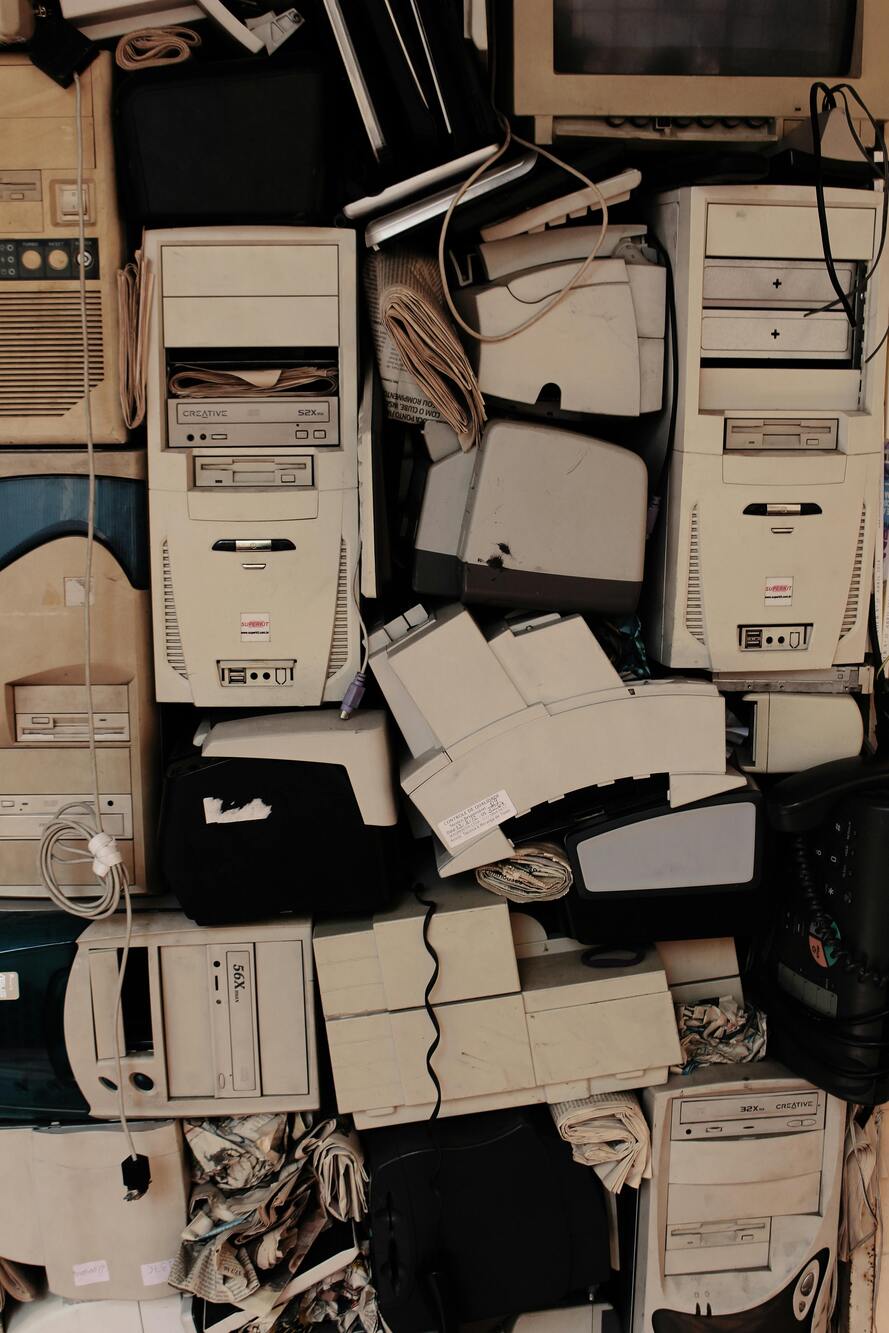
WEEE Waste Collection & Disposal
Business Waste arranges WEEE recycling and collection for businesses across the UK with no hidden fees. We collect computers, monitors, electrical appliances, IT equipment, lamps, refrigeration equipment and other end-of-life electrical and electronic items.
WEEE bins, cages, crates or larger containers can be provided, with one-off or scheduled collections for your business. Tell us what equipment you have, how much there is and whether it contains batteries, refrigerants or data that needs secure removal.
Once classified, your WEEE waste is recycled through the appropriate authorised treatment route. Some WEEE requires specialist handling because it contains hazardous substances, batteries, refrigerants or persistent organic pollutants.
 Collections in the last 7 days

Get a free quote
Get a free WEEE recycling quote
- Free quote within 1 hour
- Price-match guarantee
- WEEE waste bins provided
- Flexible agreements for your business
How WEEE Waste Collection Works
-
Get your free quote
Tell us what equipment you need collecting, how much there is and whether it’s a one-off or regular collection.
-
WEEE storage containers delivered
We’ll confirm whether the equipment needs a wheelie bin, cage, crate, bulk container or specialist collection based on its size and classification. We can supply WEEE bins, crates, cages or larger containers depending on your site space.
-
Fill and store separately
Keep WEEE items separate from general and mixed recycling. Our team can advise on weight limits, storage, and segregation.
-
Collection and compliant recycling
Collections are arranged through registered waste carriers. The equipment is transferred through the appropriate authorised treatment route, with the required waste transfer or hazardous-waste paperwork provided.
Commercial WEEE disposal with Business Waste
No-hassle WEEE collections
- Only pay for collections
- Regular or one-off collections
- One account for single or multiple site management
WEEE Compliance and Sustainability
- Collection aligned with the UK WEEE Regulations 2013
- Licensed waste carriers handle all WEEE waste
- Materials recovered and diverted from landfill
We already support 30,000+ UK organisations with waste collections, including electrical waste and specialist streams.
WEEE waste management tailored to your business
We’ll help set up the right mix of WEEE bins, containers and collection frequencies for your site.
Sectors we support
- Offices and call centres
- Hospitality and retail
- Healthcare and medical environments
- Manufacturers and logistics
- Education and public sector sites
WEEE items we collect
Under the WEEE Regulations 2013, all electrical and electronic equipment falls into one of six categories.
- Temperature exchange equipment (fridges, freezers, air conditioning units, heat pumps, and dehumidifiers): These require specialist disposal due to refrigerant gases and must not go in general waste skips.
- Screens, monitors, and equipment with screens (televisions, computer monitors, laptops, tablets, and smartphones): Contains valuable materials including rare earth metals and precious metals, as well as hazardous components including lead and mercury in older CRT screens.
- Lamps (fluorescent tubes, compact fluorescent lamps, LED strip lighting, and energy-saving bulbs): See our dedicated fluorescent tube recycling guidance.
- Large equipment (washing machines, tumble dryers, dishwashers, industrial printers, photocopiers, vending machines, and large medical devices): May require bulk collection or skip hire depending on volume.
- Small equipment (phones, tablets, microwaves, electric hand tools, medical monitoring devices, electric toys, and kitchen appliances): Suitable for WEEE bins and sacks.
- Small IT and telecoms equipment (desktop computers, laptops, keyboards, mice, routers, modems, printers, cables, hard drives, and memory cards).
If it plugs in, charges, lights up or takes a battery, it’s probably WEEE, and we can usually arrange a collection. Most end-of-life electrical or electronic equipment falls within WEEE controls, although some products are specifically excluded and loose batteries follow separate waste rules.

IT asset disposal and data destruction for businesses
For businesses disposing of computers, laptops, servers, tablets, and smartphones, data security is as important as environmental compliance. Disposal of IT equipment can lead to GDPR breaches if personal or business data is not securely erased before the device is recycled.
We’ll arrange secure IT asset disposal (ITAD) services for your business, including: certified data wiping to NIST 800-88 / HMG Infosec Standard 5 specifications; physical destruction of hard drives and storage media where required; and a Certificate of Data Destruction (CDD) confirming that data has been securely erased or destroyed.
Our ITAD service covers computers, servers, laptops, tablets, smartphones, hard drives, USBs, and all other data-bearing equipment. You’ll receive full Duty of Care documentation for peace of mind.
WEEE recycling: how we process your E-Waste
WEEE recycling is the treatment of waste electrical and electronic equipment. The process results in reusable equipment or components that can be recovered and separated for recycling.
Electrical equipment is dismantled at approved treatment facilities using processes designed to recover value and remove risks:
- Hazardous elements removed safely, e.g. refrigerants, mercury lamps, batteries
- Components dismantled by material type
- Metals are shredded, melted, and reused
- Plastics are granulated and reformed into new products
- Glass from screens is crushed and reprocessed
- Secure data handling removes confidential information if required
WEEE containing persistent organic pollutants needs a different treatment route because POPs-containing material cannot simply be recycled. This keeps useful materials in circulation and helps stop electrical waste from entering general waste.
WEEE bins for commercial electrical waste
Store WEEE separately in the right bin, crate, cage or container.
Common options include:
- WEEE wheelie bins: For smaller IT equipment and loose electrical items that fit safely within the container.
- WEEE cages: Useful for mixed electrical equipment that needs to remain visible and easy to sort.
- WEEE crates: For screens, IT equipment or other items requiring more controlled storage.
- Large containers: For bulky electrical equipment where the specific waste stream and collection route allow.
Multiple bins and sizes are available for sites producing higher volumes of IT or kitchen waste.
-
240-Litre Electronic Waste Bins
Suitable for smaller loose electrical items and IT equipment that fit safely inside.

-
WEEE Skips
WEEE skips can suit large electrical equipment. However, refrigerators, freezers and other cooling equipment may require a separate specialist collection to prevent damage to refrigerant systems.
-
Roll On Roll Off WEEE Skips
RoRo skips are large containers which can hold high volumes of electronic waste. If your site has the required space, a RoRo may be a viable option.


Read Our Customer Reviews
Efficient communication
We have worked alongside Business Waste for quite a few months now, and their efficiency with communication and resolving queries is great. Allie especially is a pleasure to liaise with. Great company from a B2B perspective
Flo Bolton-Smith
The real definition of service
The service received was simply outstanding. Business Waste gave good advice and a demonstration of a willingness to help and get me a solution.
Gregory Harrand
Great company
Great company to deal with, special thanks to Danielle who is always on the ball and sort any issues out instantly with proactive involvement with follow up phone calls and emails. I would recommend her to be the next PM to get things done, oh and as a company to deal with all the waste needs for your business.
Top Deals Online
Excellent service set up process
I was impressed by the speed of setting up the service. I made a single phone call to Business Waste and all the necessary paperwork was done efficiently.
Yahya Saeed
Electronic waste compliance legal requirements
WEEE rules businesses need to follow:
The Waste Electrical and Electronic Equipment Regulations 2013, as amended (2025), set rules for producers, distributors and the collection and treatment of WEEE.
Key obligations for businesses disposing of WEEE include:
- WEEE cannot be mixed with general business waste or household waste. It must be kept separate and collected by a registered WEEE carrier.
- Businesses must use an EA-registered (Environment Agency) WEEE carrier for all collections.
- WEEE must follow an authorised collection and treatment route. Where producer-responsibility evidence is required, approved authorised treatment facilities (AATFs) and approved exporters have specific roles in the WEEE compliance system, with dismantling, processing and recycling carried out in line with recovery targets.
- Non-hazardous WEEE generally uses a Waste Transfer Note or equivalent record as proof of Duty of Care compliance, while hazardous WEEE requires the relevant hazardous-waste documentation.
Our collections and disposal routes adhere to all of these guidelines. Use Business Waste for one invoice and one point of contact for all of your waste collections.
Information correct as of 2026. Regulations can change, so it’s worth checking the latest guidance when setting up WEEE collections.

-
Bins provided
-
E-waste recycling
-
Tailored quote
-
Free duty of care
-
1 month’s free collections





Get a fast and free quote
Get a fast FREE quote for WEEE waste disposal
- Free quote within 1 hour
- WEEE waste assessed
- WEEE waste bins provided
- Nationwide UK coverage
WEEE waste disposal FAQs
-
What does WEEE stand for?
WEEE stands for Waste Electrical and Electronic Equipment, AKA any electrical or electronic device at the end of its life. Under the WEEE Regulations 2013, WEEE must not be placed in general waste and must be collected by an authorised WEEE carrier for recycling or reprocessing at an Approved Authorised Treatment Facility.
-
How do I dispose of WEEE waste?
We can provide WEEE bins and arrange collection through registered carriers, with the right paperwork included.
-
What is classed as WEEE waste?
UK law groups electrical and electronic equipment into categories defined in the WEEE Regulations 2013 (as amended). These cover everything from IT equipment and medical devices to small household appliances and lighting. Loose batteries follow separate processes under the UK Waste Batteries and Accumulators Regulations.
-
What are the WEEE regulations?
The WEEE Regulations 2013 (as amended) require reuse, recycling, and proper treatment of electrical items wherever possible. This helps prevent landfill overcrowding and reduces hazardous risks.
-
Where does WEEE waste go?
To Approved Authorised Treatment Facilities where equipment is dismantled, hazardous components are removed, and as many materials as possible are recovered and recycled.
See our E-waste Facts & Stats page for more information.
-
How can I reduce e-waste?
Repair and reuse first, donate working equipment, choose upgrade cycles responsibly, and ensure defaults like secure data removal before disposal.
If you need help with reduction planning, our team is here to advise.
-
Are businesses legally required to use a licensed WEEE carrier?
Yes. Under the WEEE Regulations 2013, businesses must ensure that waste electrical and electronic equipment is collected by a carrier registered with the Environment Agency and transported to an Approved Authorised Treatment Facility (AATF).
Placing WEEE in general waste is illegal and can result in fines and enforcement action from the Environment Agency.
-
Can computers be put in general waste?
No. Computers, laptops, phones, tablets, and all other IT equipment are classified as WEEE under the WEEE Regulations 2013 and must not be placed in general waste bins or skips.
Additionally, computers and phones containing personal or business data must have their data securely erased or destroyed before disposal to comply with GDPR. Business Waste Ltd provides secure IT asset disposal (ITAD) with certified data destruction for all data-bearing devices.
-
How much does WEEE collection cost for businesses?
WEEE collection costs depend on the type and volume of equipment, collection frequency, and your location. We offer free quotes for WEEE collection; simply contact our in-house team or use the quote form on this page to get a price within one hour.

WEEE waste collection across the UK
And arrange your free bin and your collection
- Armagh
- Bolton Waste Management
- Brighton & Hove Waste Management
- Bristol Waste Management
- Canterbury Waste Management
- Cardiff Waste Management
- Carlisle Waste Management
- Chelmsford Waste Management
- Chester Waste Collection
- Chichester Waste Collections
- Commercial Waste Birmingham
- Commercial Waste Collection Edinburgh
- Commercial Waste Collection London
- Coventry Waste Management
- Durham Waste Management
- Ely Waste Disposal
- Glasgow Waste Management
- Hull Waste Management
- Kent Waste Management
- Lancaster Waste Management
- Lichfield Waste Disposal
- Liverpool Waste Management
- Luton Waste Management
- Newport Waste Management
- Oxford Waste Management
- Perth
- Peterborough Waste Management
- Preston Waste Management
- Reading Waste Management
- Ripon Waste Collection
- Salford Waste Management
- Slough Waste Disposal
- Southend Waste Disposal Services
- St Albans Waste Disposal
- Stirling Waste Management
- Stockport Waste Collection
- Swansea Waste Management
- Truro Waste Collection
- Wakefield Waste Management
- Warrington Waste Management
- Waste Collection Bath
- Waste Collection Middlesbrough
- Waste Disposal Inverness
- Waste Management Aberdeen
- Waste Management Aldershot
- Waste Management Alfreton
- Waste Management Ashington
- Waste Management Ashton-under-Lyne
- Waste Management Aylesbury
- Waste Management Barnsley
- Waste Management Barnstaple
- Waste Management Basildon
- Waste Management Basingstoke
- Waste Management Bedford
- Waste Management Bedfordshire
- Waste Management Bedworth
- Waste Management Belfast
- Waste Management Bellshill
- Waste Management Belper
- Waste Management Bexhill-on-Sea
- Waste Management Bicester
- Waste Management Bishop Auckland
- Waste Management Bishop’s Stortford
- Waste Management Blackburn
- Waste Management Blackpool
- Waste Management Blyth
- Waste Management Bognor Regis
- Waste Management Borehamwood
- Waste Management Bournemouth
- Waste Management Bradford
- Waste Management Brent
- Waste Management Bridgwater
- Waste Management Bridlington
- Waste Management Brighouse
- Waste Management Broadstairs
- Waste Management Bromley
- Waste Management Bromsgrove
- Waste Management Burnley
- Waste Management Burntwood
- Waste Management Bury
- Waste Management Bury St Edmunds
- Waste Management Buxton
- Waste Management Cambridge
- Waste Management Cannock
- Waste Management Canvey Island
- Waste Management Castleford
- Waste Management Caterham
- Waste Management Chatham
- Waste Management Cheltenham
- Waste Management Chesterfield
- Waste Management Chippenham
- Waste Management Christchurch
- Waste Management Clevedon
- Waste Management Coalville
- Waste Management Colchester
- Waste Management Colne
- Waste Management Congleton
- Waste Management Cornwall
- Waste Management Cramlington
- Waste Management Crawley
- Waste Management Croydon
- Waste Management Cumbria
- Waste Management Dartford
- Waste Management Derby
- Waste Management Devon
- Waste Management Dewsbury
- Waste Management Doncaster
- Waste Management Dorset
- Waste Management Dover
- Waste Management Droitwich
- Waste Management Dronfield
- Waste Management Dudley
- Waste Management Dumfries-Galloway
- Waste Management Dundee
- Waste Management East Lothian
- Waste Management East Riding of Yorkshire
- Waste Management Eastbourne
- Waste Management Ellesmere Port
- Waste Management Enfield
- Waste Management Essex
- Waste Management Evesham
- Waste Management Exeter
- Waste Management Falkirk
- Waste Management Falmouth
- Waste Management Fife
- Waste Management Folkestone
- Waste Management Frome
- Waste Management Gateshead
- Waste Management Gillingham
- Waste Management Gloucester
- Waste Management Grantham
- Waste Management Gravesend
- Waste Management Grimsby
- Waste Management Guisborough
- Waste Management Hailsham
- Waste Management Halesowen
- Waste Management Halifax
- Waste Management Hampshire
- Waste Management Harlow
- Waste Management Harrogate
- Waste Management Hastings
- Waste Management Havant
- Waste Management Hemel Hempstead
- Waste Management Hereford
- Waste Management Herne Bay
- Waste Management High Wycombe
- Waste Management Hornchurch
- Waste Management Horsham
- Waste Management Houghton Le Spring
- Waste Management Hounslow
- Waste Management Huddersfield
- Waste Management Huntingdon
- Waste Management Ilford
- Waste Management Ilkeston
- Waste Management in Tewkesbury
- Waste Management Ipswich
- Waste Management Keighley
- Waste Management Kendal
- Waste Management Kettering
- Waste Management Kidderminster
- Waste Management Kingston-Upon-Thames
- Waste Management Kingswinford
- Waste Management Knutsford
- Waste Management Lancashire
- Waste Management Leeds
- Waste Management Leicester
- Waste Management Leigh
- Waste Management Leighton Buzzard
- Waste Management Letchworth Garden City
- Waste Management Leyland
- Waste Management Leyton
- Waste Management Lincoln
- Waste Management Lincolnshire
- Waste Management Loughborough
- Waste Management Lowestoft
- Waste Management Maidenhead
- Waste Management Maidstone
- Waste Management Malvern
- Waste Management Manchester
- Waste Management Mansfield
- Waste Management Margate
- Waste Management Market Harborough
- Waste Management Melton Mowbray
- Waste Management Milton Keynes
- Waste Management Morecambe
- Waste Management Newark-on-Trent
- Waste Management Newbury
- Waste Management Newcastle upon Tyne
- Waste Management Newton Aycliffe
- Waste Management Norfolk
- Waste Management North Shields
- Waste Management North Yorkshire
- Waste Management Northampton
- Waste Management Northwich
- Waste Management Norwich
- Waste Management Nottingham
- Waste Management Oldham
- Waste Management Oxfordshire
- Waste Management Penzance
- Waste Management Plymouth
- Waste Management Poole
- Waste Management Portsmouth
- Waste Management Ramsgate
- Waste Management Redditch
- Waste Management Rochdale
- Waste Management Romford
- Waste Management Rossendale
- Waste Management Rotherham
- Waste Management Rugby
- Waste Management Rushden
- Waste Management Salisbury
- Waste Management Sandbach
- Waste Management Scarborough
- Waste Management Scottish Borders
- Waste Management Scunthorpe
- Waste Management Sevenoaks
- Waste Management Sheffield
- Waste Management Shrewsbury
- Waste Management Shropshire
- Waste Management Sittingbourne
- Waste Management Skegness
- Waste Management Somerset
- Waste Management South Lanarkshire
- Waste Management South Shields
- Waste Management Southampton
- Waste Management St Helens
- Waste Management Stafford
- Waste Management Staffordshire
- Waste Management Stoke-on-Trent
- Waste Management Stroud
- Waste Management Suffolk
- Waste Management Sunderland
- Waste Management Surrey
- Waste Management Sussex
- Waste Management Sutton
- Waste Management Sutton Coldfield
- Waste Management Sutton-in-Ashfield
- Waste Management Swindon
- Waste Management Tamworth
- Waste Management Taunton
- Waste Management Telford
- Waste Management Torquay
- Waste Management Tunbridge Wells
- Waste Management Walsall
- Waste Management Wandsworth
- Waste Management Warminster
- Waste Management Watford
- Waste Management Wednesbury
- Waste Management Welwyn Garden City
- Waste Management West Bromwich
- Waste Management West Midlands
- Waste Management West Yorkshire
- Waste Management Weymouth
- Waste Management Whitstable
- Waste Management Wigan
- Waste Management Woking
- Waste Management Wolverhampton
- Waste Management Worcester
- Waste Management Worksop
- Waste Management Yorkshire
- Winchester Waste Collection
- Worthing Waste Collection
- Wrexham Waste Collection
- York Waste Management
Published 10th April 2022 by JackBrayshaw. Last modified 8th October 2026