
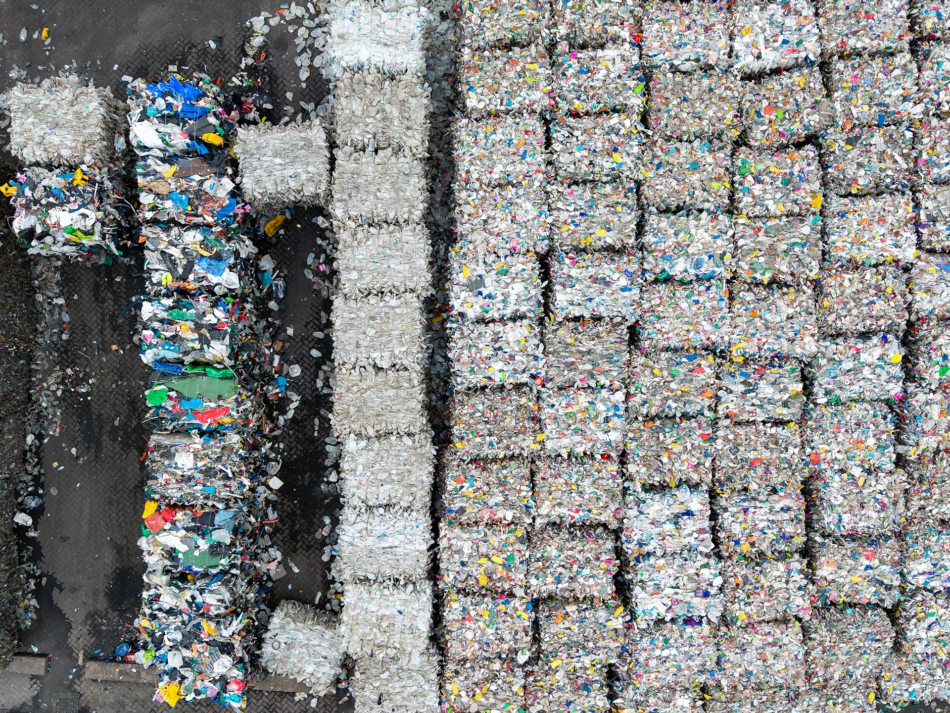
PVC Recycling
PVC waste can build up quickly on construction sites, during refurbishments and in manufacturing. Common examples include pipes, window and door profiles, flooring, cable coverings, signage and production offcuts.
Business Waste arranges PVC recycling across the UK for suitable commercial waste. We can provide the right bins or containers, arrange scheduled collections through licensed waste carriers and supply the required Duty of Care paperwork. The collection setup depends on whether your PVC is rigid, flexible, mixed with other materials or contaminated.
One-off or ad hoc collections are also available if required. Pass on details to our team and they’ll assess your options.

Get a free quote
Get a fast FREE quote for PVC recycling
- Free quote within 1 hour
- Commercial PVC waste covered
- FREE bins and delivery
- We cover all of the UK
What PVC waste can we collect?
We can collect a wide range of PVC plastic waste. For example:
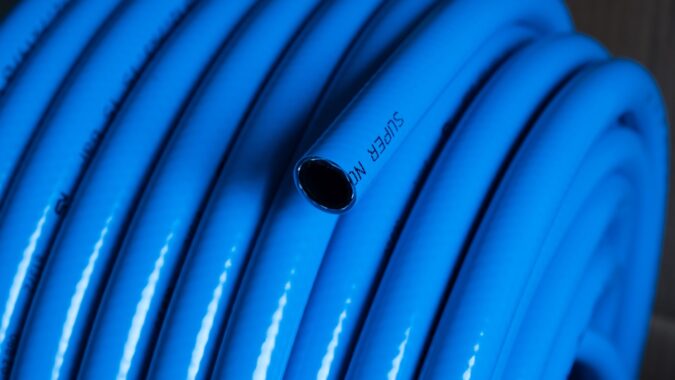
- PVC and uPVC pipes
- Window and door profiles
- Guttering and drainage components
- Vinyl flooring and suitable floor coverings
- PVC signage and sheets
- Cable coverings and suitable electrical PVC
- Construction and refurbishment offcuts
- Automotive trim and suitable interior components
- Clean manufacturing scrap
- Other identifiable rigid or flexible PVC
PVC containing other materials, hazardous residues, or clinical contamination may need a specialist collection route. We will confirm what can be accepted before your collection starts. Collections can be arranged daily, weekly, fortnightly, or on another schedule depending on your setup.
How commercial PVC recycling works
-
Tell us what PVC you produce
Let us know whether you have pipes, profiles, flooring, flexible PVC, manufacturing scrap or another material, along with the volume of each type.
-
Agree the storage setup
We recommend suitable bins or larger containers based on the size, weight and type of PVC.
-
Keep the load suitable for recycling
Store accepted PVC away from general waste, food, liquids and hazardous materials. Some PVC streams may need to be kept separate from other plastics.
-
Arrange collection
Licensed waste carriers collect the waste on the agreed schedule and transfer it to an appropriate treatment route.
-
Receive the relevant records
Business Waste provides the required Duty of Care paperwork and Waste Transfer Notes for non-hazardous commercial waste collections.
What is PVC?
Polyvinyl chloride (PVC) is a plastic polymer identified by resin code 3. It is produced in rigid and flexible forms. Rigid PVC or uPVC is widely used for pipes, windows, doors and building products, while flexible PVC appears in flooring, cables and other products that contain plasticisers.
Many products are made from PVC due to its density, hardness, strength, and affordability, including:
- Pipes
- Cables
- Flooring
- Window and door profiles
- Mattress and bed covers
- Blister packs
- Car interior door panels
- Mud flaps
- Clothing and shoes
- PVC decking such as Elements Advanced
Is PVC recyclable?
Yes. PVC is recyclable, including many rigid and flexible PVC products. It is identified by plastic resin code 3. Mechanical recycling is the main route used for PVC today, although the most suitable process depends on the product, additives and material quality.
Businesses should not assume every PVC product can be put in the same recycling container. Clean pipes, profiles and manufacturing scrap may have different requirements from flooring, cables, composites or contaminated material.

How can PVC be recycled?
Most recyclable PVC is mechanically processed. It is sorted, cleaned and reduced into smaller pieces before being reprocessed into material that can be used in new PVC products. Pipes, window profiles and other relatively consistent PVC streams are particularly suited to this type of recycling.
Why is recycling PVC important?
Recycling suitable PVC keeps a durable material in use and can create new pipes, profiles, flooring and other products. PVC is already recycled into new products across established European collection and recycling schemes.
For businesses, separating recyclable PVC can also reduce the amount of material entering residual waste and provide a clearer route for bulky construction or manufacturing scrap.
Who needs to recycle PVC?
Most businesses create some type of PVC plastic waste that needs recycling, as PVC is the third-most used plastic type in the world. It could be small items like packaging or plastic gloves (that aren’t contaminated), to larger things such as window frames, pipes, and cables. PVC can be recycled alongside other plastic waste.
Some of the main businesses and industries that benefit from PVC recycling include:
-
Construction
Waste PVC pipes, cables, guttering, flooring, window and door frames

-
Healthcare
Non-contaminated gloves, mattress covers, overshoes, and floor coverings. Used blood bags, gloves and other contaminated items require the appropriate clinical waste route.
-
Automotive
Seat coverings, sun visors, instrument panels, and mud flaps



Arrange PVC plastic waste collection
Tell us what PVC your organisation produces, how much you have and where it needs collecting. We’ll confirm the suitable container, collection schedule and recycling route.
Read Our Customer Reviews
Efficient communication
We have worked alongside Business Waste for quite a few months now, and their efficiency with communication and resolving queries is great. Allie especially is a pleasure to liaise with. Great company from a B2B perspective
Flo Bolton-Smith
The real definition of service
The service received was simply outstanding. Business Waste gave good advice and a demonstration of a willingness to help and get me a solution.
Gregory Harrand
Great company
Great company to deal with, special thanks to Danielle who is always on the ball and sort any issues out instantly with proactive involvement with follow up phone calls and emails. I would recommend her to be the next PM to get things done, oh and as a company to deal with all the waste needs for your business.
Top Deals Online
Excellent service set up process
I was impressed by the speed of setting up the service. I made a single phone call to Business Waste and all the necessary paperwork was done efficiently.
Yahya Saeed
PVC recycling FAQs
-
How is PVC made?
There are four main steps to making PVC:
- Salt and hydrocarbon resources are extracted for the raw materials to create PVC.
- Electrolysis of salt water produces chlorine. Ethylene is obtained from oil, which is combined with chlorine to form vinyl chloride monomer (VCM).
- Molecules of VCM are polymerised to create polyvinyl chloride (PVC) resin.
- Additives are introduced and the PVC polymer is blended with other materials to produce different types of PVC.
-
How long does PVC take to decompose?
PVC can take more than 450 years to decompose. However, the exact length of time depends on the type and size of PVC products. Thinner PVC wrap may take less time to decompose compared to a thick PVC pipe. Fungus or thermal degradation can biodegrade PVC – as it’s resistant to chemical breakdown.
-
Can uPVC be recycled?
Recycling uPVC is possible. Unfortunately, research has found that 83% of uPVC waste goes to landfill even though it’s recyclable. uPVC recycling follows a mechanical process similar to regular PVC recycling. Other materials must be removed before recycling uPVC to avoid contamination, then it can be recycled into new window frames and other uPVC products.
-
How many times can uPVC be recycled?
uPVC can be recycled up to 15 times without losing quality or structural integrity. As uPVC can last for between 30 and 50 years this significantly expands the lifetime of the material. It also saves on the resources and energy required to create new uPVC, having a positive environmental impact.
-
Is uPVC biodegradable?
uPVC is not biodegradable. It’s used for window and door frames because it doesn’t decompose and is highly weather resistant. Over time it will start to degrade and experience wear and tear. Most uPVC windows need replacing after 20 to 30 years but they don’t fully biodegrade, which is why recycling uPVC is important.

Get a fast and free quote
Get a fast FREE quote for plastic waste collection
- Free quote within 1 hr
- Any type of waste plastic
- FREE bins and delivery
- We cover all of the UK
Published 30th June 2023 by Mark Hall. Last modified 23rd September 2026