
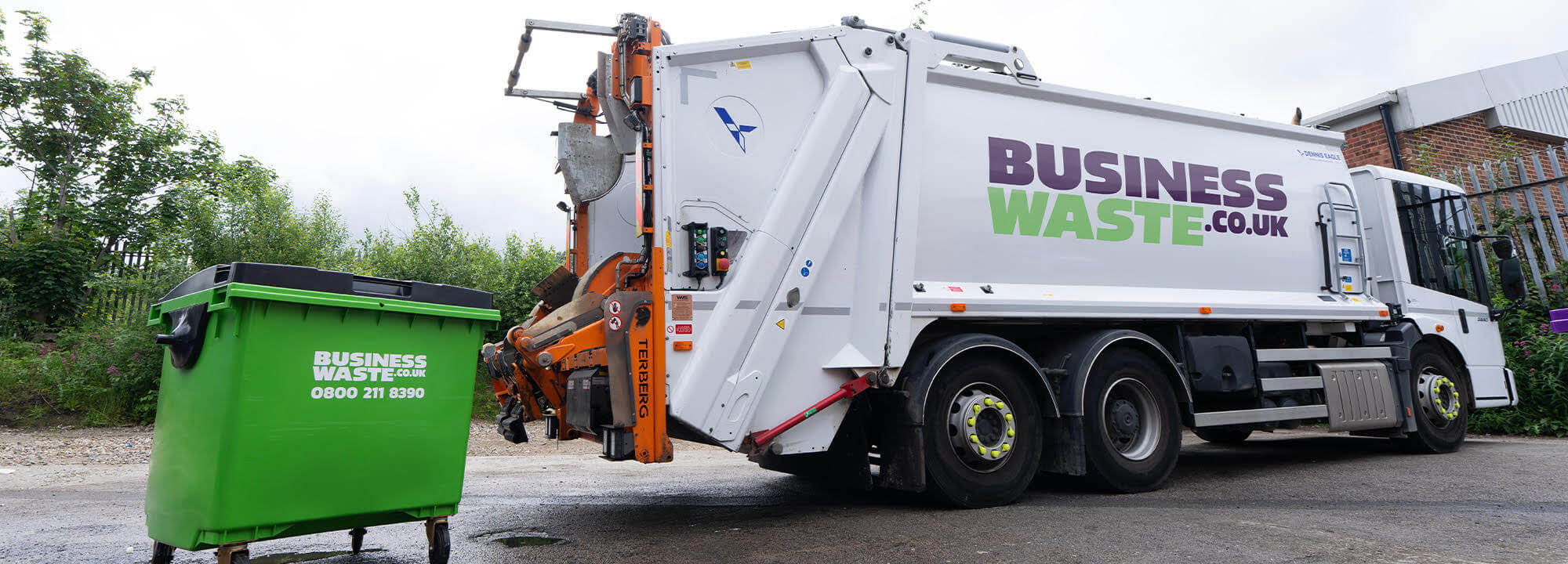
Commercial Food Waste Bins Collection & Hire
Business Waste can provide free commercial food waste bins for restaurants, cafés, hotels, schools, care homes, retailers and other businesses across the UK.
Standard food waste bins are supplied without rental or delivery charges. You only pay for collection, with daily, weekly or fortnightly services available. We also offer one-off or ad hoc food waste collections if you’re catering for a large event.
Tell us how much food waste your business produces, the space available for storage and how often you need it collected. We’ll confirm the right bin size and collection schedule with no hidden charges.

Get a free quote
Get a free quote for food waste collections
- Fast free quote
- Flexible agreements for your business
- Free food waste bins
- Price-match guarantee
Which commercial food waste bin does my business need?
The right food waste bin depends on how much waste you produce, your available storage space and collection frequency. Food waste can become heavy, so the container’s weight limit matters as well as its volume.
We can provide an indoor food waste bin for your commercial kitchen to capture scraps and peelings at the point of production. Transfer the contents to a large outdoor food waste bin to help keep preparation areas clean and hygienic.
-
120 litre food waste bins
A compact two-wheel bin for businesses producing smaller amounts of food waste or where outdoor storage space is limited.

-
240 litre food waste bins
The standard food waste wheelie bin for businesses producing regular volumes of kitchen, prep or plate waste. It can hold up to 80kg of food waste.
-
Food waste bags
Suitable for smaller volumes or internal collection points where staff need to move food scraps from kitchens, counters or preparation areas to the main outdoor food waste container.


How commercial food waste bin collection works
-
Choose your bin
Tell us how much food waste your business produces and the space available for storing containers.
-
Receive the bins
Standard food waste bins are delivered without rental or delivery charges where available.
-
Fill the correct food waste stream
Put agreed food scraps into the bin and keep packaging, general waste and other recycling separate.
-
We collect on schedule
We can arrange daily, weekly or fortnightly collections through registered waste carriers, depending on your location and how quickly the bins fill.
Which businesses use commercial food waste bins?
A wide range of businesses require a food waste bin. These commonly include:
- Restaurants and cafés: prep waste and customer plate waste
- Hotels and pubs: kitchen, buffet and catering waste
- Schools and care homes: meal preparation and leftovers
- Offices: staff kitchens and canteens
- Retailers: spoiled or expired food removed from packaging
- Food manufacturers: production scraps and rejected ingredients
What can go in a commercial food waste bin?
A food waste bin should be used solely for waste food items. Keep liquids, packaging, or garden waste separate, unless your waste carrier confirms they are accepted. Using a bin for food waste helps segregate it from other materials. Keeping food waste separate helps reduce contamination so it can be sent to an appropriate recycling route such as anaerobic digestion or composting.
Remove packaging before placing food in the bin unless your collection has been specifically set up for packaged food and depackaging.
Packaging labelled biodegradable or compostable should not automatically go in the food waste bin. Food waste caddy liners are an exception where the collector accepts them.
Some common things you can put in a food waste bin include:
- Fruit and vegetables – raw and cooked, peelings and cores
- Meat and fish – bones, raw, and cooked meat
- Dairy – cheese, yoghurt, and butter
- Bread, pasta, and rice
- Eggs and eggshells
- Tea and coffee – tea bags, coffee grounds, and granules
- Plate waste and leftovers
- Food preparation waste
- Bakery waste
- Spoiled ingredients
Arrange commercial food waste bin collection
Tell us how much food waste your business produces, which bin size you need and how often you want it collected. We’ll provide a quote based on the number of containers, collection frequency and business location. Manage all your waste through one invoice and one point of contact.
Your dedicated account manager can help with collection queries and changes to your food waste bin sizes or collection schedule as your business needs change. Get a free quote for food waste collections – call 0800 211 8390 or contact us online today.
Read Our Customer Reviews
Efficient communication
We have worked alongside Business Waste for quite a few months now, and their efficiency with communication and resolving queries is great. Allie especially is a pleasure to liaise with. Great company from a B2B perspective
Flo Bolton-Smith
The real definition of service
The service received was simply outstanding. Business Waste gave good advice and a demonstration of a willingness to help and get me a solution.
Gregory Harrand
Great company
Great company to deal with, special thanks to Danielle who is always on the ball and sort any issues out instantly with proactive involvement with follow up phone calls and emails. I would recommend her to be the next PM to get things done, oh and as a company to deal with all the waste needs for your business.
Top Deals Online
Excellent service set up process
I was impressed by the speed of setting up the service. I made a single phone call to Business Waste and all the necessary paperwork was done efficiently.
Yahya Saeed
Waste food bin FAQs
-
Can you put tea bags in food waste bins?
You can put tea bags in food waste bins. Many modern tea bags are made from biodegradable materials that will decompose naturally, so they’re suitable for composting. Some tea bags may contain microplastics or compostable bioplastics. It’s still better to dispose of tea bags with food waste rather than general waste though.
-
Can you put eggshells in food waste bins?
You can put eggshells in a food waste bin. They will break down over time depending on their size. Whole egg shells may take years to fully biodegrade but if you break them into smaller pieces it can take a few months to a year.
-
How do you stop maggots in a food waste bin?
Food waste bins can attract pests such as maggots when food starts to rot. This can be unpleasant and a health hazard. These are a few ways to prevent and reduce the chance of maggots in your food waste bin:
- Clean and dry out the food waste bin frequently and rinse with disinfectant and water
- Regularly empty your waste food bin, which should get rid of any maggots
- Keep food waste bins out of direct sunlight as this speeds up the rate of rotting food

Get a fast and free quote
Get a fast FREE quote for food bin collection
- Free quote within 1 hr
- Any type of waste food
- FREE bins and delivery
- We cover all of the UK
Published 29th January 2025 by Mark Hall. Last modified 9th October 2026