Infectious Waste Disposal
Business Waste arranges infectious waste disposal and collection for healthcare providers, laboratories, veterinary practices, care organisations and other UK businesses.
We collect infectious dressings, PPE, wipes, swabs and other clinical waste that contains microorganisms or toxins capable of causing disease. Appropriate infectious waste containers can be supplied, with one-off, ad hoc or scheduled collections available.
Tell us what waste your organisation produces, where it comes from and whether it also contains medicines, chemicals or sharps. We’ll confirm the correct waste stream, container and treatment route.
 Collections in the last 7 days

Get an infectious waste disposal quote
Get a fast FREE quote for your infectious waste disposal
- Free quote within 1 hour
- Infectious waste assessed
- FREE bins and delivery
- Coverage across the UK
How does infectious waste disposal work?
-
Tell us what infectious waste you produce
Let us know what the waste is, the volume and where it comes from. Tell us if it contains medicines, chemicals or sharps, as these need different containers and treatment routes.
-
Receive the correct bags and containers
We confirm whether you need orange infectious waste bags, yellow bags for infectious waste with medicinal or chemical contamination, or a specialist rigid container such as a sharps bin.
-
Keep each clinical waste stream separate
Place only the agreed waste in each container and keep infectious waste separate from offensive waste, medicines, cytotoxic/cytostatic materials and other specialist clinical streams.
-
Arrange collection and treatment
Collections are arranged through registered waste carriers on the agreed schedule. The waste is transferred to an authorised healthcare waste facility for the appropriate treatment or incineration route.
What is infectious waste?
Infectious waste is healthcare or related waste known or reliably believed to contain microorganisms or toxins that could cause disease.
This can include clinical materials used while treating a patient or animal with a known or suspected infection, such as contaminated dressings, swabs, PPE and other disposable treatment items.
What infectious waste can we collect?
Common examples of infectious waste we collect include:
- Dressings and bandages
- Swabs and gauze
- Disposable gloves
- Masks, aprons and other PPE
- Wipes and couch roll
- Disposable gowns
- Suitable infectious bedding
- Diagnostic and laboratory materials
- Other soft clinical waste assessed as infectious
- Sanitary waste
- Sharps
What bags and bins are used for infectious waste?
We provide you with access to a range of free bins to safely and securely store your infectious waste.
-
Yellow clinical waste bags
Yellow bags are used where infectious clinical waste is also contaminated with medicines or chemicals. Dressings, wipes, bandages, gloves and many more materials can qualify for this container if they are contaminated with medicines or hazardous chemicals.

-
Orange clinical waste bags
In England, orange bags are used for infectious clinical waste that is not contaminated with medicines or chemicals. Examples include: infectious dressings, infectious swabs, contaminated PPE.
-
Sharps bins
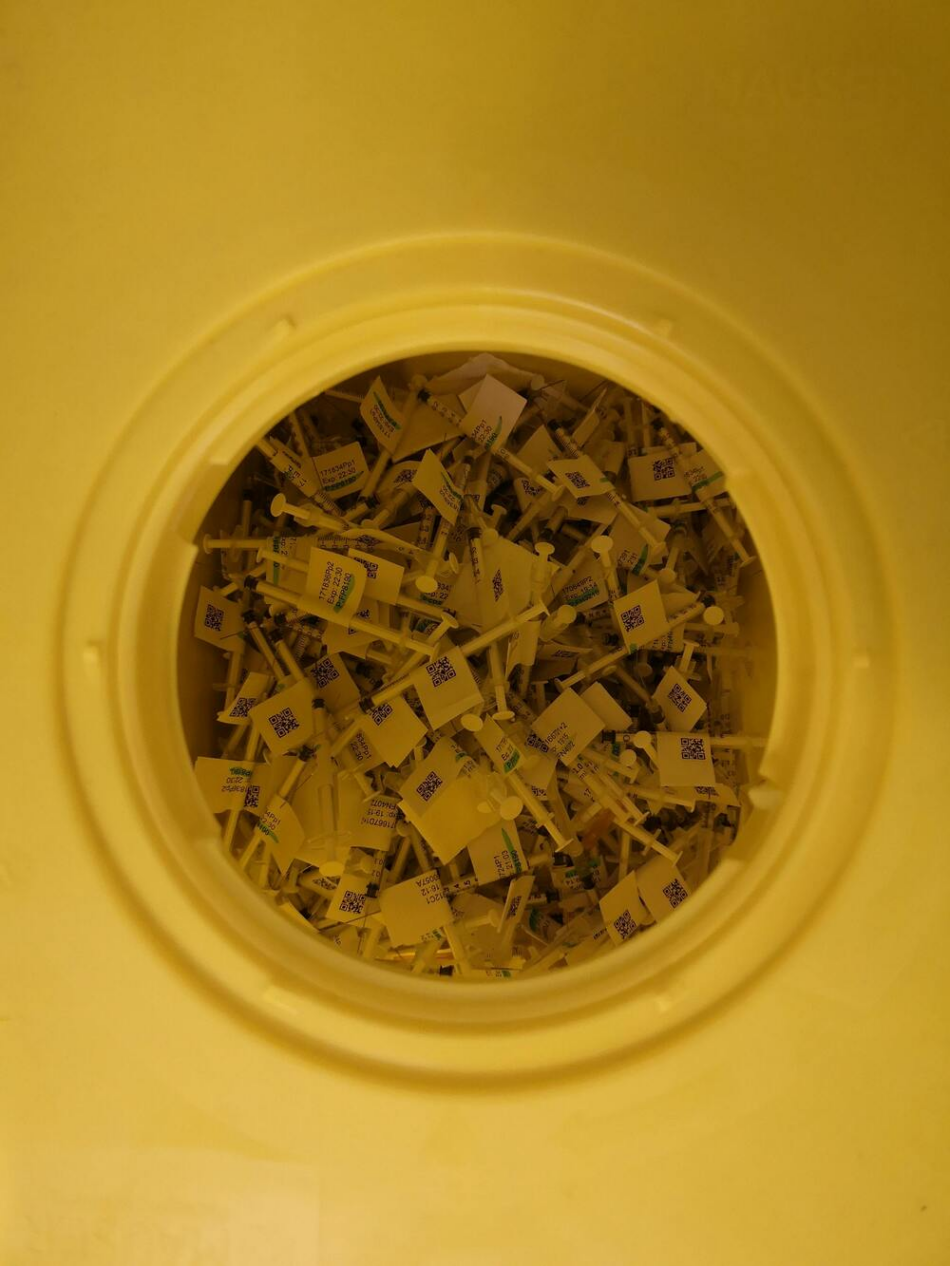
Sharps waste can be infectious and hazardous if not disposed of correctly, though it’s not always infectious. Use an orange lid for sharps not contaminated with medicine, a yellow lid for sharps contaminated with non-cytotoxic medicine, and a purple lid for sharps contaminated with cytotoxic or cytostatic medicine.
Which businesses need infectious waste disposal?
Many different facilities produce infectious waste. Organisations that deal with human or animal health are the main places that require disposal of infectious waste on a regular basis, but some places may need one-off or less frequent collections. The main places that produce infectious waste include:
-
Healthcare facilities
Dressings, swabs, PPE, diagnostic materials and other waste generated while treating patients with a known or suspected infection.
-
Nursing homes
Dressings, PPE and other healthcare waste can become infectious when produced during care for residents with a known or suspected infection. Routine nappies, incontinence products and hygiene waste are normally offensive rather than infectious where no infection risk exists.
-
Dental practices
Blood-contaminated clinical materials and suitable waste generated during treatment where an infection risk has been identified.
-
Laboratories
Samples, swabs, cultures, PPE and other materials contaminated with infectious biological material.
-
Veterinary practices
Dressings, swabs, PPE, bedding and other materials contaminated during treatment of animals with known or suspected infectious disease.
-
Blood banks
Blood-contaminated materials, test components and clinical waste where an infectious hazard is present.




How is infectious waste disposed of?
The disposal route depends on what the infectious waste contains.
Infectious-only clinical waste, such as the standard orange stream in England, can go through an approved alternative treatment process, or it may be incinerated.
Infectious waste contaminated with medicines or chemicals needs a different treatment route and is normally sent for incineration.
Alternative treatment can include validated thermal or steam-based processes that destroy the infectious hazard. Once the waste has been properly rendered safe, the resulting material follows the authorised downstream route for that treatment process.
Whenever infectious waste is collected from your business premises, you must make sure it’s disposed of safely and securely. It’s your legal obligation to do this so you comply with the standards set by the Environment Agency. You could face numerous fines and reputational damage for non-compliance.
Start by ensuring your waste is stored appropriately and rendered safe before disposal – which means removing any risks or threats. Then arrange collection by a licensed waste carrier for your infectious waste, so it’s removed and transported to an appropriate facility. Here the process for disposal of infectious waste will depend on its specific type.
How to store infectious waste
When infectious waste isn’t stored or handled appropriately, it poses a significant threat to anybody who may come into contact with it.
Your infectious waste management plan for storage should ensure that:
- You keep infectious waste in the correct clinical bag or rigid container and store it securely until collection.
- Bags and containers are protected from damage, kept separate from other clinical streams and not overfilled.
- Staff know which waste goes into each container so infectious waste is not mixed with offensive waste, medicines, chemicals or general waste.
There are two types of infectious waste bags used to store this type of waste. Your organisation should use these to help separate infectious and non-infectious waste and ensure proper disposal of each type.
These infectious waste bags are:
- Yellow infectious waste bags – for highly infectious and hazardous clinical waste.
- Orange infectious waste bags – used to store infectious waste that needs treating before disposal.
Infectious waste facts
According to the World Health Organisation (WHO), 85% of waste produced in healthcare facilities classes as general, non-hazardous. This means the remaining 15% of healthcare waste is either infectious, toxic, or radioactive as it’s classified as hazardous. That’s a significant amount, which further makes it clear the need to handle it appropriately.
In the UK the NHS produces 600,000 tonnes of waste per year – though only a small percentage of that is infectious waste. For example, the NHS disposes of 133,000 tonnes of plastic waste annually. However, the Royal College of Nursing (RCN) found in a report of bagged waste in health care settings that 60% was municipal, 39% infectious waste, and just 1% offensive waste.
There are various legislations in place that dictate how infectious waste should be handled, stored, transported, and disposed of within the UK. These include the Environmental Protection Act (1990) and the Carriage of Dangerous Goods Regulations.
Arrange infectious waste collection
Business Waste arranges infectious waste collections for organisations across the UK. Daily, weekly or fortnightly collections can be set up where available, with the number of bags and containers based on how much infectious waste your site produces.
Collections are arranged through registered waste carriers, and the waste is transferred to an authorised treatment facility.
Our licensed waste carriers provide peace of mind, all your waste will be handled and disposed of according to relevant legislations and with the environment in mind. Plus, you can speak to our friendly team for expert advice and guidance on all areas of waste disposal, including tips to reduce your waste effectively.
Get a free quote for infectious waste collection and disposal today. Call 0800 211 8390 or contact us online and see how much it could cost your organisation to safely remove any infectious waste, wherever your business is based in the UK.
Read Our Customer Reviews
Efficient communication
We have worked alongside Business Waste for quite a few months now, and their efficiency with communication and resolving queries is great. Allie especially is a pleasure to liaise with. Great company from a B2B perspective
Flo Bolton-Smith
The real definition of service
The service received was simply outstanding. Business Waste gave good advice and a demonstration of a willingness to help and get me a solution.
Gregory Harrand
Great company
Great company to deal with, special thanks to Danielle who is always on the ball and sort any issues out instantly with proactive involvement with follow up phone calls and emails. I would recommend her to be the next PM to get things done, oh and as a company to deal with all the waste needs for your business.
Top Deals Online
Excellent service set up process
I was impressed by the speed of setting up the service. I made a single phone call to Business Waste and all the necessary paperwork was done efficiently.
Yahya Saeed
Infectious waste disposal FAQs
-
Is animal waste classed as infectious waste?
Yes, any waste products contaminated by either human or animal blood or bodily fluids class as infectious waste. Any gloves, wipes, bedding, and other such items that come into contact with animal waste may be infectious and should be stored and disposed of like any human infectious waste products. Therefore, lots of waste produced in a vets could class as infectious waste.
-
What colour bag is used for infectious waste?
Either a yellow or orange coloured clinical waste bag is used to store and dispose of infectious waste. If you use an infectious waste bin such as a sharps bin to store needles, scalpels, and other sharp items contaminated with infectious waste, then you may need to use a sharps bin with a yellow lid.
Explore yellow clinical waste bags and orange clinical waste bags.
-
Which type of waste is highly infectious?
Highly infectious waste includes products contaminated with blood and bodily fluids that must be incinerated due to their highly infectious nature. They must be stored and disposed of in yellow clinical waste bags. Often these include products that have been in heavy, direct contact with an infectious person, such as contaminated:
- Medicated dressings
- Iodine dressings
- Swabs
- Wipes
-
What is soft infectious waste?
Orange waste bags are used to store soft infectious waste. This includes infectious and potentially infectious waste – items where there’s a risk of spreading infection but it may not have come into direct contact with an infectious substance. These can sometimes be treated or go into an autoclave that uses high pressure steam to disinfect such waste, rather than incinerate it.
Soft infectious waste can include:
- Gloves
- Gowns
- Masks
- Aprons
-
Is all clinical waste infectious?
No, lots of clinical waste is non-infectious. It may still be contaminated with blood or bodily fluids, but from someone who has no known or suspected infection. This can include similar products such as wipes, gloves, and swabs, but they should be stored separately from infectious waste for proper disposal.

Get a fast and free quote for infectious waste disposal
Get a fast FREE quote for infectious waste removal
- Free quote within 1 hour
- Infectious waste assessed
- FREE bins and delivery
- Coverage across the UK
Published 20th April 2022 by Mark Hall. Last modified 25th September 2026