
How Is Clinical Waste Disposed Of?
Key takeaways
- Clinical waste must be classified before it is collected, disposed of or recovered.
- Different clinical waste streams require different containers and treatment routes.
- Suitable infectious waste can be disinfected through alternative treatment such as autoclaving.
- Anatomical, medicinally contaminated and chemically contaminated waste normally requires
- incineration or another specifically permitted process.
- Cytotoxic and cytostatic waste requires high-temperature incineration at more than 1,000°C.
- Hazardous clinical waste movements require the correct consignment documentation.
- Clinical waste should remain securely contained and separated from incompatible waste before
- collection.
- Correct segregation at the point of production helps ensure waste reaches an appropriate treatment facility.
What is clinical waste?
Clinical waste is waste from healthcare or similar activities that presents particular infection, medicinal, chemical or other hazardous properties.
Environment Agency guidance defines clinical waste as including waste that:
- Contains viable microorganisms or their toxins that are known or reliably believed to cause disease
- Contains or is contaminated with biologically active medicines
- Includes sharps, body fluids or other biological material contaminated with hazardous substances
- Is waste of a similar nature generated by a non-healthcare activity.
Businesses must classify healthcare waste before it is collected, disposed of or recovered. This determines whether the waste is hazardous, which controls apply to its movement and the treatment route it requires.
Not everything produced in a healthcare setting is clinical waste. The Environment Agency classifies offensive waste as non-clinical and non-infectious, provided it does not contain pharmaceutical or chemical substances.
What are the legal requirements for clinical waste disposal?
Clinical waste producers have responsibilities before, during and after collection.
Classify clinical waste correctly
Environment Agency guidance states that businesses must classify the healthcare waste they produce before it is collected, recovered or disposed of.
Classification establishes:
- Whether the waste is hazardous
- The correct List of Waste code
- Any hazardous properties
- The packaging and storage requirements
- How it can be transported
- Which treatment facility can accept it
Segregate waste at the point of production
Clinical and healthcare waste should be separated according to its type, properties and intended treatment route.
The Environment Agency states that correct classification and source segregation help make sure the right waste reaches the right storage and treatment process. It can also prevent non-hazardous streams, such as offensive waste, from being sent unnecessarily through more intensive clinical waste treatment.
Use the correct bags and containers
Clinical waste should be placed directly into the appropriate bag, sharps container or rigid container.
At permitted healthcare waste facilities, the Environment Agency requires different waste types to remain separated according to their treatment destination. This includes separate storage for:
- Clinical waste for incineration
- Clinical waste for alternative treatment
- Offensive waste
- Cytotoxic and cytostatic medicines and contaminated sharps
- Other waste medicines and contaminated sharps
- Non-medicinally contaminated sharps
- Dental amalgam
Containers must remain secure and in good condition so waste cannot leak or escape.
Use an authorised waste carrier and receiving facility
Commercial clinical waste should be transferred through an appropriate collection route and sent to a facility permitted to accept that particular waste stream.
Environment Agency pre-acceptance guidance requires permitted facilities to gather enough information about a waste before it arrives to confirm that it is technically and legally suitable for the site.
Complete the correct documentation
Relevant non-hazardous waste movements require appropriate Duty of Care documentation, such as a Waste Transfer Note.
Where clinical waste is hazardous, the appropriate Hazardous Waste Consignment Note is required. This records information including the waste producer, classification, quantity, carrier and receiving facility.
What can’t you do with clinical waste?
Clinical waste should not be treated as ordinary commercial rubbish simply because this is the easiest disposal option.
Businesses should not:
- Place infectious or hazardous clinical waste into general waste
- Mix clinical waste with dry mixed recycling
- Place medicines or chemically contaminated waste into a treatment stream intended only for infectious waste
- Put loose sharps into bags or ordinary bins
- Mix separately classified healthcare waste streams after segregation
- Transfer waste to an unauthorised carrier or receiving facility
- Deliberately misclassify waste to avoid specialist treatment
- Abandon or fly-tip clinical waste
What should businesses do before clinical waste collection?
Good clinical waste disposal starts before the collection vehicle arrives.
Confirm which waste streams are produced
Identify whether the site generates infectious waste, medicines, sharps, anatomical material, cytotoxic or cytostatic waste, chemicals or other specialist streams.
This determines which containers and treatment routes are required.
Use the correct containers
Place waste directly into the bag or rigid container intended for that stream.
Sharps containers should not be overfilled, bags should be securely closed, and rigid containers should remain sealed and stable before collection.
Store clinical waste securely
Keep clinical waste separate from general waste and incompatible healthcare streams while it is
awaiting collection.
Environment Agency guidance requires permitted facilities to maintain the integrity of healthcare waste packaging and prevent compression, puncturing or other damage that could cause it to fail.
Check labels and waste information
Make sure containers are labelled correctly and that the waste description, classification and quantity supplied to the collector accurately reflect the material being collected.
Treatment facilities compare incoming waste against pre-acceptance information and transfer documentation before accepting it.
Keep pre-acceptance information up to date
Relevant healthcare waste producers should ensure their clinical waste pre-acceptance audit reflects the waste actually generated and how it is segregated on site.
Environment Agency guidance requires treatment facilities to assess the producer’s waste streams, quantities, physical form, composition, properties, classification and storage practices before approving the waste for acceptance.
If treatments, materials or waste streams change significantly, this information may also need updating.
What happens after we collect your clinical waste?
-
1. The waste is transported securely
Collected clinical waste remains in its sealed bags, sharps bins or rigid containers while being transported by a registered waste carrier.
Keeping each stream contained and separate protects the integrity of the waste classification and reduces the risk of exposure during transport.
-
2. The receiving facility checks the load
When the waste arrives, the facility checks the accompanying documentation and compares the load with the pre-acceptance information supplied beforehand.
This helps confirm that the waste has been classified correctly and that the site is authorised to accept and treat it.
-
3. Different waste streams are separated by treatment route
Infectious waste suitable for alternative treatment is kept separate from streams that require incineration, such as anatomical, medicinally contaminated or cytotoxic and cytostatic waste.
Sharps and other specialist streams are also directed according to their contents.
-
4. The waste goes through the appropriate treatment
Depending on its classification, the waste may be disinfected, autoclaved, incinerated or treated through another specifically permitted route.
The aim is to make the waste safe and, where required, destroy hazardous or recognisable material.
-
5. Treated outputs move to recovery or final disposal
Suitable material from alternative treatment may move to energy recovery or another permitted recovery route. Incineration produces residues that require further authorised management, while non-clinical offensive waste can follow less intensive recovery or disposal routes where appropriate.
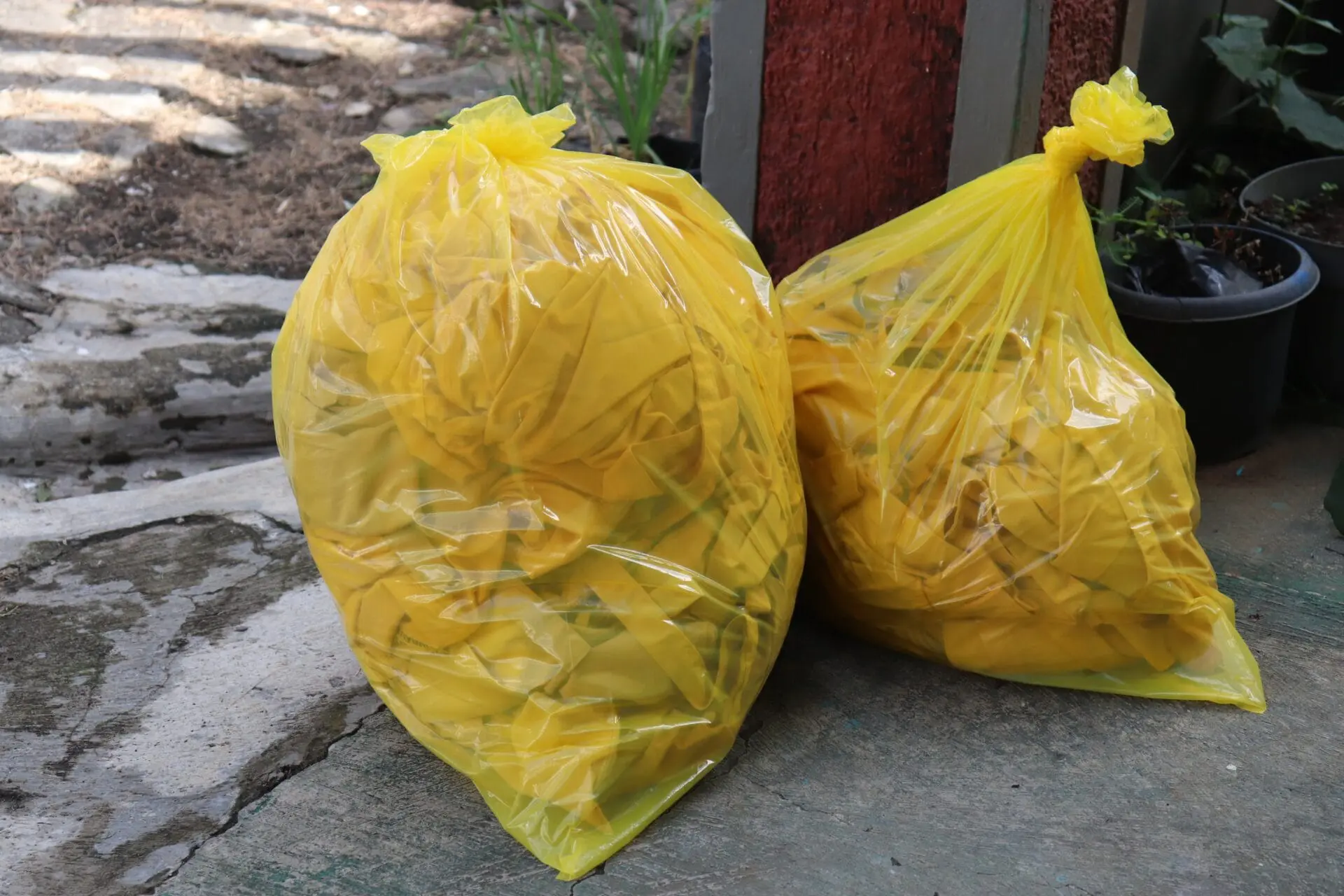
Where does clinical waste go?
When waste reaches a permitted healthcare waste facility, the operator checks that it matches the pre-acceptance information and transfer documentation provided beforehand.
Environment Agency guidance requires facilities to visually check waste packages and containers against this information. Waste that is incorrectly classified, damaged or otherwise non-conforming may need to be quarantined or rejected.
Healthcare waste packages are not simply opened and manually sorted. Correct classification, colour coding and segregation at the producer’s site allow treatment facilities to identify the appropriate route while reducing unnecessary exposure to infectious waste and sharps.
How is infectious clinical waste treated?
Suitable infectious clinical waste can go through alternative treatment rather than incineration.
This may involve heat-based or chemical disinfection. Autoclaving is one common example and uses controlled heat and steam to reduce microorganisms.
Environment Agency treatment guidance requires the process to be validated so that the waste is rendered safe.
A typical process may involve:
-
1. Waste entering the treatment system

-
2. Shredding or maceration where the permit and treatment process allow
-
3. Heat, steam or another validated process disinfecting the waste
-
4. Treatment making the waste non-infectious and unrecognisable
-
5. The resulting material moves to an appropriate recovery or disposal route




Which clinical waste is incinerated?
Anatomical waste
Human or animal tissue generally requires incineration or another specifically authorised treatment that destroys the material so it is no longer recognisable.
Simple infectious-waste disinfection is not normally appropriate for anatomical material.
Medicinal and chemically contaminated waste
Medicines and waste contaminated with medicines or chemicals generally require incineration or another specifically permitted process capable of destroying the relevant substances.
Alternative treatment designed only to disinfect infectious waste is not enough if pharmaceutical or chemical contamination remains.
Cytotoxic and cytostatic waste
Cytotoxic and cytostatic waste requires high-temperature incineration.
Environment Agency guidance defines high-temperature incineration for this waste as treatment at temperatures above 1,000°C.
Sharps
The correct treatment route depends on contamination.
Non-medicinally contaminated infectious sharps may be suitable for an approved alternative-treatment route. Medicinally contaminated or cytotoxic and cytostatic sharps require the treatment route appropriate to those contaminants.
Environment Agency classification guidance lists these sharps streams separately because their hazardous properties and treatment requirements differ.
Who uses our clinical waste collection service?
Business Waste arranges clinical waste collections for organisations that produce healthcare and related waste through treatment, care, research and other activities.
This includes:
- Hospitals and healthcare facilities: infectious waste, anatomical material, medicines, sharps and other specialist streams.
- GP surgeries and health centres: dressings, sharps, medicines and patient-treatment waste.
- Dental practices: sharps, medicines, dental amalgam and contaminated clinical materials.
- Veterinary practices: animal healthcare waste, sharps, medicines and anatomical material.
- Care and nursing providers: clinical waste produced through medical and nursing care.
- Pharmacies: waste medicines and related pharmaceutical waste.
- Laboratories: infectious, chemical and other specialist waste depending on the work carried out.
- Aesthetic and beauty clinics: sharps and other relevant clinical waste generated during treatments.
The required setup depends on what the organisation actually produces rather than its sector alone. Two healthcare sites may need different containers and treatment routes depending on the procedures they provide.
Areas we cover
We arrange clinical waste collections across the UK through registered waste carriers.
We support organisations in England, Scotland, Wales and Northern Ireland, from individual practices to businesses operating across multiple locations.
Waste classification, documentation and regulatory requirements differ between the UK nations, so collections and paperwork should follow the rules that apply where the waste is produced.
Clinical waste disposal FAQs
-
Does all clinical waste get incinerated?
No. Suitable infectious waste can undergo approved alternative treatment such as autoclaving. Anatomical, medicinally contaminated, chemically contaminated and cytotoxic or cytostatic waste normally requires incineration or another specifically permitted treatment.
-
What happens to clinical waste after autoclaving?
Once an approved treatment process has rendered suitable infectious waste safe, the resulting material can move to an appropriate recovery or disposal route.
Depending on its composition and the available outlet, this may include energy recovery or, in some cases, recycling.
-
What happens after clinical waste is incinerated?
Incineration destroys the original clinical waste and significantly reduces its volume.
The remaining ash and other residues are then managed through appropriate authorised recovery or disposal routes, depending on their properties and the facility handling them.
Environment Agency guidance specifically defines high-temperature incineration for cytotoxic and cytostatic waste as treatment at temperatures above 1,000°C.
-
What happens to used sharps?
Sharps remain inside rigid sharps containers during collection and transport.
Their treatment route depends on contamination. Infectious-only sharps may be suitable for an approved alternative treatment process, while medicinally contaminated or cytotoxic and cytostatic sharps require the corresponding specialist treatment route.


Have your waste collected
Get a fast FREE quote for your waste collection 0800 211 83 90
- Free quote within 1 hr
- Any type of waste
- FREE bins and delivery
- We cover all of the UK