

Pub Waste Collection & Management
Business Waste arranges waste collection for pubs, bars and clubs across the UK.
We can provide bins and collections for food waste, glass bottles, cardboard, dry recycling, residual waste and sanitary waste, alongside specialist streams such as used cooking oil or certain cleaning chemicals where required.
Tell us your main waste streams, postcode, bin-storage space and how often they fill, and we’ll help confirm suitable containers and collection frequencies.
 Collections in the last 7 days

Get a free quote
Get a quote for pub waste collection
- Free quote within 1 hour
- Bins for glass, food, recycling and residual waste
- One-off and scheduled collections
- Waste Transfer Notes at no extra charge
Pub waste collection services
We’ll build your waste service around your venue size, whether you offer food, customer numbers and available bin-storage space. This can include:
- Routine pub waste collections for residual waste, food waste, glass, cardboard and agreed dry recycling.
- Washroom and specialist collections for sanitary waste, used cooking oil and other agreed streams where required.
- Bins matched to your venue, with different collection frequencies for high-volume glass, food and other waste streams.
- One-off collections for events, clear-outs or temporary increases in waste alongside your normal service.
- Flexible schedules that can be reviewed around busy weekends, seasonal trading or changes in waste volumes.
- Waste Transfer Notes at no extra charge for eligible non-hazardous collections.
How does pub waste collection work?
-
Tell us about your venue
Provide your postcode, main waste streams, food-service setup, average volumes and available storage space.
-
We confirm suitable bins
We’ll recommend containers and collection frequencies for food, glass, recycling, residual and any specialist streams.
-
Separate the waste
Keep each agreed stream in the correct container and avoid contaminating recycling with food or unrelated materials.
-
We arrange collection
Registered waste carriers collect each stream on the agreed schedule.
-
Review the service as volumes change
Bin capacity or collection frequency can be adjusted around events, seasonal trading or changes to your food and drinks offer.
Pub waste collection
Pubs can produce very different volumes across their waste streams. Glass and food may fill quickly, while cardboard, sanitary waste or specialist streams may need less frequent collections.
Collections can be arranged around your venue’s waste volumes, available storage and operational requirements, with one-off removals available for events or unusual peaks.
What types of waste do pubs produce?
Pubs, bars, and clubs produce similar waste types daily. While the disposal methods vary for each kind, many of these are recyclable and can be stored in standard wheelie bins. However, there are some more specialist waste types that require extra attention.
Some of the most common types of waste that pubs, clubs, and bars produce include:
- Food waste: leftover meals from customers, expired and wasted ingredients.
- Oil waste: used cooking oil produced during prep and kitchen activities.
- Glass recycling: drink bottles and glasses. Broken or unusable glassware requires a dedicated collection.
- Cardboard waste: boxes for packaging and storage.
- Plastic recycling: plastic cups, drink bottles, and food packaging.
- Dry mixed recycling: various packaging materials, including drink cans.
- Sanitary waste: feminine hygiene products and other bathroom waste.
- Chemical waste: leftover products or contaminated materials that require specialist handling according to their classification.
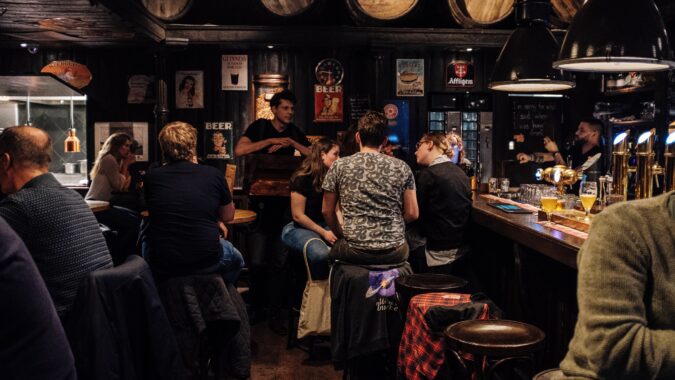
Bins for pubs, bars and clubs
We provide a range of free bins of various types and sizes to safely and securely store all waste types that pubs, bars, and clubs produce:
- Food waste bins – These are long-lasting, easy to clean, colour-coded, and sealable bins specifically for food waste. They help prevent cross-contamination and keep pests away. They’re available as 120- and 240-litre wheelie bins constructed from thick and sturdy plastics. The law requires food waste bins to be sealable and colour-coded to distinguish them from other bins.
- Glass recycling bins – Glass waste requires toughened bins with a unique sealing. The size of the bin depends on your needs and output. 120 and 240 litre wheelie bins suitable for glass waste are also available.
- Plastic recycling bins – For all your plastic waste, we will provide you with a wheelie bin that has a lid to prevent any tampering, in sizes up to 1100 litres.
- Sanitary waste bins – Bathrooms must have specific sanitary waste bins for safe storage, so no such waste is flushed away. These vary in size to suit your waste levels.
- Cardboard recycling bins – Larger venues producing significant cardboard volumes may benefit from higher-capacity containers or volume-reduction equipment.
Explore common bins used for pubs, bars, and clubs.
-
120L wheelie bins
Suitable for lower-volume food waste, glass or another agreed stream depending on the service.

-
240L wheelie bins
Suitable for lower-volume residual waste or an agreed recycling stream.
-
Sanitary waste bins
Suitable sanitary disposal facilities should be provided where required, including for female staff toilets, with washroom services matched to the facilities on site.

Pub waste recycling and disposal
Different pub waste streams follow different routes after collection. Suitable bottles and jars, cardboard, metals and plastics can be sent through the relevant recycling process, while food waste is collected separately for an appropriate biological treatment route.
Residual and specialist waste follows the recovery, treatment or disposal route appropriate to its classification and the collection service.
Case study: Inglenook Inns Group
We support Inglenook Group with waste management across its growing portfolio of pubs, restaurants and hospitality venues. Our services cover food waste, glass, cardboard, general waste and dry mixed recycling, with multiple weekly collections where required.
Each venue has its own collection arrangements based on trading patterns and waste volumes, helping keep busy kitchens, bars and customer-facing areas clean and organised.
Read Our Customer Reviews
Efficient communication
We have worked alongside Business Waste for quite a few months now, and their efficiency with communication and resolving queries is great. Allie especially is a pleasure to liaise with. Great company from a B2B perspective
Flo Bolton-Smith
The real definition of service
The service received was simply outstanding. Business Waste gave good advice and a demonstration of a willingness to help and get me a solution.
Gregory Harrand
Great company
Great company to deal with, special thanks to Danielle who is always on the ball and sort any issues out instantly with proactive involvement with follow up phone calls and emails. I would recommend her to be the next PM to get things done, oh and as a company to deal with all the waste needs for your business.
Top Deals Online
Excellent service set up process
I was impressed by the speed of setting up the service. I made a single phone call to Business Waste and all the necessary paperwork was done efficiently.
Yahya Saeed
Pub waste FAQs
-
How can I reduce my pub’s waste?
There are a few things you can try to reduce the amount of waste your pub, bar, or club produces. These include:
- Run a comprehensive audit to see what ends up in your bins and identify areas that need the most attention.
- Only buy food, drinks, and other items from suppliers that use recyclable packaging.
- Encourage the purchase of draught drinks (both alcoholic and soft drinks) rather than those served in bottles or cans.
- Ensure regular stock rotation and proper storage for food to prevent spoilage.
- Offer doggy bags to customers and include smaller plate options for customers who don’t want a full meal.
-
How do you manage bar wastage?
Bar wastage is any drink (whether draught, bottle, or can) or other product that should be sold but is wasted. This can cost bars lots of money over time, but there are ways to try and manage bar wastages, such as:
- Having a first in, first out approach, so barrels and other drinks used and sold next are those with the shortest shelf life.
- Training your team for the perfect serve, cellar duties, wastage recording, and stock rotation.
- Creating par levels by using your stocktaking reports and tills to see how much of every product you sell. Adapt your stockholding accordingly to avoid holding out of date products.
-
How much pub waste is recycled?
Research has found that almost 75% of non-food waste that pubs produce is recycled. Packaging and glass recycling levels were at 73% but for food waste only 11% is recycled currently. This is also expensive, and figures show that food waste costs UK pubs a staggering £350 million a year.
Using the right bins and licensed waste carriers to collect your waste can help increase the recycling rates for your pub, reducing your costs too.

Get a fast and free quote
Get a quote for pub waste collection
- Free quote within 1 hour
- Bins for glass, food, recycling and residual waste
- One-off and scheduled collections
- Waste Transfer Notes at no extra charge
Published 13th April 2022 by Mark Hall. Last modified 27th October 2026