
How To Dispose Of Kitchen Knives
Old, damaged or unsafe kitchen knives from restaurants, cafés, pubs, hotels, schools, care homes and commercial kitchens should be treated as sharp business waste. They should never be placed loose in bin bags, recycling sacks or public bins.
Businesses should store old knives safely, tell their licensed waste carrier what is being collected, and keep the correct waste transfer paperwork. If a knife is made entirely from metal, it may be suitable for scrap metal recycling, but it still needs to be handled safely.
Households should check their local council’s rules, as some recycling centres accept kitchen knives as scrap metal and some councils allow securely wrapped knives in general waste.
At a glance: how to dispose of kitchen knives safely
- Wrap the blade securely in cardboard, old cloth, bubble wrap or several layers of newspaper.
- Tape the wrapping so the blade cannot come through.
- Put the wrapped knife inside a rigid box, plastic tub or other sturdy container if possible.
- Clearly label it as sharp knives or sharp objects.
- Store old knives away from other commercial kitchen waste.
- Alert your waste provider that sharp metal items are being collected
- Do not put loose knives into recycling bags, black sacks or public bins.
What should businesses do with old kitchen knives?
Businesses should not use household recycling centres unless the site explicitly accepts trade waste. Kitchen knives from restaurants, cafés, pubs, hotels, schools, care homes, butchers, food manufacturers, and commercial kitchens are classified as business waste.
Your business has a duty of care to ensure waste is stored, transferred, and disposed of safely. This includes completing a Waste Transfer Note for waste that leaves your premises and checking that your waste carrier holds a valid upper-tier registration.
Knives may need to be disposed of when:
- Replacing worn chef’s knives
- Removing damaged blades
- Refitting kitchens
- Closing a restaurant or catering business
- Clearing out catering equipment
- Replacing existing knife sets
- Handles break or blades become loose
If you want to dispose of a kitchen knife from your business, follow these steps:
- Store old knives in a safe container before collection.
- Keep them separate from loose general waste where possible.
- Tell the waste provider what is being collected.
- Do not put loose knives in bin bags, recycling sacks or public bins.
- Use a licensed waste carrier.
- Keep the right transfer paperwork.
- Train kitchen staff not to throw blades into general waste bags.
For restaurants, cafés, pubs and hotels, this should be part of normal kitchen waste procedures. Staff should know where damaged knives are stored, who is responsible for arranging collection, and why blades should never be dropped into bin bags at the end of a shift.
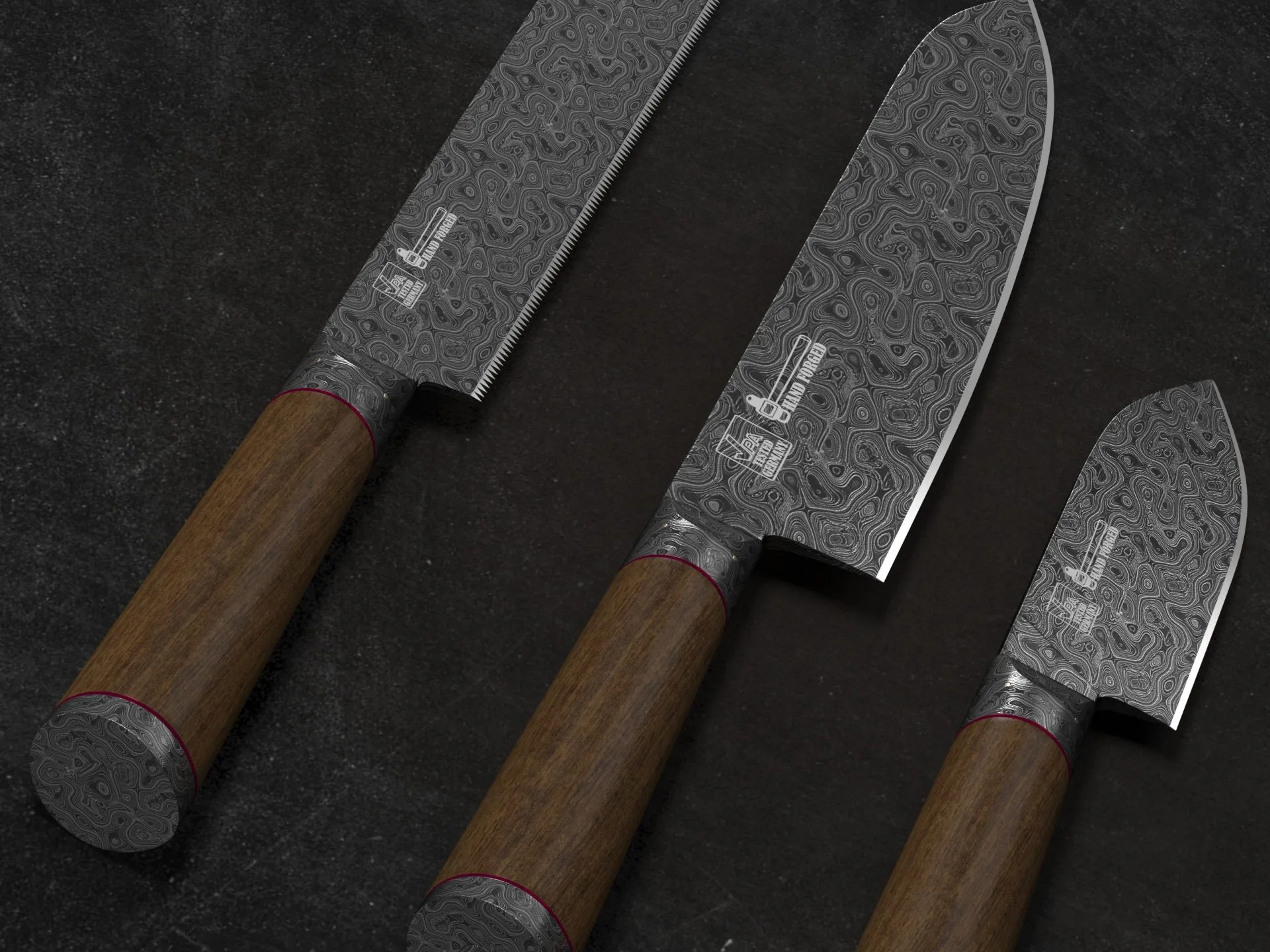
Can kitchen knives be recycled?
For businesses, scrap metal recycling may be possible through a commercial waste provider or metal waste collection service. Businesses should not assume they can take trade waste to a household recycling centre unless the site explicitly accepts it.
Kitchen knife handles can be made from a variety of materials, including wood, POM, polypropylene, carbon fibre, and animal products such as horn. This can affect how easily the item can be recycled. Do not attempt to dismantle the knife yourself.
How to wrap kitchen knives before disposal
-
1. Cover the blade
Use a suitable, hardy material like thick cardboard, old cloth, bubble wrap, several layers of newspaper, a folded cereal box, or a rigid plastic bottle or tub, if suitable.
-
2. Secure it with tape
Tape around the wrapped blade. Make sure the point and edge cannot cut through.
-
3. Place it in a sturdy container
Your options may include cardboard boxes, plastic tubs, old food containers, empty plastic bottles with the top replaced or strongly taped parcels.
-
4. Label the package
Use clear wording, for instance: “Sharp knives”, “Sharp objects”, “Caution: sharp”.
What bins should old kitchen knives not go in?
Old kitchen knives should not be treated like normal kitchen rubbish. Even if the blade is blunt, it can still cut through bags and injure staff, cleaners or collection crews.
Businesses should never place loose knives into food waste, dry mixed recycling, glass bins, cardboard bins or public bins. If knives are being removed from a commercial kitchen, they should be stored safely and described clearly to the waste provider before collection.
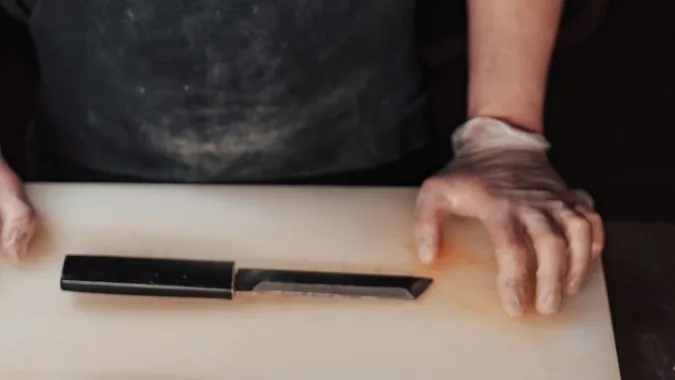
Should you take old kitchen knives to the police?
Standard kitchen knives from businesses usually do not need to go to the police. They should normally be handled through a safe commercial waste or scrap metal route.
Police surrender bins or amnesty schemes may be relevant if a knife is unsafe to keep, is classified as a weapon, or there is a specific safety concern. Always check local police guidance first.
Why safe knife disposal matters
Loose knives pose a serious health risk. They can cut through bags and injure collection crews. HSE guidance recognises sharps injuries as a workplace risk associated with waste and recycling. Sharps injuries should be reported under RIDDOR in certain circumstances, including where a worker is injured by a sharp contaminated with a bloodborne virus.
If you’re disposing of a knife that you believe poses a threat, or that is classified as a weapon, locate a local knife surrender bin or amnesty point.
Can households put kitchen knives in the bin?
In some areas, kitchen knives can be disposed of in household general waste if they are securely wrapped. If they’re placed loose in this stream, they pose a risk to:
- People in the household
- Waste collection crews
- Sorting staff
- Anyone who may handle the bag
Rules can vary between UK councils. If you’re unsure, consult your local council to ensure you’re following the correct procedure.
Don’t treat kitchen knives like ordinary waste
Mark Hall, Waste Disposal Expert, confirms the correct procedure:
If you’re unsure of how to dispose of kitchen knives in your business, Business Waste can handle the entire process. Speak to our expert team today, or get a free quote by filling in the form below.

Contact us
Get a fast FREE quote for safe commercial knife disposal
- Free quote within 1 hour
- All sectors supported
- FREE bins
- Nationwide UK coverage
Kitchen knife disposal FAQs
-
 How should businesses dispose of kitchen knives?
Businesses should store old kitchen knives safely, wrap and label the blades, tell their waste provider what is being collected, use a licensed waste carrier, and keep the correct waste transfer paperwork.
-
Can restaurants put old kitchen knives in general waste?
Only if their waste provider accepts them and the knives are securely wrapped, labelled, and handled safely. Loose knives should never be placed in general waste bags, recycling sacks, food waste bins, or public bins.
-
Can kitchen knives be recycled as scrap metal?
Yes, many kitchen knives can be recycled as scrap metal if they are made mostly or entirely from metal. Businesses should arrange this through a commercial waste provider or metal waste collection service, rather than assuming they can use a household recycling centre.
-
Do businesses need a Waste Transfer Note for old kitchen knives?
Yes. Old kitchen knives from restaurants, cafés, pubs, hotels, schools, care homes, butchers, and commercial kitchens are business waste. A Waste Transfer Note should be completed when the waste leaves the premises.
-
How do you dispose of old kitchen knives in the UK?
Wrap the blade securely, tape it, label it clearly, and follow the correct route for your situation. Businesses should use a licensed waste carrier. Households should check whether their council accepts wrapped knives in general waste or at a recycling centre.
-
Can you take kitchen knives to the police?
Usually, standard kitchen knives do not need to go to the police. A police surrender bin or amnesty scheme may be relevant if the knife is unsafe to keep, classed as a weapon, or linked to a safety concern. Always check local police guidance first.


Have your waste collected
Get a fast FREE quote for your waste collection 0800 211 83 90
- Free quote within 1 hr
- Any type of waste
- FREE bins and delivery
- We cover all of the UK