
How Is Asbestos Disposed Of?
Asbestos waste is not normally recycled. Once it has been removed, it must be securely packaged, transported and disposed of at a site authorised to accept asbestos-containing waste. In England, this usually means a hazardous waste landfill or a dedicated asbestos cell within a permitted non-hazardous landfill.
Care is taken to prevent asbestos fibres from being released during handling, transport and final disposal.
What happens to asbestos after it is removed?
-
The asbestos waste is contained
HSE guidance recommends double wrapping, a red inner bag with printed asbestos warnings and a clear outer bag with the appropriate hazard markings. It’s not broken up to make it easier to transport.
-
It is kept separate from other waste
Asbestos waste shouldn’t be mixed with general or construction waste. Environment Agency (EA) standards require most facilities to double-bag and store asbestos in a clearly identified container.
-
It is transported to an authorised facility
Care is taken during transportation to prevent fibres from escaping. The appropriate waste documentation must travel with commercial asbestos waste. HSE declares that anything containing more than 0.1% asbestos is classified as hazardous waste in England and Wales, therefore requiring a hazardous waste consignment note.
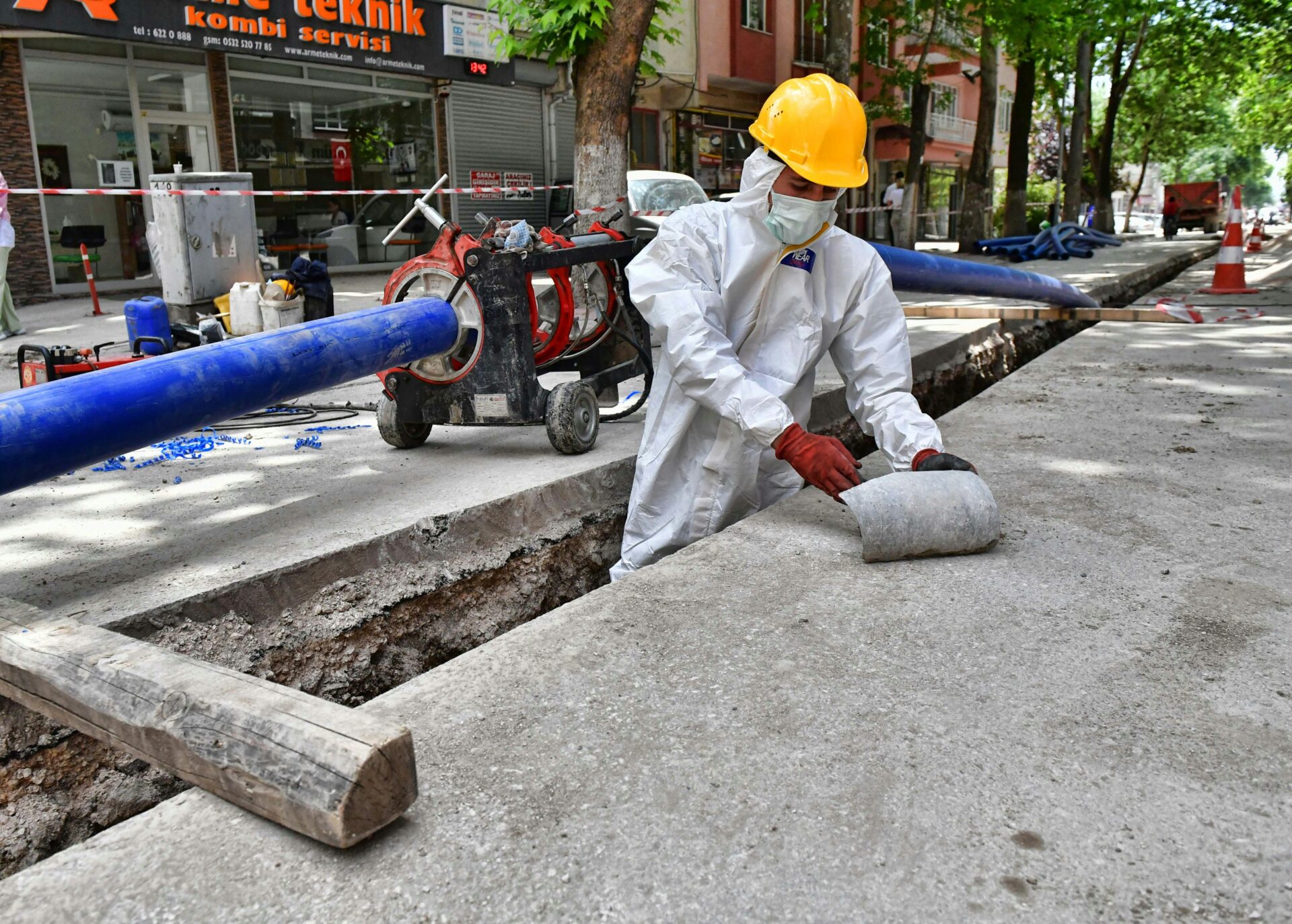
Where does asbestos waste go?
Asbestos waste has two main disposal routes in England.
Hazardous waste landfill
At such sites:
- Paperwork and waste description are checked
- The operator confirms the landfill is permitted to accept that type of asbestos waste
- The waste is deposited in an appropriate area
- It is managed to prevent disturbance and fibre release
Dedicated asbestos cell at a non-hazardous landfill
Asbestos does not always go to a landfill classified entirely as hazardous waste. Some non-hazardous landfills contain dedicated cells specifically designed and authorised for asbestos. These facilities are not available across the UK.
What happens to asbestos at the landfill?
When it arrives, asbestos is deposited in a dedicated area or cell where it is contained to prevent fibre release. EA guidance requires operators to either accept asbestos already wrapped or manage the disposal area carefully. At the end of each working day, the asbestos disposal area must be covered.
Disturbing the asbestos through drilling is not allowed. Any disturbance to the waste should be minimal. When the asbestos cell reaches its final level, the surface is covered with at least two metres of suitable material. So, the waste is covered and ultimately sealed beneath substantial layers of material so it remains undisturbed.
Can asbestos ever be recycled or treated instead?
Not through standard commercial recycling routes. Asbestos cement, insulation board or other asbestos-containing materials cannot simply be crushed and recycled.
Some specialist treatment technologies exist internationally. For instance, high-temperature vitrification is used in France. Thermal destruction has been used on a small scale in the UK, but the vast majority of commercial asbestos waste is still sent to hazardous landfill.


Have your waste collected
Get a fast FREE quote for your waste collection 0800 211 83 90
- Free quote within 1 hr
- Any type of waste
- FREE bins and delivery
- We cover all of the UK