
How Does Recycling Help The Environment?
Recycling helps the environment by keeping useful materials in circulation, reducing demand for virgin resources and avoiding some of the energy and emissions associated with manufacturing new products. It can also reduce the amount of waste sent to landfill or incineration.
For businesses, separating recyclable waste such as paper, cardboard, glass, metal and plastic is one practical way to reduce the environmental impact of day-to-day operations.
However, recycling works best alongside waste prevention and reuse. Avoiding unnecessary waste should come first, followed by keeping products and materials in use for as long as possible.
How does recycling help the environment?
- Conserves natural resources by reducing demand for virgin materials.
- Cuts greenhouse gas emissions for many materials compared with producing them entirely from virgin resources.
- Saves energy during manufacturing.
- Keeps waste away from landfill and incineration where appropriate recycling routes exist.
- Supports a circular economy by keeping useful materials in circulation.
- Reduces pressure on habitats and ecosystems associated with extracting new raw materials.
Recycling reduces the need for new raw materials
Making new products often requires virgin materials such as timber, metal ores, oil, sand and other natural resources. Recycling keeps existing materials in use and reduces some of the demand for extracting new ones.
For example, waste paper and cardboard can be turned into recycled fibres, scrap metals can be used in new metal products, and recovered plastics can replace some virgin polymers. Glass can also be remelted and used to produce new glass products.
Recycling does not remove the need for virgin raw materials completely, but it helps businesses and manufacturers make better use of resources that are already in circulation.
Recycling can reduce greenhouse gas emissions
Extracting raw materials, processing them and manufacturing new products all create greenhouse gas emissions. For many materials, using recycled content can avoid some of these processes and lower the overall carbon impact.
The level of saving depends on the material and how it is collected and recycled. Metals such as aluminium can offer particularly significant benefits because producing primary metal from ore is energy intensive.
WRAP’s CarbonWARM2 model compares the greenhouse gas impacts of different waste management routes, including recycling, energy recovery and landfill. It shows why the carbon benefit needs to be considered separately for each material rather than assuming every recycling process has the same impact.
Recycling can save energy
Producing goods from recycled materials can also use less energy than starting with virgin resources.
Raw materials may need to be mined, harvested or extracted before they are transported and processed into something manufacturers can use. Recycled materials have already been through some of these stages.
The exact energy saving varies between materials and processes, but using recycled feedstock can reduce the amount of energy needed to produce many new products.
Recycling keeps useful materials out of landfill and incineration
Recyclable waste has more value when the material can be kept in use.
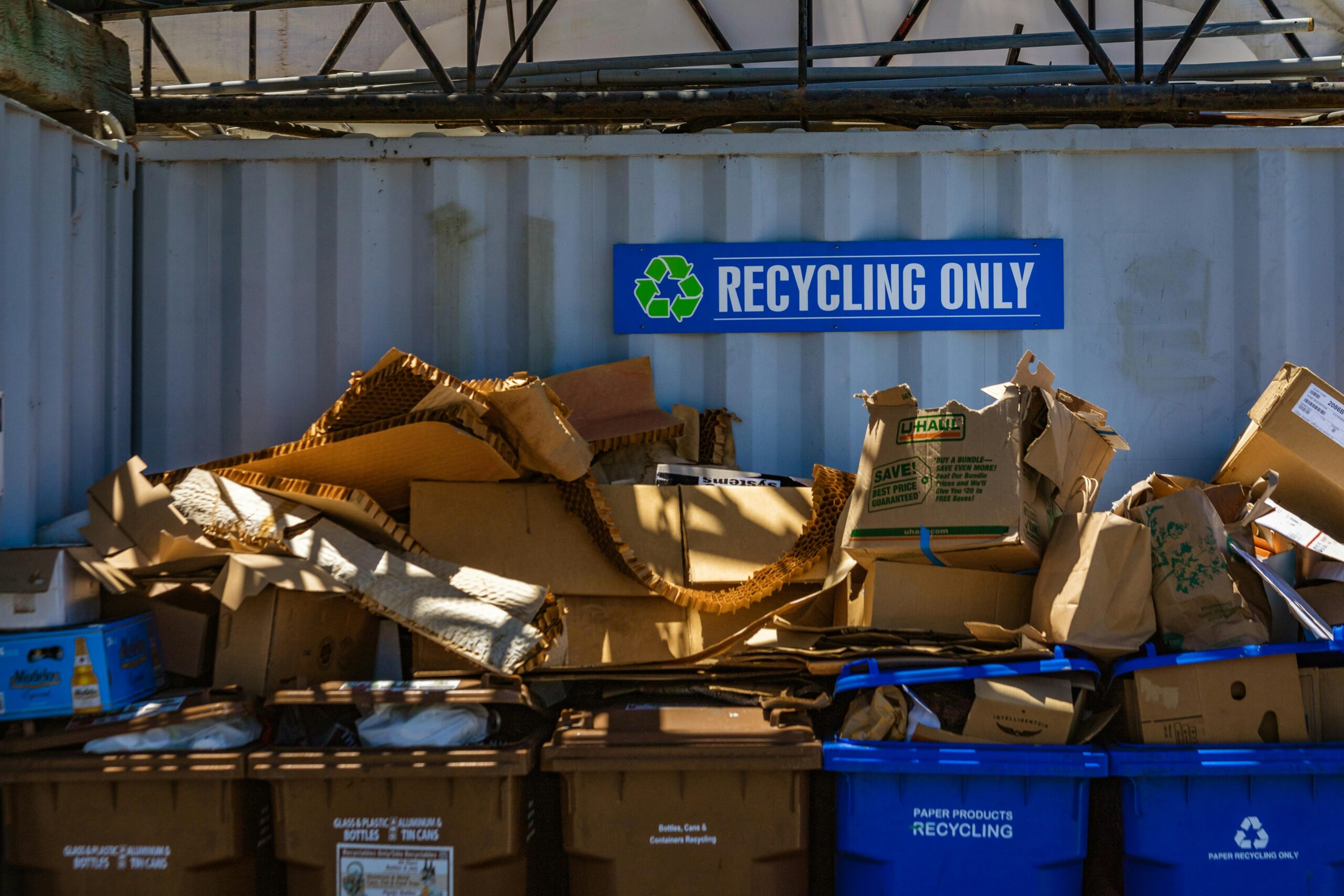
If recyclable paper, cardboard, glass, metals and plastics are placed in general waste, they may instead be sent to landfill or energy-from-waste facilities. This removes materials that could potentially have been turned into new products.
Landfill can also create additional environmental impacts. Biodegradable materials breaking down in landfill can produce methane, a powerful greenhouse gas.
Separating recyclable materials correctly helps keep them within the material cycle for longer and reduces reliance on final disposal.
Recycling supports a circular economy
A traditional linear economy follows a simple pattern: materials are extracted, made into products, used and then thrown away.
A circular economy aims to keep products and materials in use for longer. Recycling supports this by turning suitable waste back into raw material that can be used again.
However, recycling is only one part of a circular economy. Preventing waste, reusing products, repairing equipment and refurbishing items can all preserve more of their original value.
This is reflected in the waste hierarchy used in England and Wales. It prioritises waste prevention first, followed by preparing items for reuse, recycling, other recovery and disposal.
Recycling can reduce the impact of resource extraction
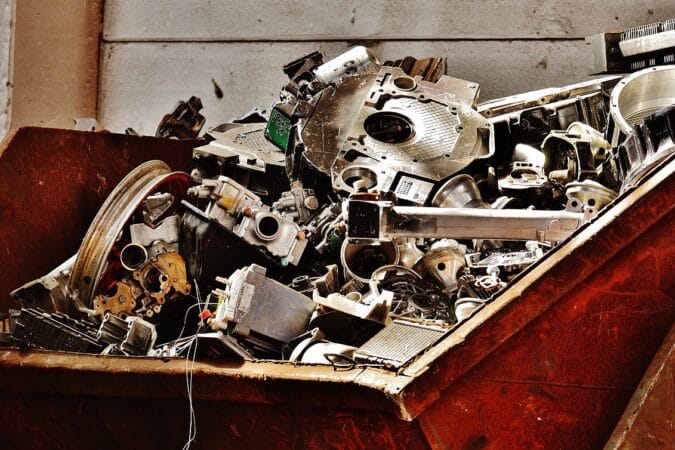
Many raw materials come from activities such as mining, quarrying, logging and oil and gas extraction. These processes can use significant amounts of land, water and energy and may affect surrounding habitats.
Using recycled materials can reduce some of the demand for new resources and the environmental pressures associated with extracting them.
The impact differs between materials, so recycling should not be presented as removing the environmental effects of manufacturing entirely. Instead, it helps make better use of resources that have already been extracted.
How can businesses improve the environmental benefits of recycling?
Good recycling starts before anything goes in the bin. Businesses can improve their approach by:
- Preventing unnecessary waste: Review purchasing and avoid materials or packaging that are not needed.
- Reusing products: Keep equipment, furniture and other items in use for longer where possible.
- Separating waste correctly: Provide suitable bins for the recycling streams your organisation produces.
- Reducing contamination: Keep food, liquids and non-recyclable materials out of dry recycling.
- Training employees: Make it clear which materials belong in each container.
- Positioning bins carefully: Place recycling containers close to where waste is produced.
- Reviewing waste data: Check which recyclable materials are still ending up in general waste.
- Considering end-of-life disposal when buying products: Choose materials that have a realistic reuse or recycling route.
- Using authorised waste carriers: Make sure collected waste is handled through appropriate recycling and treatment facilities.
We can arrange commercial recycling collections if your business is based in the UK. This can include dry mixed recycling, cardboard, glass, metal, plastics and other waste streams depending on your requirements.

Contact us
Get a fast quote for commercial recycling
- Free quote within 1 hour
- Price-match guarantee
- Free bins and containers
- Nationwide UK coverage
What are the advantages of recycling?
-
 What is recycling?
Recycling is the process where materials are reused to make or manufacture new products. Instead of dumping material into a landfill site where it will simply sit in the ground, recycling uses this material as a resource to continue being useful. It’s important to note that not all material is recyclable – such as hazardous waste.
However, many materials are recyclable, and this is often indicated on the material itself. The fact that large amounts of waste are recyclable means it’s possible for businesses to vastly reduce the amount of waste material they send to landfill sites by implementing proper recycling processes. It’s therefore possible to significantly reduce the damage caused to the environment through recycling.
The latest recycling figures show that the UK recycles 45% of its waste overall.
Recyclable materials include:
-
Why do we recycle?
You might be asking yourself why there’s such a focus on recycling. Here we outline the core reasons for recycling and the push to get homeowners and businesses to recycle more of their waste. The importance of recycling is to:
- Reduce pollution
Recycling means materials that would otherwise class as waste and simply be left to sit in the ground are reused instead. Through reusing materials, we can decrease the demand for new materials. This process helps reduce the levels of pollution emitted as we create new materials. Waste stored in landfill sites can contribute towards damaging the environment, so avoiding unnecessarily stuffing of waste into landfill is highly desirable.
- Lower costs
Recycling makes financial as well as environmental sense for businesses. The cost of using recycled material is much less than the cost of creating brand new material to work with. Through using recycled materials, businesses can lower their costs. When recycling is implemented on a large scale, the savings that can be made can be hugely significant.
One of the other benefits of recycling is that it helps avoid and reduce the amount of landfill tax you pay when disposing of waste.
- Save energy
Similar to reducing costs, recycling material is much more energy-efficient than creating new material. Therefore, increased recycling can lead to lower levels of energy consumption. A decrease in energy consumption can lead to less energy needing to be created. This leads to less pollution being created and reduces overall environmental damage.
- Cultivate a green image
Recycling is now an important part of life, and businesses that don’t recycle are increasingly being viewed in a negative light. Therefore, it’s beneficial for businesses to be seen to as environmentally responsible. As people become increasingly aware of the environmental damage caused by landfill waste, the process of recycling becomes even more championed.
Those who take their environmental responsibilities seriously are seen as desirable partners. Those who don’t may find their perceived irresponsibility a big disadvantage. From a business perspective, being green makes a lot of sense to entice and keep new customers.
-
What are advantages of recycling?
There are many recycling benefits. Here we go into more detail about the benefits recycling has for businesses, the environment, and the planet as a whole.
The primary benefit of recycling is that it helps to protect the environment. With the threat of global warming growing ever more serious and extreme weather conditions becoming more frequent, steps to protect the environment are rightfully seen as very important. Recycling is one of these steps that’s relatively easy for UK businesses and homeowners to adopt.
So, we know recycling is said to be good for the environment generally. But what environmental issues does recycling specifically help to remedy? Find out with these key recycling advantages:
- Global warming and pollution
Recycling can help remove the problem posed by huge volumes of waste dumped at sites that still need dealing with. in many cases, this waste is simply burned. However, doing so releases great volumes of C02 into the air, something that contributes significantly to the problem of global warming when carried out on a large scale.
If increasing volumes of waste are recycled, this means the volumes of waste that are burnt and release harmful volumes of gasses into the air decrease. In this way, recycling can contribute to tackling one of the causes of global warming and pollution.
- Protect the environment and animal habitats
Landfill sites and sites where waste is burnt have a hugely detrimental effect on the environment surrounding them. These sites can damage animals’ habitats beyond repair. This is especially concerning where the habitats of rare or endangered species are jeopardised.
Through recycling, we can reduce the need for these damaging waste sites by reducing the amount of waste sent to them. Working to reuse materials rather than simply discard them helps protect the environment and preserve natural habitats rather than destroying them.
- Conserve natural resources
As recycling involves reusing resources it can help conserve the planet’s natural resources. Rather than extracting raw materials from the earth, recycling provides us with a more environmentally friendly alternative. Reducing the demand for raw materials can also help stop large parts of forestation, such as the Amazon, from being destroyed in the search for the natural resources within.
In this way, recycling can help us slow the rate at which we extract and mine minerals and other resources from the earth. This protects and helps to conserve the earth’s natural resources for future generations.
-
Is recycling good or bad?
Overall, recycling can prove to be a beneficial process for both businesses and the environment. Helping to conserve natural resources, reduce levels of pollution and tackle some of the root causes of global warming means recycling is good and can clearly have a positive effect on the environment.
Increasingly, a culture of recycling is forming in Britain. This culture envelopes both homes and businesses, with people now placing a keen emphasis on environmental responsibility. Within this culture, it pays for businesses to take recycling seriously, demonstrating that they are environmentally conscious as many of their customers will demand.
-
What are the three types of recycling?
There are three main types of recycling.
- Primary recycling – primary recycling refers to a product that can be reused without altering its current state or purpose at all. This means that once recycled, it will serve the same function again. An example of this is when you reuse a single-use plastic water bottle several times to avoid throwing it away after one use.
- Secondary recycling – secondary recycling is when we repurpose a product for an alternative use, without it being processed or altered at all. For example, you may use leftover materials for a DIY or arts and craft project. One way you can do this is by using newspaper to create papier-mâché art.
- Tertiary recycling – tertiary recycling is when recyclable materials are collected and altered (often chemically) for them to be reused as something else. This is typically what happens when our recyclable waste is collected and sent to a recycling centre.
-
What items can be recycled?
There are a large variety of products that can be recycled. Although the below list is by no means comprehensive, it gives you an idea of what items you can recycle:
- Mixed paper
- Magazines
- Plastic bottles
- Cardboard
- Cans (tin, aluminium, steel)
- Glass containers/jars
- Glass bottles (wine etc.)
-
What is natural recycling?
Natural recycling refers to adapting our practices to ensure our products can always be reused. If not, they should be broken down in a way that doesn’t harm the planet. It aims to replicate the way the earth naturally makes use of its waste. For example, plant and animal decay become part of our soil.
To practice natural recycling, we should attempt to reuse everything we purchase, where possible. We can also begin the practice of composting, as this allows us to reuse non-recyclable materials such as food waste to benefit the environment.
-
What materials are non-recyclable?
Unfortunately, there are some materials that cannot currently be recycled. It’s important, where possible, to avoid using these products or at least minimise our consumption of them. Materials that are non-recyclable include:
- Plastic wraps, such as cling film
- Food waste or ‘food contaminated’ items
- Broken glass
- Polystyrene
- Plastic utensils
- Garden waste (though this can be used in composting)
- Oils
- Hazardous materials
- Batteries
Find more information on recycling

How does recycling collection work?
-
Select your free bins
-
Arrange delivery
-
Fill up your bin
-
Get your business waste collected
As featured in…





Have your waste collected
Get a fast FREE quote for your waste collection 0800 211 83 90
- Free quote within 1 hr
- Any type of waste
- FREE bins and delivery
- We cover all of the UK