
85,676 Landfill Odour Complaints Made Across Great Britain
Freedom of Information (FOI) requests submitted by Business Waste revealed that 85,676 landfill odour complaints were made between 2022 and 2025. Environmental regulators across England, Scotland, and Wales provided the data, while the Northern Ireland Environment Agency was unable to supply the information within the cost limit.
Landfill remains one of the most debated aspects of waste management in Great Britain, with odour complaints forming a significant part of the discussion. Persistent landfill odours can affect nearby communities and may indicate exposed waste, landfill gas emissions, or the breakdown of organic materials. Where waste can be reused, recycled, recovered, or treated through alternative processes, landfill should remain the last resort.
TLDR: How many landfill odour complaints were made?
- 85,676 landfill odour complaints were recorded across Great Britain between 2022 and 2025.
- This averages 21,419 complaints a year.
- The data covers England, Scotland and Wales.
- Northern Ireland is not included in the total because the NIEA said responding to the FOI request would exceed cost limits.
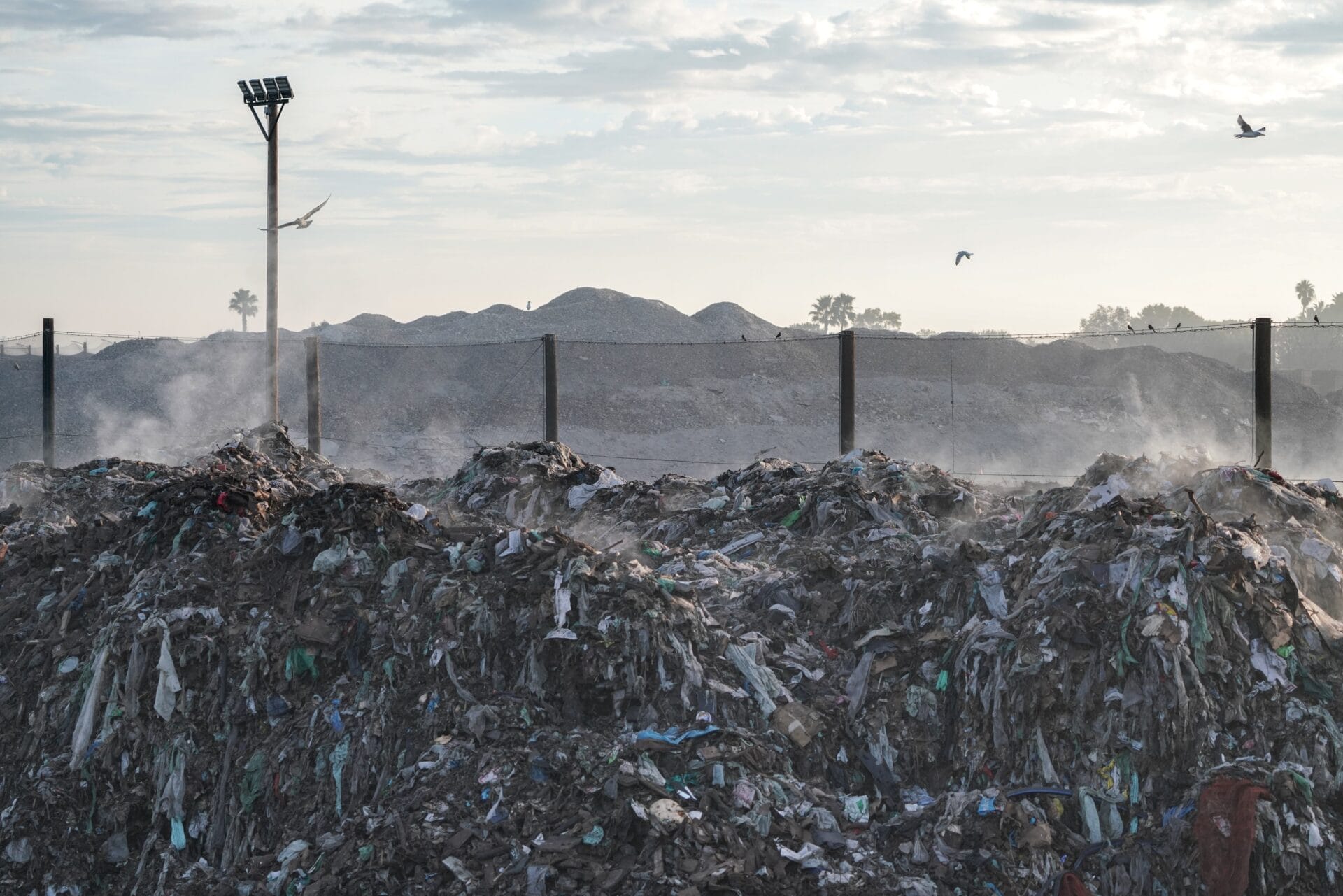
Landfill odour complaints by country
- England: 76,802 complaints between 2022 and 2025
- Wales: 6,806 complaints between 2022 and 2025
- Scotland: 2,068 complaints between 2022 and 2025
- Great Britain total: 85,676 complaints
- Average per year: 21,419 complaints
Complaint totals provide a snapshot of where complaints are being made. England accounts for the majority of complaints in the dataset. However, it has more sites than Wales and Scotland, so these totals don’t reflect a direct ranking of site performance or community impact.
Why do landfill odour sites smell?
Landfills produce an odour when organic waste breaks down. This waste can decompose within oxygen-poor conditions and escape when gas management systems are not working effectively, or if fresh waste is exposed.
Weather conditions can make this worse. Still air, low pressure, or temperature inversions trap smells close to the ground. Active tipping, waste movement, or more odorous loads also contribute to the smell of a landfill.
Common odour sources include:
- Hydrogen sulfide: produced when organic matter breaks down in oxygen-poor conditions. Often described as a rotten egg smell.
- Ammonia: often linked to decomposing food waste, garden waste, manure, and other nitrogen-rich material. It has a sharp, pungent smell.
- Volatile organic compounds (VOCs): can be released as materials such as food, wood, paper, solvents, paints, or household chemicals break down or are disposed of. Smells can be sweet, chemical, solvent-like, or musty.
- Mercaptans: produced when bacteria break down sulphur-containing proteins. They can smell like rotten cabbage or garlic.
How landfill odour can affect nearby communities
Odour complaints often originate from locals who feel unable to freely use their homes, gardens, parks, or other outdoor spaces. Simple actions such as opening windows, drying clothes outside, taking a picnic or enjoying green spaces can become a chore.
As well as being unpleasant and disruptive, repeated exposure to strong odours may be associated with temporary symptoms such as:
- Headaches
- Nausea
- Loss of appetite
- Sleep disturbance
- Stress or anxiety
Although these are usually temporary, repeated odour episodes can still affect quality of life and increase resident stress. Odour complaints can also create tension between residents, landfill operators, regulators and local authorities. Further, it can create concerns about local reputation and property desirability.
Mark Hall, Co-Director, Business Waste
“Odour complaints show how visible landfill issues are for local communities. When people cannot open windows or use outdoor spaces without noticing a smell, waste management becomes a daily quality-of-life issue.”
Why landfill capacity matters
Although the UK has reduced its reliance on landfill over time, these sites still receive waste that cannot be reused, recycled, recovered, or treated through another disposal route. Odour issues can become more significant when landfill sites serve large catchment areas or accept high volumes of residual waste.
Environment Agency data shows England had 325.9 million cubic metres of remaining permitted landfill capacity at the end of 2023. However, capacity is not just about available space. It also depends on where landfill sites are located, the types of waste they are permitted to accept, and how much residual waste can be diverted to recycling, recovery, or other treatment methods.
What can be done to reduce landfill odour?
Short-term odour controls
- Cover exposed waste more frequently.
- Reduce the size of the active tipping area.
- Repair landfill gas leaks.
- Improve gas capture and monitoring.
- Restrict or manage certain odorous loads.
- Plan operations around weather conditions where possible.
- Use odour suppressants or neutralising treatments where appropriate.
Suppressants can reduce nuisance, but they don’t solve the source of the problem.
Longer-term waste reduction methods
- Reduce the amount of suitable material sent to landfill
- Separate food waste so it does not enter general waste
- Improve recycling for paper, card, plastic, metal, and glass
- Reduce contamination so fewer recyclable materials are rejected
- Find ways to keep reusable materials in use for longer
- Support circular economy principles
The overall goal is to reduce the amount of suitable material sent to landfill by prioritising reuse, recycling, and recovery wherever possible.
How businesses can help reduce landfill reliance
Businesses can’t control landfill site odour directly, but they can play their part in reducing the volume and type of waste sent to disposal.
Steps your business can take:
- Only use general waste bins for materials that cannot be reused, recycled or collected separately
- Ensure correct food waste separation, as organic material can contribute to odour
- Audit what’s going into your waste containers
- Keep paper and cardboard clean and dry
- Train staff on the correct use of bins
- Review collection frequency and bin capacity
Mark Hall advises:
Methodology
- Business Waste Ltd submitted FOI requests to environmental regulators across the UK.
- England’s Environment Agency, SEPA, and Natural Resources Wales responded with landfill odour complaint data.
- Northern Ireland Environment Agency said the request would exceed cost limits, so Northern Ireland was not included in the complaint total.
- Data covers complaints recorded between 2022 and 2025.
The total of 85,676 covers Great Britain, not the whole UK. - Complaint figures show the number of reports made to regulators. They do not prove breaches, rank site performance, or measure actual odour intensity.
- Complaint data may be affected by reporting behaviour, local awareness, population density, number of sites, and the way regulators categorise complaints.


Have your waste collected
Get a fast FREE quote for your waste collection 0800 211 83 90
- Free quote within 1 hr
- Any type of waste
- FREE bins and delivery
- We cover all of the UK