
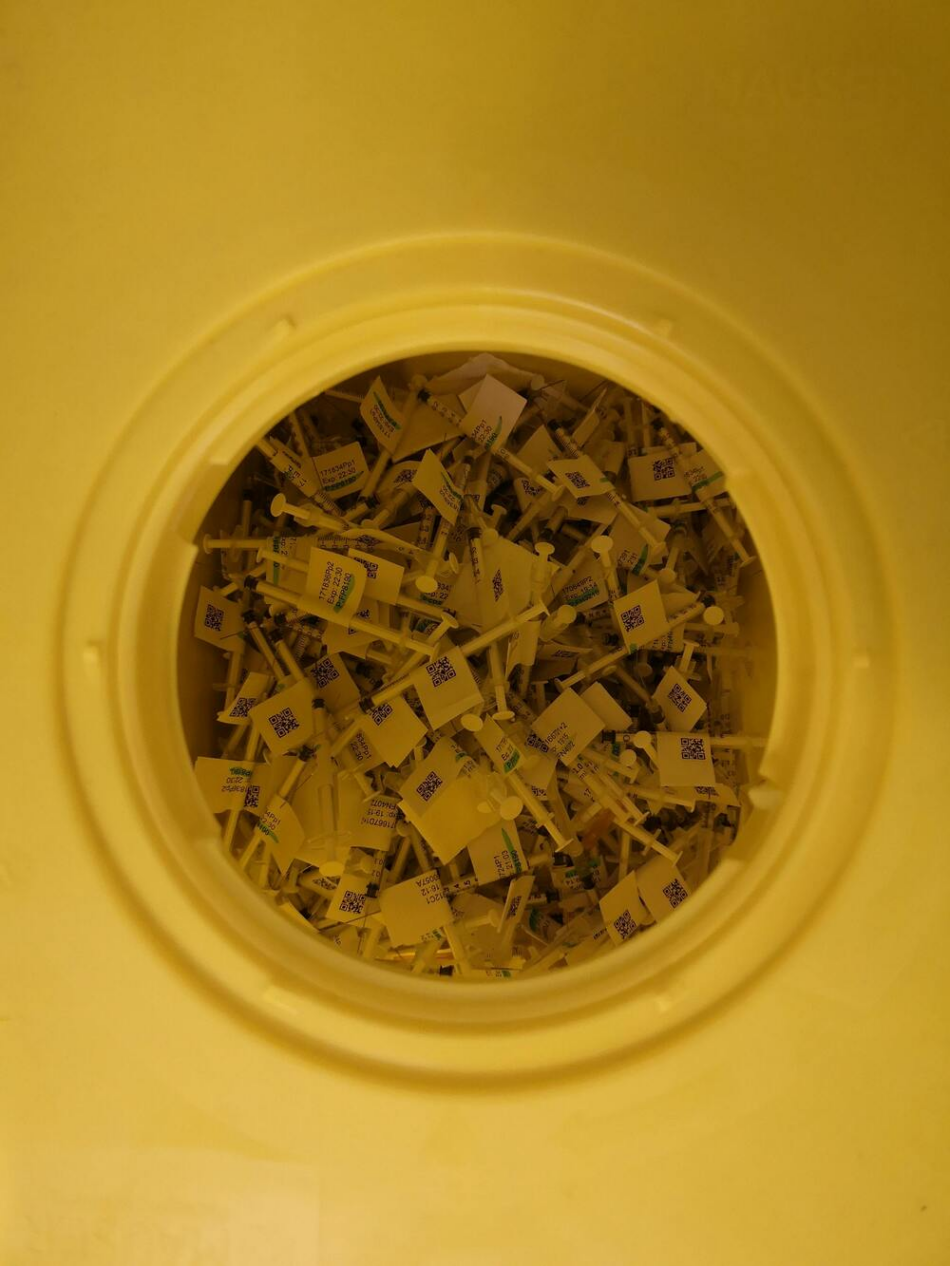
Anatomical Waste Disposal
Hospitals, veterinary practices, laboratories and other healthcare organisations can produce anatomical waste such as tissue, body parts, placentas and blood bags. Business Waste arranges anatomical waste disposal across the UK, with suitable containers and ongoing or one-off collections depending on your requirements.
We arrange collection through registered waste carriers who send anatomical waste to an authorised treatment facility. Tell us whether the waste is human or animal, whether it may be infectious or chemically contaminated, and how much you produce. We’ll use all this information to confirm the appropriate container, collection schedule and paperwork.
 Collections in the last 7 days

Get a free quote
Get a fast FREE quote for your anatomical waste collection
- Free quote within 1 hour
- Anatomical waste assessed
- FREE bins and delivery
- We cover all of the UK
What anatomical waste can we collect?
Anatomical waste can come in many forms. Types we collect include:
- Human tissue and body parts
- Organs
- Amputated tissue
- Placentas
- Tissue specimens
- Full and partial blood bags
- Blood preserves
- Suitable veterinary tissue and animal body parts
Any infectious or chemical hazards should be identified before collection. Sharps, dressings, PPE and other clinical waste should not automatically be placed in an anatomical waste container.
What is anatomical waste?
Anatomical waste is healthcare waste containing recognisable human or animal tissue or body parts (NHS). Examples include organs, amputated tissue, placentas and tissue specimens. Full or partial blood bags and blood preserves are also managed within the anatomical waste stream.
Anatomical waste is not automatically hazardous. It must be classified before both collection and disposal.
Examples of anatomical waste include:
- Organs
- Body parts
- Blood bags
- Blood
- Bodily fluids
- Animal carcasses
- Placentas
- Tissue samples
- Contaminated/soaked materials (PPE, bandages, swabs)
Who produces anatomical waste?
Anatomical waste is often produced at healthcare facilities. Organisations that deal with human or animal health at any point will likely encounter such waste as a by-product of your operations.
Sectors that require anatomical waste disposal include:
-
Hospitals and health centres
Surgical tissue, body parts and placentas.

-
Veterinary practices
Animal tissue and material from procedures.
-
Funeral homes
Appropriate anatomical material where produced.
-
Dentist practices
Gauze, blood, blood bags or contaminated and soaked materials.
-
Laboratories
Human or animal tissue specimens.
-
Blood donation centres
Lots of waste blood, soaked and contaminated materials and other bits of anatomical waste are common products from blood donation centres. These need disposing safely and securely.



How anatomical waste disposal works
-
Tell us what waste you produce
Let us know the anatomical material, whether it comes from human or animal healthcare and whether there are known infection or chemical hazards.
-
Confirm the correct container
We provide a suitable anatomical waste container based on the classification, volume and collection requirements.
-
Store and label the waste correctly
Keep anatomical waste in the provided container, separate from sharps and other clinical waste streams.
-
Arrange collection
Collections are arranged through registered waste carriers on the agreed schedule.
-
Waste is sent for authorised treatment
Anatomical waste is transferred to a facility for the appropriate treatment, with the relevant waste documentation completed.
How to store and dispose of anatomical waste
Anatomical waste must be assessed before disposal. Some anatomical waste is hazardous because it is infectious or chemically contaminated, while other material can be classified as non-hazardous. Business owners should:
- Ensure employees receive appropriate anatomical waste management and disposal training.
- Provide employees with easy access to suitable anatomical waste containers.
- Clearly label all anatomical waste bins and arrange collection and disposal by a licensed waste carrier.
- Keep a copy of your Waste Transfer Notes for at least two years after your anatomical waste has been collected.
There are various codes you need to use when disposing of anatomical waste. These vary depending on whether the waste is from humans or animals and if it’s hazardous, infectious, or chemically preserved. The classification codes you need for anatomical waste are:
| Hazardous/non-hazardous | Human anatomical waste | Animal anatomical waste | |
| Not chemically preserved (infectious) | Hazardous | 18-01-03 | 18-02-02 |
| Not chemically preserved (non-infectious) | Non-hazardous | 18-01-02 | 18-02-03 |
| Chemically preserved (infectious or non-infectious) | Hazardous | 18-01-06 and 18-01-02/03 |
18-02-05 and 18-02-02/03 |
Keep anatomical waste securely contained and arrange collection promptly. Where it needs to remain on site for longer periods, refrigerated storage may be required. HTM 07-01 uses below 5°C as the benchmark for anatomical waste kept beyond 24 hours.
How is anatomical waste disposed?
Anatomical waste is usually sent for incineration at a suitably authorised facility. Healthcare waste guidance requires anatomical material to be rendered unrecognisable, and incineration is currently the established treatment route.
Anatomical waste collection
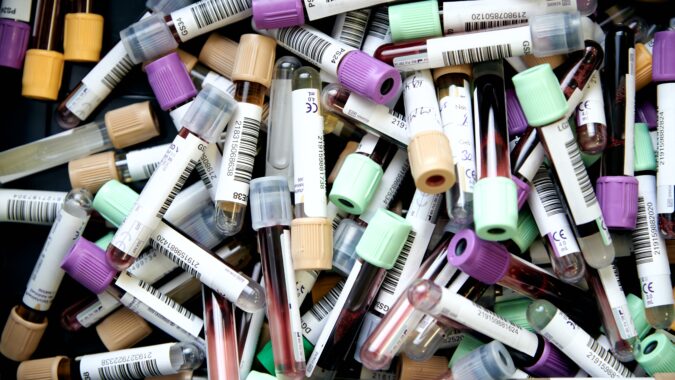
One-off and scheduled anatomical waste collections are available, with daily, fortnightly or monthly services depending on your requirements and available collection route. We provide the agreed containers before collection and arrange removal once they are ready.
After agreeing a collection schedule and delivering these bins, simply fill them within any weight limits and store safely and securely. We’ll then collect, transport, and dispose of your anatomical waste in a way that complies with all legislations and minimises the impact your business has on the environment.
Get a free quote for anatomical waste removal anywhere in the UK by calling us on 0800 211 8390 or contact us online. Someone from our friendly, expert team can answer any of your questions and advise on the right size and type of anatomical waste bags, bins, or containers to meet your needs.
Anatomical waste bins and bags
There are various anatomical waste bags, bins, and containers to store different types of anatomical waste. The typical anatomical waste bag colour is red, making it easy for you and employees to properly segregate anatomical waste from other waste produced at their facility. Segregation is essential as it ensures businesses remain compliant with all government regulations.
Anatomical waste bins and containers are normally yellow with a red lid to show the waste contained is hazardous – non-hazardous bins may have a yellow lid. You can arrange for delivery and collection of one or more of the same or different anatomical waste bins, bags, and containers. Explore some of the main storage solutions for anatomical waste.
-
Red clinical waste bags
Red anatomical waste bags are highly durable and leak-proof, so they don’t damage easily or spill their contents. It can be safer to double-bag an anatomical waste bag to reduce the risk of cross-contamination.
-
240L anatomical waste bin
This standard two-wheel bin can hold up to four bags of anatomical waste. It’s easy to move around both inside and outdoors when disposing of anatomical waste in hospitals and other healthcare settings.
-
660L anatomical waste bin
A larger four-wheel bin, this can hold up to ten bags of anatomical waste. They’re perfect for storing anatomical waste as they’re secure, lockable, and built to comply with all local and EU standards.
Read Our Customer Reviews
Efficient communication
We have worked alongside Business Waste for quite a few months now, and their efficiency with communication and resolving queries is great. Allie especially is a pleasure to liaise with. Great company from a B2B perspective
Flo Bolton-Smith
The real definition of service
The service received was simply outstanding. Business Waste gave good advice and a demonstration of a willingness to help and get me a solution.
Gregory Harrand
Great company
Great company to deal with, special thanks to Danielle who is always on the ball and sort any issues out instantly with proactive involvement with follow up phone calls and emails. I would recommend her to be the next PM to get things done, oh and as a company to deal with all the waste needs for your business.
Top Deals Online
Excellent service set up process
I was impressed by the speed of setting up the service. I made a single phone call to Business Waste and all the necessary paperwork was done efficiently.
Yahya Saeed
Anatomical waste FAQs
-
What colour bin does anatomical waste go in?
The common anatomical waste bin colour is to have a red lid. The bin or container itself may be yellow but the lid should always be red – whether the waste is infectious or not. Any bins you use to store anatomical waste should be clearly labelled to avoid risk of exposure or contamination.
-
What is non-anatomical waste?
Non-anatomical waste should be separated from anatomical waste for disposal. There may seem to be some overlap, but the following are examples of non-anatomical waste that should be stored and disposed of in different clinical waste bins, bags, and containers:
- Sharps in contact with animal or human blood, biological fluids, or tissues
- Tissue or microbial cultures, and material contaminated by such cultures
- Live vaccines
- Containers or materials saturated with blood products
-
How do hospitals dispose of placentas?
As placentas class as anatomical waste, hospitals must dispose of them in the same way as other types of waste body parts. However, some hospitals may keep the placenta in appropriate storage for longer than usual if it needs analysing for any reason.
Otherwise, hospitals will store placentas in anatomical waste bins and arrange collection by a licensed carrier. Then they’ll be transported to an appropriate facility, checked, and treated, before being incinerated.

Get a fast and free quote
Get a fast FREE quote for your anatomical waste disposal
- Free quote within 1 hour
- Anatomical waste assessed
- FREE bins and delivery
- We cover all of the UK
Published 20th April 2022 by Mark Hall. Last modified 24th September 2026