
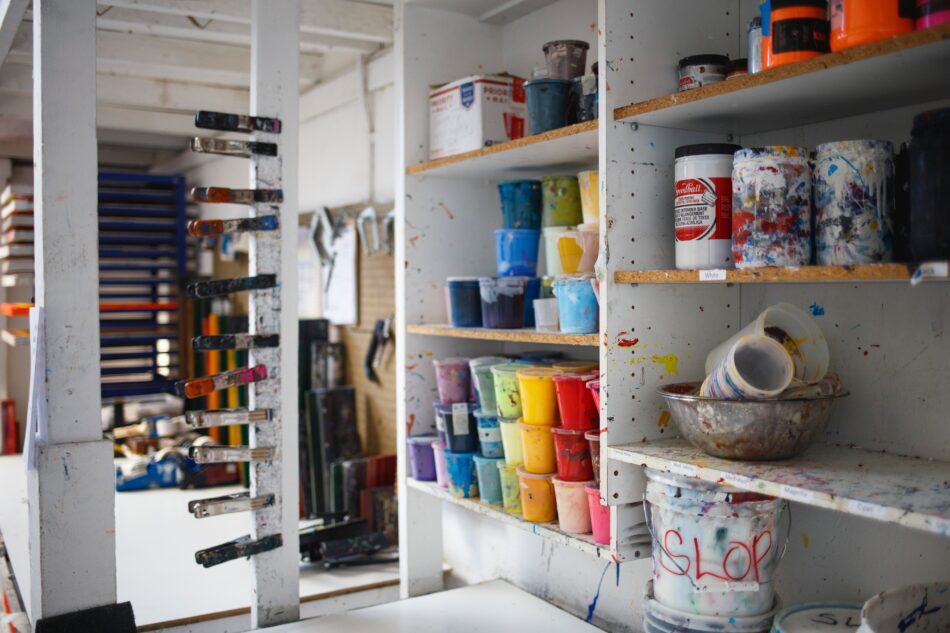
Paint Tin Disposal
Paint cans should be empty, dry and free from wet paint before they are recycled. Small amounts of leftover water-based paint can usually be dried out before disposal, but solvent-based paint, paint thinner and white spirit should be treated as hazardous waste.
For businesses, disposing of paint cans depends on what is inside the tin, how much waste paint you have and whether the paint contains hazardous substances. We can arrange the disposal of paint tins, as well as hazardous waste collections for decorators, contractors, landlords, maintenance teams, facilities managers and businesses clearing old paint stock.
Learn how to dispose of and recycle paint tins from your home or business in this guide.
Disposing of paint tins: businesses vs at home
Disposing of paint tins for businesses
Businesses must dispose of paint tins through an approved waste route.
The right disposal route depends on the type of paint and whether the tin is empty, partly full or contaminated. Water-based paint, solvent-based paint, aerosols, paint thinners, varnishes, resins and contaminated containers may all need different handling.
We’ll help you identify the waste type, arrange collection by licensed carriers and provide the relevant Duty of Care paperwork or hazardous waste consignment notes where required.
Disposing of paint tins at home
Householders should check their local council rules before disposing of old paint tins. Many household waste recycling centres accept paint tins, but the rules vary depending on whether the tin is empty or not.
If the paint is still usable, donating it is usually better than throwing it away. Some reuse schemes accept leftover paint for community groups, charities and households. If the paint cannot be reused, small amounts of water-based paint should be completely dried out before disposal.
Never pour paint down the sink, toilet, drain or outside grid. Paint can pollute water and create problems at wastewater treatment sites.
Can paint tins be recycled?
This depends on the material and whether the tin is clean and dry. Wet paint should not go in mixed recycling because it can leak, contaminate other materials, and make recycling loads harder to process.
- Empty metal paint tins can often be recycled if they are clean and dry. Some recycling centres or waste providers may accept empty plastic paint tins, but rules vary.
- Paint tins with wet paint inside should not go in mixed recycling or general recycling bins.
- Paint tins with dried paint residue may still need checking before recycling or disposal.
- Solvent-based paint tins may need to be treated as hazardous waste, especially if residue remains.
- Commercial paint tins should be separated, described properly, and collected through the right recycling, recovery, or hazardous waste route.
How to dispose of old paint tins with paint inside
Checking the contents of your old paint tins is extremely important before disposal.
If the paint is water-based and only a small amount is left, it can usually be dried out before the tin is disposed of.
- Leave the lid off in a safe, well-ventilated place away from children, pets, drains and public access.
- You can also use paint hardener, sawdust, sand or soil to help it set.
Do not dry out solvent-based paint, paint thinner, white spirit or varnish in the same way. These may be hazardous and should be collected through a licensed hazardous waste collection.
Businesses should not leave paint waste to dry out on a site unless they are sure it is safe. If you are clearing old paint from a workplace, construction site, school, warehouse, workshop or rental property, it’s usually safer to arrange a commercial collection instead.
Paint can recycling – FAQs
-
 How do you dispose of old tins of paint?
The best way to dispose of old paint tins that still contain some paint is to donate it. Ask your friends, family, and colleagues if they could make use of any leftover paint you have. You can also try donating paint to your local community centre, school, library, or council.
Otherwise, take old paint tins from your home to your local household waste recycling centre (HWRC). They should recycle your paint cans and dispose of any paint left in them responsibly. You should never pour paint down the drain as it can cause environmental problems for your local ecosystem and create hard-to-shift blockages that will obstruct your pipes.
Liquid paint is banned from landfills and will not be accepted by your local council. You must wait for it to harden – this can be sped up by adding sawdust, soil, or sand. Do this if there’s more than a few centimetres of pint left in the can.
Businesses must arrange commercial waste collection by licensed waste carriers to get rid of any old paint tins. You cannot take paint cans used for a commercial purpose to a HWRC. Get a quote from Business Waste for help disposing of old paint tins from your company.
-
Can you recycle paint cans?
You can recycle empty metal paint cans in most cases. Ensure they’re clean, dry, and free from any remaining paint, then check the type of metal and if it’s accepted in your household recycling bin. You can also take them to your local HWRC to recycle paint cans made of metal.
Plastic paint cans and those that still contain paint are trickier to recycle, so check with your local council for where to recycle them. Businesses can recycle empty paint cans made of metal or plastic with their commercial metal recycling or plastic recycling collections. Any that contain paint should be treated as hazardous waste and might not be recyclable.
-
Can you put paint tins in the bin?
You can’t normally put paint tins in your bin at home as they usually contain some paint still, which is hazardous waste. Instead, you should take them to your nearest HWRC or contact your council to arrange hazardous waste collection. If they’re completely clean of paint you may be able to put it in your household recycling bin if the type of metal or plastic is accepted.
Paint tins used for commercial purposes can be put in a hazardous waste bin at the business. Again, if they’re completely clean and dry with no paint remnants then you might be able to place them in a metal recycling bin or plastic recycling bin, depending on the material of the can.
-
What are paint cans made from?
There are two main types of paint cans, made from either plastic or metal. The more recently developed plastic cans are constructed from high-density polyethylene (HDPE). Metal cans are made from tin-plated steel. The tin plating is for corrosion resistance, and the steel can be repeatedly recycled.
Empty and clean paint cans can therefore class as a type of plastic waste or a form of metal waste.
-
What are the problems with paint can waste?
Paint cans are often hazardous waste because the paint contains metallic pigments and fortifiers. These can cause breathing problems if inhaled, which can have damaging effects on children and older people, including liver issues and some cancers. Oil-based paint waste is especially problematic because it’s also flammable and often contains volatile organic compounds.
Improper disposal of paint tins and cans can mean they end up in landfill, where such hazardous elements can leach into the surrounding soil and water putting human and environmental health at risk. This is why recycling paint cans and disposing of any waste paint responsibly is so important.
-
Are there any alternatives to paint cans?
It’s always better to opt for metal paint cans where possible as they’re easier to dispose of and are widely recycled compared to plastic paint cans. Recycling paint tins made of metal means you’ll contribute less to landfill and environmental pollution.
For paint, you can get creative with alternatives. Wallpaper is one substitute when decorating interior walls but there are more. Consider experimenting with drapes and tapestries, decals and art, flowers and garlands for a living wall, or even bare brick or stone.
-
What are some facts about paint cans?
These are a few interesting facts about pain and paint cans:
- Before using linseed oil, artists used egg yolk to mix pigments.
- Until the paint tube was invented, paint was stored in purses made from animal bladders.
- Oil paint can take two weeks to fully dry.
-
Where can you take paint cans to recycle and dispose of them for free?
You can take paint cans and tins used domestically to your local HWRC for free. Add a bit of sawdust, soil, or sand to soak up any remaining paint and help the recycling process. It’s always better to dispose of paint and paint cans responsibly to save yourself from legal, environmental, or health concerns.
For businesses, you need to arrange collection by licensed waste carriers when getting rid of paint tins – which comes at a small cost. This is a legal requirement and ensures your company operates within the law when disposing of paint cans. Contact us today for a free quote.
-
Who invented paint cans?
Paint itself dates back more than 100,000 years, so it’s hard to say who exactly invented paint as a material and concept. The earliest example of paint making was discovered in South Africa, where various mineral and organic-based pigments were excavated. This paint was made from red iron oxide and charcoal to create a burgundy shade and it was mixed with bone marrow, used as a binding agent.
Paint cans were invented much more recently. US company Sherwin-Williams patented the first resealable tin paint can in 1877. Before this, any leftover paint was simply thrown away. Aerosol paint cans are an even more recent invention, invented by Edward Seymour in 1949.

Learn about more waste types
Learn about waste types
Get a fast and free quote
Get a fast FREE quote for hazardous waste collection
- Free quote within 1 hour
- Any type of hazardous waste
- FREE bins and delivery
- We cover all of the UK
Published 14th August 2025 by Mark Hall. Last modified 24th August 2026