Simpler Recycling For Businesses
Simpler Recycling rules now apply to businesses and non-household premises in England with ten or more full-time equivalent employees.
Since 31 March 2025, affected businesses must separate food waste, dry recyclable materials, and general waste before collection. Micro-firms with fewer than ten full-time equivalent employees have until 31 March 2027 to comply. This is based on the total number of employees across the business, not just the number at each site.
Business Waste Ltd can help you set up compliant waste collections with the right bins, scheduled collections, and Duty of Care paperwork included.

Simpler Recycling – Are You Ready?
Add in your business details to find out what your company must do to comply with Simpler Recycling.
Simpler Recycling at a glance
Simpler Recycling makes workplace recycling more consistent across England. For businesses, it means keeping recyclable waste and food waste separate from general waste before collection.
The main requirements are:
- Food waste must be separated from general waste
- Dry recyclable materials, such as plastic, metal, glass, paper, and card, must be separated from general waste
- Paper and cardboard may need a separate collection, depending on your waste setup
- General waste should only be used for non-recyclable materials
- Businesses must use suitable bins and arrange compliant collections
- Waste collectors must keep recyclable waste separate from residual waste for recycling or composting
The rules already apply to most businesses with 10 or more full-time equivalent employees. Smaller businesses have more time, but should still prepare before the 2027 deadline.
What is Simpler Recycling?
Simpler Recycling is a set of workplace recycling rules for England (GOV). It was introduced to make recycling collections more consistent, so businesses and non-household premises separate the same core waste streams.
For most businesses, the change is straightforward: recyclable waste, food waste, and general waste need to be kept apart before collection. This helps reduce contamination and gives recyclable materials a better chance of being processed properly.
Who must follow Simpler Recycling rules?
Simpler Recycling applies to businesses and relevant non-household premises in England. In simple terms, this covers most places where people work or use services, including waste produced by staff, customers, visitors, pupils, patients, or residents.
-
Offices
Offices usually need separate collections for paper and card, dry mixed recycling, food waste from staff areas, and general waste. WEEE and confidential waste should be kept out of standard recycling and collected through the right service.

-
Hospitality
Restaurants, pubs, hotels and cafes should prioritise food waste, glass, cardboard and dry mixed recycling. Busy kitchens and bars may need more frequent collections to avoid smells, pests and overflowing bins.
-
Hospitals
Hospitals need clear separation between food waste, dry recycling, general waste, clinical waste, offensive waste, sharps and pharmaceutical waste. Healthcare waste should never be mixed with standard workplace recycling, so clear bin placement and staff guidance are important.
-
Construction Sites
Construction sites should keep general waste, packaging, wood, metal, plasterboard, rubble and hazardous waste separate where needed. This helps reduce contamination and keeps the right paperwork in place for site records.
-
Shops
Shops, supermarkets and retailers often produce large amounts of cardboard, packaging, plastic film, food waste and customer waste. Separate bins can help keep recyclable materials away from general waste and support Simpler Recycling compliance.
-
Care Homes
Care homes need clear separation between food waste, dry recycling, general waste and clinical or offensive waste. Healthcare-related waste should never be mixed with standard workplace recycling.
-
Factories
Factories and warehouses often need separate collections for cardboard, plastic wrap, pallets, packaging, dry mixed recycling and general waste. Sites that produce oils, chemicals, WEEE or batteries may also need specialist collections.
-
Schools
Schools, colleges and universities usually produce food waste, paper, card, packaging and mixed recycling across classrooms, offices, kitchens and communal areas. Clear bin placement makes it easier for staff and pupils to separate waste properly.
-
Properties & Facilities
Facilities managers may need to organise separate waste streams across offices, shared buildings, tenant areas and communal spaces. A clear bin setup helps reduce contamination when several businesses or users share the same waste area.






Simpler Recycling deadlines so far
-
31 March 2025
Businesses and non-household premises in England with 10 or more full-time equivalent employees must separate food waste, dry recyclable waste, and general waste.
This deadline has now passed.
-
31 March 2026
Local authorities must introduce core recycling collections for households in England, including food waste collections for most homes. This does not replace the workplace rules. Businesses still need proper commercial waste collections.
-
31 March 2027
Micro-firms with fewer than 10 full-time equivalent employees must comply with Simpler Recycling. Plastic film is also expected to be included in plastic recycling collections from this date.
If your business is currently exempt, it’s worth preparing early. Waiting until the deadline could make it harder to arrange bins, train staff, and update internal waste processes.
What waste must businesses separate?
Most businesses will need to ensure the following waste streams are separated from general waste in a clean, orderly manner.
-
Food Waste
Food waste from kitchens, staff rooms, cafés, restaurants, hospitality areas, and food preparation.
-
Paper & Cardboard
Office paper, packaging, boxes, and card. These must be kept out of general waste and require a separate collection.
-
Dry Mixed Recycling
Plastic bottles and containers, metal cans and tins, foil and cartons.
-
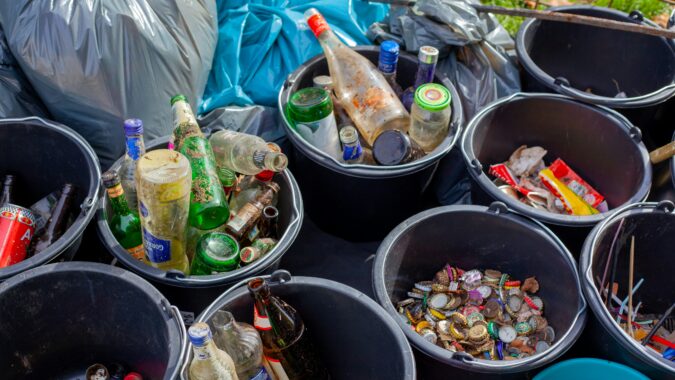
Glass Waste
Any type of glass waste must be stored and collected separately. This includes, glass bottles of any colour, jars, industrial glass, laminated, coated, mirrored and drinkware.




How many bins does your business need?
The number of bins depends on what your business produces. You only need bins for waste streams that apply to your site.
A small office may need general waste, food waste, paper and cardboard, and dry mixed recycling. A restaurant may need those streams, plus separate glass and used cooking oil collections.
Business Waste Ltd can help you choose the right bin sizes and scheduled collection frequencies, so you avoid overflowing bins, wasted space, and unnecessary costs.
Why does Simpler Recycling matter for businesses?
Simpler Recycling can’t be viewed as another admin task. The right setup makes waste easier to manage and provides your business with a clearer paper trail if your waste arrangements are audited.
It helps you stay compliant
Businesses have a Duty of Care for the waste they produce. Licensed waste carriers, suitable bins, and proper paperwork help show your waste is being handled correctly.
It reduces contamination
Contamination happens when the wrong waste goes in the wrong bin. Separating food waste, recycling, paper and cardboard, and general waste helps reduce the number of rejected loads.
It makes collections more efficient
The right bin size and collection frequency can prevent overflowing bins and wasted space. This matters if you have limited storage, busy trading periods, or awkward site access.
It supports sustainability goals
Better separation can improve recycling performance and give you cleaner data for ESG reporting, tender requirements, and internal environmental policies.
What happens if a business does not comply?
The Environment Agency is responsible for enforcing Simpler Recycling requirements for businesses and relevant non-household premises.
If your business does not comply, the Environment Agency may first provide advice and guidance. If the issue continues, it can issue a compliance notice. Ignoring a compliance notice can become an offence and may lead to enforcement action.
From February 3rd, 2026, the Environment Agency introduced a time and materials charge for regulatory work linked to Simpler Recycling non-compliance. Increased in April 2026 to £122.48 per hour, this applies where businesses or occupiers of relevant non-domestic premises are found to be non-compliant. For most businesses, the best approach is to show that reasonable steps have been taken to separate waste correctly and use suitable collections.
This is not a fixed fine for every business.
Compliant businesses are not charged. However, if your business is investigated and found to be failing its Simpler Recycling duties, the cost of regulatory work may be charged back to you.
What’s changing in 2026?
Simpler Recycling has already started for most workplaces in England. Since 31 March 2025, businesses with 10 or more full-time staff have had to separate dry recyclables, food waste and general waste before collection.
The next stage is about smaller businesses getting ready. Micro-firms with fewer than 10 full-time equivalent staff are currently exempt until 31 March 2027, but 2026 is the time to sort your bins, collections and storage. GOV.UK guidance can change, so check the latest position before you implement anything new.
If your business is close to the 10-staff threshold, has multiple sites, or produces regular food waste, packaging, paper, card, glass or mixed recycling, it’s worth setting up separate collections now.
How to prepare your business for Simpler Recycling
Start by identifying the waste your business produces. This may include food waste, paper, cardboard, glass, plastic, metal, packaging, and general waste.
Then check whether you have suitable bins for each waste stream. Your setup should make separation straightforward for staff, cleaners, contractors, and anyone else handling waste on site.
You should also review:
- Your collection frequency
- Your available bin storage space
- Your duty of care paperwork
- Your waste transfer notes
- Whether your waste carrier is licensed
- Whether staff know which bins to use
- Whether bin labels are clear and easy to follow
Clear signage and well-positioned bins can help reduce contamination and make waste separation easier day to day.
These Simpler Recycling rules apply in England. If your organisation operates sites in Scotland, Wales, or Northern Ireland, Business Waste Ltd can help arrange suitable waste collections for each location.
Common Simpler Recycling questions
-
Does every business need a food waste bin?
Every business that produces food waste must separate it. This includes small amounts from staff kitchens, such as tea bags, coffee grounds, fruit peelings, and leftovers.
-
Can recyclable waste go in one bin?
Some dry recyclable materials may be collected together, depending on your waste collector and site setup. Food waste must be collected separately from dry recycling and general waste
-
Can staff take workplace waste home?
No. Staff should not take commercial waste home to dispose of it in household bins. Waste produced by a business must be stored, collected, and documented properly.
-
Can commercial waste go in public bins?
No. Commercial waste should not be placed in public litter bins. If your business produces waste, you need a proper commercial waste collection.
-
How often should food waste be collected?
This depends on how much food waste your business produces and how quickly bins fill up. Many businesses use weekly or fortnightly food waste collections, while busy hospitality sites may need more frequent collections.

How Business Waste Ltd helps with Simpler Recycling
We can help with:
- General waste, food waste, paper and cardboard, dry mixed recycling, and glass collections
- Free bins and delivery with no bin hire charges
- Flexible bin sizes and regular collection schedules
- Licensed waste carriers, Duty of Care documentation, and Waste Transfer Notes
- Single-site and multi-site waste setups
You only pay for collection. Tell us what waste your business produces and how often you need collections, and Business Waste Ltd will help you find the right setup.
Get a fast and free quote
Get a fast FREE quote for compliant waste management
- Free quote within 1 hour
- Any type of waste
- FREE bins and delivery
- We cover all of the UK