
Commercial Chemical Waste Disposal
Business Waste Ltd arranges commercial chemical waste disposal and collection for UK businesses. We collect acids, alkalis, solvents, laboratory chemicals, cleaning products, pesticides, paints, process chemicals and contaminated chemical packaging, with free containers, EA-licensed carrier collections, and full Duty of Care documentation where required.
If your business produces hazardous chemical waste, it must be stored, collected, and disposed of through the correct route. Pouring chemical waste down drains, mixing it with general waste, or burning it can lead to enforcement action.
Tell us what chemical waste you have, how much, its physical form and how it was produced. We’ll confirm whether it is hazardous, which container is suitable and the appropriate collection and treatment route.
 Collections in the last 7 days

Get a free quote
Get a fast FREE quote for chemical waste collection
- Free quote within 1 hour
- Chemical waste assessed
- FREE bins and delivery
- We cover all of the UK
Chemical waste management
Chemical waste needs careful handling from the start. We’ll help you store it safely, keep incompatible chemicals separate, and arrange the right collection and paperwork for the waste your site produces. This starts with knowing what chemicals you have, how much there is, and whether they are hazardous, mixed, expired, contaminated, leaking, or unknown.
We can arrange drums, barrels, IBC containers, and specialist bins for different chemical waste types. There are no delivery or rental fees for standard containers where available, so you only pay for collection.
Licensed carriers collect your chemical waste at an agreed time and take it to an authorised facility for treatment, recovery, or disposal.
Find chemical waste disposal near you, as we cover all of the UK. Our team can also provide you with practical steps to reduce the amount of waste you produce. Plus, we offer competitive and fair prices for our services to help you save time, money, and the planet in one go.

What containers are used for chemical waste?
Drums and barrels
For compatible liquid, solid or semi-solid chemical waste. The container material needs to be suitable for the chemical stored inside.
IBCs
For larger volumes of compatible liquid chemical waste where the waste properties, site setup and collection method allow.
Specialist containers
For laboratory chemicals, reagents and smaller quantities that need to remain separate.
Contaminated packaging containers
Empty bottles, tins and drums that still contain hazardous residues may require a separate container rather than standard recycling.
Do not choose a chemical waste container based on size alone. The material must be compatible with the waste being stored.
Chemical waste collection
Regular collections help reduce storage risks, avoid overflowing containers, and keep chemical waste away from everyday work areas.
Use free bins and containers to store all used chemicals your company produces, then arrange removal on a suitable frequency. Licensed waste carriers will collect your chemical waste at an agreed time and date. Collections can be arranged daily, weekly, fortnightly, or on another agreed schedule, depending on your waste volume and site access.
We provide Duty of Care paperwork and consignment notes where required, giving you a record of the collection and disposal route. The right bin size and collection frequency can also help avoid half-empty collections or containers being left too long.

Our chemical waste collection process
-
Tell us what chemical waste you have
Share the chemical name where known, the container type, quantity, physical form (liquid, solid, powder, sludge or gas), and what process produced it. Let us know if the waste is hazardous, mixed, expired, contaminated, leaking, or unknown.
-
Confirm the right container and paperwork
Chemical waste needs to be identified before collection so the correct waste code, container and disposal route can be confirmed. We arrange suitable drums, barrels, IBCs, containers, or specialist packaging based on the waste type and volume, and confirm whether a consignment note or waste transfer record is needed.
-
Store and segregate safely
Keep chemical waste sealed, labelled, secure, and separate from incompatible materials. Do not mix chemicals unless a specialist has confirmed this is safe and suitable.
-
Licensed collection
Licensed carriers collect the waste at the agreed time and take it to an authorised treatment, recovery, or disposal facility.
-
Treatment, recovery, or disposal
The downstream route depends on the chemical and its contamination. Suitable waste can be recovered or recycled, while other streams need another authorised disposal route, with consignment notes or Duty of Care paperwork provided where required.
How does chemical disposal work?
Chemical waste disposal is controlled by waste, environmental, and health and safety rules, including the Environmental Protection Act 1990 and the Health and Safety at Work Act 1974.
If chemical waste is handled incorrectly, businesses can face enforcement action, fines, and serious health, safety, or environmental risks.
Some chemical waste was historically sent to landfill, but that can create pollution risks if chemicals leak into soil or water. Today, the disposal route depends on the chemical type, hazard properties, and whether recovery or treatment is possible.
Common chemical waste treatments include:
- Recovery and recycling – some solvents and other usable chemical streams can be recovered or purified for reuse where their composition and contamination allow.
- Physico-chemical treatment – acids, alkalis and other chemical wastes can undergo processes such as neutralisation, precipitation or separation at an authorised treatment facility.
- Thermal treatment – chemicals that cannot be safely recovered may require specialist incineration or another thermal treatment route.
- Specialist disposal – some contaminated residues, sludges or other difficult chemical wastes need a disposal route based on their hazardous properties and waste acceptance requirements.
Business Waste Ltd arranges chemical waste collections through authorised routes, with treatment, recovery, or disposal matched to the waste type.
How should businesses classify chemical waste?
Chemical waste should be identified before collection so the right container, waste code, paperwork, and treatment route can be arranged.
Businesses may need to confirm the chemical name, process that produced the waste, physical form, hazard properties, approximate quantity, and whether the waste is mixed, contaminated, flammable, corrosive, toxic, oxidising, or reactive.
Safety data sheets can help identify chemical hazards, storage requirements, and emergency measures, but they are not a risk assessment on their own. The same chemical can have a different waste code depending on how and where it became waste.
Who needs chemical waste disposal?
A wide range of businesses produce chemical waste. You may need to dispose of empty paint tins or toxic solvents in the correct manner.
Common sites that need chemical waste collection include:
- Laboratories – Solvents, resins, acids, dyes, mercury-containing items, reagents, and labelled chemical containers.
- Healthcare and clinical facilities – Disinfectants, cleaning chemicals, lab chemicals, and contaminated containers where specialist disposal is needed.
- Factories – The manufacture of new goods and materials results in lots of chemical waste in factories. This could include products such as waste oil and brake fluids.
- Dry cleaning – Chemical cleaning products, such as Perchloroethylene (PERC), are used in dry cleaners. While PERC helps clean and launder clothes, it can threaten the environment if disposed of incorrectly.
- Farms and agricultural businesses – These produce large volumes of chemical waste, such as pesticides, brake fluids and waste oils.
- Offices – Printer toner, ink cartridges, cleaning chemicals, aerosols, and small chemical containers.
- Automotive – Solvents, degreasers, paints, cleaning chemicals and specialist fluids, with waste oils collected separately.
Types of chemical waste and their disposal routes
Chemical waste can include hazardous and non-hazardous materials, from lab chemicals and solvents to contaminated packaging, aerosols, paint, toner, and cleaning products.
- Acid waste (sulphuric acid, hydrochloric acid, nitric acid, phosphoric acid): These are corrosive chemicals (EWC code 06 01 *) that must be stored in acid-resistant containers. Disposal routes include neutralisation followed by controlled discharge, or high-temperature incineration.
- Alkali waste (sodium hydroxide, potassium hydroxide, ammonia solutions): Corrosive alkalis (EWC 06 02 *) require similar segregation and neutralisation or incineration treatment.
- Solvent waste (acetone, toluene, xylene, MEK, IPA): Flammable and toxic (EWC 07 01 * or 07 03 *). Depending on quality and contamination level, solvent waste may be recovered for re-use through distillation or sent for incineration. Visit our dedicated solvent recycling page for more.
- Oxidising chemicals (hydrogen peroxide, sodium hypochlorite, chlorates): EWC 06 07 *. Must be stored separately from flammables. They require specialist disposal.#
- Pesticides and biocides (herbicides, insecticides, fungicides): EWC 20 01 19 *. Must not be mixed with other chemical waste. They require specialist disposal through licensed contractors.
- Laboratory reagents: Mixed reagents and unknown chemicals require characterisation before disposal. See our laboratory chemical waste page for further guidance.
Industrial chemical waste disposal
We arrange industrial chemical waste disposal for manufacturers, engineering companies, production facilities, warehouses and other sites producing chemical residues as part of their operations.
Industrial streams can include:
- Spent acids and alkalis
- Solvents
- Cleaning chemicals
- Off-specification products
- Production residues
- Sludges
- Wash-water chemicals
- Contaminated packaging
The waste needs to be identified before collection so incompatible materials can remain separate and the appropriate container and treatment route can be arranged.
Smaller volumes may use drums or barrels, while suitable high-volume liquid streams can use IBCs or another specialist bulk collection setup.
Types of chemical waste
Chemical waste can include hazardous and non-hazardous materials, from lab chemicals and solvents to contaminated packaging, aerosols, paint, toner, and cleaning products.
Common chemical waste examples include:
- Waste oils – such as diesel, kerosene, gearbox, and other oils.
- WEEE (Waste Electrical and Electronic Equipment) products – including the materials contained within them.
- Batteries – standard AA batteries to car and machinery ones.
- Chemical containers or packaging – contaminated due to contact with chemicals.
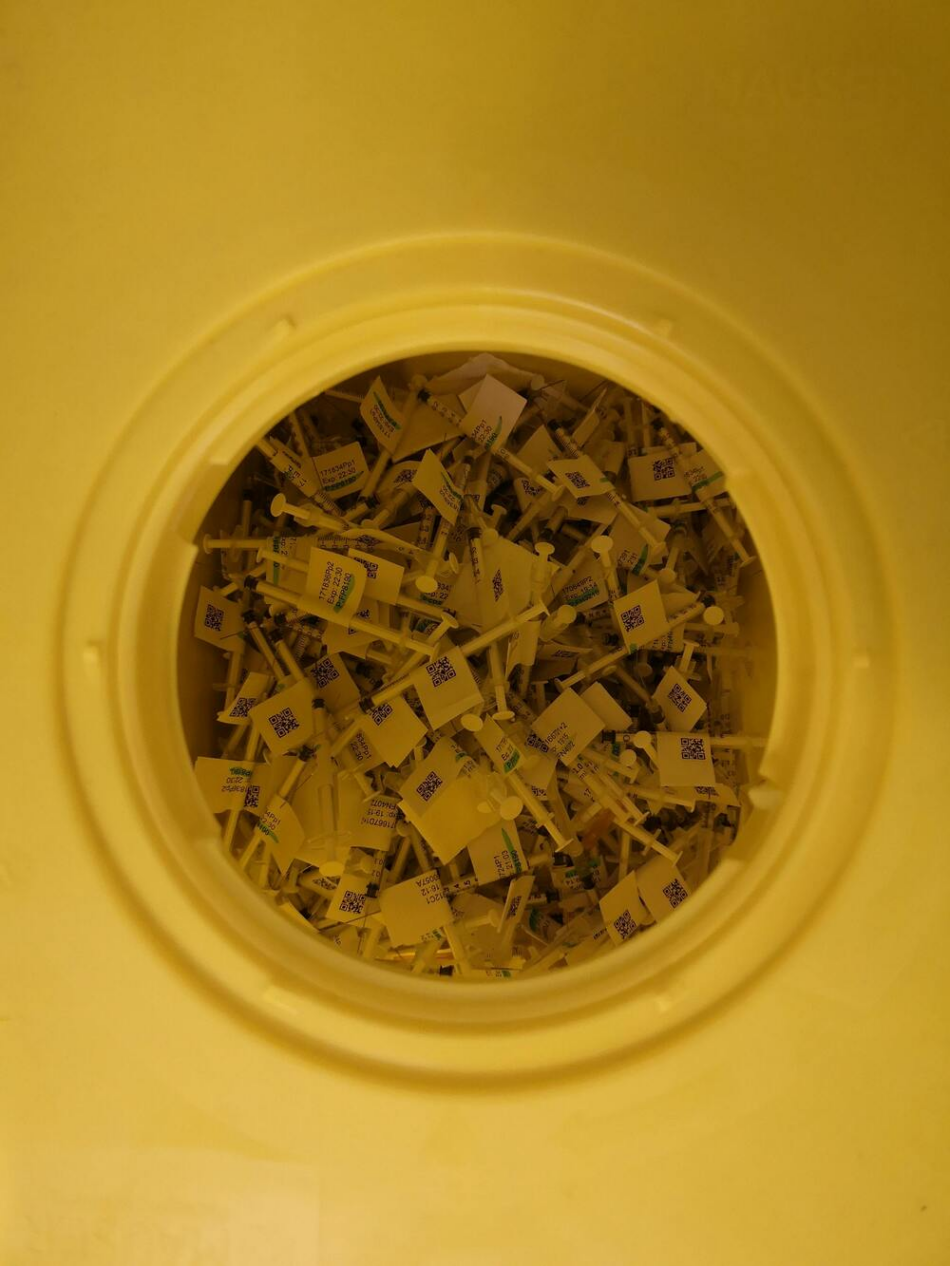
- Chemically contaminated sharps – needles, syringes, lancets, or clippers contaminated with chemicals, where a specialist collection route is required.
- Cleaning products – detergents, disinfectants, wipes, and sprays.
- Solvents – ethanol, methanol, and acetone.
- Pesticides – insecticides, herbicides, and fungicides.
- Paint – emulsion, gloss, primer, and more.
- Printer toner and ink cartridges – empty ink cartridges are contaminated by chemicals.
- Used aerosol cans – deodorants, air fresheners, paints, thinners, adhesives, resins and more.
- Fluorescent light bulbs – contain a mix of argon, xenon, neon, and mercury vapour.
Chemical waste storage
Chemical waste should be stored safely before collection. COSHH applies where staff may be exposed to hazardous substances, and waste rules apply once the chemical becomes waste.
Chemical waste must be:
- Handled carefully before, after, and during use. Any person who comes into contact with these products must wear the appropriate personal protective equipment (PPE) and follow all health and safety guidelines.
- Stored in a marked, secure area away from the public that staff can access safely.
- Separated from other hazardous waste products and stored in appropriate chemical waste bins and containers. These chemical waste containers should be inspected regularly to ensure they haven’t sustained any damage.

Read our reviews
We have been using Business Waste for a few months and have had a good experience with their chemical waste collection service.Basusree Ghosh
The communication and support from the sales, logistics, and collection teams have been good. I would like to specifically mention Liam and Katie, who have been in touch with us multiple times and have been very helpful.
Why use Business Waste for chemical waste removal?
Chemical waste can be difficult to manage because each waste stream may need a different container, label, waste code, collection route, and treatment method.
Business Waste Ltd gives you one contact for chemical waste containers, collection dates, carrier paperwork, and authorised disposal routes.
When we manage your chemical waste removal, you benefit from:
- Free bins – just cover the collection costs with a range of drums, barrels, containers, and bins for used chemicals.
- Safe disposal – treatment, recovery, or disposal at authorised sites, based on the chemical type.
- Hazardous waste consignment notes, where required
- Competitive prices – clear quotes based on waste type, container size, collection frequency, and location.
- Regular waste collection – choose from daily, weekly, and fortnightly chemical waste collections.
- Great customer service – support with chemical classification, storage, collections, and paperwork.
What paperwork is needed for chemical waste disposal?
Hazardous chemical waste usually needs a hazardous waste consignment note when it is moved. This records what the waste is, where it came from, who carried it, and where it was taken.
Non-hazardous chemical waste may need waste transfer documentation instead. Business Waste Ltd can help arrange the correct paperwork based on the chemical type, classification, and collection route.
COSHH and chemical waste disposal
The Control of Substances Hazardous to Health (COSHH) Regulations 2002 require UK employers to assess and control exposure to hazardous substances, including chemicals that become waste materials.
When a COSHH-regulated chemical becomes waste, it typically also falls under the Hazardous Waste Regulations 2005. That can mean using a registered waste carrier and completing a hazardous waste consignment note when the waste is moved. Businesses producing more than 500kg of hazardous waste per year (or lower thresholds for specific waste types) must notify the Environment Agency.
Business Waste Ltd provides a specialist COSHH waste disposal service.
-
 Free bins
 -
Safe disposal
-
Bespoke quote
-
Free duy of care
-
1 month’s free collections





Get a fast and free quote
Get a fast FREE quote for chemical waste removal
- Free quote within 1 hour
- Chemical waste assessed
- FREE bins and delivery
- We cover all of the UK
Chemical waste disposal FAQs
-
How do you dispose of empty chemical containers?
Empty chemical containers may still contain residues, vapours, or contamination, so they should not go in general waste or standard recycling bins.
Business Waste Ltd can arrange collection for empty chemical containers as part of your chemical or hazardous waste service. Depending on the container and residue, they may be sent for specialist cleaning, reuse, recycling, treatment, or safe disposal.
-
Can you pour chemical waste down the drain?
No. Businesses should not pour chemical waste down sinks, drains, toilets, or surface water systems. This can cause pollution, damage pipework, create health and safety risks, and lead to enforcement action.
Chemical waste should be stored separately in a suitable container and collected by a licensed waste carrier. Business Waste Ltd can arrange compliant chemical waste disposal and provide the paperwork you need for duty of care records.
-
What counts as chemical waste?
Any chemical substance that you need to dispose of. This includes: expired or surplus chemicals, used solvents, laboratory reagents, cleaning chemicals, pesticides and biocides, process chemicals, and contaminated packaging that held chemicals.
If the substance is classified as hazardous due to toxicity, flammability, corrosiveness, or other hazard properties, it must be handled as hazardous waste.
-
Do businesses need a consignment note for chemical waste?
Yes, if the chemical waste is hazardous. Hazardous waste usually needs a consignment note when it is moved. This records what the waste is, where it came from, who carried it, and where it was taken.
We can arrange consignment note support and Duty of Care paperwork for regulated chemical waste collections.

Published 3rd April 2022 by Mark Hall. Last modified 10th September 2026