
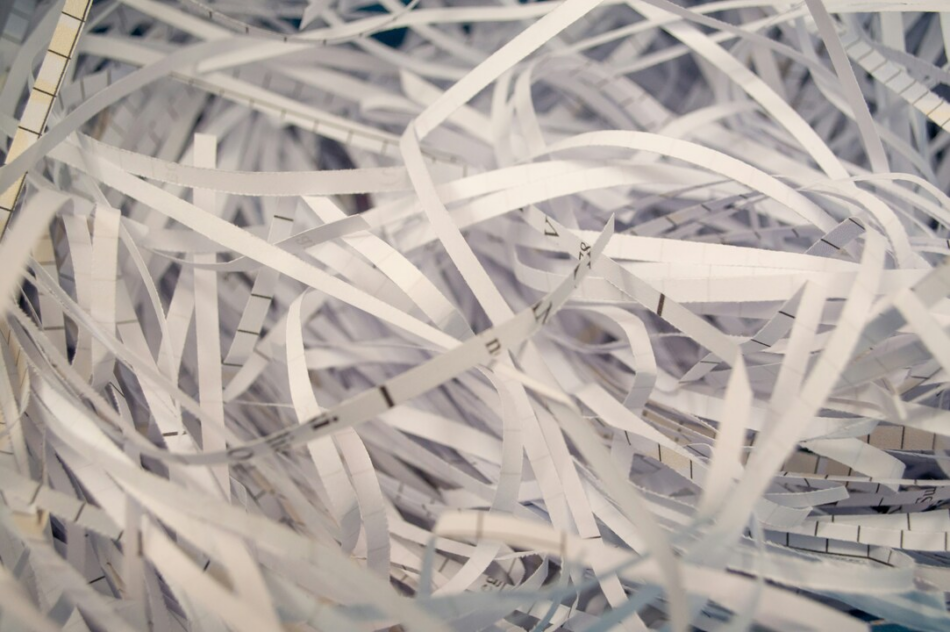
Confidential Waste Disposal & Collection
We arrange confidential waste disposal for businesses across the UK. We’ll collect sensitive paper records, data-bearing media and branded materials, with secure destruction arranged through shredding, pulping, incineration or specialist media destruction, and provide a Certificate of Destruction for each collection.
Tell us what confidential material you need to dispose of, roughly how much there is and whether you need a one-off clearance or regular collections. We’ll confirm the secure containers, collection schedule and destruction method.
For records containing personal information, secure disposal helps businesses meet their UK GDPR and Data Protection Act responsibilities by preventing data from being recovered or accessed after it is no longer required. Collections are arranged in line with BS EN 15713:2023 secure destruction standards.
 Bins collected in the last 7 days

Get a free quote
Get a free confidential waste disposal quote
- Free quote within 1 hour
- Confidential waste assessed
- FREE bins and delivery
- Collection across the UK
Our confidential waste collection process
-
Choose secure bins, sacks, or containers
We’ll help you choose lockable consoles, sacks, wheelie bins, archive boxes, or secure containers based on your waste type, volume, collection frequency, and security requirements.
-
Store confidential waste securely
Keep documents, records, media, and branded materials in the agreed container until collection, rather than leaving them in open recycling or general waste bins. Lockable containers help reduce the risk of unauthorised access.
-
Arrange scheduled or one-off collection
Choose one-off, daily, weekly, fortnightly, monthly, or ad-hoc collections based on your site and how much confidential waste you produce.
-
Secure destruction
The destruction method depends on the material and security requirement. Your confidential waste is taken to an authorised destruction facility or destroyed on site where available – paper can use secure shredding, pulping or another appropriate destruction route, while digital media and branded products may require specialist physical destruction.
-
Receive your paperwork
You receive a certificate of destruction and Duty of Care documentation where required, giving your business a clear record of collection and destruction.
Confidential waste collection
Confidential waste should not be left in open bags, desk bins, or general waste containers. We provide secure storage, one-off or scheduled collections and an appropriate destruction route for your commercial materials.
We’ll help you choose the right secure container, collection schedule, and destruction route for your confidential waste.
We can provide:
- Lockable confidential waste consoles for offices
- Sacks and bags for low-volume or one-off clear-outs
- Wheelie bins for higher-volume document disposal
- Secure containers for media, branded items, or mixed confidential materials
- On-site destruction available where suitable
- Certificates of destruction
- Duty of Care documentation and waste transfer records where required
- Scheduled or one-off collections anywhere in the UK
Whether you’re a law firm, healthcare provider, school, or corporate office, we’ll base the service on your waste volume, security requirements, and collection frequency.
What counts as confidential waste?
Confidential waste is not just old paperwork. It can include records or materials containing personal data, financial information, commercially sensitive details or information stored on physical media.
Common types of confidential waste we collect include:
- Personal documents: CVs, payroll records, ID badges, staff records and HR documents.
- Customer and client records: contracts, account forms, case files, applications, and correspondence.
- Financial documents: invoices, receipts, payment records, audit files and account statements.
- Medical and health records: non-clinical patient, resident, visitor or staff data.
- Legal and professional documents: case files, deeds, wills, contracts and confidential reports.
- Branded materials: uniforms, packaging, promotional items and obsolete stock.
- IT and data storage: hard drives, USBs, CDs, tapes and obsolete devices.
We’ll check what confidential waste you have, how it needs to be stored, and whether it needs paper shredding, media destruction, or another secure route. We can use this information to build a confidential waste management plan that’s secure, cost-effective, and fully compliant with the Waste Hierarchy.
What should not go in confidential waste bins?
Confidential waste bins are for sensitive documents and agreed confidential materials. They should not be used for general waste, food waste, liquids, hazardous waste, batteries, clinical waste, or ordinary recycling.
Electrical items, hard drives, USBs, branded goods, and uniforms may need a separate secure destruction route. We’ll confirm the right collection before you place them in a container.
Hard drives and digital media destruction
Hard drives, solid-state drives (SSDs), USB drives, CDs, DVDs, backup tapes, and mobile devices all contain data that can be recovered using specialist tools even after deletion or formatting.
Deleting files or carrying out a basic reformat does not necessarily remove recoverable data. Depending on the media, security requirements, and whether the equipment will be reused, suitable methods can include verified secure wiping, degaussing or physical destruction.
We can arrange secure physical destruction for hard drives, SSDs, USB drives and other data-bearing media where destruction rather than reuse is required, with data-grade shredding to DIN 66399 standards and a Certificate of Destruction for each item. Our service is built for IT equipment refresh projects, office relocations, data centre decommissioning, and end-of-life hardware disposal.
What bins are used for confidential waste?
The right container depends on how much confidential waste you produce, how sensitive it is, and whether you need regular collections or a one-off clear-out.
Common options include:
- Confidential waste consoles (60-120L): lockable units for regular paper documents in offices, healthcare sites and professional workplaces.
- Shredding sacks and bags: suitable for lower volumes or one-off document clear-outs where the agreed security setup allows.
- Wheelie bins (240-660L): for higher-volume archive clearances and organisations producing large quantities of confidential paper.
- Archive boxes: for stored files and record clearances where documents are already boxed.
- Secure lockable containers and drums: for agreed data media, branded products, ID badges or other materials requiring separate destruction.
Keep confidential waste in the secure container until collection. Do not leave loose documents in open bags, general waste bins, or shared recycling points.
Containers are labelled and collected by registered waste carriers before being taken to approved destruction facilities.

Confidential Waste Bins
Get free bins, bags, and containers for your confidential waste. There are no delivery or bin hire fees, so you’ll only pay for collection. Explore the range of confidential bins and bags available.
How much does confidential waste disposal cost?
Costs for commercial confidential waste disposal vary depending on the material, volume, container type, and collection frequency. Geographical factors and local destruction facilities will also impact your quote.
A small office using one secure console on a regular collection will need a different service from an archive clearance involving several wheelie bins or a batch of hard drives requiring specialist destruction.
On-site destruction, specialist media handling and one-off bulk clearances can also affect the collection price.
Confidential waste compliance and paperwork
Confidential waste often contains personal data, financial information, or sensitive business records. Under UK GDPR and the Data Protection Act 2018, organisations must protect personal data from unauthorised access, loss, or misuse, including when records are disposed of.
Secure confidential waste disposal helps by keeping sensitive materials stored safely, collected properly, destroyed securely, and recorded.
We can provide:
- A Certificate of Destruction for securely destroyed confidential material, where required.
- Waste transfer documentation, meeting Duty-of-Care requirements under the Environmental Protection Act 1990.
- Secure containers for material awaiting destruction.
- Collection through registered waste carriers.
- Destruction through an authorised facility or on-site service where available, under BS EN 15713:2023 standards.
- Security-vetted staff (to BS7858) handling your waste.
Waste Duty of Care requirements also apply to the physical waste transfer. Businesses should use authorised waste carriers, accurately describe their waste and retain the required transfer records. Exact waste rules differ between England, Wales, Scotland and Northern Ireland.
Data protection law does not prescribe one specific destruction method. The method should prevent personal information from being recovered or disclosed. ICO guidance gives cross-cut or micro-cut shredding for paper and secure wiping, degaussing or hardware destruction for electronic media as examples.
We help you meet the following legislation and frameworks:
- Data Protection Act 2018 and UK GDPR
- Environmental Protection Act 1990
- Waste (England and Wales) Regulations 2011
- BS EN 15713:2023 (Secure Destruction of Confidential Material)
Under the Data Protection Act 2018 and UK GDPR, you’re legally required to dispose of personal data securely when it is no longer needed by your business. GDPR requires that personal data be processed with appropriate security, including protection against unauthorised access and accidental loss or destruction.
For physical documents and data-bearing media, this means using a secure disposal process with a clear record of collection and destruction. Business Waste Ltd arranges confidential waste collections through licensed carriers and approved destruction routes.
Related confidential waste services
Getting rid of confidential waste is convenient, secure, and cost-effective with Business Waste. Use the services below for secure containers, paper shredding, or recycling once documents have already been destroyed.
-
Confidential waste bins and bags
Store sensitive documents securely before collection.

-
Shredding services
Arrange secure destruction for confidential paper records and documents.
-
Shredded paper recycling
Recycle paper that has already been shredded securely.


Read Our Customer Reviews
Efficient communication
We have worked alongside Business Waste for quite a few months now, and their efficiency with communication and resolving queries is great. Allie especially is a pleasure to liaise with. Great company from a B2B perspective
Flo Bolton-Smith
The real definition of service
The service received was simply outstanding. Business Waste gave good advice and a demonstration of a willingness to help and get me a solution.
Gregory Harrand
Great company
Great company to deal with, special thanks to Danielle who is always on the ball and sort any issues out instantly with proactive involvement with follow up phone calls and emails. I would recommend her to be the next PM to get things done, oh and as a company to deal with all the waste needs for your business.
Top Deals Online
Excellent service set up process
I was impressed by the speed of setting up the service. I made a single phone call to Business Waste and all the necessary paperwork was done efficiently.
Yahya Saeed
Get a fast and free quote
Get a fast FREE quote for confidential waste removal
- Free quote within 1 hour
- Confidential waste assessed
- FREE bins and delivery
- Collection across the UK
Confidential waste FAQs
-
What is confidential waste?
Confidential waste is any material that contains personal, financial, legal, medical, customer, employee, or business-sensitive information. It can include paper records, files, contracts, branded materials, ID badges, and data-bearing media where secure media destruction is arranged.
-
How is confidential waste disposed of?
Confidential waste is shredded, pulped, incinerated, or destroyed through a specialist route, depending on the material. Collections can be arranged in line with BS EN 15713:2023 standards, with records provided after destruction.
-
What bins are required for confidential waste?
Most businesses use lockable confidential waste consoles, shredding sacks, archive boxes, or secure wheelie bins. The right container depends on waste volume, collection frequency, and whether the material is paper, media, branded stock, or mixed confidential waste.
-
Can shredded paper be recycled?
Yes. Once shredded, paper can be pulped and recycled into new products, such as cardboard or tissue.
-
What is a certificate of destruction?
A Certificate of Destruction provides evidence that confidential material passed through the agreed secure destruction service. It can form part of your information-disposal and audit records.
The certificate typically records: the date of collection, the quantity and type of waste destroyed, the method of destruction (shredding, pulping, or incineration), the licensed carrier and authorised facility used, and a unique reference number for your records. Keep it with your waste and data retention records.
-
How much does confidential waste disposal cost?
Confidential waste disposal cost depends on the volume and type of material, container required, collection frequency, destruction method and business location.
Regular paper collections using a confidential console will normally have different requirements from an archive clearance, on-site shredding job or batch of hard drives requiring specialist destruction.
We provide a quote based on the material and collection setup, with standard containers supplied without rental or delivery charges where applicable.

Nationwide confidential waste disposal in the UK
And arrange your free bin and your collection
- Armagh
- Bolton Waste Management
- Brighton & Hove Waste Management
- Bristol Waste Management
- Canterbury Waste Management
- Cardiff Waste Management
- Carlisle Waste Management
- Chelmsford Waste Management
- Chester Waste Collection
- Chichester Waste Collections
- Commercial Waste Birmingham
- Commercial Waste Collection Edinburgh
- Commercial Waste Collection London
- Coventry Waste Management
- Durham Waste Management
- Ely Waste Disposal
- Glasgow Waste Management
- Hull Waste Management
- Kent Waste Management
- Lancaster Waste Management
- Lichfield Waste Disposal
- Liverpool Waste Management
- Luton Waste Management
- Newport Waste Management
- Oxford Waste Management
- Perth
- Peterborough Waste Management
- Preston Waste Management
- Reading Waste Management
- Ripon Waste Collection
- Salford Waste Management
- Slough Waste Disposal
- Southend Waste Disposal Services
- St Albans Waste Disposal
- Stirling Waste Management
- Stockport Waste Collection
- Swansea Waste Management
- Truro Waste Collection
- Wakefield Waste Management
- Warrington Waste Management
- Waste Collection Bath
- Waste Collection Middlesbrough
- Waste Disposal Inverness
- Waste Management Aberdeen
- Waste Management Aldershot
- Waste Management Alfreton
- Waste Management Ashington
- Waste Management Ashton-under-Lyne
- Waste Management Aylesbury
- Waste Management Barnsley
- Waste Management Barnstaple
- Waste Management Basildon
- Waste Management Basingstoke
- Waste Management Bedford
- Waste Management Bedfordshire
- Waste Management Bedworth
- Waste Management Belfast
- Waste Management Bellshill
- Waste Management Belper
- Waste Management Bexhill-on-Sea
- Waste Management Bicester
- Waste Management Bishop Auckland
- Waste Management Bishop’s Stortford
- Waste Management Blackburn
- Waste Management Blackpool
- Waste Management Blyth
- Waste Management Bognor Regis
- Waste Management Borehamwood
- Waste Management Bournemouth
- Waste Management Bradford
- Waste Management Brent
- Waste Management Bridgwater
- Waste Management Bridlington
- Waste Management Brighouse
- Waste Management Broadstairs
- Waste Management Bromley
- Waste Management Bromsgrove
- Waste Management Burnley
- Waste Management Burntwood
- Waste Management Bury
- Waste Management Bury St Edmunds
- Waste Management Buxton
- Waste Management Cambridge
- Waste Management Cannock
- Waste Management Canvey Island
- Waste Management Castleford
- Waste Management Caterham
- Waste Management Chatham
- Waste Management Cheltenham
- Waste Management Chesterfield
- Waste Management Chippenham
- Waste Management Christchurch
- Waste Management Clevedon
- Waste Management Coalville
- Waste Management Colchester
- Waste Management Colne
- Waste Management Congleton
- Waste Management Cornwall
- Waste Management Cramlington
- Waste Management Crawley
- Waste Management Croydon
- Waste Management Cumbria
- Waste Management Dartford
- Waste Management Derby
- Waste Management Devon
- Waste Management Dewsbury
- Waste Management Doncaster
- Waste Management Dorset
- Waste Management Dover
- Waste Management Droitwich
- Waste Management Dronfield
- Waste Management Dudley
- Waste Management Dumfries-Galloway
- Waste Management Dundee
- Waste Management East Lothian
- Waste Management East Riding of Yorkshire
- Waste Management Eastbourne
- Waste Management Ellesmere Port
- Waste Management Enfield
- Waste Management Essex
- Waste Management Evesham
- Waste Management Exeter
- Waste Management Falkirk
- Waste Management Falmouth
- Waste Management Fife
- Waste Management Folkestone
- Waste Management Frome
- Waste Management Gateshead
- Waste Management Gillingham
- Waste Management Gloucester
- Waste Management Grantham
- Waste Management Gravesend
- Waste Management Grimsby
- Waste Management Guisborough
- Waste Management Hailsham
- Waste Management Halesowen
- Waste Management Halifax
- Waste Management Hampshire
- Waste Management Harlow
- Waste Management Harrogate
- Waste Management Hastings
- Waste Management Havant
- Waste Management Hemel Hempstead
- Waste Management Hereford
- Waste Management Herne Bay
- Waste Management High Wycombe
- Waste Management Hornchurch
- Waste Management Horsham
- Waste Management Houghton Le Spring
- Waste Management Hounslow
- Waste Management Huddersfield
- Waste Management Huntingdon
- Waste Management Ilford
- Waste Management Ilkeston
- Waste Management in Tewkesbury
- Waste Management Ipswich
- Waste Management Keighley
- Waste Management Kendal
- Waste Management Kettering
- Waste Management Kidderminster
- Waste Management Kingston-Upon-Thames
- Waste Management Kingswinford
- Waste Management Knutsford
- Waste Management Lancashire
- Waste Management Leeds
- Waste Management Leicester
- Waste Management Leigh
- Waste Management Leighton Buzzard
- Waste Management Letchworth Garden City
- Waste Management Leyland
- Waste Management Leyton
- Waste Management Lincoln
- Waste Management Lincolnshire
- Waste Management Loughborough
- Waste Management Lowestoft
- Waste Management Maidenhead
- Waste Management Maidstone
- Waste Management Malvern
- Waste Management Manchester
- Waste Management Mansfield
- Waste Management Margate
- Waste Management Market Harborough
- Waste Management Melton Mowbray
- Waste Management Milton Keynes
- Waste Management Morecambe
- Waste Management Newark-on-Trent
- Waste Management Newbury
- Waste Management Newcastle upon Tyne
- Waste Management Newton Aycliffe
- Waste Management Norfolk
- Waste Management North Shields
- Waste Management North Yorkshire
- Waste Management Northampton
- Waste Management Northwich
- Waste Management Norwich
- Waste Management Nottingham
- Waste Management Oldham
- Waste Management Oxfordshire
- Waste Management Penzance
- Waste Management Plymouth
- Waste Management Poole
- Waste Management Portsmouth
- Waste Management Ramsgate
- Waste Management Redditch
- Waste Management Rochdale
- Waste Management Romford
- Waste Management Rossendale
- Waste Management Rotherham
- Waste Management Rugby
- Waste Management Rushden
- Waste Management Salisbury
- Waste Management Sandbach
- Waste Management Scarborough
- Waste Management Scottish Borders
- Waste Management Scunthorpe
- Waste Management Sevenoaks
- Waste Management Sheffield
- Waste Management Shrewsbury
- Waste Management Shropshire
- Waste Management Sittingbourne
- Waste Management Skegness
- Waste Management Somerset
- Waste Management South Lanarkshire
- Waste Management South Shields
- Waste Management Southampton
- Waste Management St Helens
- Waste Management Stafford
- Waste Management Staffordshire
- Waste Management Stoke-on-Trent
- Waste Management Stroud
- Waste Management Suffolk
- Waste Management Sunderland
- Waste Management Surrey
- Waste Management Sussex
- Waste Management Sutton
- Waste Management Sutton Coldfield
- Waste Management Sutton-in-Ashfield
- Waste Management Swindon
- Waste Management Tamworth
- Waste Management Taunton
- Waste Management Telford
- Waste Management Torquay
- Waste Management Tunbridge Wells
- Waste Management Walsall
- Waste Management Wandsworth
- Waste Management Warminster
- Waste Management Watford
- Waste Management Wednesbury
- Waste Management Welwyn Garden City
- Waste Management West Bromwich
- Waste Management West Midlands
- Waste Management West Yorkshire
- Waste Management Weymouth
- Waste Management Whitstable
- Waste Management Wigan
- Waste Management Woking
- Waste Management Wolverhampton
- Waste Management Worcester
- Waste Management Worksop
- Waste Management Yorkshire
- Winchester Waste Collection
- Worthing Waste Collection
- Wrexham Waste Collection
- York Waste Management
Published 4th April 2022 by JackBrayshaw. Last modified 10th September 2026