
World’s Most Littered Tourist Attractions Revealed
Visitors are criticising some of the world’s best-known tourist attractions for visible litter, according to new research from Business Waste Ltd.
The study analysed Tripadvisor reviews for more than 140 major tourist attractions and ranked sites by the number and percentage of reviews mentioning “litter”. The ranking reflects visitor complaints and perceptions, rather than a physical litter audit. Still, it gives a useful indication of where waste has become noticeable enough for tourists to mention publicly.
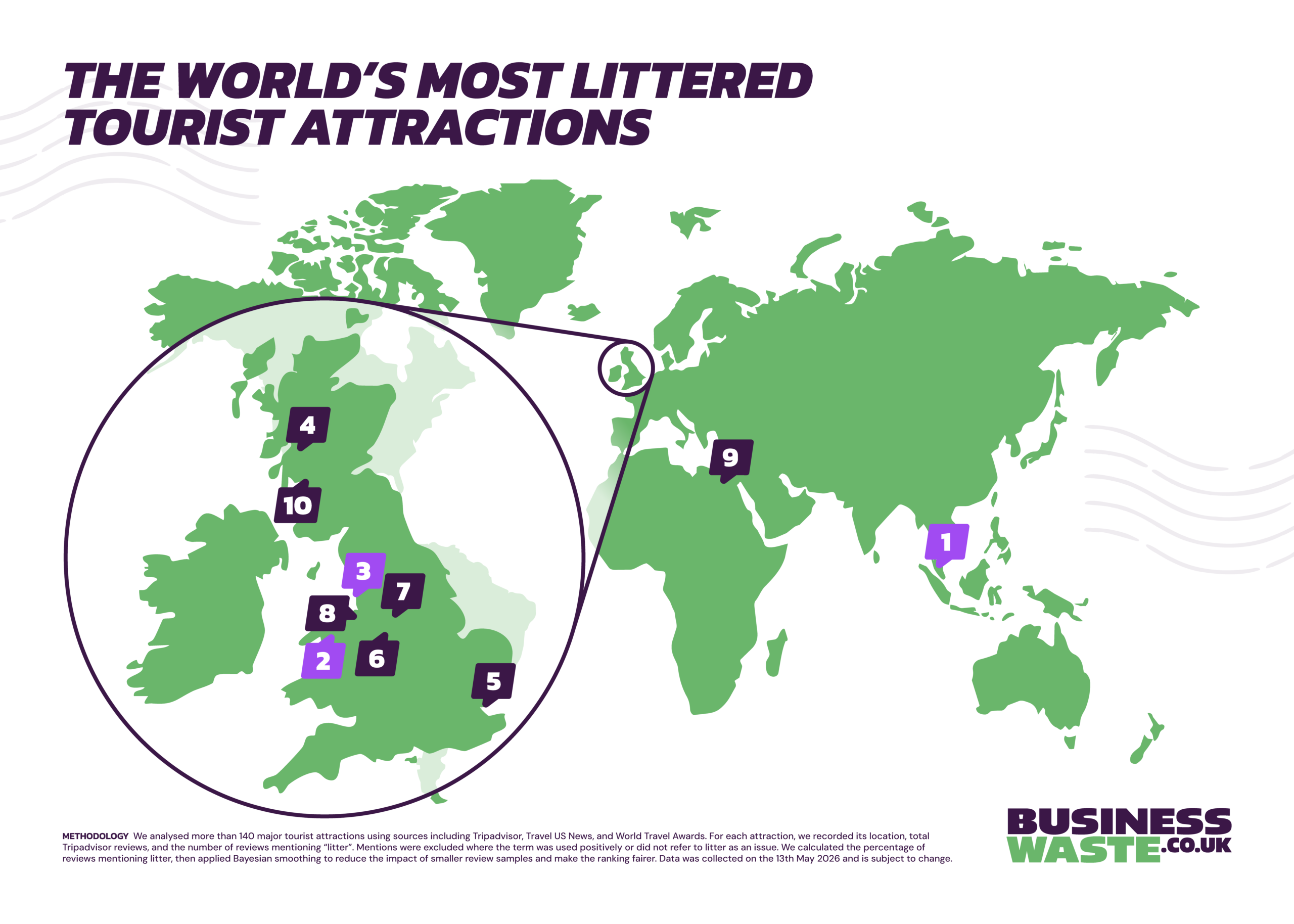
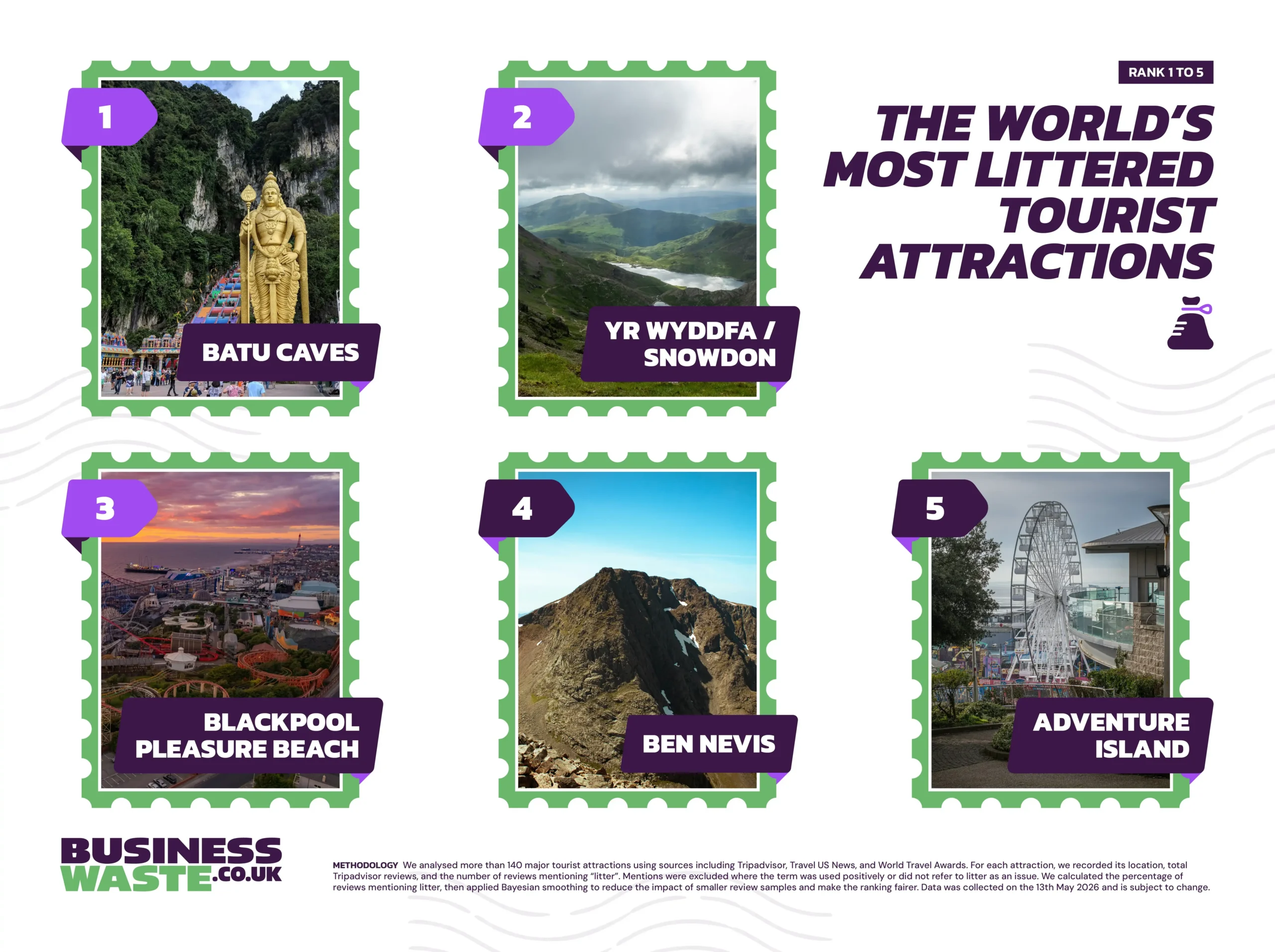
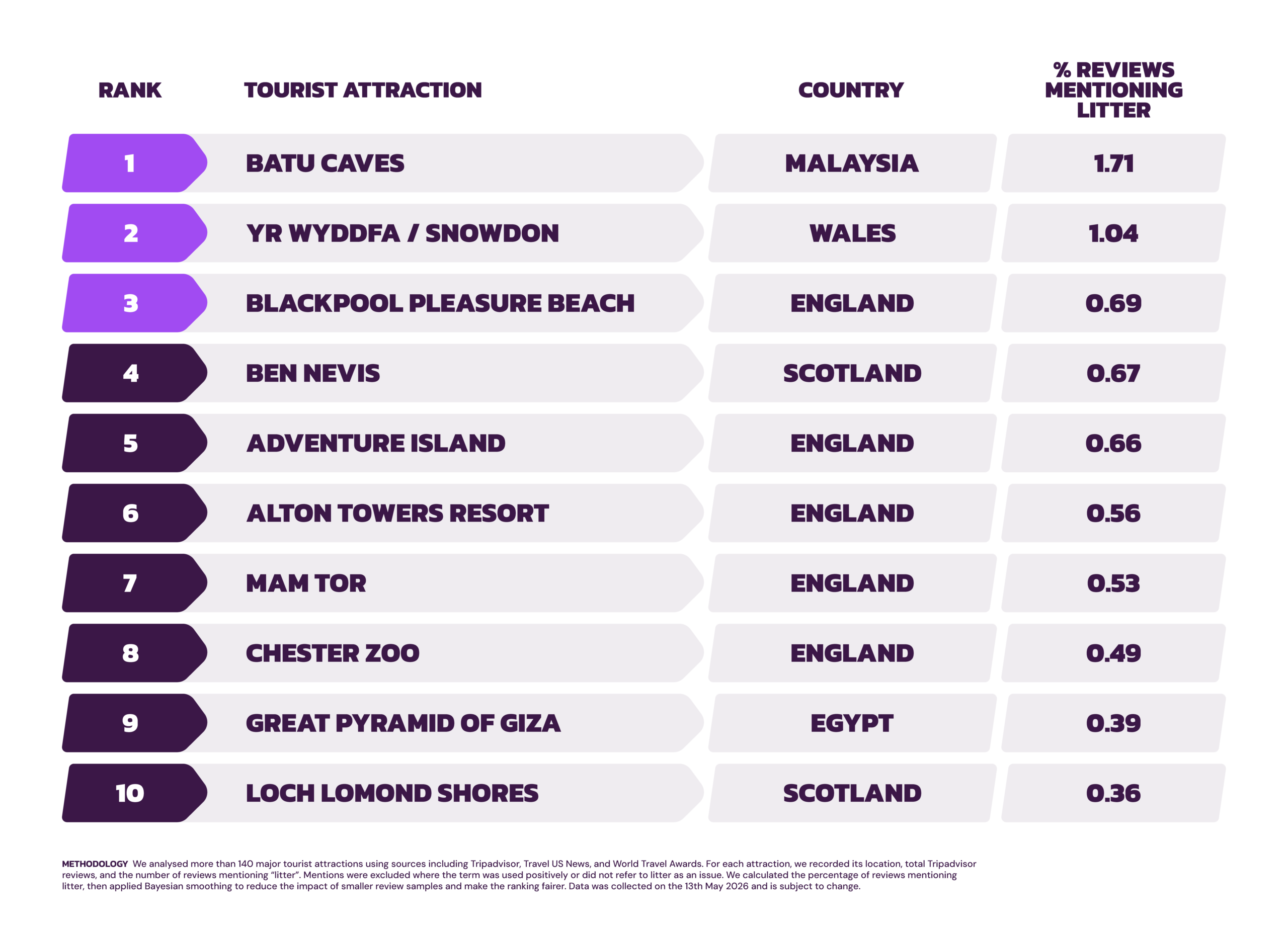
Batu Caves in Malaysia ranked as the world’s most littered tourist attraction for the second year running, while Yr Wyddfa/Snowdon ranked second globally and first in the UK.
Key findings
- Batu Caves ranked first, with 257 reviews mentioning litter.
- Yr Wyddfa/Snowdon was the UK’s most littered tourist attraction, with 1.04% of reviews mentioning litter.
- Blackpool Pleasure Beach was England’s most littered attraction in the study.
- Ben Nevis ranked fourth globally and was Scotland’s highest-ranked site.
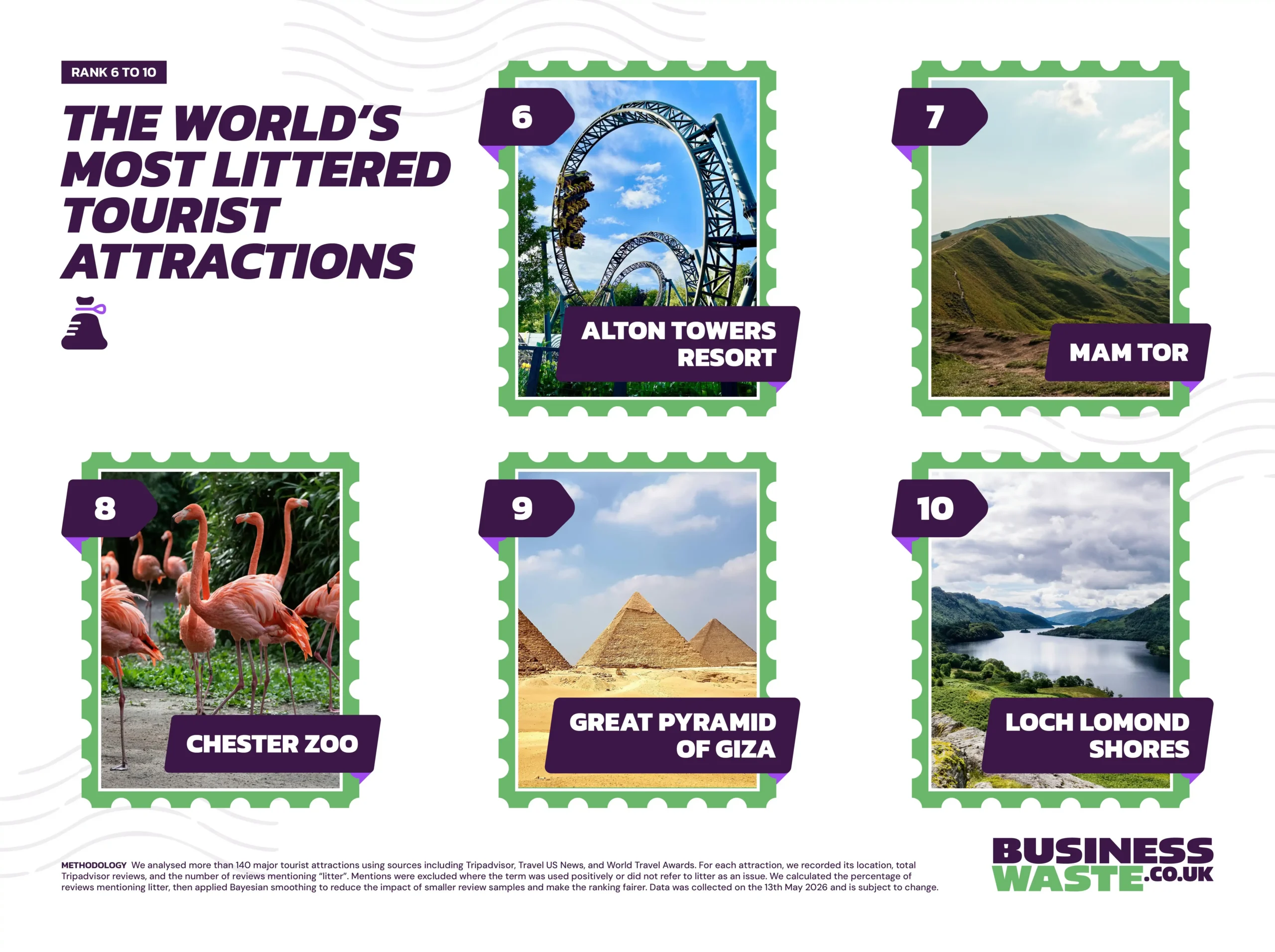
- Eight of the top 10 most littered tourist attractions were in the UK.
- Sugarloaf Mountain in Rio de Janeiro ranked as the world’s cleanest tourist attraction, with zero litter mentions across 57,071 reviews.
How the ranking was calculated
Business Waste Ltd analysed TripAdvisor review data for major tourist attractions around the world.
The study examined:
- Total reviews for each attraction
- Reviews containing the word “litter”
- The percentage of reviews mentioning litter
The final rankings were based on the percentage of reviews that mentioned litter. This approach helps compare attractions of different sizes and visitor volumes more fairly.
A higher ranking does not necessarily mean a location has the highest physical volume of litter. It means visitors were more likely to mention litter in their reviews.
A closer view
Why tourist attractions struggle
with litter
Tourist attractions often face unusual waste pressures. Unlike offices, shops, or factories, visitor numbers can change sharply depending on the season, weather, school holidays, event schedules, and transport links.
Common challenges include:
- High footfall during short peak periods
- Food and drink packaging used outdoors
- Bins filling faster than expected
- Visitors bringing waste from outside the site
- Wind spreading lightweight packaging
- Remote or difficult-to-access areas
- Limited vehicle access for collections
- Wildlife disturbing bins or loose waste
Outdoor and natural attractions face an additional challenge, as waste can become spread across paths, car parks, picnic areas, viewpoints, and open landscapes rather than remaining within one managed site.
The world’s cleanest tourist attractions
Thirteen attractions in the study had no reviews mentioning litter. The 10 cleanest attractions were:
- Sugarloaf Mountain, Brazil: 0 litter mentions from 57,071 reviews
- Iguazu Falls, Brazil: 0 litter mentions from 45,801 reviews
- Titanic Belfast, Northern Ireland: 0 litter mentions from 27,315 reviews
- Sydney Harbour Bridge, Australia: 0 litter mentions from 14,088 reviews
- Sky Tower, New Zealand: 0 litter mentions from 11,860 reviews
- Shakespeare’s Globe Theatre, England: 0 litter mentions from 9,472 reviews
- Spinnaker Tower, England: 0 litter mentions from 6,454 reviews
- Milford Sound, New Zealand: 0 litter mentions from 5,868 reviews
- Salar de Uyuni, Bolivia: 0 litter mentions from 4,274 reviews
- Nazca Lines, Peru: 0 litter mentions from 3,291 reviews
This does not mean these sites never experience litter. It means litter was not mentioned in the reviews analysed.
What can tourist attractions do
to reduce litter?
Tourist attractions cannot rely solely on visitors to manage waste properly. Effective waste management needs to be built into the site itself.
Practical steps include:
- Auditing where litter appears most often
- Increasing bin capacity during peak periods
- Separating general waste, recycling, and food waste
- Using clear signs with simple instructions
- Reviewing packaging used by vendors
- Monitoring bins before they overflow
- Planning extra collections during holidays and events
- Training staff to report repeat problem areas
For attractions with seasonal demand, collection schedules should adapt to visitor numbers. A setup that works in February may struggle during peak summer periods.
Mark Hall:
Visitor behaviour and site planning both matter
Mark Hall, general waste expert at Business Waste Ltd, commented:
Final thoughts
The world’s most littered tourist attractions are not necessarily badly managed sites. Many are large, busy, exposed, seasonal or difficult to maintain.
But the data shows how quickly litter can affect visitor perception. If people notice waste enough to mention it in reviews, it has already become part of the attraction’s public reputation.


Have your waste collected
Get a fast FREE quote for your waste collection 0800 211 83 90
- Free quote within 1 hr
- Any type of waste
- FREE bins and delivery
- We cover all of the UK